Key Takeaways
- 537 stores in 27 countries. As of mid-2026, Apple runs 537 official, company-owned Apple Store retail locations across 27 countries. Roughly half of them (269) are in the United States alone.
- China is a distant second. China has 50 Apple Stores, more than any other country outside the US. The UK follows with 39, Canada 28, Australia 22 and France 20.
- The flagships are architectural landmarks. Fifth Avenue's glass cube in New York, Regent Street's grand-listed hall in London, Sanlitun in Beijing, Marina Bay Sands' floating dome in Singapore and Champs-Elysees in Paris are the marquee stores. All are architecturally distinct and were designed as public monuments as much as retail spaces.
- India is the new front line. After opening its first two Indian stores in Mumbai and Delhi in April 2023, Apple has scaled up fast: six stores now, with Delhi's second flagship added in early 2026 and more locations rumored for Bengaluru and Pune.
- Saudi Arabia is coming next. Apple announced its Saudi retail expansion in 2025 (online first), with the first physical Apple Store on Riyadh's Diriyah area planned for 2026-27. That would make the Kingdom Apple's 28th country and the second Arab country after the UAE.
Apple opened its first two retail stores in the United States in May 2001. Twenty-five years later, the count is 537 official, company-owned Apple Store locations in 27 countries. That is a much smaller footprint than most global brands (Starbucks runs about 41,000 stores across 89 markets; McDonald’s roughly 41,800 across more than 100) but Apple’s stores are not fast-food outlets. They are landmark buildings, chosen to double as public architecture and a permanent brand ad in each market Apple enters.
Here is where every one of them is.
The Map: Apple’s Global Retail Footprint
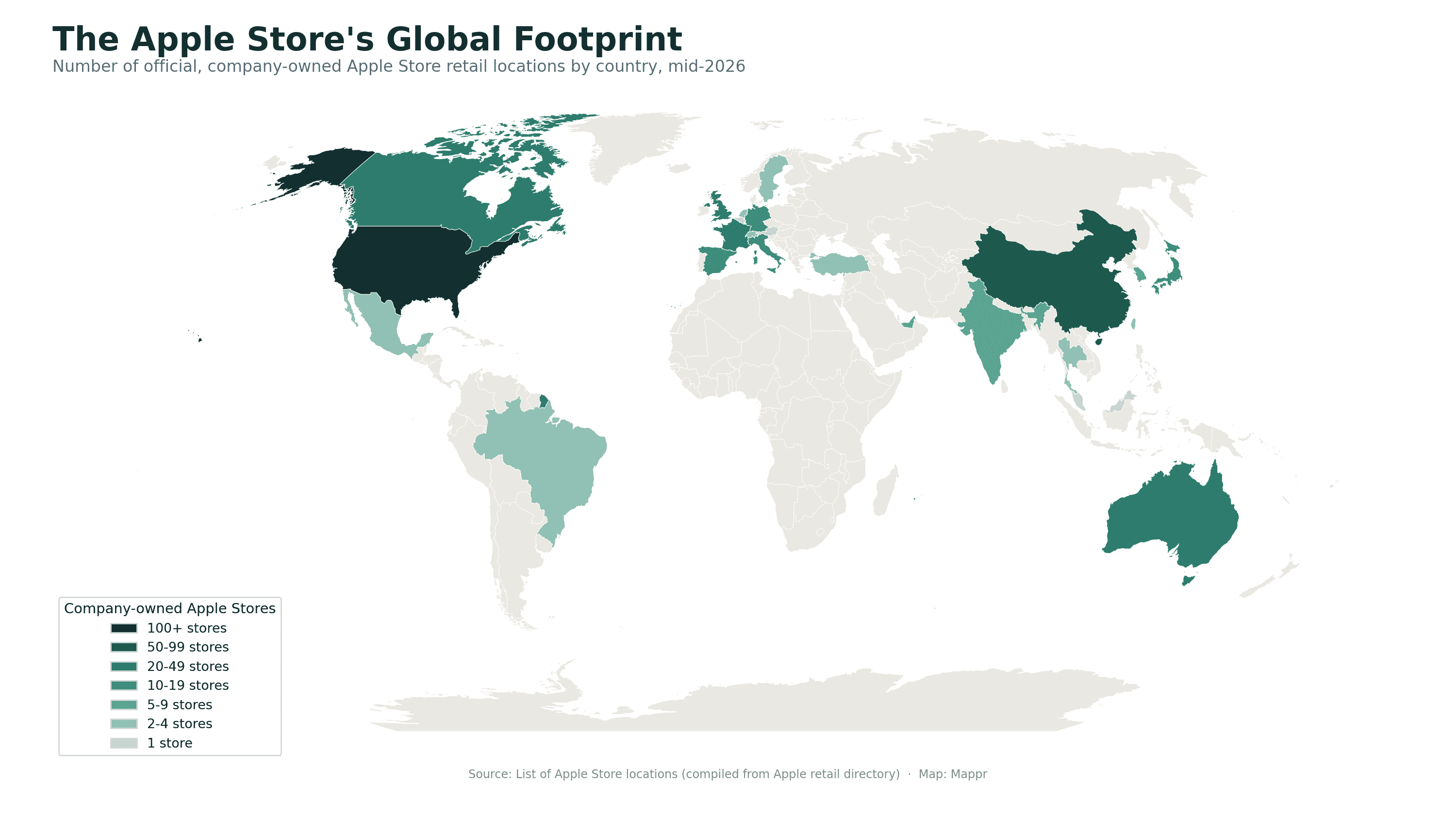
Half of Apple’s retail estate sits in one country. The 269 US stores outweigh the next twelve countries combined, and the map’s darkest patch is essentially North America and coastal China. The rest of the picture is Europe, wealthy East Asia (Japan, Korea, Hong Kong, Taiwan, Singapore, Thailand, Malaysia) and a few new frontiers where Apple is deliberately planting flags: India, the UAE, and next, Saudi Arabia.
The Top 10 Countries by Store Count
| Rank | Country | Stores | First store |
|---|---|---|---|
| 1 | United States | 269 | Tysons Corner, VA (2001) |
| 2 | China | 50 | Sanlitun, Beijing (2008) |
| 3 | United Kingdom | 39 | Regent Street, London (2004) |
| 4 | Canada | 28 | Yorkdale, Toronto (2005) |
| 5 | Australia | 22 | George Street, Sydney (2008) |
| 6 | France | 20 | Carrousel du Louvre, Paris (2009) |
| 7 | Italy | 17 | Roma Est, Rome (2007) |
| 8 | Germany | 16 | Munich (2008) |
| 9 | Spain | 12 | Barcelona (2010) |
| 10 | Japan | 11 | Ginza, Tokyo (2003) |
The gap after the US is striking. China’s 50 stores put it in a class of one below America; the next tier (UK, Canada, Australia, France) all sit between 20 and 40. Below France, Apple’s presence thins quickly: Germany has only 16 stores despite being Europe’s largest economy, and Japan, one of Apple’s most valuable single markets, has just 11.
Full Table: All 27 Countries
Every country where Apple currently operates a company-owned retail store, with the number of locations, first store, and most recent opening. Sortable and searchable.
| Rank | Country | Stores | First store year | First store | Latest store |
|---|---|---|---|---|---|
| 1 | United States | 269 | 2001 | Tysons Corner Center, Tysons Corner, Virginia | The Shops at Blackstone Valley, Massachusetts |
| 2 | China | 50 | 2008 | Sanlitun, Beijing | Livat Centre, Beijing |
| 3 | United Kingdom | 39 | 2004 | Regent Street, London | Solihull, Birmingham |
| 4 | Canada | 28 | 2005 | Yorkdale Shopping Centre, Toronto | Saint Catherine Street, Montreal |
| 5 | Australia | 22 | 2008 | George Street, Sydney | Perth City, Perth |
| 6 | France | 20 | 2009 | Carrousel du Louvre, Paris | Champs-Élysées, Paris |
| 7 | Italy | 17 | 2007 | Centro Commerciale Roma Est, Rome | Via del Corso, Rome |
| 8 | Germany | 16 | 2008 | 1 Rosenstrasse, Munich, Bavaria | Rosenthaler Strasse, Berlin |
| 9 | Spain | 12 | 2010 | La Maquinista, Barcelona | La Vaguada, Madrid |
| 10 | Japan | 11 | 2003 | Ginza, Tokyo (original) | Ginza, Tokyo (renovated 2022–2025) |
| 11 | South Korea | 7 | 2018 | Garosu-gil, Seoul | Hongdae, Seoul, South Korea |
| 12 | Hong Kong | 6 | 2011 | ifc Mall, Central and Western District | apm Hong Kong |
| 13 | India | 6 | 2023 | Bandra Kurla Complex, Mumbai, Maharashtra | Sky City Mall, Mumbai, Maharashtra |
| 14 | United Arab Emirates | 5 | 2015 | Mall of the Emirates, Dubai Yas Mall, Abu Dhabi | Al Jimi Mall, Al Ain |
| 15 | Switzerland | 4 | 2008 | Rue de Rive, Geneva | Freie Strasse, Basel |
| 16 | Netherlands | 3 | 2012 | Hirschbuilding, Leidseplein, Amsterdam | De Passage, The Hague |
| 17 | Singapore | 3 | 2017 | Orchard Road | Marina Bay Sands |
| 18 | Turkey | 3 | 2014 | Zorlu Center, Istanbul | Bağdat Caddesi, Istanbul |
| 19 | Sweden | 3 | 2012 | Westfield Täby Centrum, Täby | Westfield Mall of Scandinavia, Solna |
| 20 | Brazil | 2 | 2014 | VillageMall, Barra da Tijuca, Rio de Janeiro | Morumbi, São Paulo |
| 21 | Macau | 2 | 2016 | Galaxy Macau | The Londoner Macao |
| 22 | Taiwan | 2 | 2017 | Taipei 101, Taipei | Xinyi A13, Taipei |
| 23 | Mexico | 2 | 2016 | Centro Santa Fe, Santa Fe, Mexico City | Centro Comercial Antara Fashion Hall, Mexico City |
| 24 | Thailand | 2 | 2018 | Iconsiam, Bangkok | CentralWorld, Bangkok |
| 25 | Belgium | 1 | 2015 | Avenue de la Toison d’Or, Brussels | align=center | 1 |
| 26 | Austria | 1 | 2018 | Kärntner Straße, Vienna | align=center | 1 |
| 27 | Malaysia | 1 | 2024 | The Exchange TRX, Kuala Lumpur | align=center | 1 |
The Flagships
Apple does not officially use the label “flagship,” but a handful of stores are treated as flagships by the company and by architecture writers: they occupy landmark buildings, they are the launch venues for new products, and they are the most photographed retail spaces in their cities.
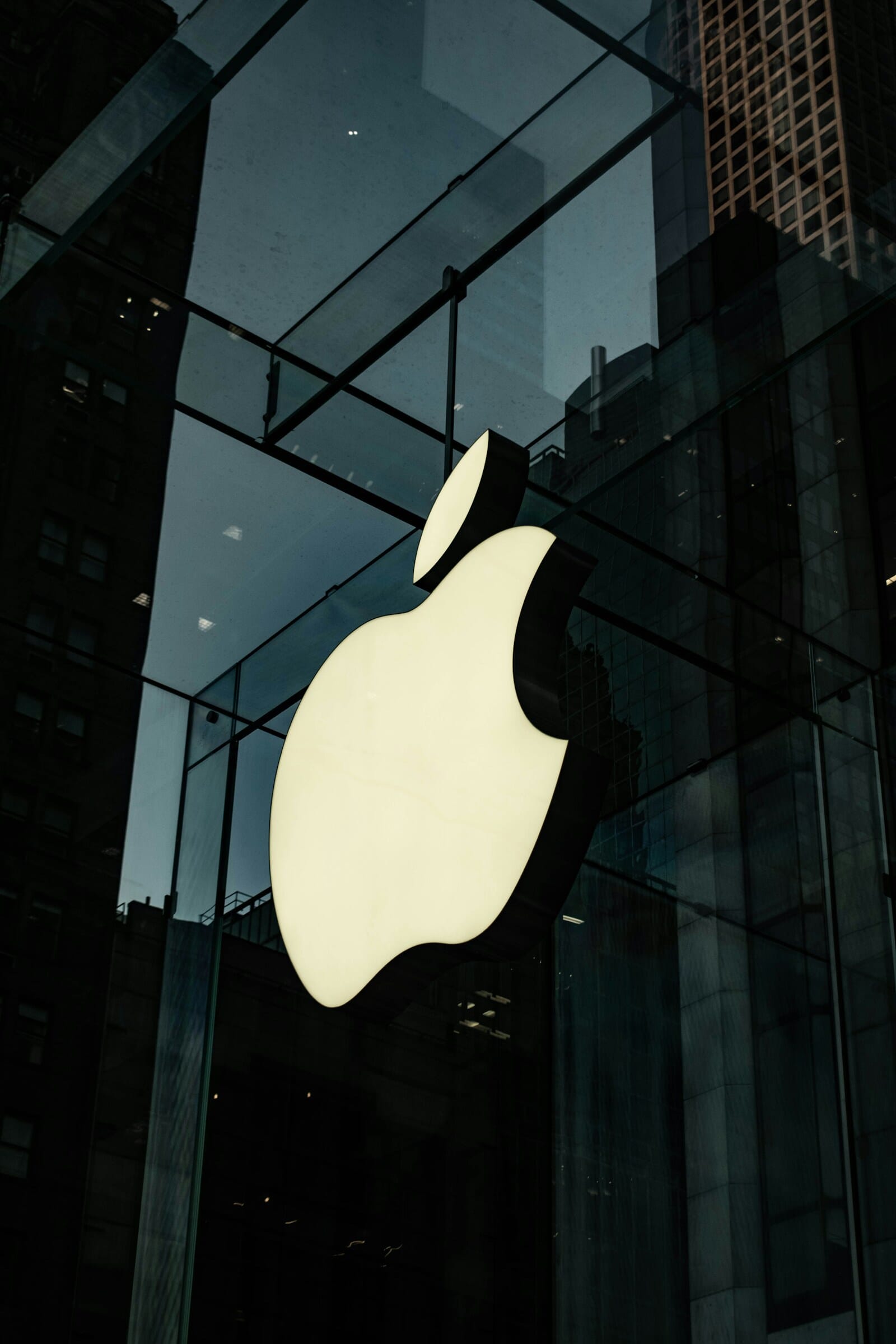
Fifth Avenue, New York (the glass cube)
The most iconic Apple Store in the world. A single 32-foot glass cube on Fifth Avenue leads down to a subterranean store that runs 24 hours a day. Designed with Bohlin Cywinski Jackson, it holds architectural design patents in its own right. Opened 2006, redesigned 2019.
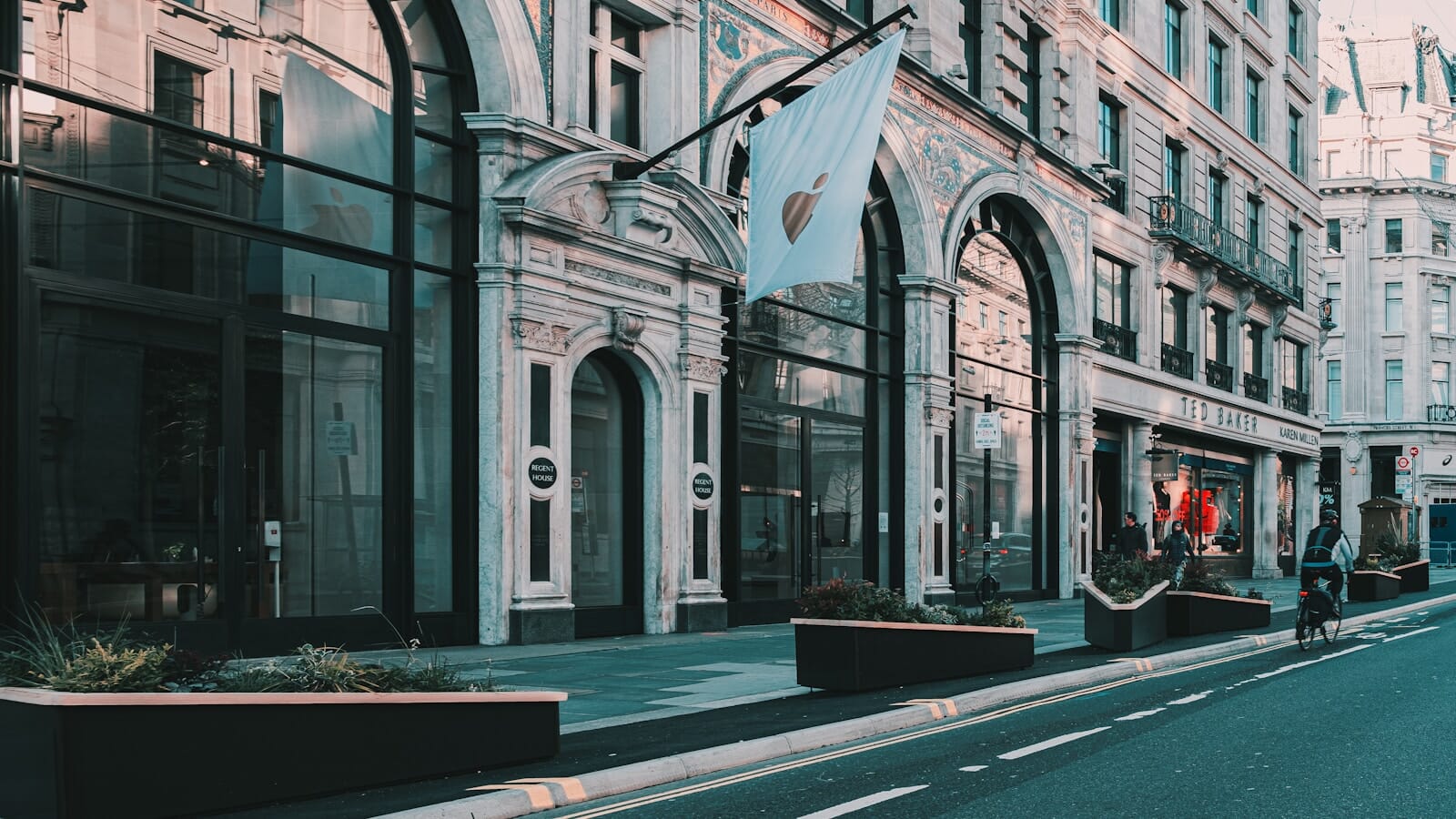
Regent Street, London
Apple’s first store outside the US, opened in 2004 in a Grade II-listed neoclassical building. Rebuilt 2016 under Foster + Partners with skylights, live trees and a bespoke stone floor. Still the busiest Apple Store in Europe.
Sanlitun, Beijing
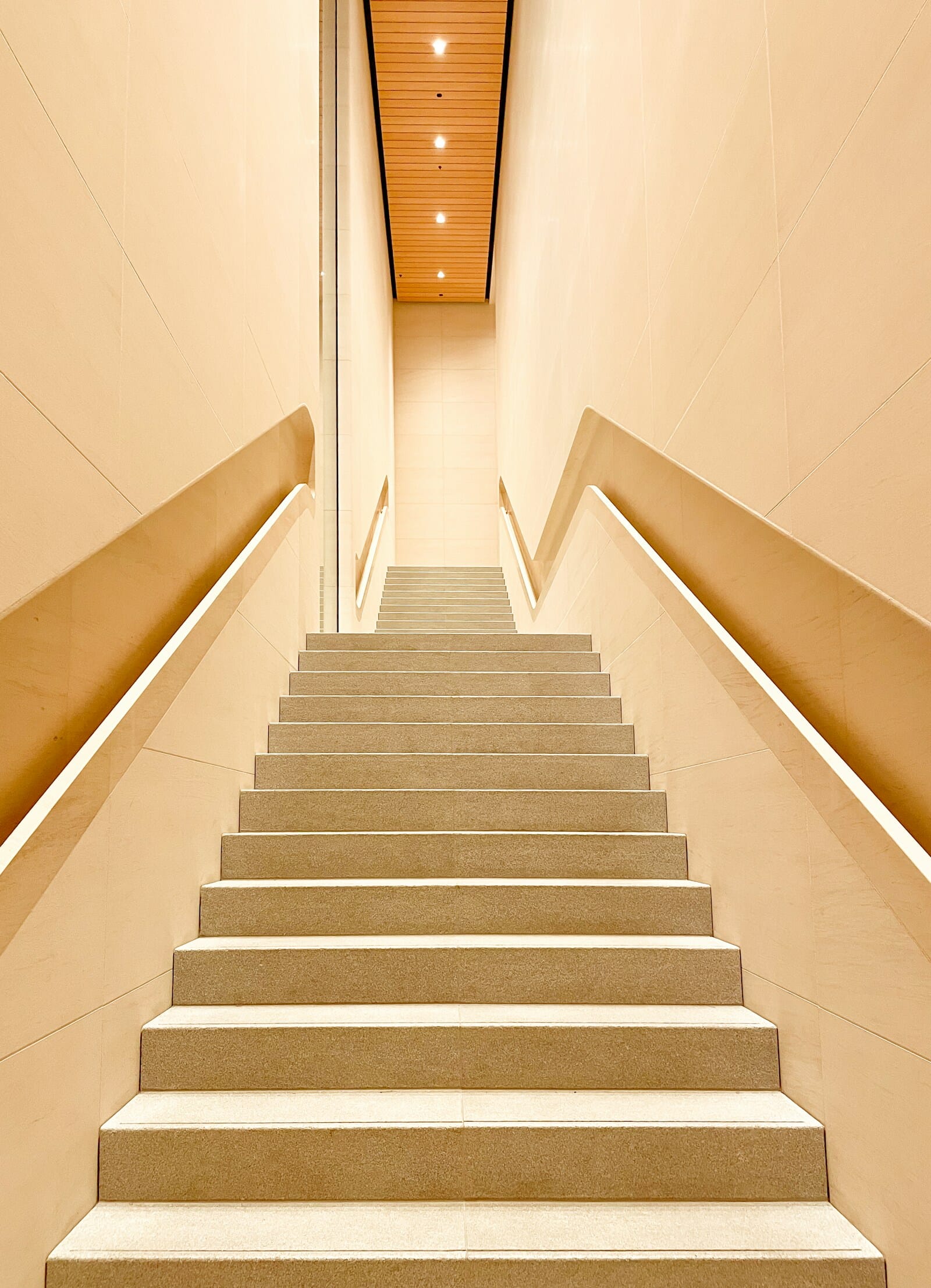
Apple’s first store in mainland China, opened 2008; comprehensively rebuilt in 2020 as a two-story glass volume in Sanlitun’s Taikoo Li shopping district, with a stone plaza and a signature timber ceiling. The template for Apple’s next generation of Asian flagships.
Marina Bay Sands, Singapore
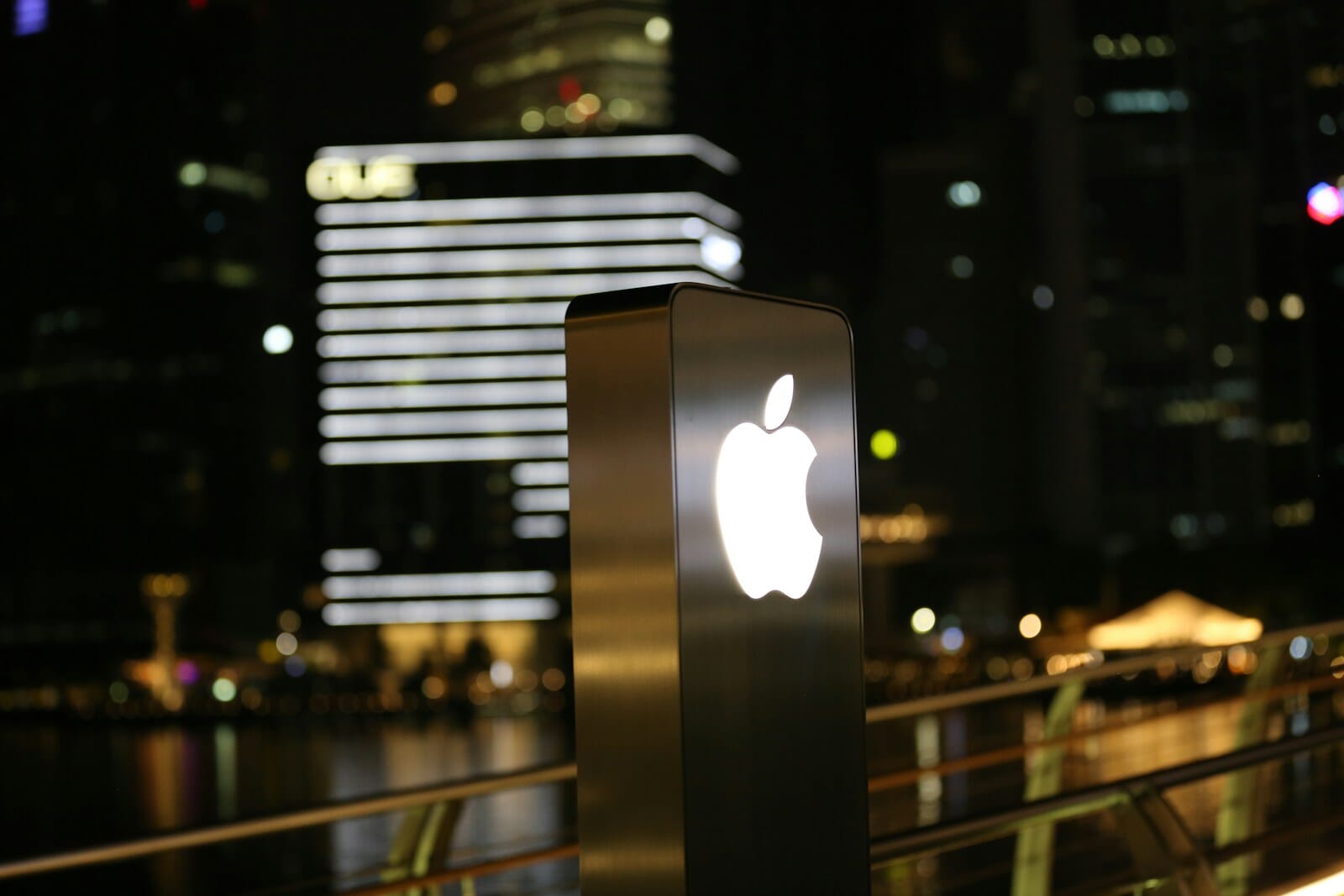
The world’s first Apple Store built on the water: a glass dome floating on Marina Bay, connected to the resort by an underwater tunnel, opened 2020. Designed with Foster + Partners. There is no company logo on the outside; the sphere itself is the brand.
Champs-Elysees, Paris
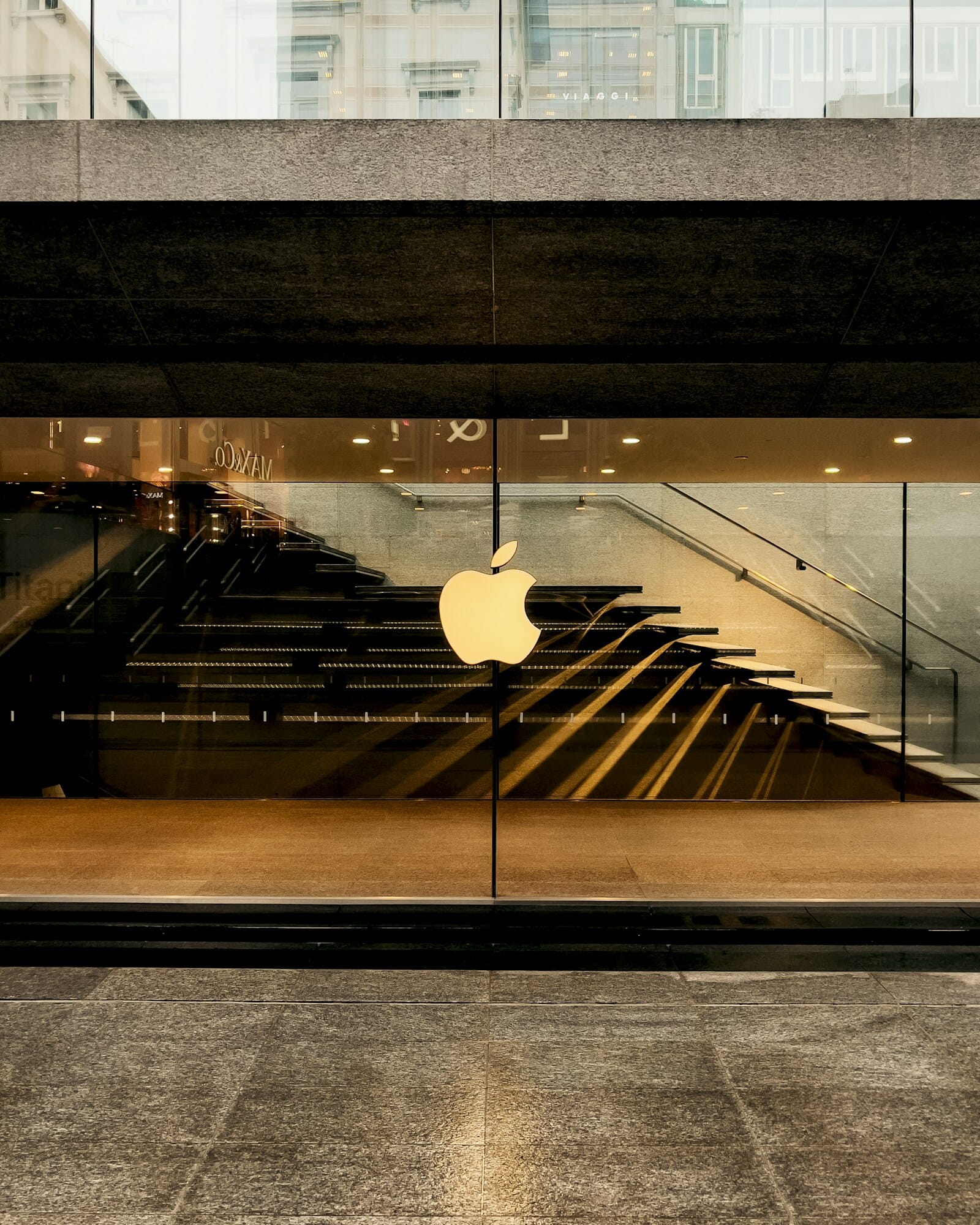
Opened 2018 in a former Citibank on the Champs-Elysees, and Apple’s largest store in Europe. Restored 19th-century vaults and mosaics in one wing; a 15-meter-high living green wall in another. The company treats it as the anchor of its European retail portfolio.
Piazza Liberty, Milan
A modern amphitheater sunk into Piazza Liberty with water walls on either side, opened 2018. An outdoor performance space above the store hosts free concerts and Today at Apple sessions. One of the most literal expressions of Apple’s “retail as public space” idea.
Jewel Changi Airport, Singapore
Not the largest, but one of the smartest sitings: right inside the Rain Vortex atrium of Changi’s transit hub. It has become a stopover destination for tourists, and it is Apple’s only airport store.
Where Apple Is Not
The map is as interesting for the gaps as for the presence. There is no Apple Store anywhere in Africa (the continent’s iPhones flow through authorized resellers and premium partners), none in Central Asia, and none in most of the Middle East beyond the UAE. Europe has holes too: Portugal, Ireland, Greece, most of the Nordics apart from Sweden, and all of Central and Eastern Europe (Poland, Czechia, Romania) are Apple Premium Reseller territory rather than company-owned.
Latin America is thin as well: two stores in Brazil, two in Mexico, and that is the entire region. Argentina, Chile and Colombia rely on authorized partners despite substantial iPhone sales.
What’s Next: Saudi Arabia, and More India
Apple announced its retail expansion into Saudi Arabia in December 2025, launching the Apple Store online first and confirming that its first physical Saudi stores are planned to open in 2026 and 2027, including a flagship in the Diriyah historic-district development in Riyadh. That will make Saudi Arabia Apple’s 28th country and the second Arab nation with an Apple Store.
India is the other frontier. From zero stores in early 2023, India now has six, with Mumbai (Sky City) added in February 2026. Apple has publicly targeted several more, with Bengaluru, Pune and a second Delhi flagship all rumored in the trade press. Given India’s iPhone growth, the current six stores are almost certainly not the ceiling; expect double digits within a couple of years.
Apple’s retail footprint is still one of the most concentrated in global corporate history: half of it in one country, nearly nine-tenths of it in ten. But the shape of the next chapter, more India, first-time Saudi Arabia and steady expansion across Southeast Asia, is already visible.