
Key Takeaways
- A real GPS tracker is not a tag. True GPS trackers use a cellular SIM to report location anywhere. AirTag and Tile are Bluetooth finders that only work when another phone is nearby
- Best all-round car option is a plug-in OBD tracker. For most vehicles an OBD unit like ShadowGPS or Bouncie gives 5-second live tracking and engine alerts for roughly 12 to 15 dollars a month
- Judge the subscription, not the sticker price. Almost every real GPS tracker needs a paid cellular plan. A cheap 25-dollar device can cost more over two years than a 110-dollar one
- People need different gear than cars. Kids, seniors and dementia care want a small wearable such as Jiobit or AngelSense, not a car OBD plug
- Pets are their own category. Tractive and Fi beat generic trackers for dogs and cats. A Bluetooth tag will not help you chase a runaway
“GPS tracker” has become a catch-all label for everything from a $29 Apple AirTag clipped to a backpack to a $130 wearable that keeps tabs on a child — but those devices use completely different technology, and buying the wrong type is the single most common mistake shoppers make.
We dug through 2025–2026 owner reviews, Reddit threads and hands-on tests to rank the trackers that actually hold up, organised by what you are trying to track: a car, a kid, an aging parent, a dog, or a piece of equipment. For each pick we list the real-world pros and cons people report — not the spec sheet — and flag the subscription traps that make a “cheap” tracker expensive.
First, the one distinction that decides everything
Before you compare brands, you need to know which of two very different products you are buying:
- Real-time cellular GPS trackers have a built-in SIM card. They report their location over the mobile network from anywhere with coverage, which is why they require a paid monthly or annual plan. This is what you want for a vehicle, a person, or a pet that might actually go missing.
- Bluetooth item finders (Apple AirTag, Tile, Samsung SmartTag) have no SIM and no GPS. They pigg-back on the vast network of other people’s phones to report a last-seen location. No monthly fee, brilliant for keys, wallets and luggage in busy places — useless for live tracking or anywhere there are no other phones around.
If you remember nothing else: a tag finds things, a GPS tracker follows things. The rankings below are real-time GPS trackers unless we say otherwise.
At a glance
GPS trackers compared by use-case
Our top pick in each category, with the price you pay up front and the typical cellular plan.
| Device | Price | Plan | Best for |
|---|---|---|---|
| ShadowGPS (our value pick) | $108.90 | ~$12/mo | Live vehicle tracking with engine alerts |
| Bouncie | ~$90 | ~$10/mo | Easiest plug-and-play car tracker |
| Vyncs | ~$80 | ~$8/mo* | Lowest ongoing cost / small fleets |
| LandAirSea 54 | ~$30 | $20+/mo | Hidden, long-battery vehicle tracking |
| Jiobit | $130 | ~$10/mo | Kids and independent seniors (wearable) |
| AngelSense | $100 | $40+/mo | Dementia and special-needs care |
| Tractive | ~$50 | ~$6/mo | Dogs and cats |
| Apple AirTag | $29 | None | Finding keys, bags and luggage (not live GPS) |
* Vyncs is usually billed annually (around $100/year), which works out cheaper per month but locks you into a year.
Best GPS trackers for cars & vehicles
This is the biggest category and where most buyers start. The cleanest setup is an OBD-II plug-in — it draws power from the car so it never needs charging, installs in seconds, and adds engine diagnostics. If you need to hide the tracker or track something without an OBD port, a magnetic battery unit is the alternative.
🥇 ShadowGPS — best value real-time tracker
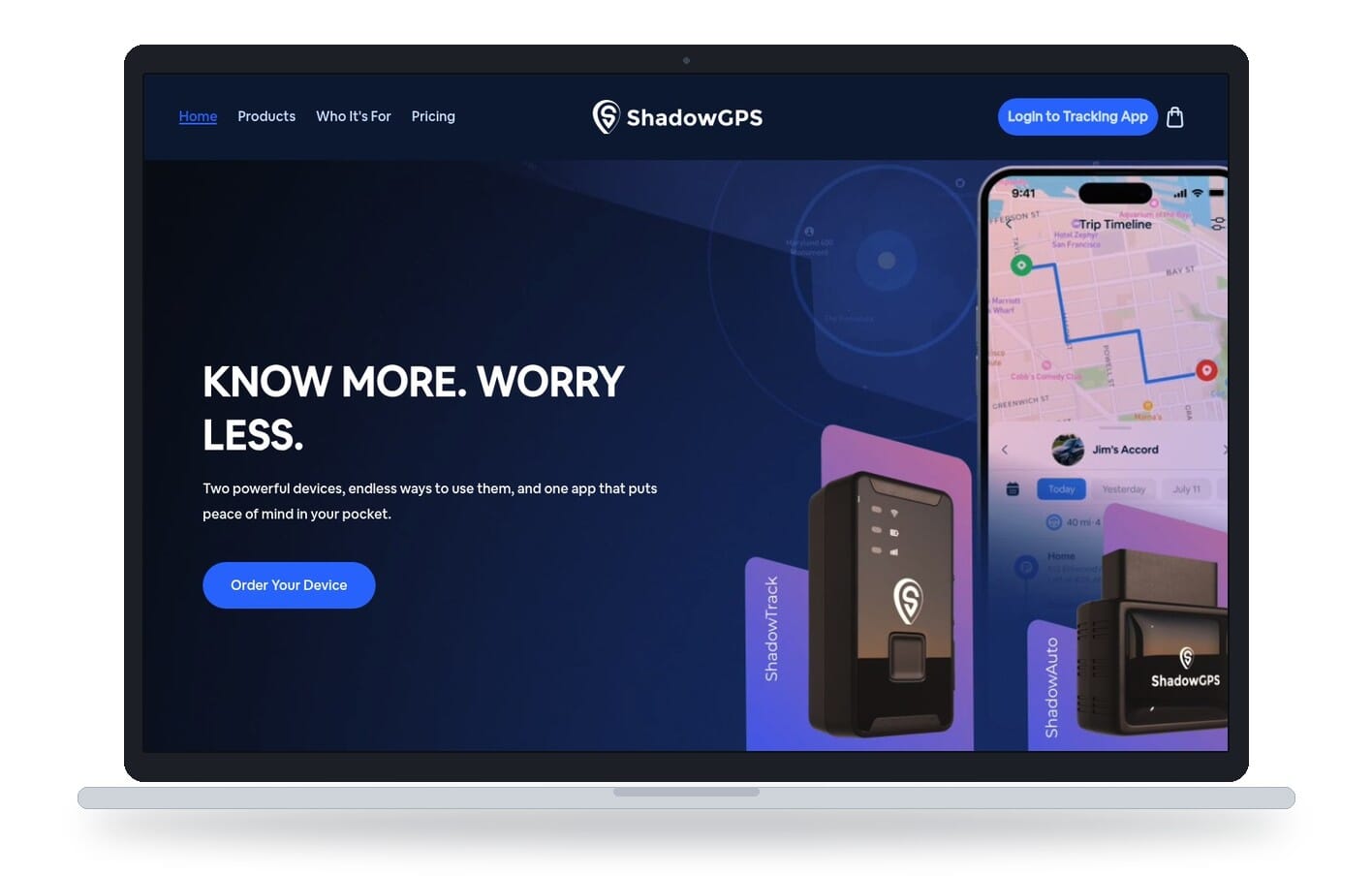
ShadowGPS is our value pick for live vehicle tracking, and it is the one affiliate partner in this guide. Its OBD model, the ShadowAuto ($108.90, regularly $138.90), pushes 5-second location updates, 16+ alert types (speeding, motion, curfew, crash), full engine diagnostics and a year of trip history with route playback. Plans run $12–15/month depending on term, on T-Mobile, AT&T and Verizon. If you would rather hide the tracker, the battery-powered ShadowTrack ($69.90) does 5–15 days per charge with a magnetic mount and adjustable 5/30/60-second updates.
Pros
- Fast 5-second live updates — among the quickest at this price
- Both an OBD and a battery model, so it covers cars and covert/asset use
- Transparent pricing and engine-health alerts (codes, battery, fuel)
- No long-term contract
Cons
- Like all real GPS trackers, it needs a paid plan to work
- Battery model’s life drops in fastest-update mode
- Newer brand with less of a long-term review track record than Bouncie
→ Check current ShadowGPS pricing
Bouncie — easiest plug-and-play
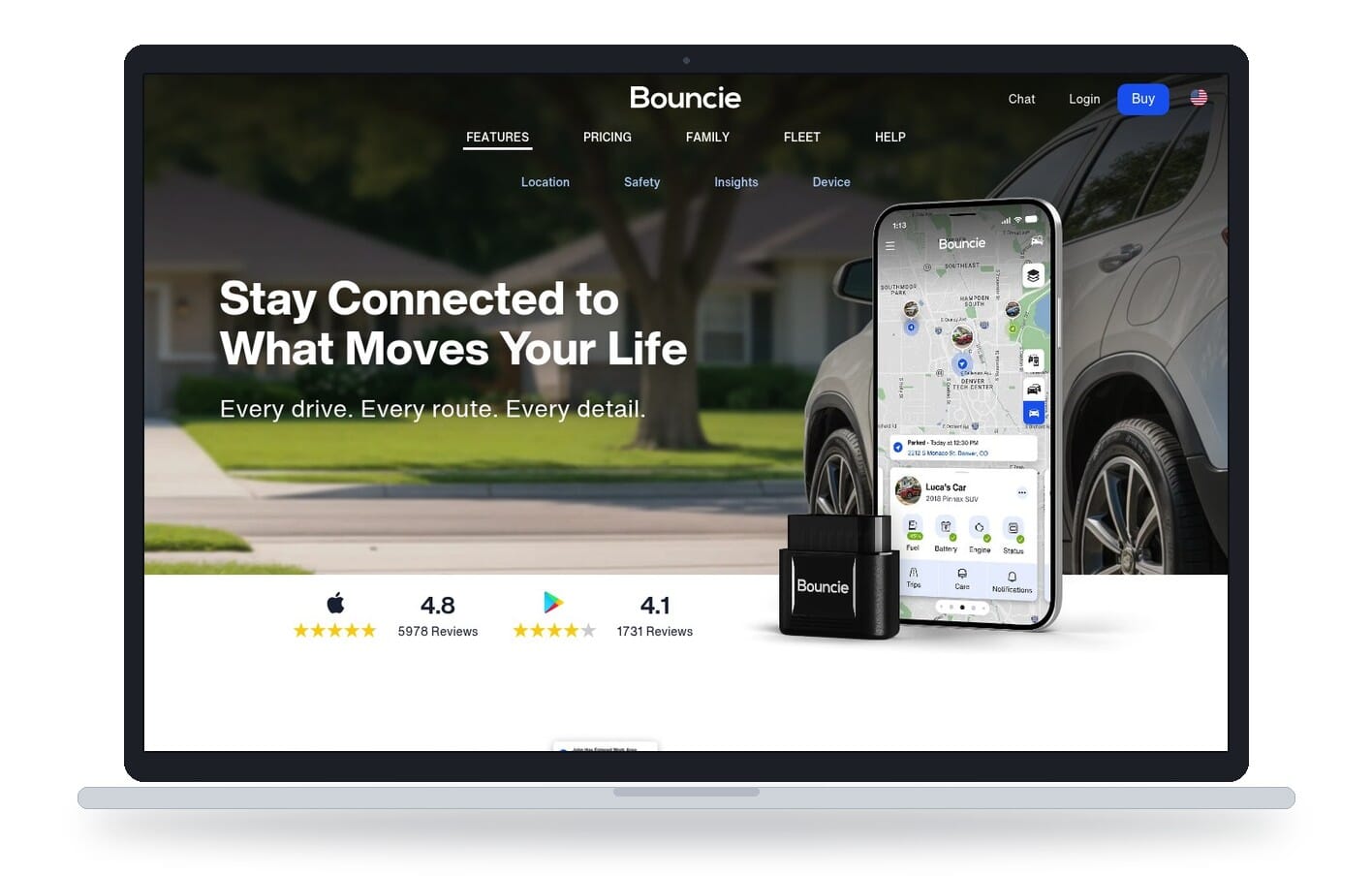
Bouncie is the device most people should buy if they just want a simple family-car tracker. It plugs into the OBD port, costs around $10/month with no contract or hidden fees, and its app for trip history, geofences and crash detection is consistently praised.
Pros
- Genuinely plug-and-play; the most beginner-friendly setup
- Low, flat ~$10/month with no contract or activation fee
- Strong app, geofencing and crash/driving reports
Cons
- Vehicle-only — it must stay plugged into an OBD port
- Not hidden, so no good for covert tracking
- Fewer fleet/telematics features than Vyncs
Vyncs — lowest ongoing cost
Vyncs also plugs into the OBD port but bills annually (around $100/year for the 4G plan), which makes it the cheapest per-month option for long-term vehicle or small-fleet monitoring.
Pros
- Cheapest long-run cost via annual billing
- Solid fleet/family telematics and trip history
- No battery to charge — vehicle-powered
Cons
- Owners repeatedly report slow, hard-to-reach customer service
- Annual plan locks you in; some dispute the activation fee
- OBD location makes it visible in the car
LandAirSea 54 — best hidden battery tracker

When you need to conceal the tracker, the LandAirSea 54 is the long-running favourite: a small, waterproof (IPX8) magnetic puck with two to three weeks of battery in light use.
Pros
- Strong magnet + IPX8 waterproofing for covert outdoor placement
- 2–3 weeks battery in light use; longer than most battery units
- Well-reviewed accuracy and instant geofence alerts
Cons
- Real-time mode drains the battery far faster
- Subscription runs higher ($20+/mo) than OBD options
- Tracking frequency is a constant battery-vs-detail trade-off
Also worth a look: Spytec GL300 & Tracki
Spytec’s GL300 (Atlas) is a portable, rechargeable tracker with strong coverage that moves easily between a car, a person or an asset. Tracki is the budget pick ($25–35) and very small — but owners warn the subscription prices are hidden inside the app until after you register, and indoor accuracy and battery life are common gripes.
Best GPS trackers for kids & teens
For a child you want a small, wearable, real-time tracker — not a car plug. For a teen driver, the better move is usually a vehicle OBD tracker (ShadowGPS or Bouncie above) so you see the car, the speed and the trips.
Jiobit — best wearable for kids
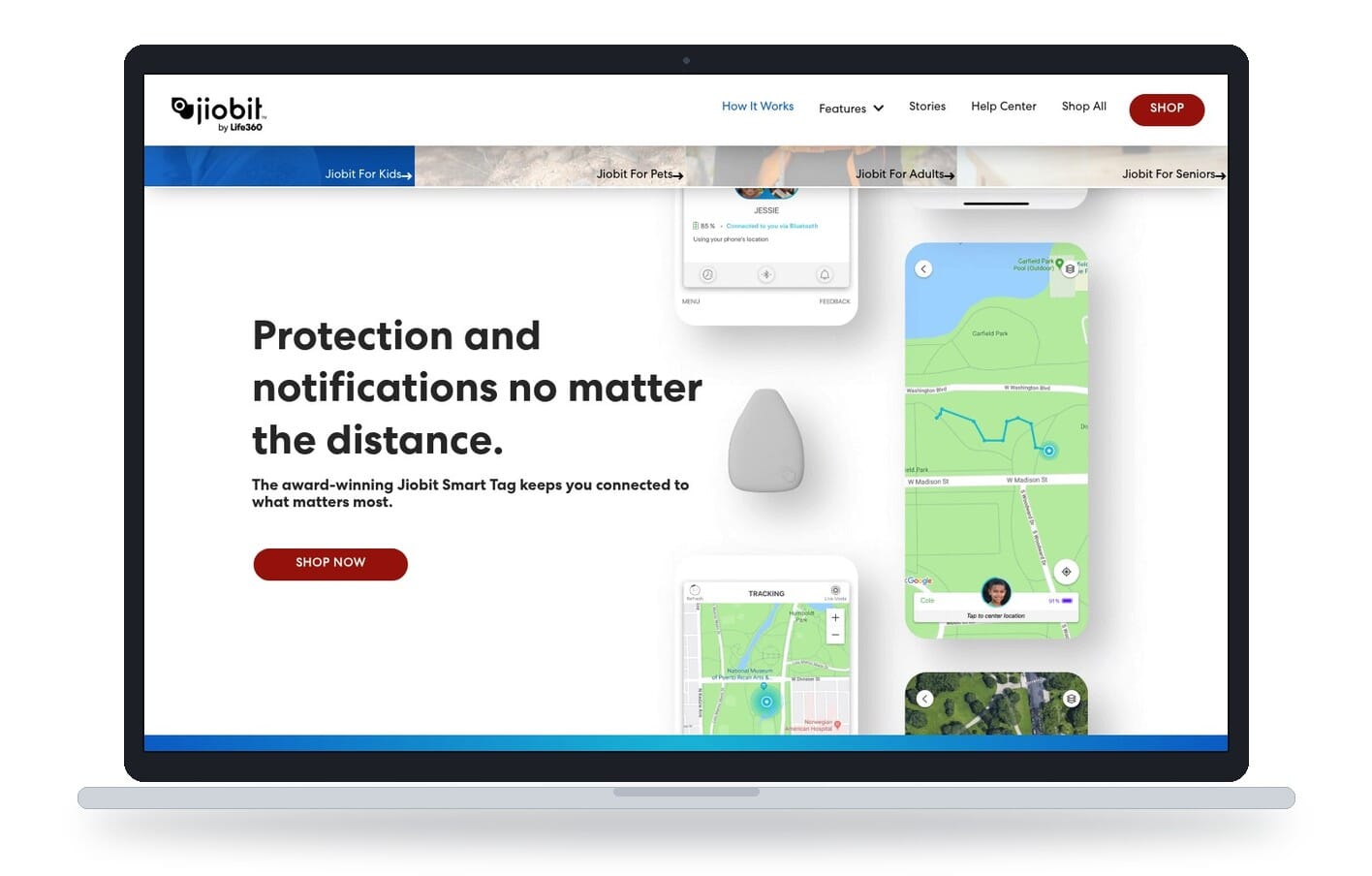
Jiobit ($130 + ~$10/month) is the smallest real-time tracker on the market — it clips to clothing or a belt loop, lasts up to a week per charge, and is purpose-built for family safety with geofences and live location.
Pros
- Tiny and light enough for a young child to wear all day
- Reliable real-time location and geofence alerts
- Discreet — does not look like a tracking device
Cons
- Subscription required
- No two-way voice or dedicated SOS button
- More expensive up front than a generic tracker
AngelSense — best for special-needs children
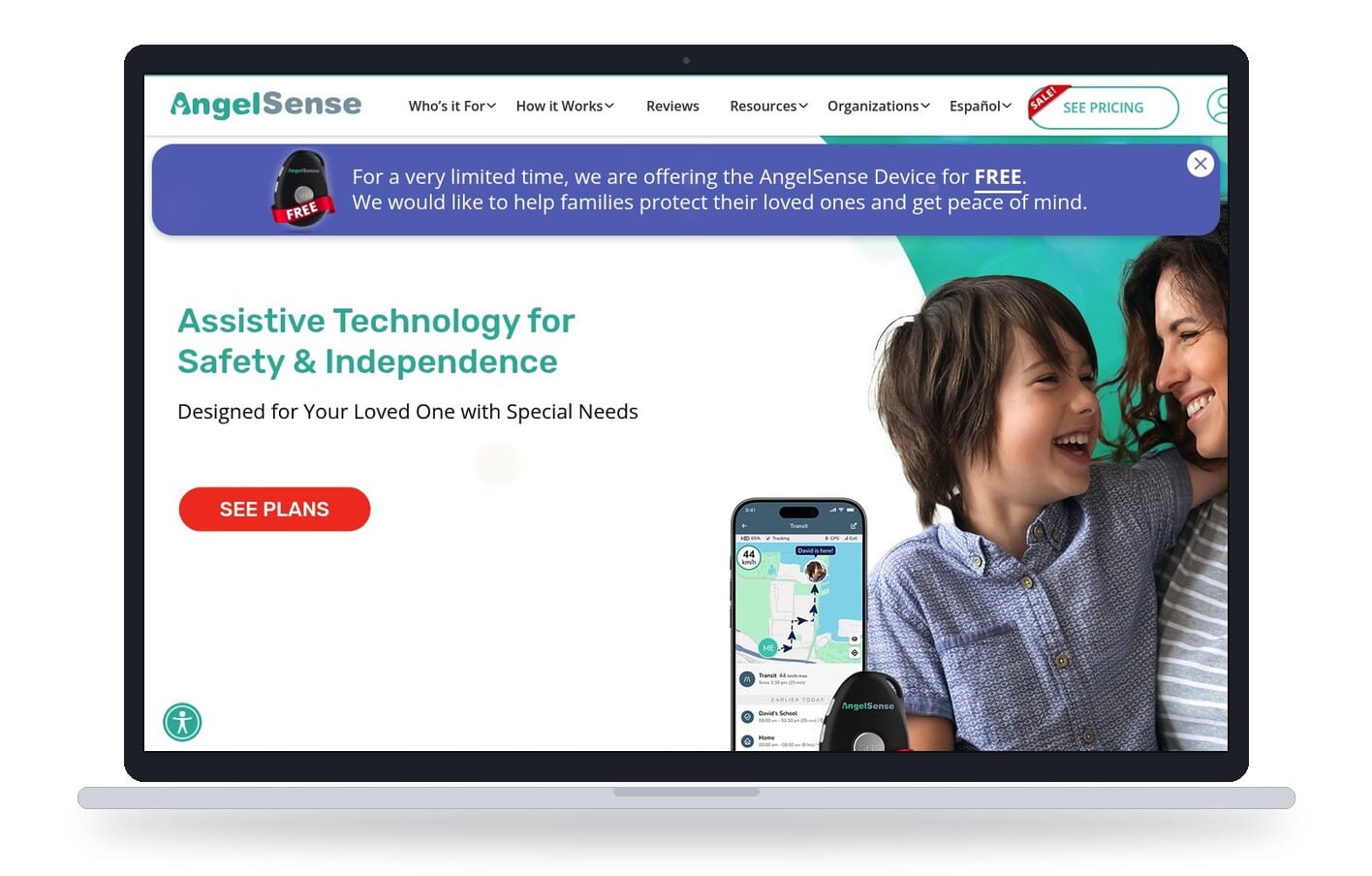
AngelSense ($100 + $40+/month) is built for children with autism or cognitive disabilities: it adds two-way voice, a tamper-proof magnetic lock so the child cannot remove it, and alerts that flag deviations from a learned daily routine.
Best GPS trackers for elderly & dementia care
Two clear winners depending on the level of care:
- AngelSense is the top pick for dementia and Alzheimer’s. It is the only consumer tracker with a tamper-proof magnetic lock, adds two-way voice and an SOS button, and uses routine-deviation alerts (early departures, unexpected stops) that matter more than a fixed boundary for advanced cases. Around $100 + $40–53/month.
- Jiobit suits an independent senior who just needs discreet location. It clips on, does not look medical, and is far cheaper to run — but it has no voice or SOS, so it is not for advanced dementia.
Best GPS trackers for pets (dogs & cats)
Pets get their own category for a reason: a runaway dog moves fast and far, so a Bluetooth tag is useless — you need live cellular tracking with frequent updates.
🐕 Tractive — the Reddit favourite
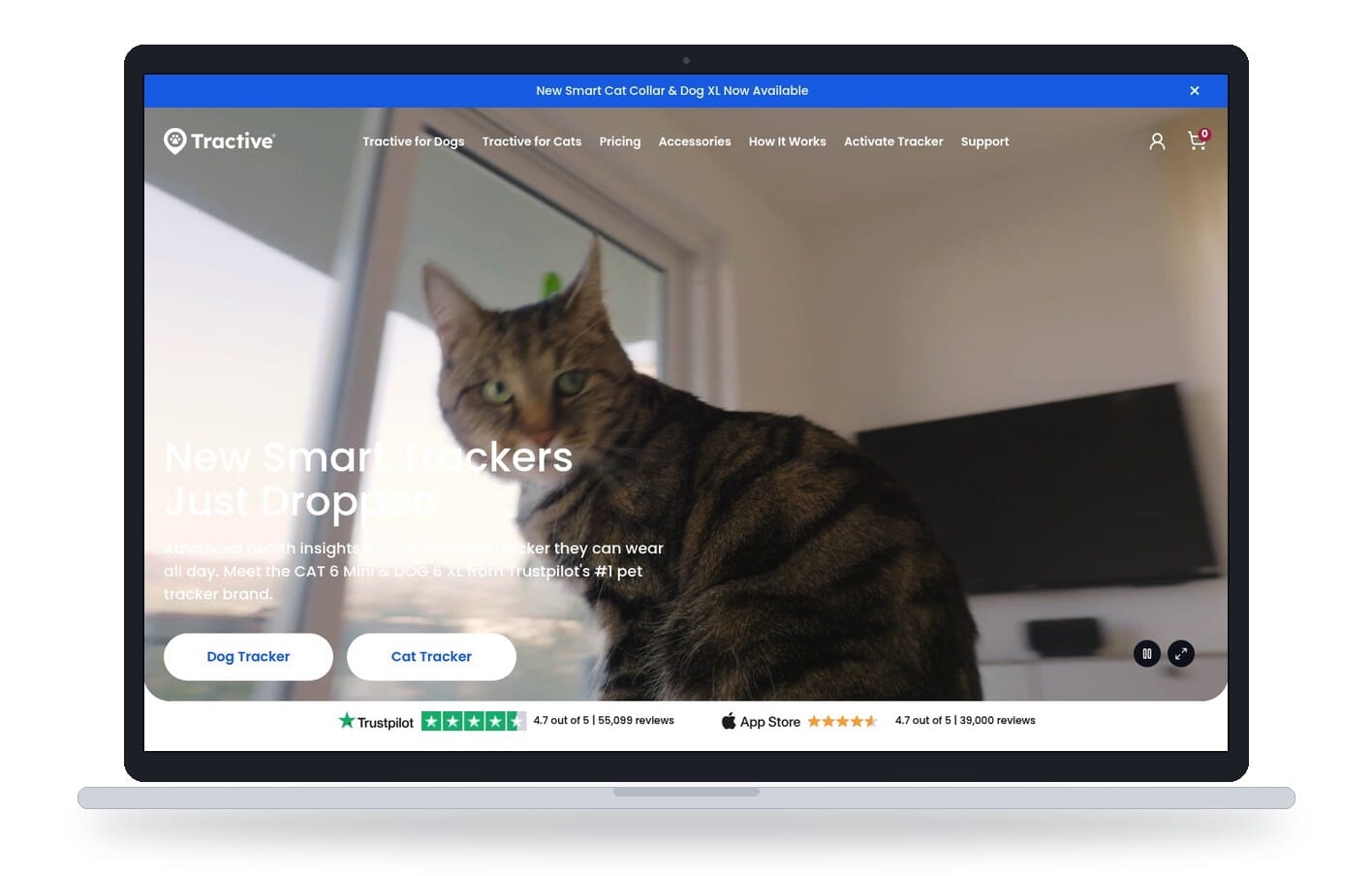
Across r/dogs and pet forums, Tractive (~$50 + ~$6/month) is the most consistently recommended pet GPS. It attaches to the collar, gives live tracking with a fast update rate in lost-pet mode, plus activity and sleep monitoring.
Pros
- Most-recommended pet tracker by actual owners
- Fast live updates in escape mode; unlimited range
- Activity, sleep and wellness tracking included
Cons
- Bulkier than the Fi collar
- Subscription required for live tracking
- Battery needs recharging every few days in active use
Fi Series 3 & Whistle
Fi Series 3 is a sleek smart-collar with great battery life and escape alerts, well-loved on r/FiDogCollar — though some owners report slower WiFi-to-cellular handoff. Whistle Go Explore is a solid alternative with 15-second updates in lost mode, but Chewy reviews flag durability and customer-service complaints.
Best GPS trackers for assets, trailers & equipment
For tools, trailers, RVs and seasonal gear, prioritise battery life and a strong magnet over update speed.
- Trak-4 (~$80 + $7–17/month) runs on swappable AA batteries for very long deployments — ideal for equipment and trailers you check occasionally.
- ShadowGPS ShadowTrack and the LandAirSea battery units suit moving assets you want to follow in near real time.
- Geotab GO9 is the pick for powered commercial equipment and serious fleets, via a reseller plan.
Item finders (AirTag & Tile) — great, but not GPS
If you only want to find keys, a wallet, a bag or luggage, skip the subscription entirely. Apple AirTag ($29) is unbeatable for iPhone users thanks to the enormous Find My network; Tile and Samsung SmartTag cover Android and Samsung households. There is no monthly fee — but remember the trade-off: these report a location only when another compatible phone passes nearby, so they are weak in rural areas and cannot track a moving target live.
How to choose — and dodge the subscription trap
- Real-time or finder? If the thing can move out of range, you need cellular GPS. If it is just misplaced nearby, a tag is cheaper and fine.
- Add up two years of subscription, not the sticker price. A $29 tracker at $20/month costs $509 over two years; a $109 tracker at $12/month costs $397. The cheaper device is often the dearer choice.
- OBD vs battery. OBD never needs charging but is visible and vehicle-only. Battery units can be hidden and moved, but you trade battery life for update frequency.
- Match the form factor to the target. Car → OBD. Person → small wearable. Pet → collar unit. Asset → long-life battery puck.
- Check the alerts you actually need — geofence, speed, SOS, two-way voice, crash — before paying for a tier that bundles ones you won’t use.
- Know the law. Only track vehicles, people or pets you are legally entitled to. Tracking another adult without consent can be illegal in many US states.
The short answer
For most people tracking a car, a plug-in OBD tracker is the right call — ShadowGPS for fast live updates and engine alerts at a fair price, or Bouncie for the simplest setup. For a child or senior, choose a wearable: Jiobit for everyday use, AngelSense for dementia or special-needs care. For a dog or cat, get Tractive or Fi. And if you only need to find your keys and bags, an AirTag with no monthly fee is all you need.
Pricing, specs and owner-sentiment in this guide were compiled from manufacturer pages and independent 2025–2026 reviews and user discussions.
Image Sources
- Mappr – Featured illustration created by Mappr
This guide contains an affiliate link to ShadowGPS via the Awin network. If you buy through it, Mappr may earn a small commission at no extra cost to you. It never affects our rankings — ShadowGPS is included on merit and clearly marked as our value pick.


