
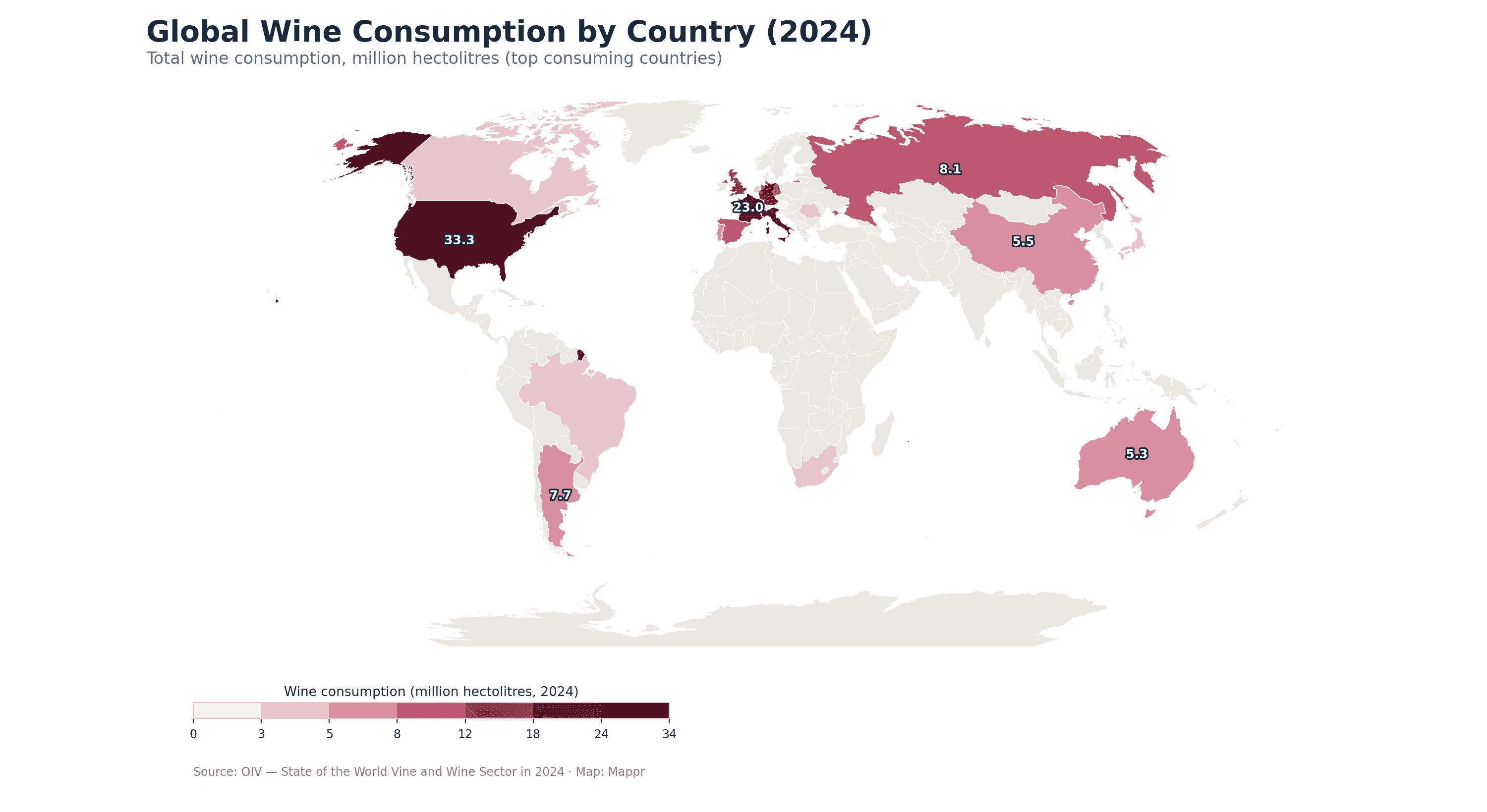
The latest report by the OIV (International Organisation of Vine and Wine), covering 2024, paints a sobering picture: global wine consumption has fallen to its lowest level in more than 60 years. Here we map where the world’s wine is drunk and explore the trends reshaping major markets.
Global Wine Consumption by Country (2024)
Overall Global Wine Consumption Decline
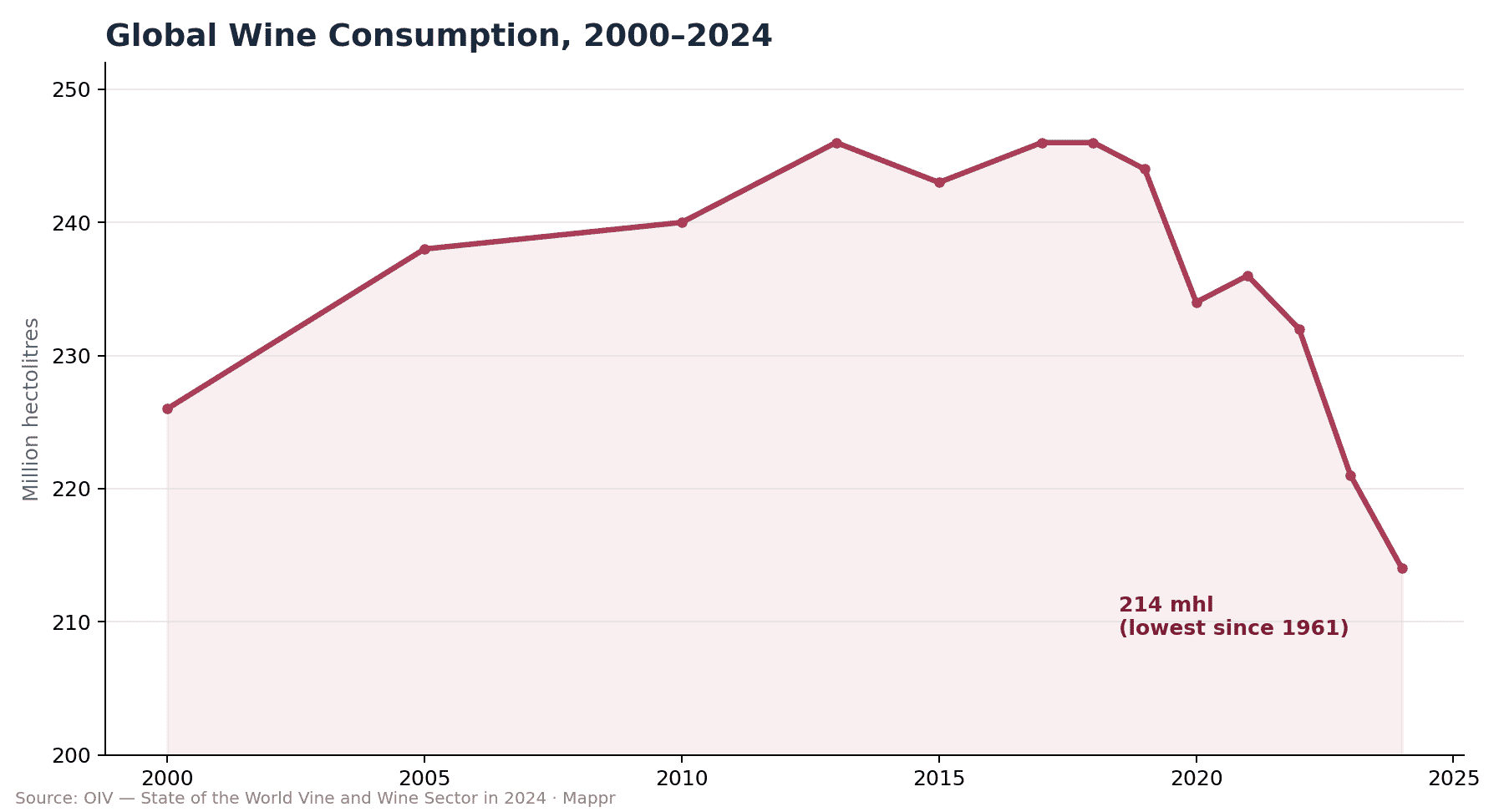
The long-term trend in wine consumption is firmly downward. After holding above 24 billion litres for most of the 2010s, global consumption fell to an estimated 21.4 billion litres (214 million hectolitres) in 2024 — a 3.3% drop from 2023 and the lowest level since 1961, according to the OIV. The decline reflects inflation and economic uncertainty in key markets, alongside long-running shifts in lifestyle, health awareness and generational drinking habits. The European Union, which still accounts for about 48% of all wine drunk worldwide, consumed roughly 10.4 billion litres (103.6 mhl), down 2.8%.
While some countries are bucking the trend and maintaining or even increasing their consumption, others are witnessing significant declines.
Top Wine-Consuming Countries in 2024
USA: The World’s Biggest Wine Consumer

USA Wine Consumption Trend
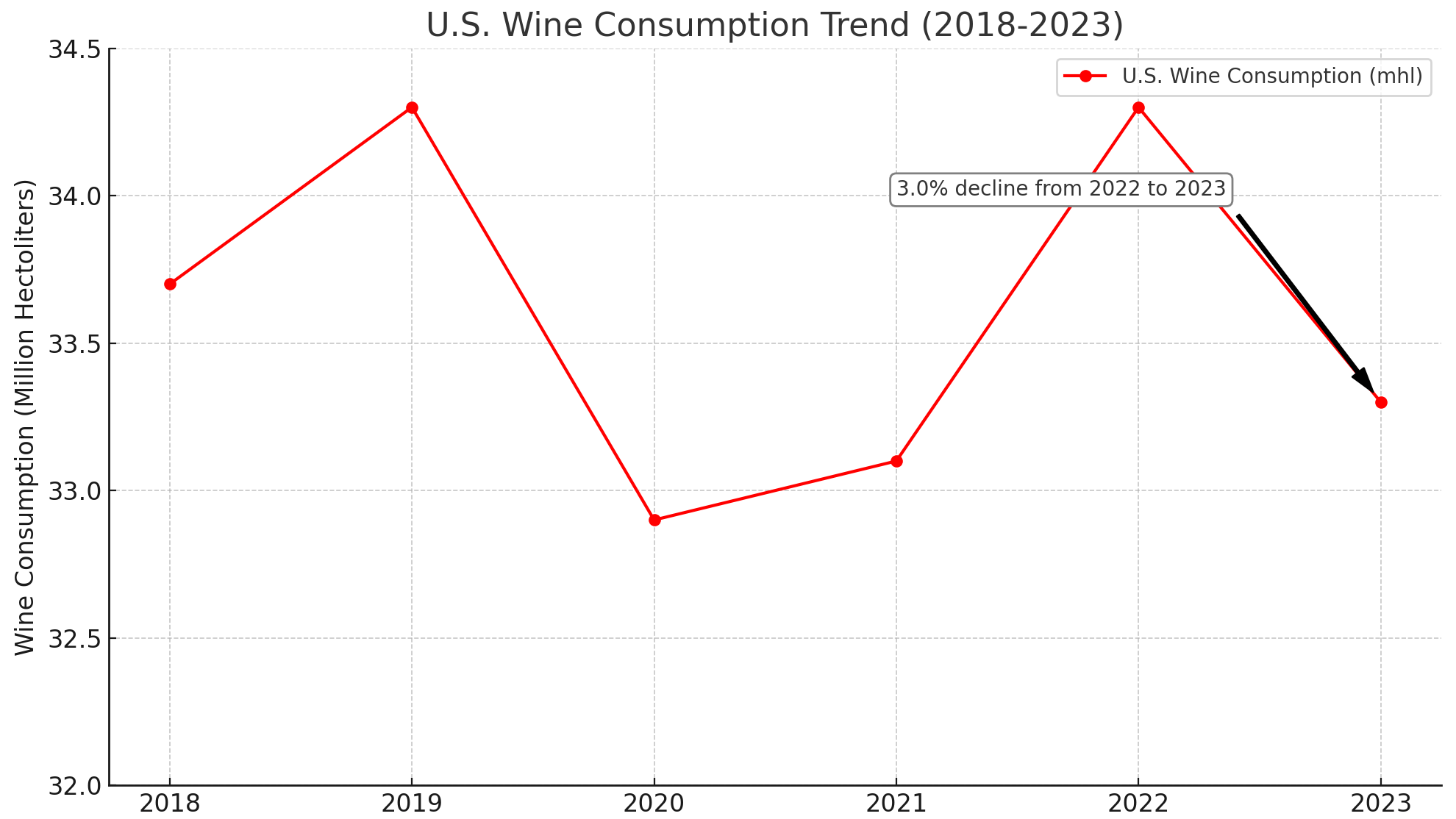
The United States remains the world’s largest wine market. In 2024, Americans drank an estimated 3.33 billion litres (33.3 mhl) of wine — but the U.S. has not escaped the global slowdown, with consumption falling 5.8% from 2023. Even so, the country drinks far more wine in total than any other, and its wine culture remains deeply embedded.
France: A Steady Love Affair with Wine
France Wine Consumption Trend
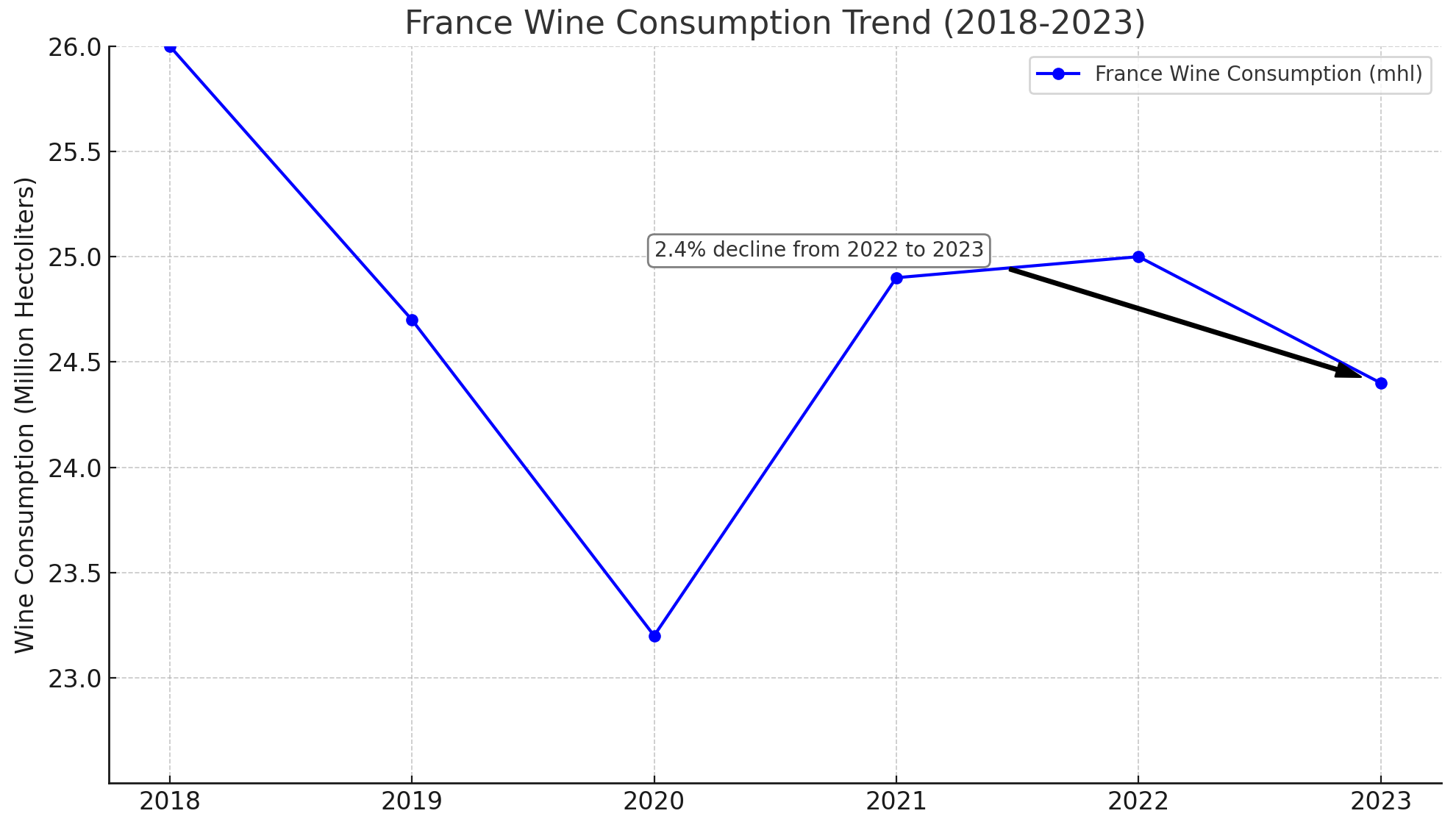
France, with its historic wine regions and long-standing traditions, is the largest consumer in Europe and second worldwide. In 2024 the French drank about 2.30 billion litres (23.0 mhl), a 3.6% decline from 2023 that continues a long, gradual fall in domestic wine drinking — a striking shift in a country once synonymous with wine at every table.
Italy: A Decline in Consumption
Italy Wine Consumption Trend
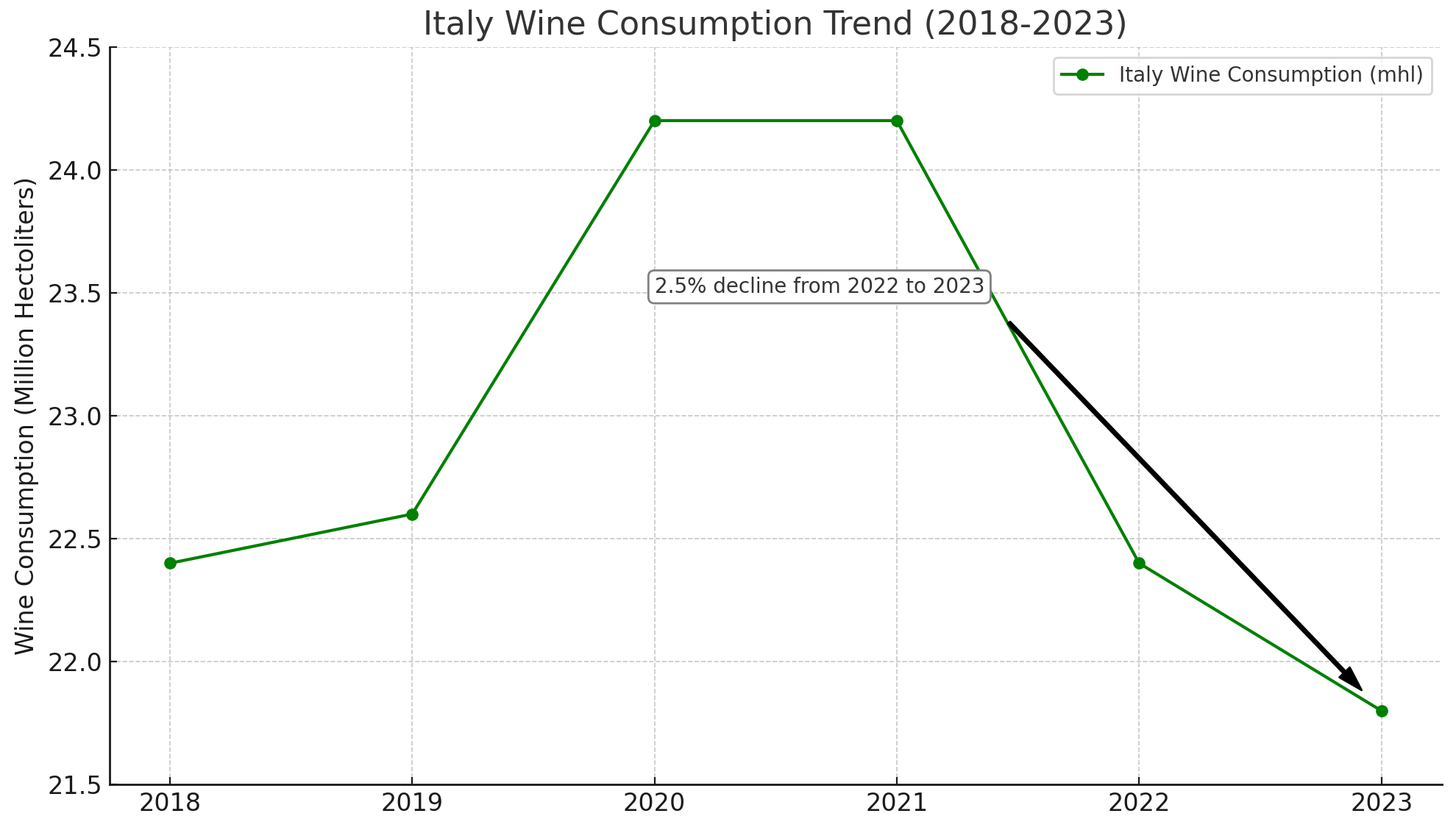
Italy, the EU’s second-largest market and third globally, held broadly steady in 2024 at around 2.23 billion litres (22.3 mhl) — essentially flat (+0.1%) versus 2023. After years of gentle decline, Italian consumption has stabilised, even as younger Italians drink less than previous generations.
Germany: A Consistent Decline
Germany Wine Consumption Trend
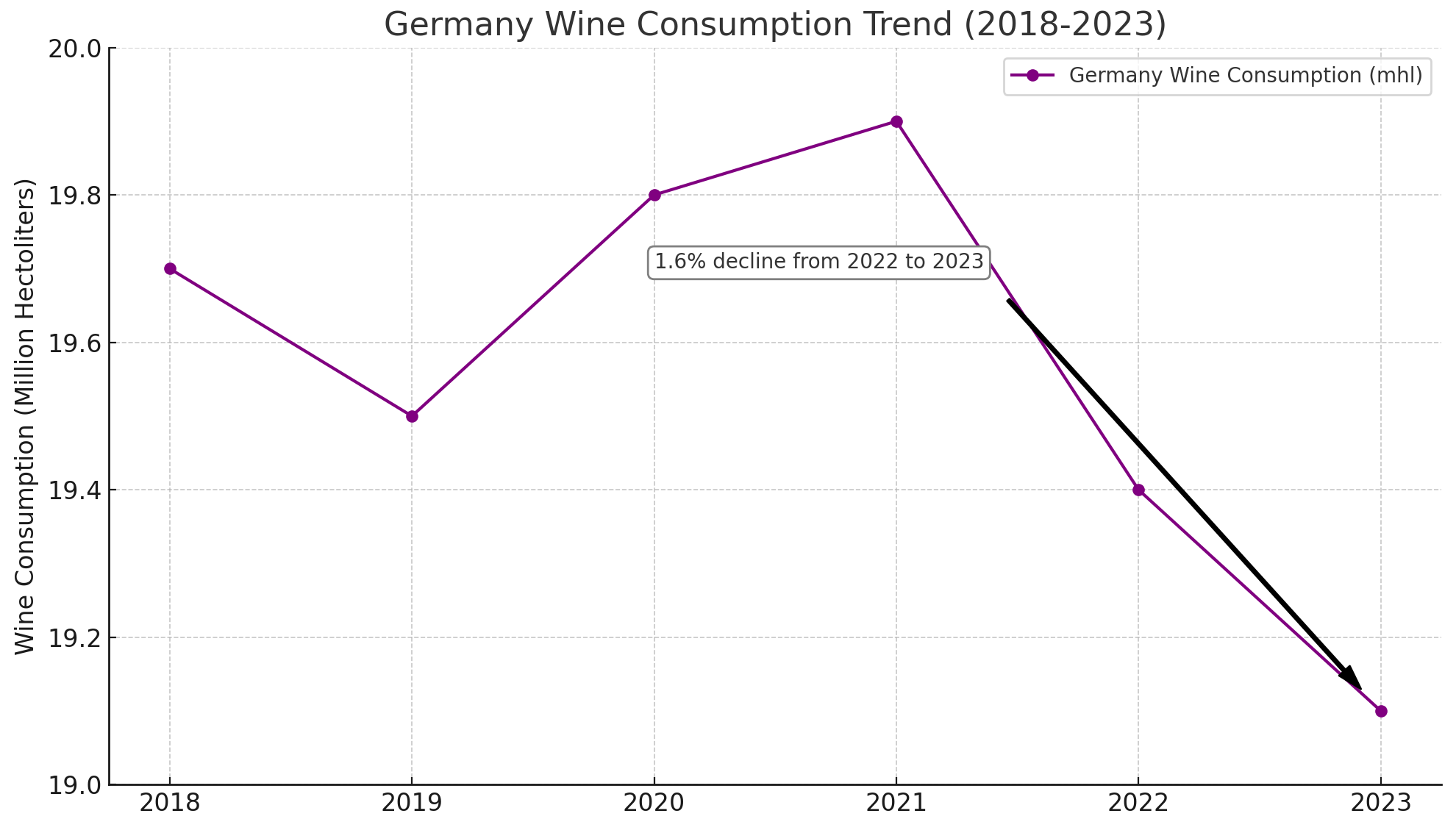
Germany remains one of the world’s biggest wine markets but continues its slow decline. In 2024 Germans drank an estimated 1.78 billion litres (17.8 mhl), down 3.0% on the year. Rising prices and changing tastes — including growth in no- and low-alcohol options — are weighing on demand.
United Kingdom: Continued Decline Post-Pandemic
UK Wine Consumption Trend
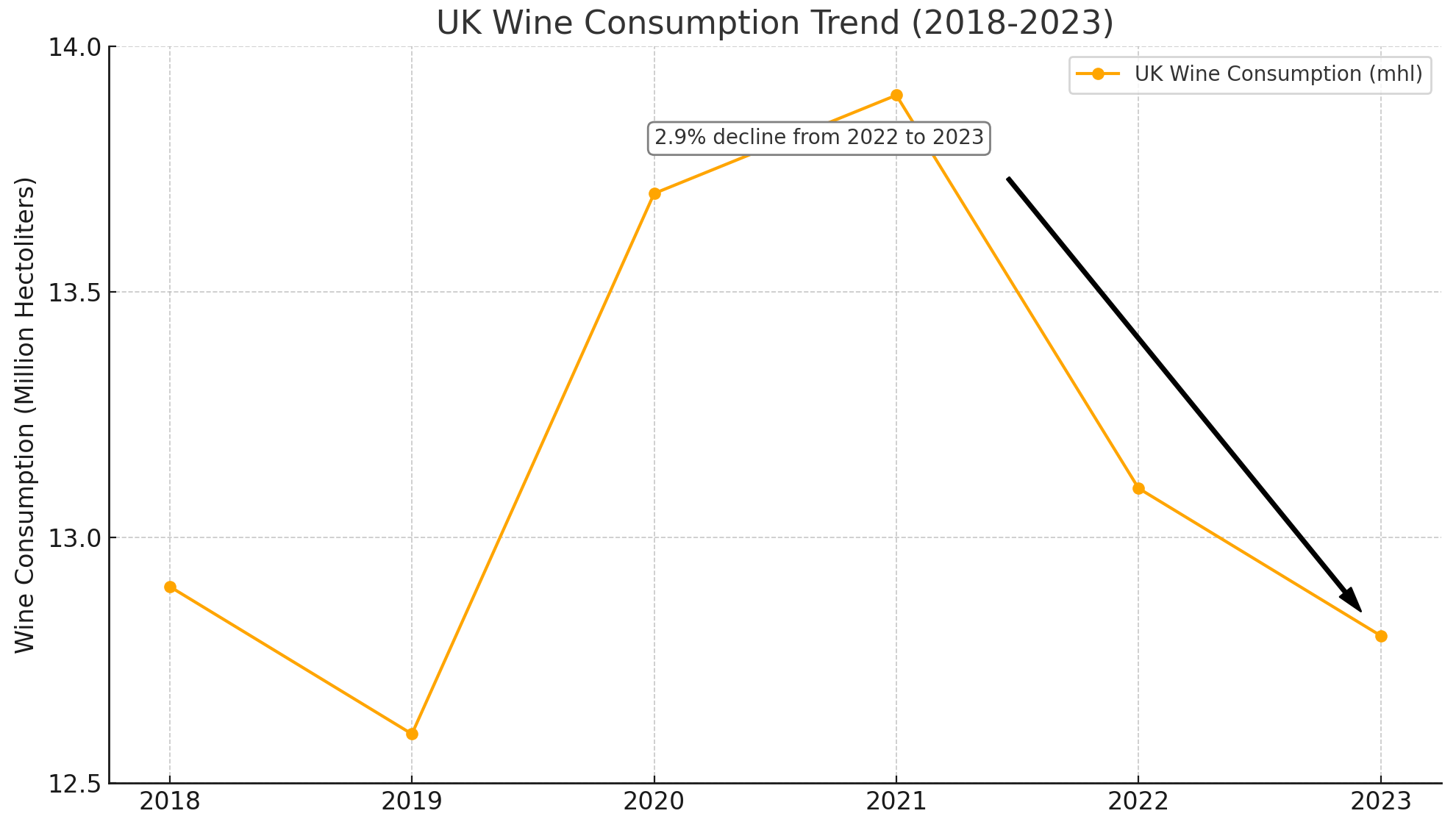
The United Kingdom drank about 1.26 billion litres (12.6 mhl) of wine in 2024, a 1% dip from 2023. Consumption has drifted down from its pandemic-era peak as shoppers cut back on alcohol and trade between drink categories.
Countries with Notable Changes
China: A Dramatic Drop
China Wine Consumption Trend
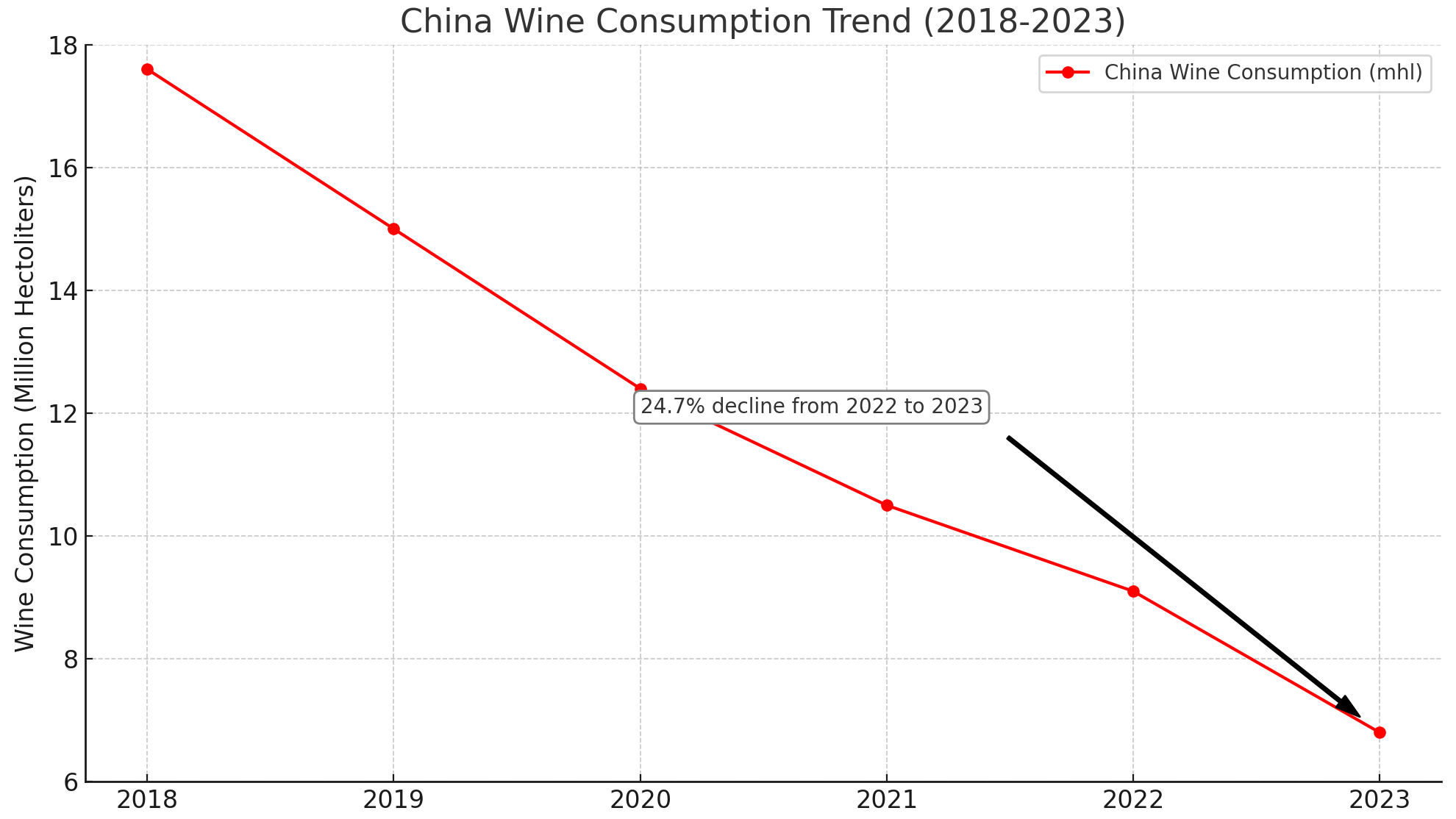
China has seen one of the most dramatic reversals in the wine world. Once a fast-growing market, Chinese consumption has collapsed — falling another 19.3% in 2024 to just 550 million litres (5.5 mhl), pushing the country down to tenth place globally with barely 2.6% of world consumption. Economic headwinds, anti-extravagance norms and changing drinking culture have all played a part.
Portugal: A Steep Decline
Portugal Wine Consumption Trend
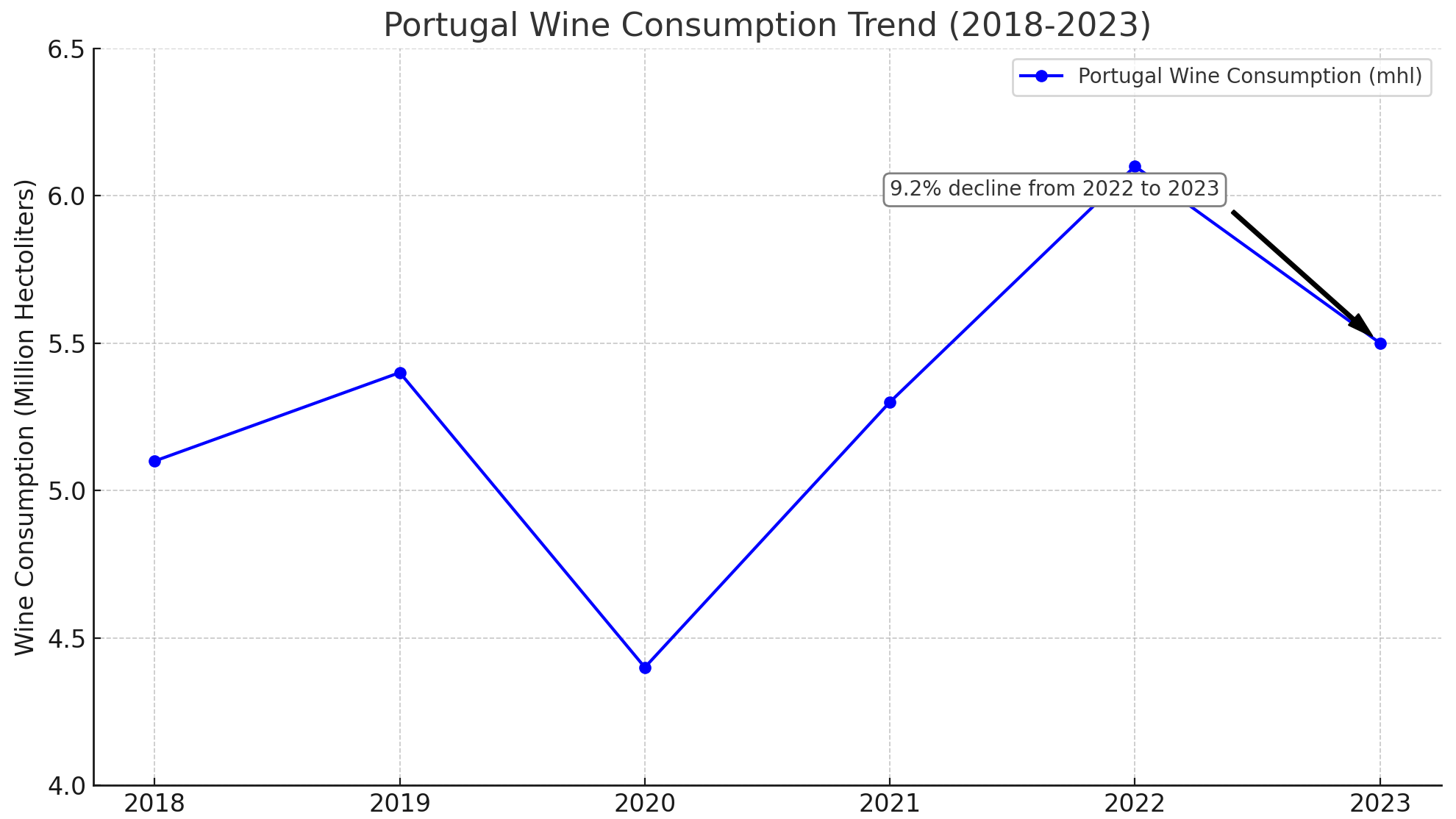
Portugal, a small country with a deep wine tradition, bucked the trend slightly in 2024 with a modest increase of about 0.5%, to roughly 540 million litres (5.4 mhl). It remains one of the highest per-capita wine-drinking nations on Earth.
South Africa: Stable but Subdued
South Africa Wine Consumption Trend
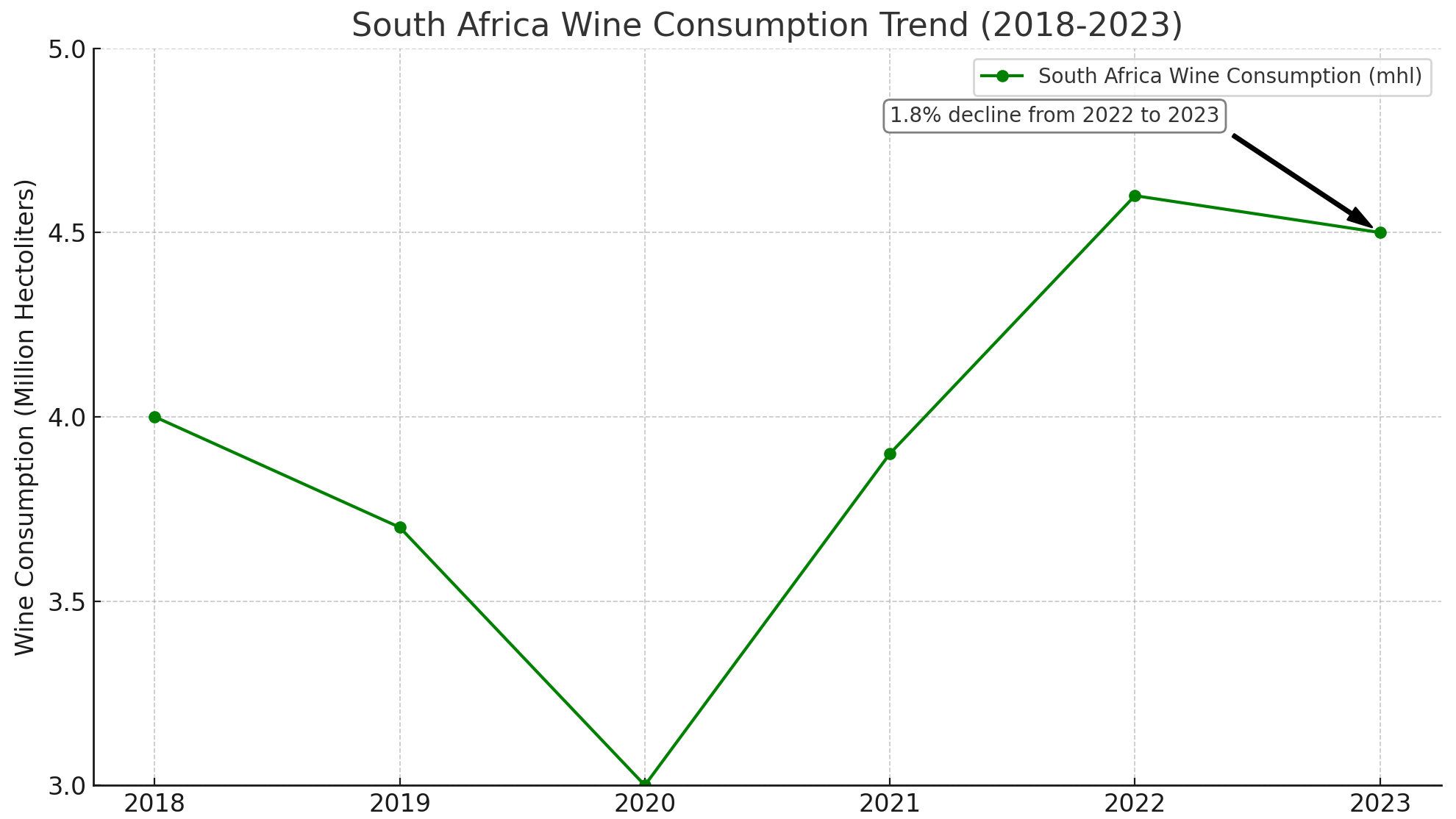
South Africa’s consumption has stayed relatively stable, at around 400 million litres (4.0 mhl). As a major producer with a strong domestic wine culture, it has been somewhat insulated from the sharper declines seen elsewhere.
Brazil: An Impressive Increase
Brazil Wine Consumption Trend
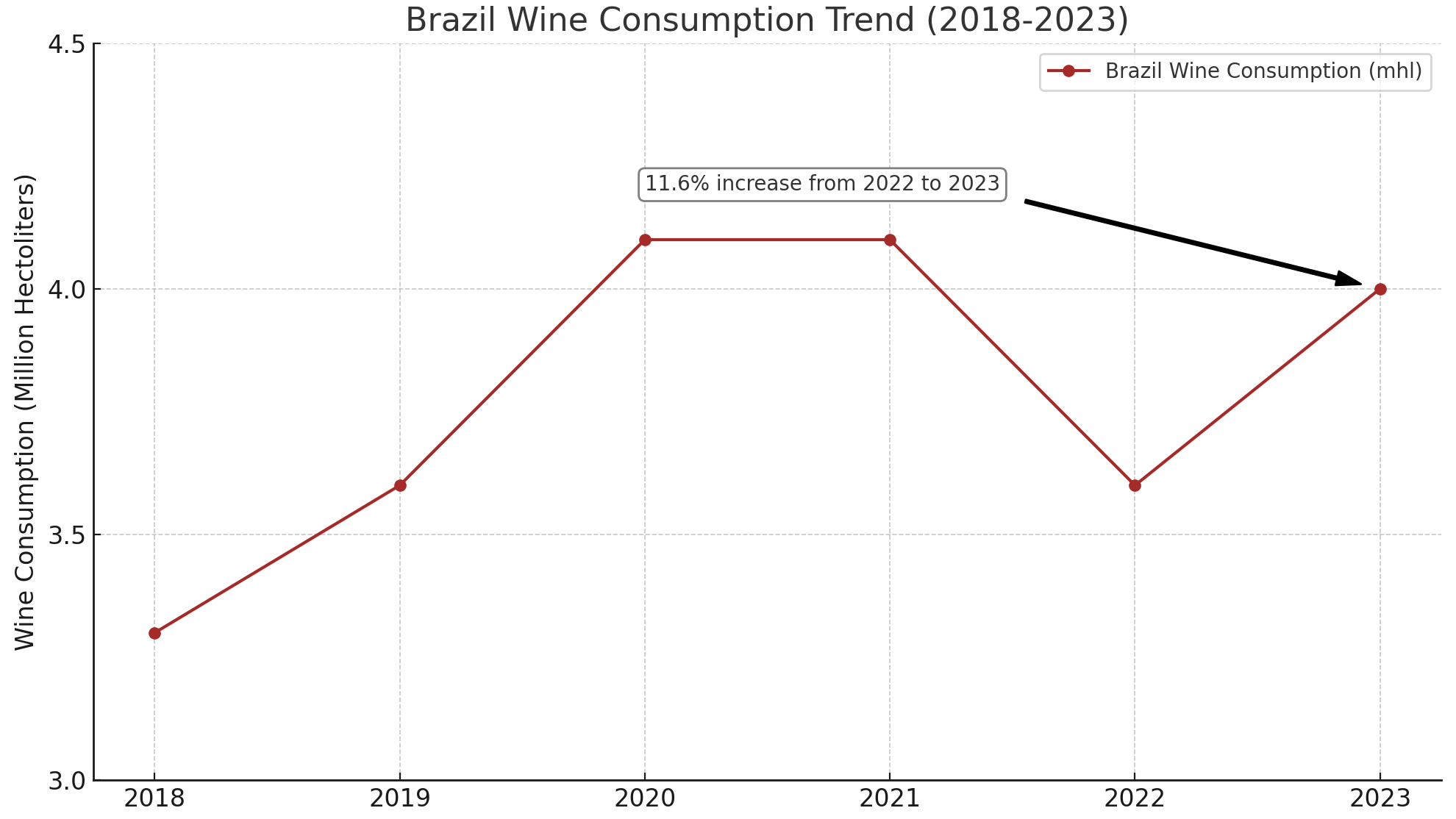
Brazil is one of the few markets still growing. Although total consumption is modest at roughly 360 million litres (3.6 mhl), a rising middle class and growing interest in wine as a lifestyle choice continue to lift demand, making Brazil one of the more promising emerging markets.
Japan: Steady Growth
Japan Wine Consumption Trend
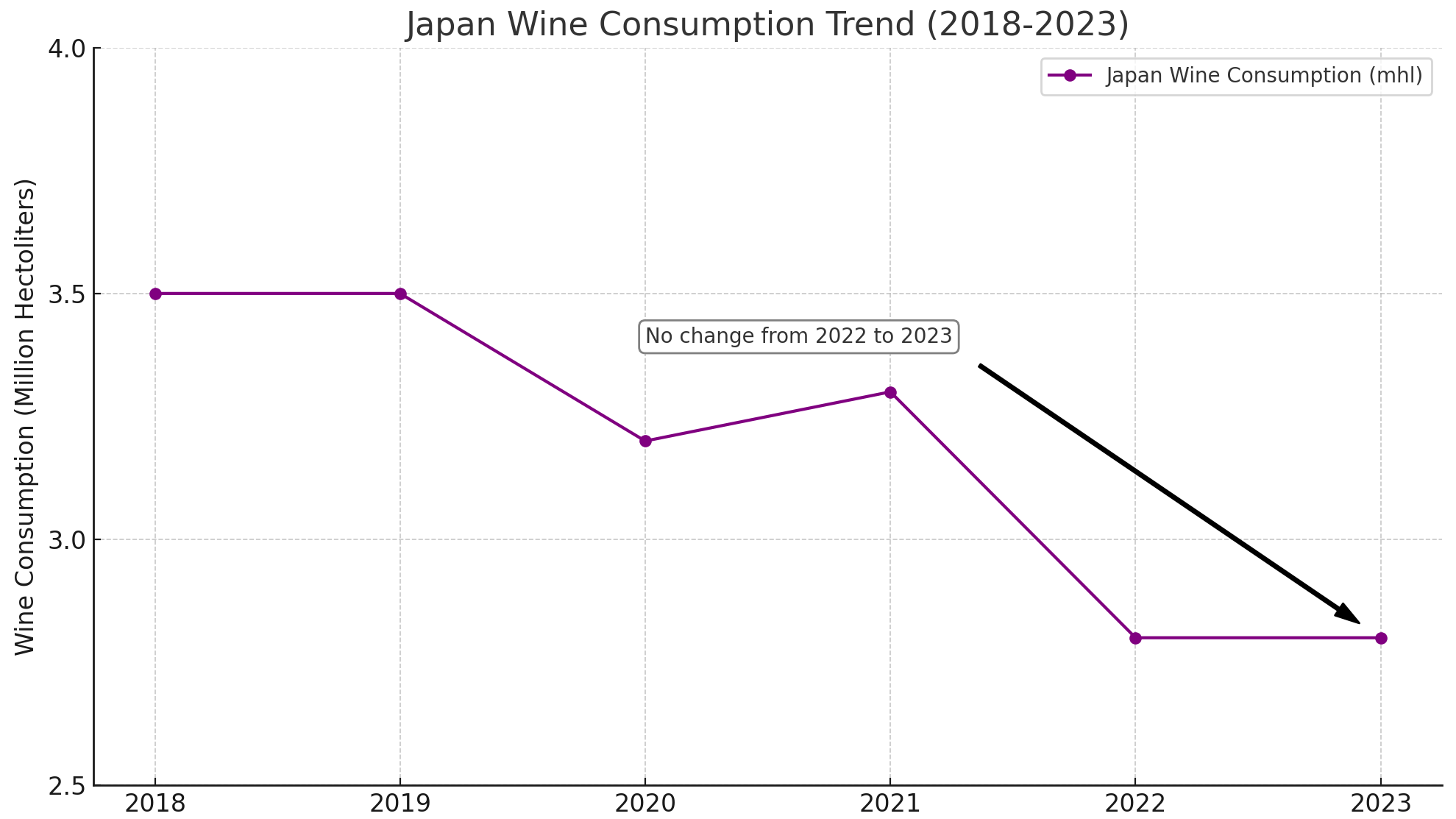
Japan’s wine consumption has held broadly steady at around 350 million litres (3.5 mhl), supported by interest among younger, urban drinkers. It remains one of Asia’s more resilient wine markets even as China contracts.
Conclusion: What’s Driving the Trends?
Wine consumption is shaped by a complex mix of cultural, economic and social forces. The traditional heartlands — the U.S., France, Italy and Germany — still dominate the rankings, but most are drinking a little less each year. China’s steep retreat and Argentina’s slide to its lowest level since 1942 stand out on the downside, while Brazil, Japan and Russia (up 2.4% to 8.1 mhl in 2024) offer pockets of growth.
The record-low global total is the product of overlapping pressures: inflation squeezing discretionary spending, rising health consciousness, and younger consumers drinking less alcohol overall. Competition from craft beer, spirits, ready-to-drink cocktails and fast-growing no- and low-alcohol options is eating further into wine’s share.
What happens next will hinge on whether emerging markets such as Brazil keep growing fast enough to offset the long decline in mature ones — and whether producers can win over a new generation of drinkers. For now, one thing is clear from the 2024 data: the world is drinking less wine than at any point in over six decades.


All original maps and graphics on this page are © Mappr, free to use under a Creative Commons Attribution–ShareAlike licence (CC BY-SA): use them anywhere, including commercially, as long as you credit Mappr with a link back to Mappr.co. Exception: maps credited to third-party cartographers (for example © Rainer Lesniewski/Shutterstock, noted in the caption) are licensed for display on Mappr only and are not covered by this licence — they may not be downloaded or reused.
- Global Wine Consumption Decline — © Mappr
- Two women drinking white wine with the US flag in the background. — © Igor Vetushko/Depositphotos
- Usa Wine Consumption Trend — © Mappr
- France Wine Exhibition — © ifeelstock/Depositphotos
- France Wine Consumption Trend — © Mappr
- Italy Wine Consumption Trend — © Mappr
- Germany Wine Consumption Trend — © Mappr
- Uk Wine Consumption Trend — © Mappr
- China Wine Consumption Trend — © Mappr
- Portugal Wine Consumption Trend — © Mappr
- South Africa Wine Consumption Trend — © Mappr
- Brazil Wine Consumption Trend — © Mappr
- Japan Wine Consumption Trend — © Mappr