Key Takeaways
- There's a new tallest church on Earth. Barcelona's Sagrada Família has reached 172.5 m (566 ft) with its new central Tower of Jesus Christ, making it the tallest church in the world.
- Blessed by the Pope on the Gaudí centenary. The crowning tower is being inaugurated on 10 June 2026 — exactly 100 years after the death of the basilica's architect, Antoni Gaudí.
- It dethroned a 136-year German record. Ulm Minster in Germany had been the world's tallest church since 1890 at 161.5 m. Germany still has more churches in the top 15 than any other country.
- Almost all of them are in Europe. The only non-European church in the top tier is the vast Basilica of Our Lady of Peace in Yamoussoukro, Côte d'Ivoire (158 m).
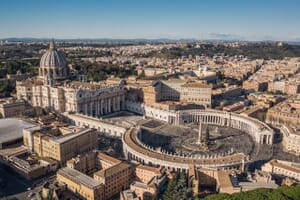
- Height means spires, not just roofs. These rankings measure a church's tallest point — usually a spire or tower — which is why soaring Gothic cathedrals beat wider, dome-topped basilicas like St. Peter's.
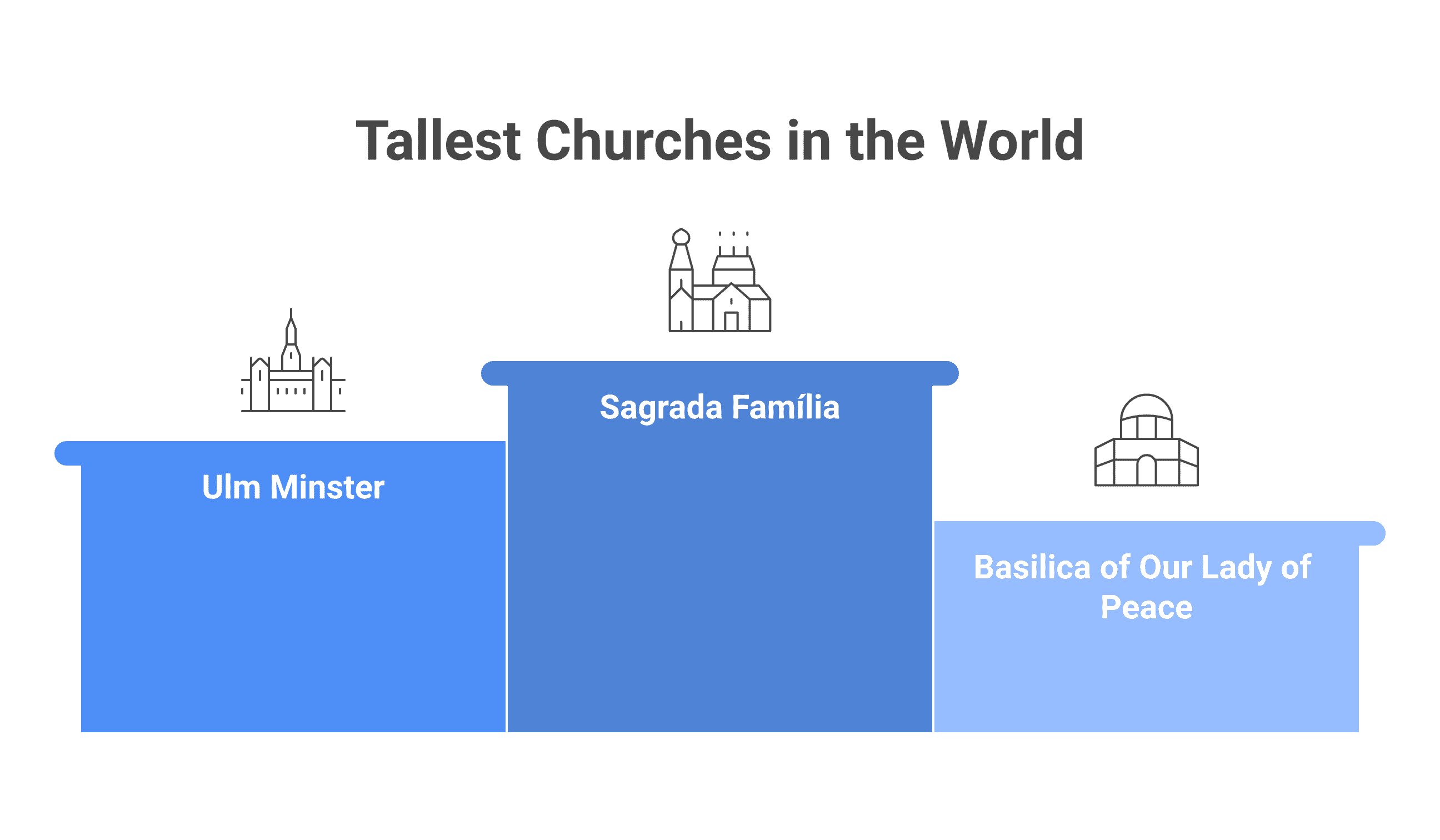
For 136 years, the title of the world’s tallest church belonged to a single Gothic tower in southern Germany. That has just changed. With the completion of its central Tower of Jesus Christ, Barcelona’s Sagrada Família has risen to 172.5 metres (566 feet) — overtaking Germany’s Ulm Minster to become the tallest church on the planet.
The crowning tower is set to be inaugurated and blessed by the Pope on 10 June 2026 — exactly a century after the death of the basilica’s visionary architect, Antoni Gaudí, who died on that day in 1926. To mark the moment, we’ve mapped and ranked the tallest churches in the world — a list that, as you’ll see, is overwhelmingly European and remarkably German.
Ranked
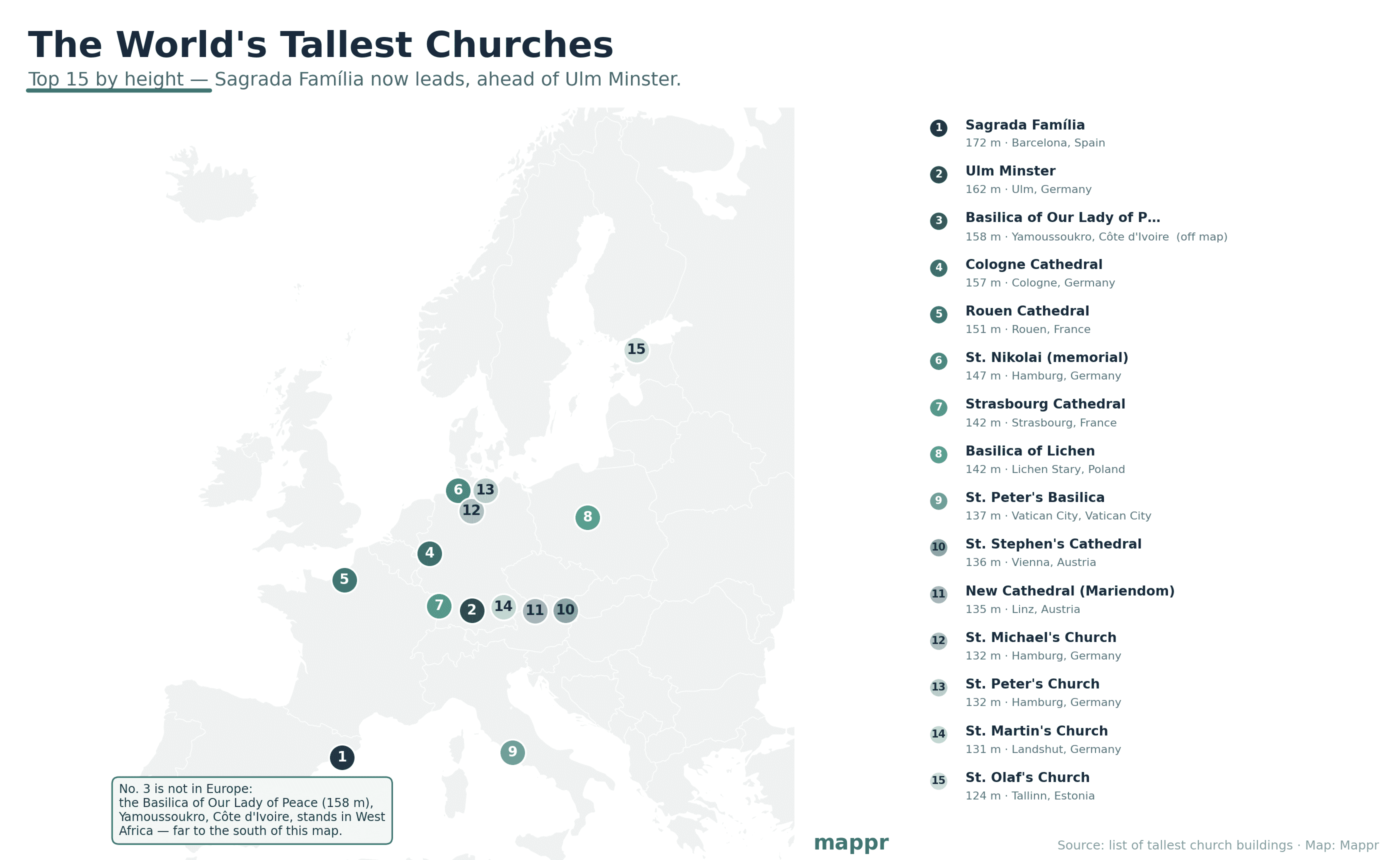
The 15 Tallest Churches in the World
By architectural height (tallest spire, tower or pinnacle). Heights in metres.
| Church | Height | Completed | Location |
|---|---|---|---|
| Sagrada Família | 172.5 m | 2026 | Barcelona, Spain |
| Ulm Minster | 161.5 m | 1890 | Ulm, Germany |
| Basilica of Our Lady of Peace | 158.0 m | 1989 | Yamoussoukro, Côte d'Ivoire |
| Cologne Cathedral | 157.4 m | 1880 | Cologne, Germany |
| Rouen Cathedral | 151.0 m | 1876 | Rouen, France |
| St. Nikolai (memorial) | 147.3 m | 1874 | Hamburg, Germany |
| Strasbourg Cathedral | 142.0 m | 1439 | Strasbourg, France |
| Basilica of Lichen | 141.5 m | 2004 | Lichen Stary, Poland |
| St. Peter's Basilica | 136.6 m | 1626 | Vatican City, Vatican City |
| St. Stephen's Cathedral | 136.4 m | 1433 | Vienna, Austria |
| New Cathedral (Mariendom) | 134.8 m | 1924 | Linz, Austria |
| St. Michael's Church | 132.0 m | 1786 | Hamburg, Germany |
| St. Peter's Church | 132.0 m | 1878 | Hamburg, Germany |
| St. Martin's Church | 130.6 m | 1500 | Landshut, Germany |
| St. Olaf's Church | 123.7 m | 1500 | Tallinn, Estonia |
⛪ A new world champion: the Sagrada Família
Begun in 1882 and still unfinished, Gaudí’s basilica has spent its whole life as a building site — and it is precisely the long-delayed central tower that has now pushed it to the top. The Tower of Jesus Christ is crowned by a giant illuminated cross, bringing the total height to 172.5 m. Gaudí deliberately kept it just under the 173 m of Barcelona’s Montjuïc hill, believing his work should not rise higher than God’s. Its completion on the centenary of his death — he was killed by a tram in June 1926 — gives the milestone a poetic weight.
The record it broke: Ulm Minster
The church Barcelona overtook is Ulm Minster in Germany — a Lutheran church whose single openwork spire reaches 161.5 m. Completed in 1890 (centuries after it was begun), it had been the tallest church in the world ever since, and visitors can still climb 768 steps to a viewing gallery near the top. Its loss of the record after 136 years is the headline change, but the rest of the top of the list has been stable for over a century.
Why so many of the tallest churches are German
Look at the map and one pattern jumps out: Germany dominates, with six of the fifteen tallest churches, including three in the single city of Hamburg. There are a few reasons. The Rhineland and northern Germany were the heartland of high Gothic and, later, of the 19th-century “cathedral-completion” movement, when wealthy industrial cities raced to finish or out-build medieval towers as symbols of civic and national pride — Cologne and Ulm were both topped out in the 1880s–90s. France (Rouen, Strasbourg) and the old Habsburg lands (Vienna, Linz) account for most of the rest.
The outlier: a basilica in West Africa
The one entry that breaks the European pattern is striking. The Basilica of Our Lady of Peace in Yamoussoukro, the political capital of Côte d’Ivoire, stands 158 m tall — the third-tallest church on Earth and, by floor area, often cited as the largest church in the world. Modelled on St. Peter’s in Rome and completed in 1989, it was built on the orders of the country’s first president in his home village, and dwarfs the small town around it.
A closer look at all 15
From a still-rising Modernist masterpiece to a medieval brick tower and a Cold-War basilica in West Africa, here is every church in the top 15 — its height, architectural style, year of completion and the story that makes it worth a look.
1. 🇪🇸 Sagrada Família — 172 m
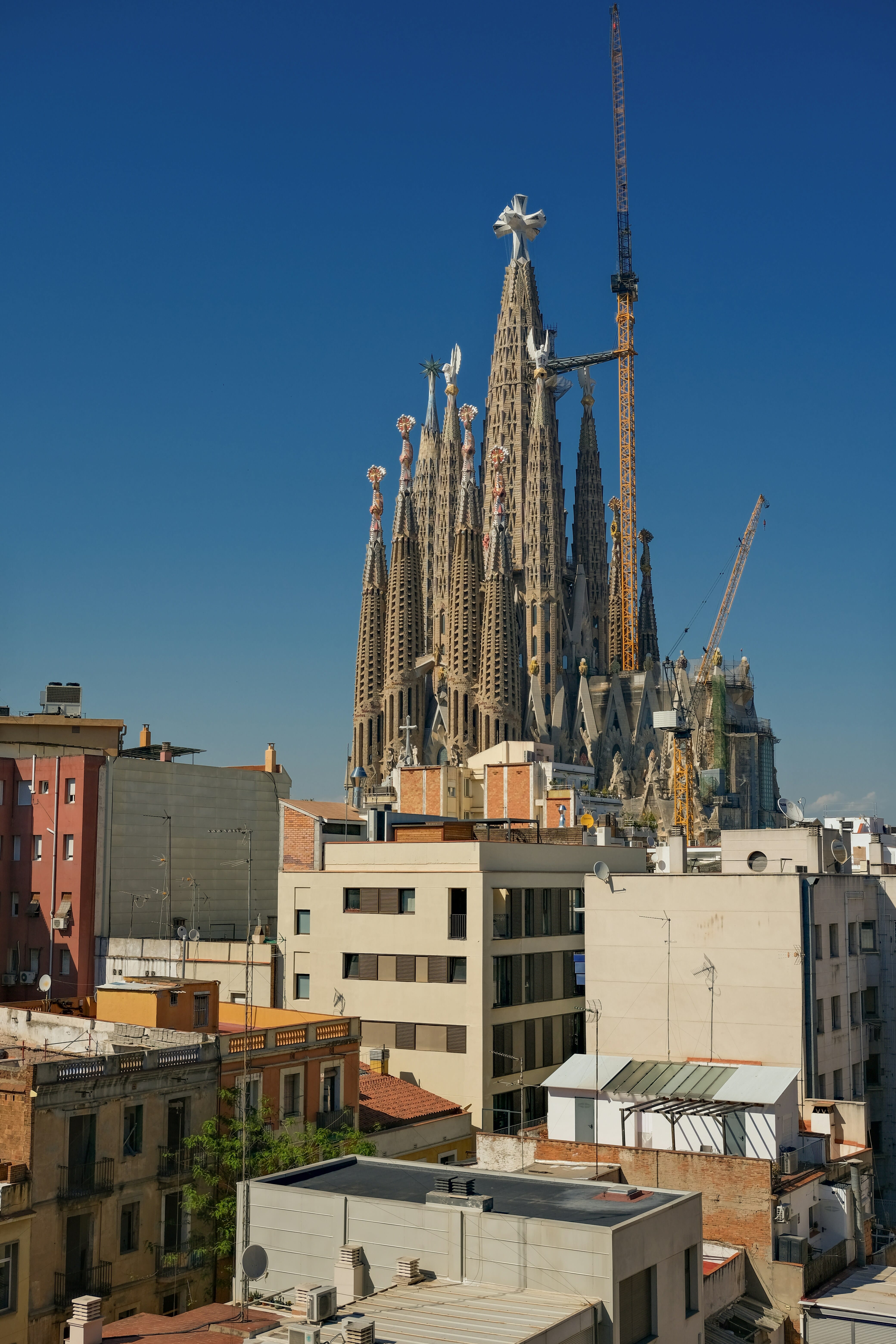
Barcelona, Spain · 172.5 m (566 ft) · Modernisme (Catalan Art Nouveau) · completed 2026. Gaudí’s basilica has been under construction since 1882 and is still unfinished. He is buried in its crypt, and he set its height just below Barcelona’s Montjuïc hill so it would not rise above God’s own work.
2. 🇩🇪 Ulm Minster — 162 m
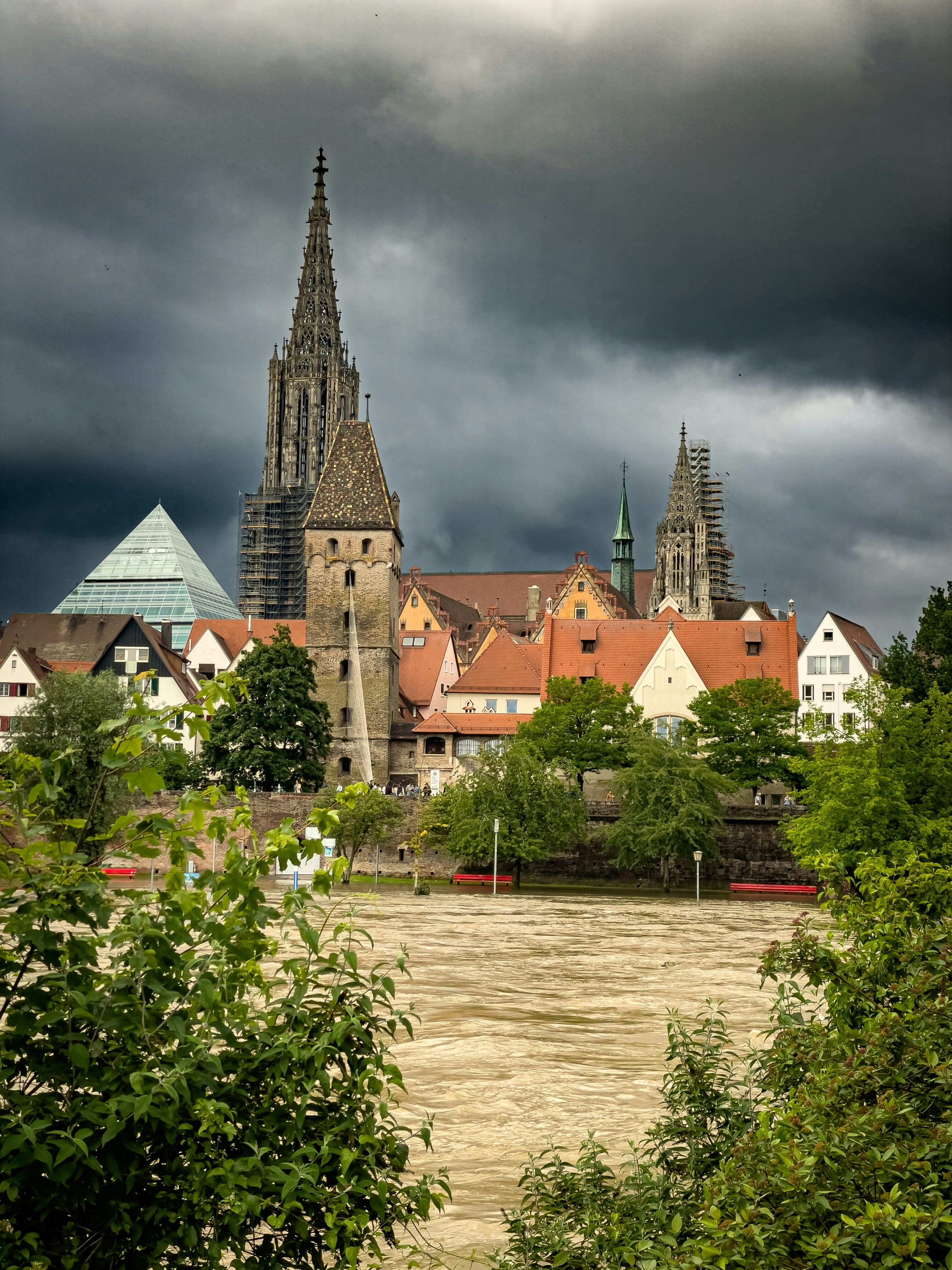
Ulm, Germany · 161.5 m (530 ft) · Gothic · completed 1890. Ulm Minster held the title of world’s tallest church for 136 years. It is the largest Lutheran church in the world, and the brave can climb 768 steps to a gallery near the top of its lacy openwork spire.
3. 🇨🇮 Basilica of Our Lady of Peace — 158 m
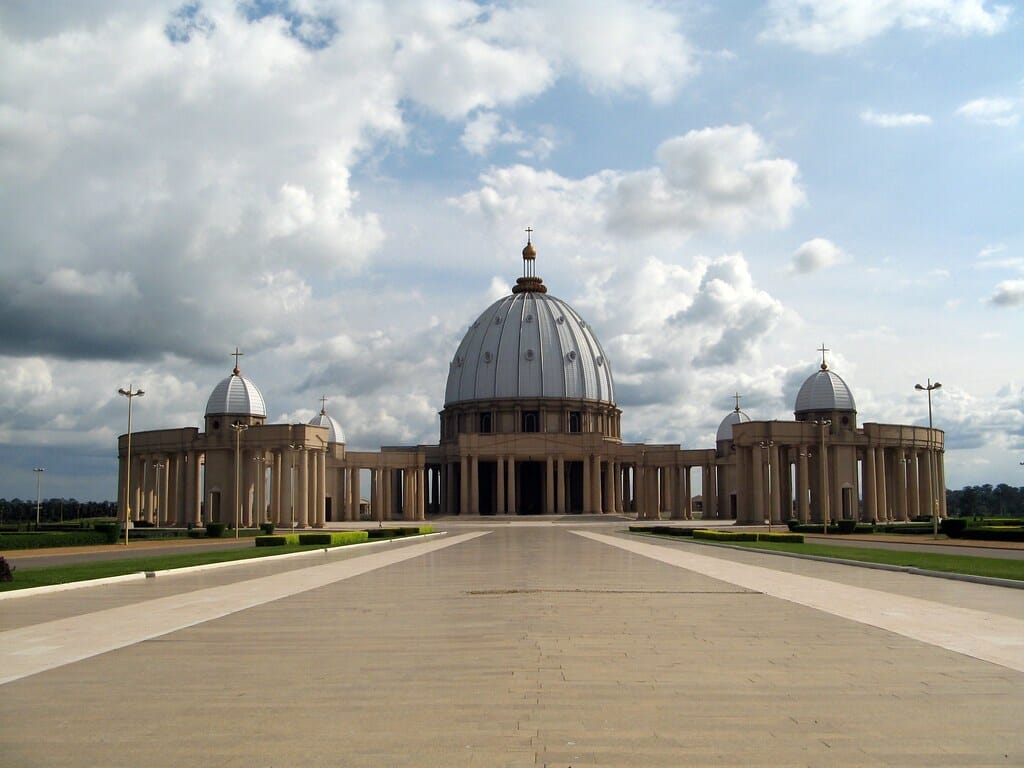
Yamoussoukro, Côte d’Ivoire · 158.0 m (518 ft) · Neoclassical / Renaissance Revival · completed 1989. Modelled on St. Peter’s in Rome, this basilica in the political capital of Côte d’Ivoire is the largest church in the world by floor area. It was built in just three years on the orders of the country’s first president and consecrated by Pope John Paul II in 1990.
4. 🇩🇪 Cologne Cathedral — 157 m
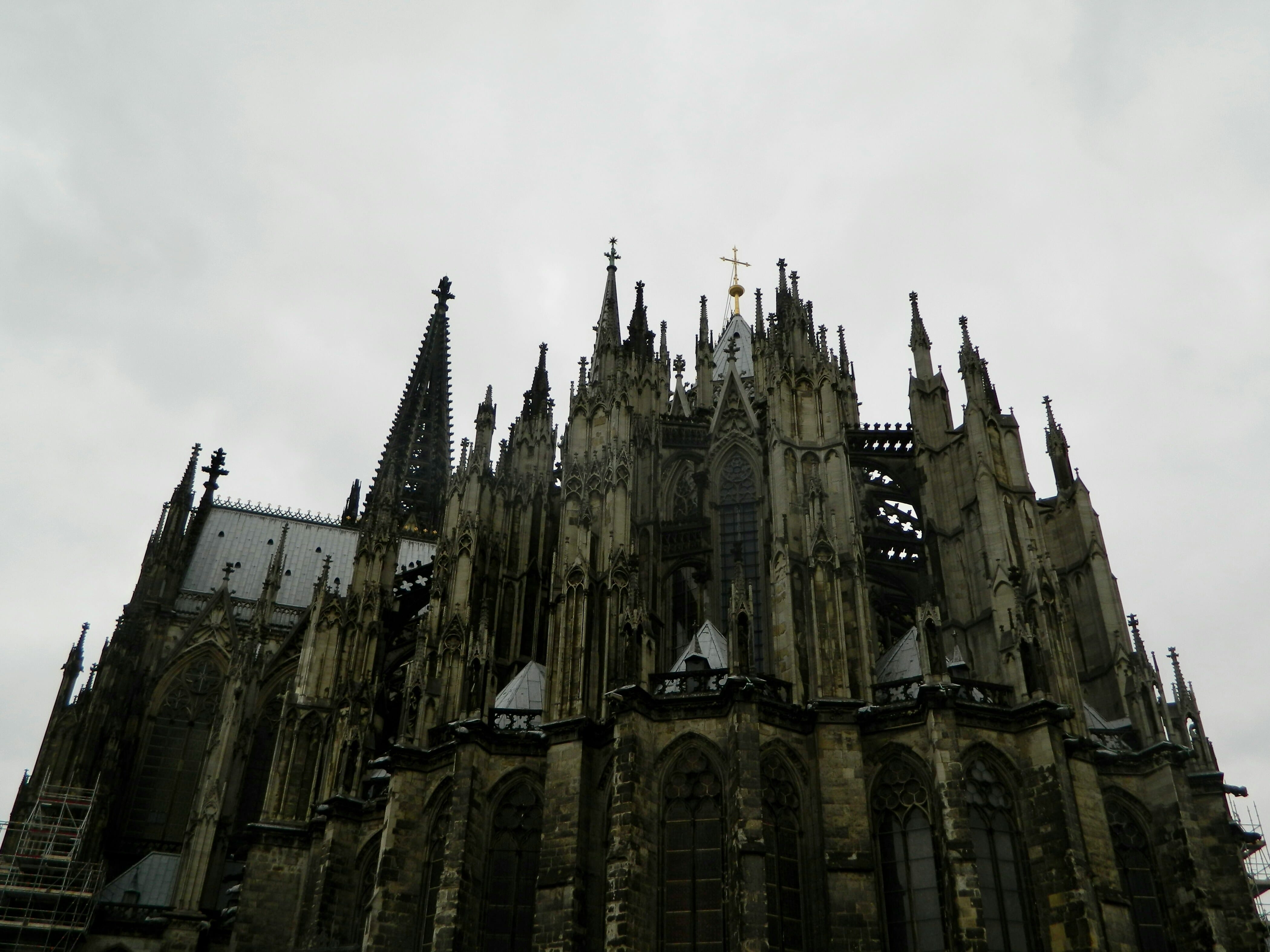
Cologne, Germany · 157.4 m (516 ft) · High Gothic · completed 1880. Cologne Cathedral took an astonishing 632 years to build (1248–1880), and was briefly the tallest building in the world. Its twin spires survived the WWII bombing that flattened the city around it, and it guards the golden Shrine of the Three Kings.
5. 🇫🇷 Rouen Cathedral — 151 m
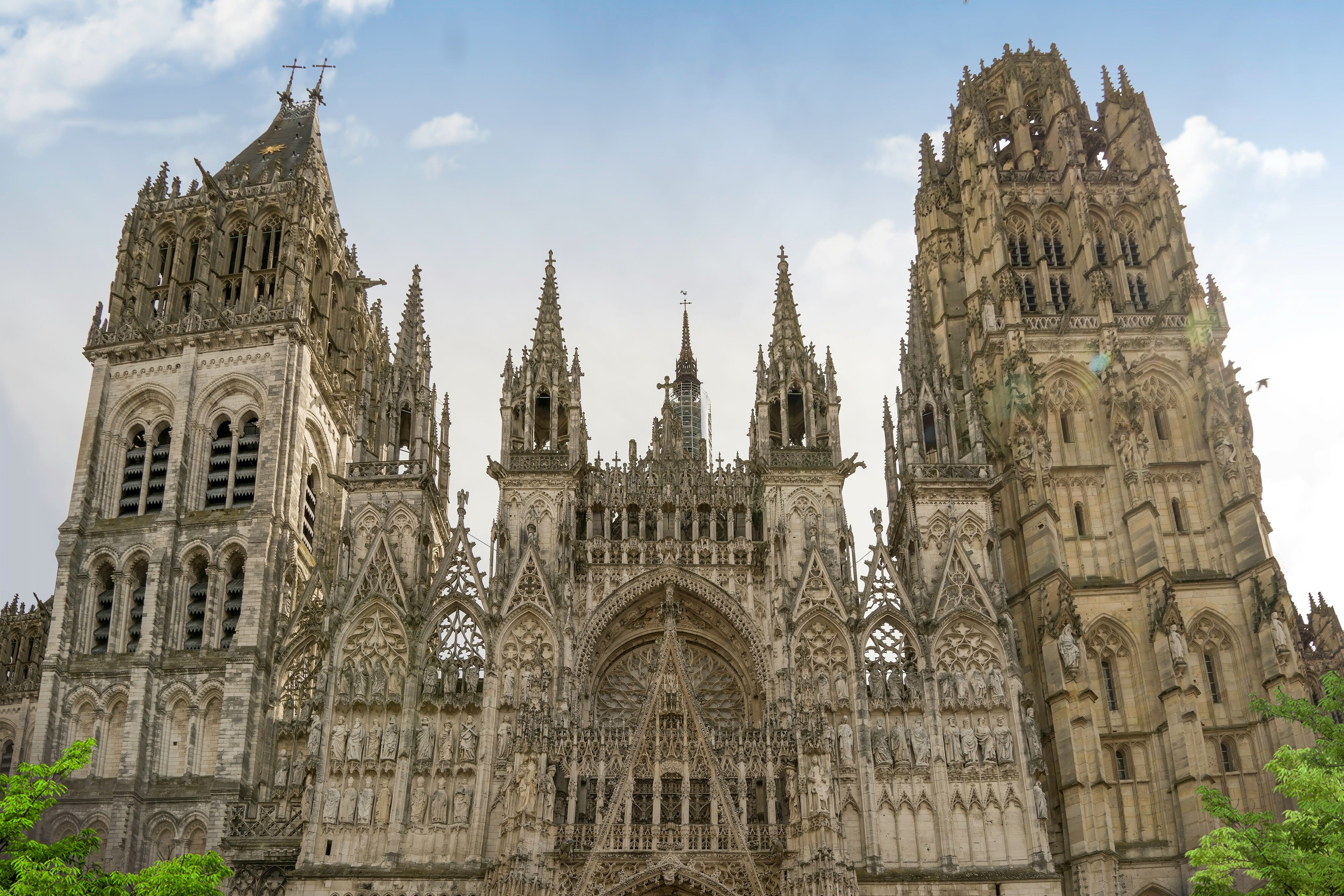
Rouen, France · 151.0 m (495 ft) · Gothic · completed 1876. With its slender cast-iron spire, Rouen Cathedral was the tallest building in the world from 1876 to 1880. Claude Monet was so obsessed with its façade that he painted it more than thirty times in different light.
6. 🇩🇪 St. Nikolai (memorial) — 147 m
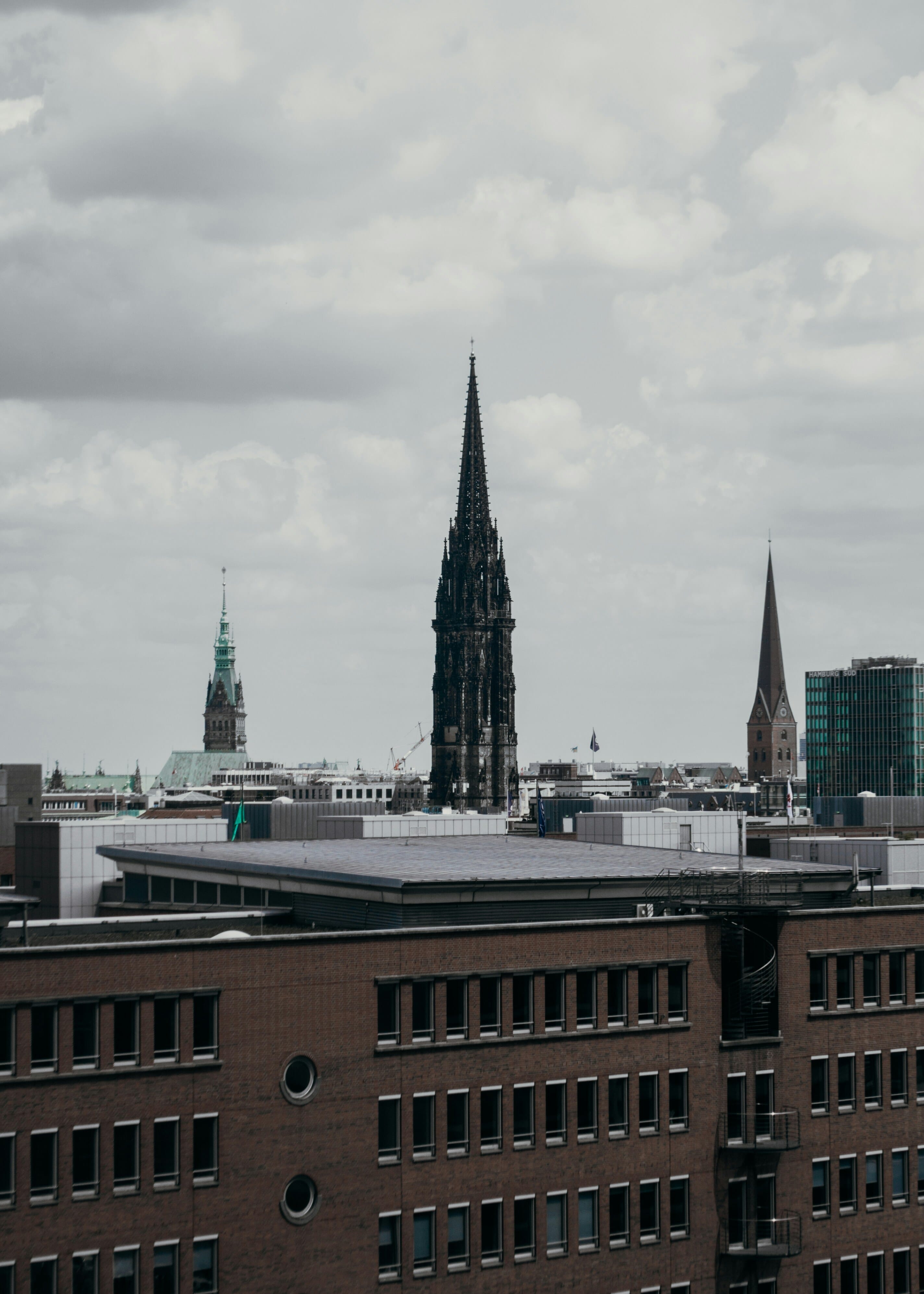
Hamburg, Germany · 147.3 m (483 ft) · Gothic Revival · completed 1874. St. Nikolai was itself the world’s tallest building from 1874 to 1876. Gutted by Allied bombing in 1943, it was never rebuilt — today only its soaring spire survives, kept as a stark memorial to the victims of war.
7. 🇫🇷 Strasbourg Cathedral — 142 m
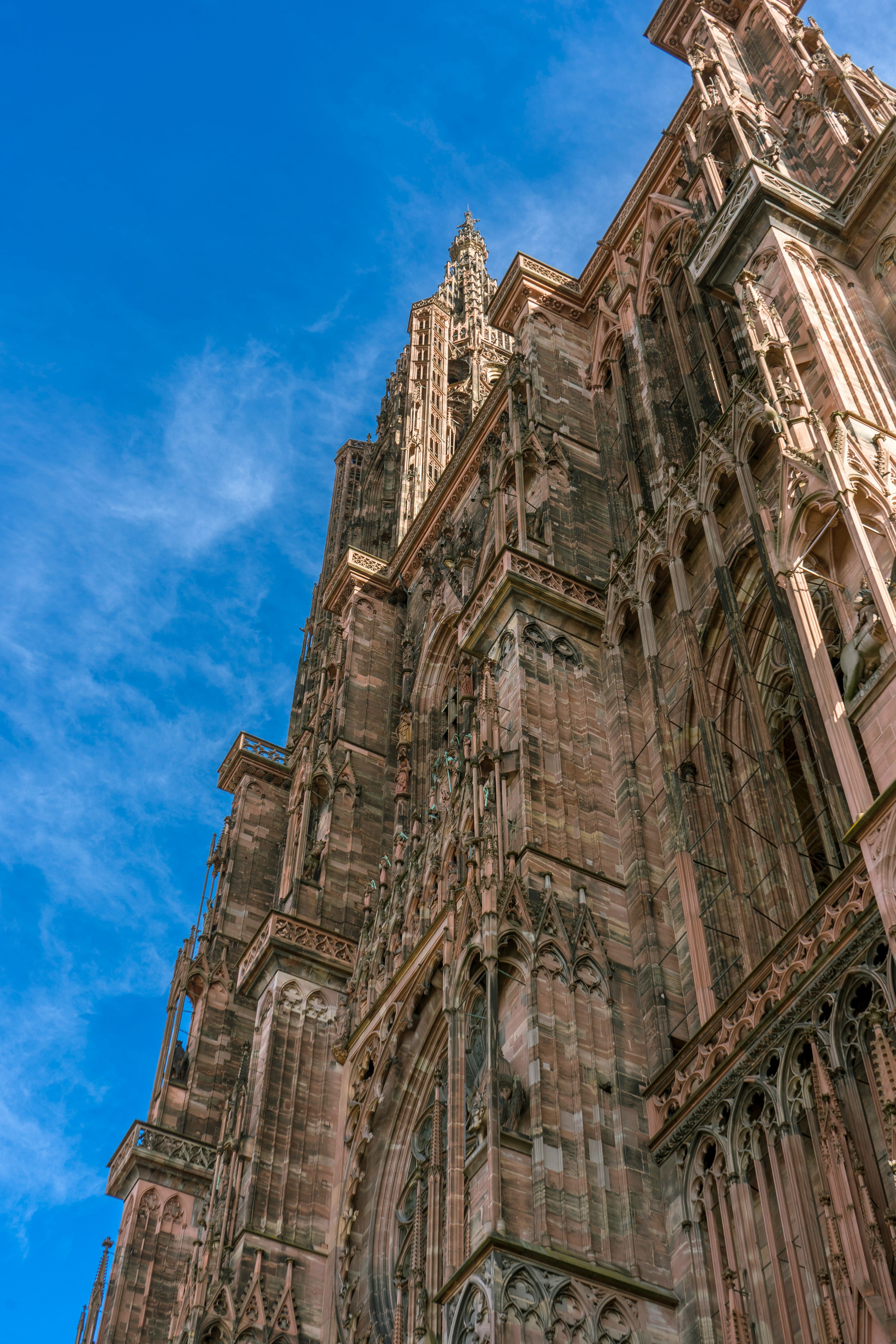
Strasbourg, France · 142.0 m (466 ft) · Rayonnant Gothic · completed 1439. Built of pink Vosges sandstone, Strasbourg Cathedral was the tallest building on Earth for an extraordinary 227 years (1647–1874). Victor Hugo called it a ‘gigantic and delicate marvel’; inside ticks a famous Renaissance astronomical clock.
8. 🇵🇱 Basilica of Lichen — 142 m
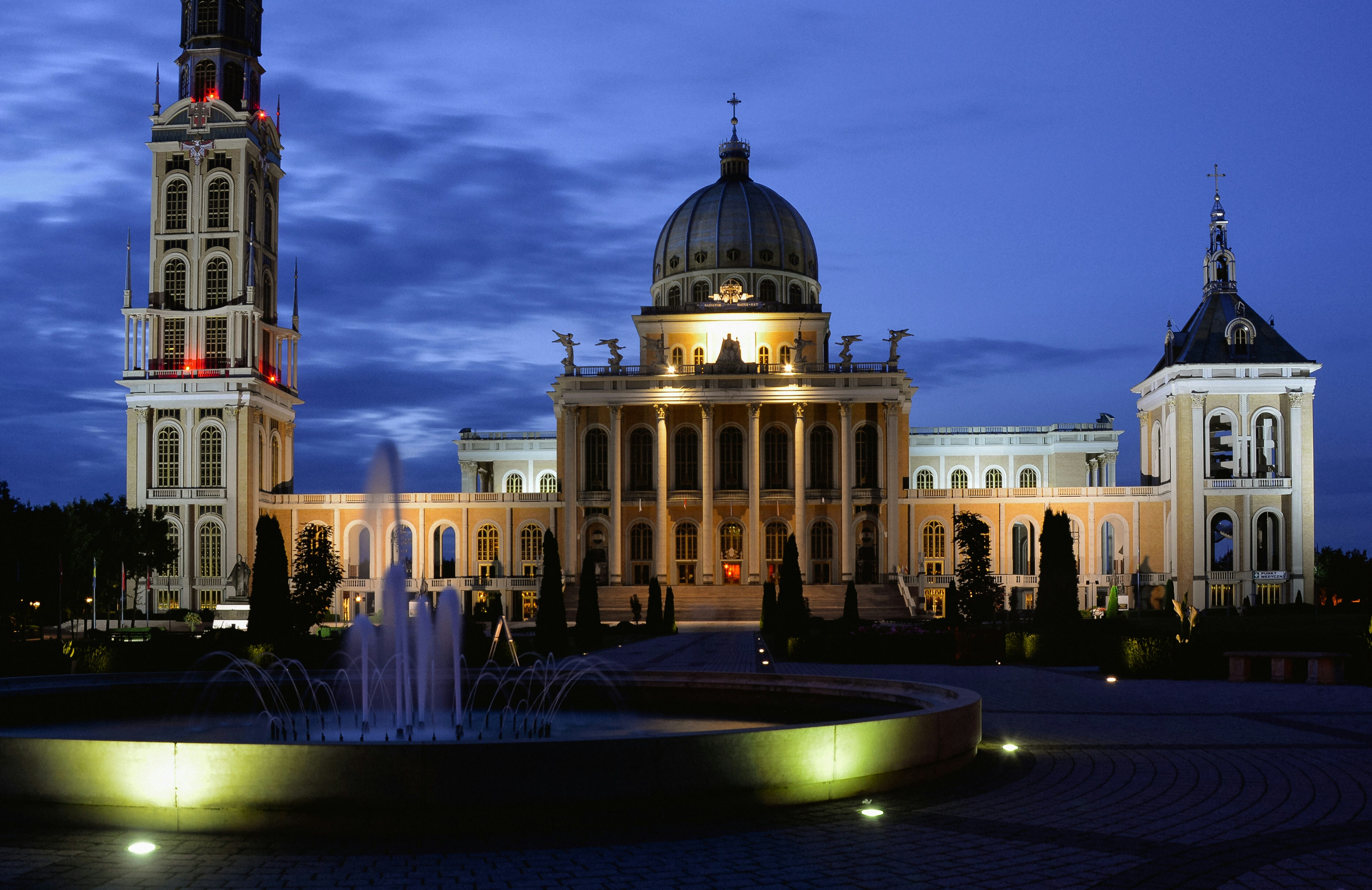
Lichen Stary, Poland · 141.5 m (464 ft) · Eclectic / Neoclassical · completed 2004. The largest church in Poland, the basilica at Licheń is a modern creation (1994–2004) and a major Marian pilgrimage site, drawing more than a million visitors a year to a small village in the country’s centre.
9. 🇻🇦 St. Peter’s Basilica — 137 m
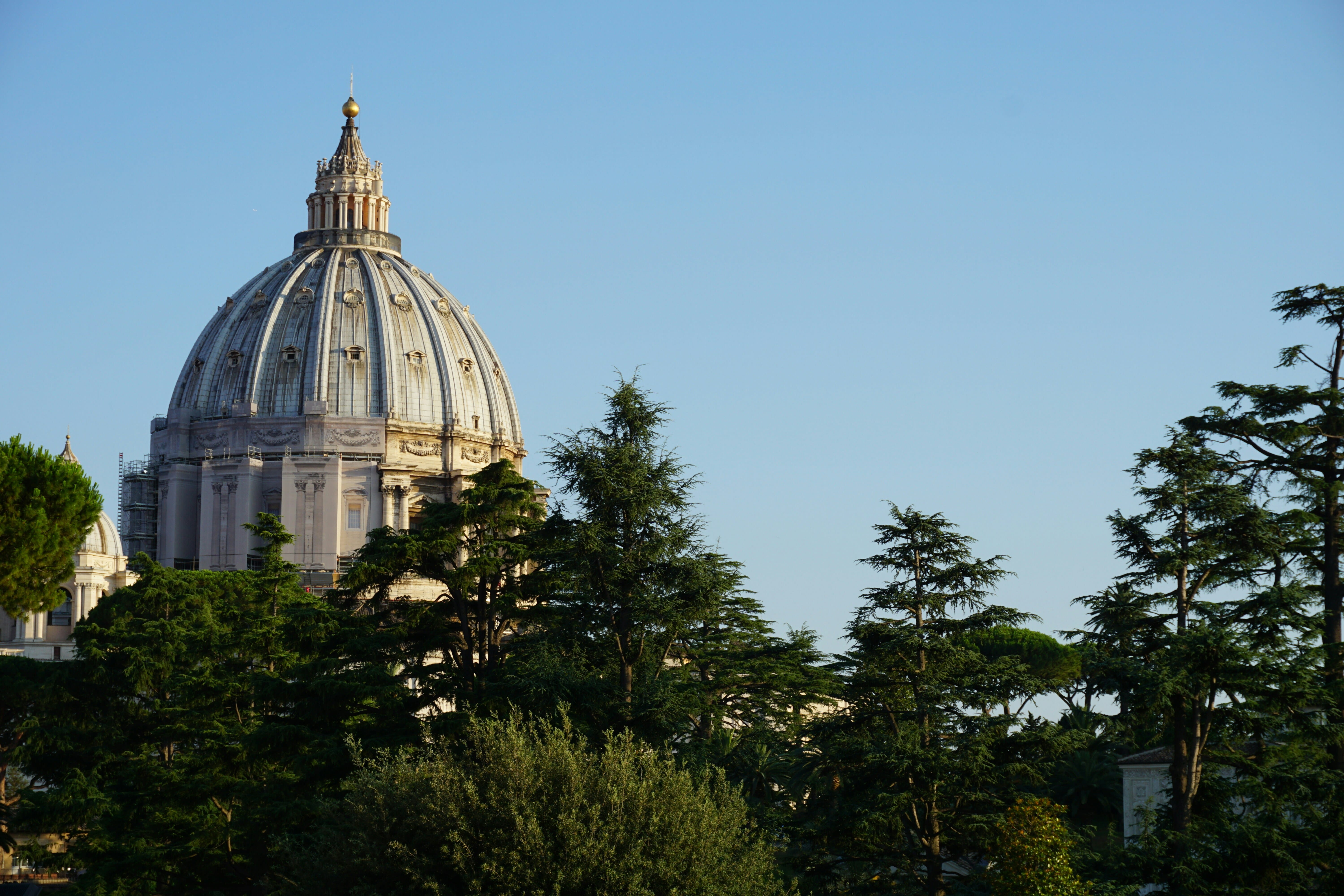
Vatican City, Vatican City · 136.6 m (448 ft) · Renaissance & Baroque · completed 1626. Perhaps the most important church in Christendom, St. Peter’s reaches its height through the dome designed by Michelangelo. Because a dome is a lower, broader form than a Gothic spire, the Vatican’s masterpiece ranks ‘only’ ninth.
10. 🇦🇹 St. Stephen’s Cathedral — 136 m
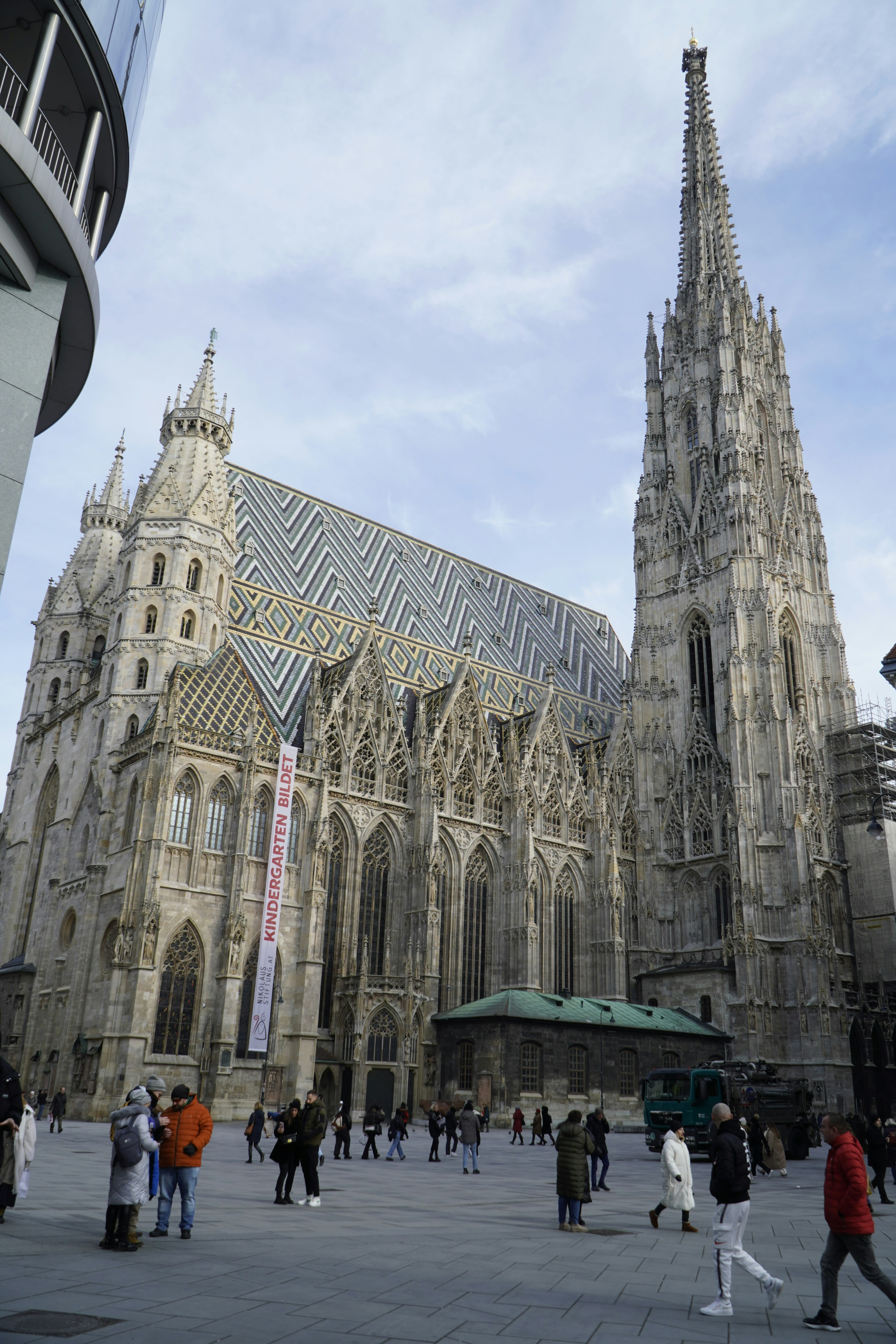
Vienna, Austria · 136.4 m (448 ft) · Romanesque & Gothic · completed 1433. The beloved ‘Steffl’ is the symbol of Vienna, famous for its dazzling roof of 230,000 glazed tiles. Mozart was married and had his funeral here, and 343 steps lead up its south tower.
11. 🇦🇹 New Cathedral (Mariendom) — 135 m
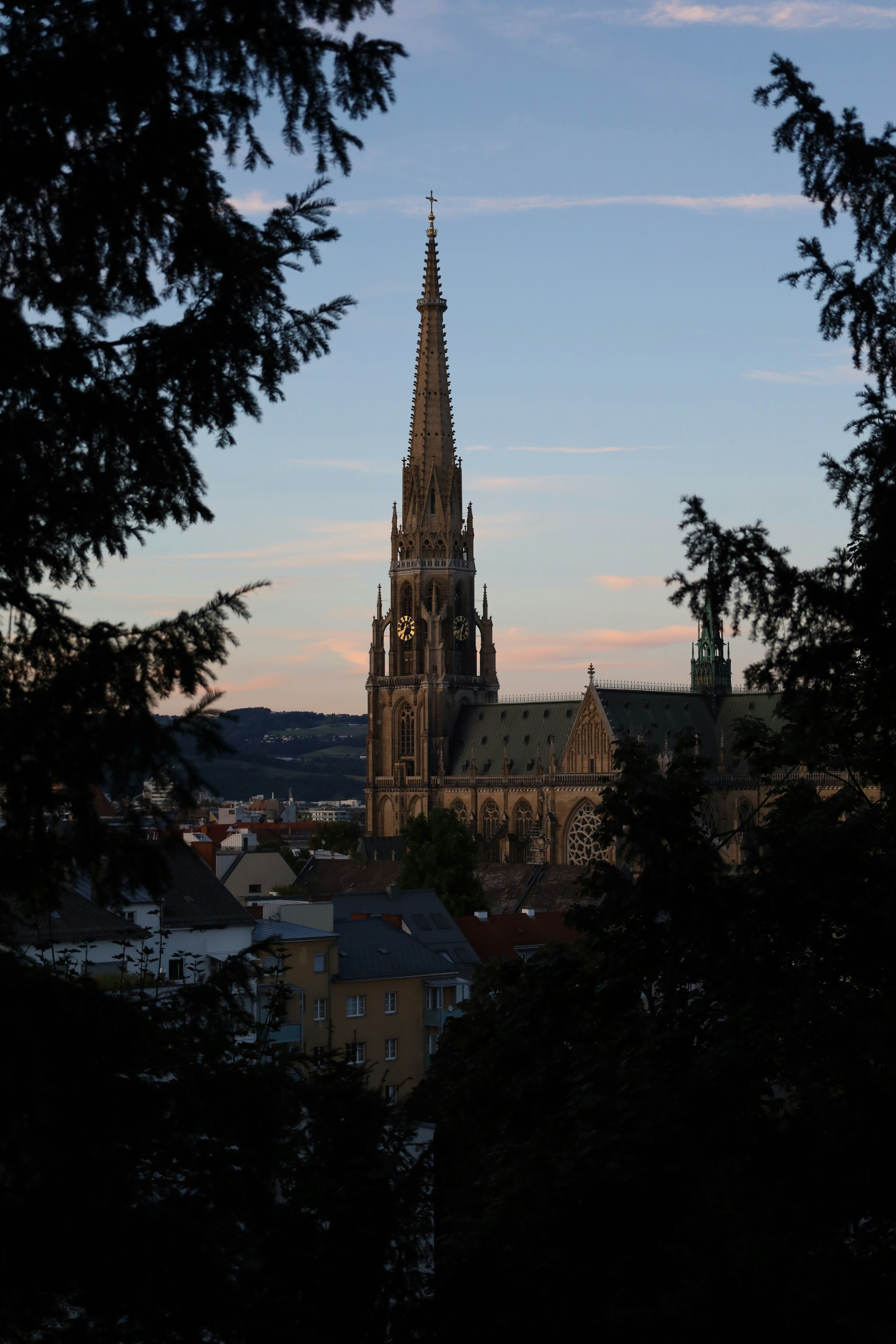
Linz, Austria · 134.8 m (442 ft) · Gothic Revival · completed 1924. The largest church in Austria by capacity, Linz’s New Cathedral was deliberately built two metres shorter than St. Stephen’s in Vienna — at the time, no church in the empire was allowed to out-top the capital’s cathedral.
12. 🇩🇪 St. Michael’s Church — 132 m
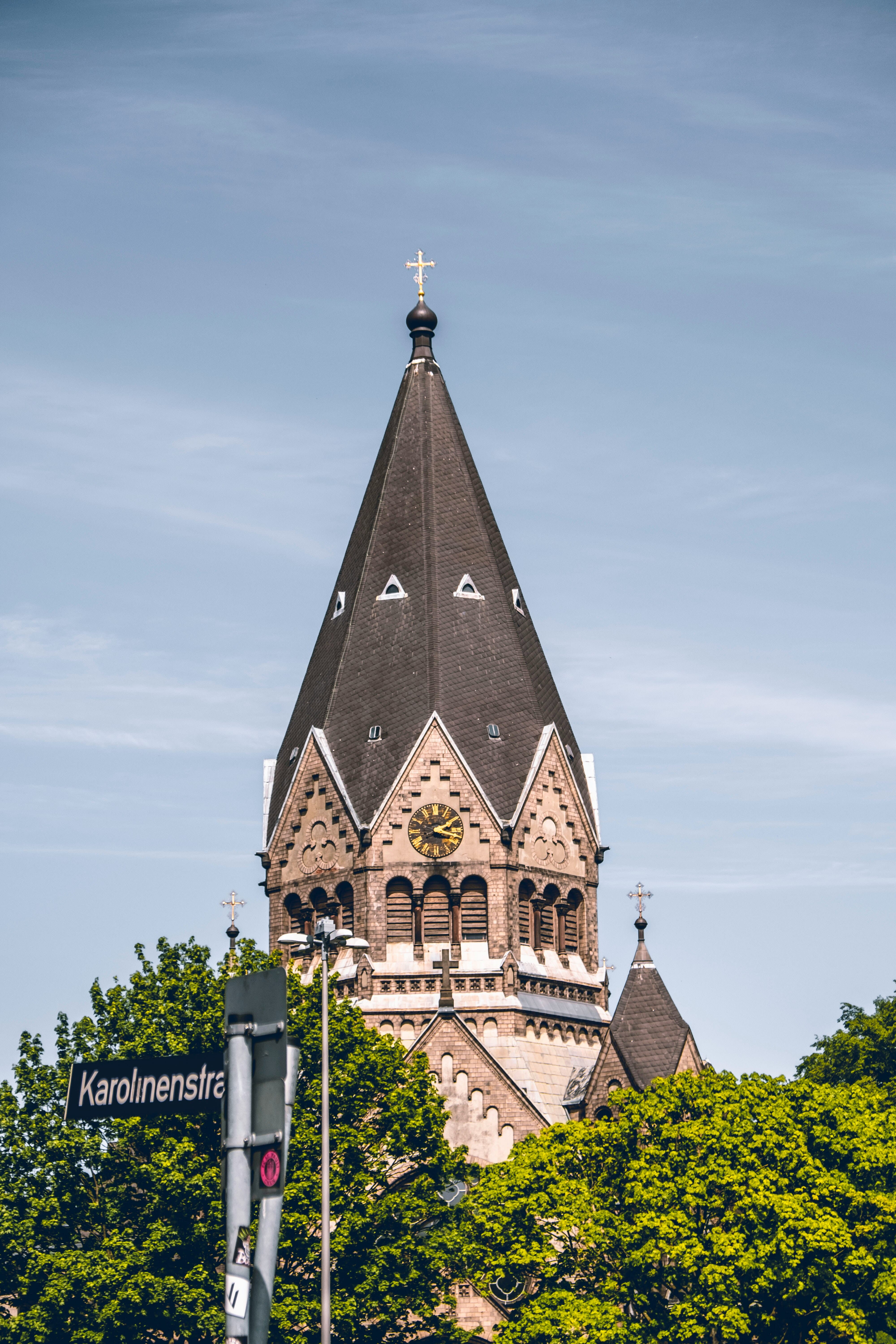
Hamburg, Germany · 132.0 m (433 ft) · Baroque · completed 1786. Known affectionately as the ‘Michel’, St. Michael’s is the symbol of Hamburg and the finest Baroque church in northern Germany. Its tower has long been a landmark for sailors coming up the Elbe.
13. 🇩🇪 St. Peter’s Church — 132 m
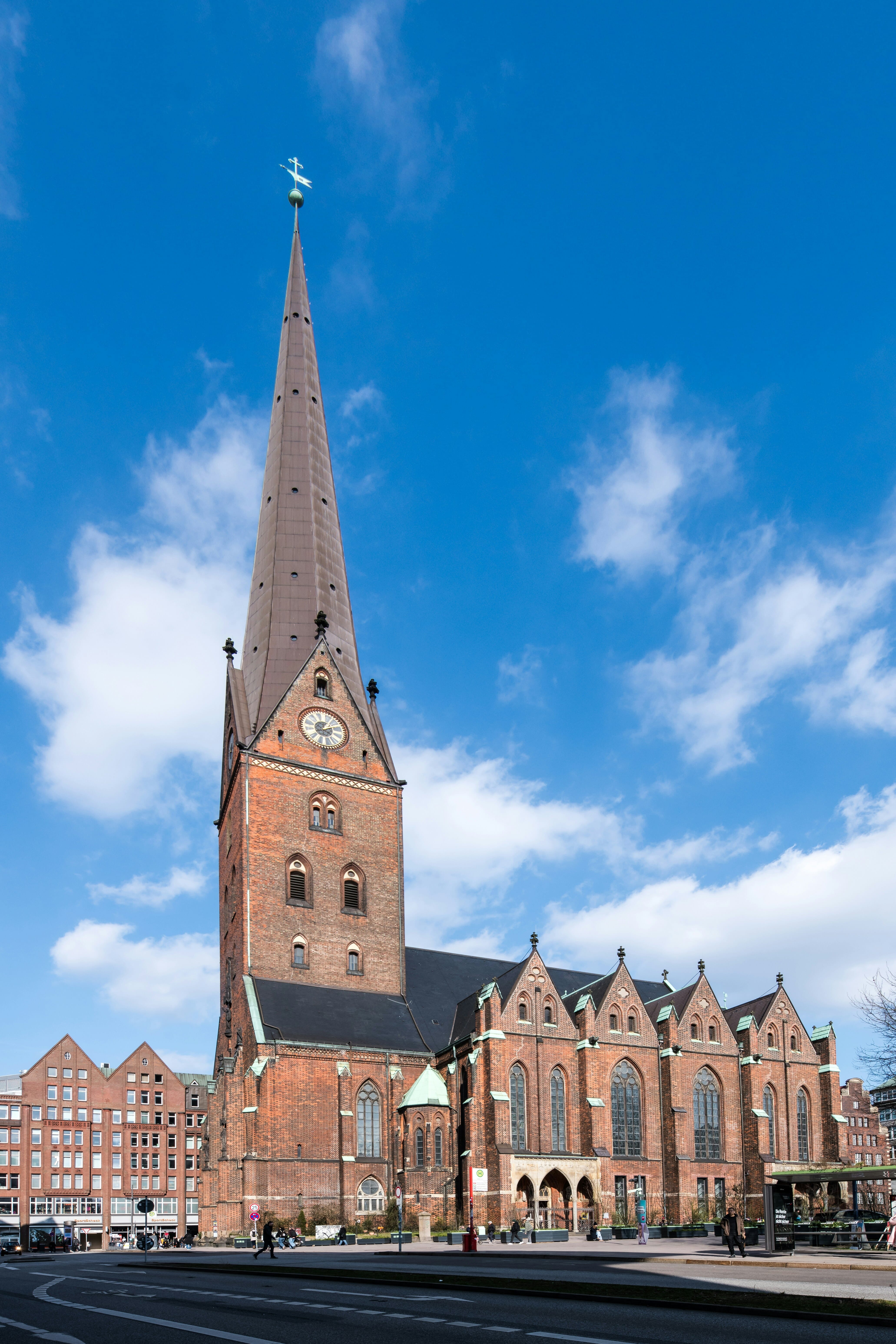
Hamburg, Germany · 132.0 m (433 ft) · Gothic · completed 1878. St. Peter’s is the oldest parish church in Hamburg, with roots in the 12th century. Its green-copper spire was rebuilt after the Great Fire of 1842 that destroyed much of the old city.
14. 🇩🇪 St. Martin’s Church — 131 m
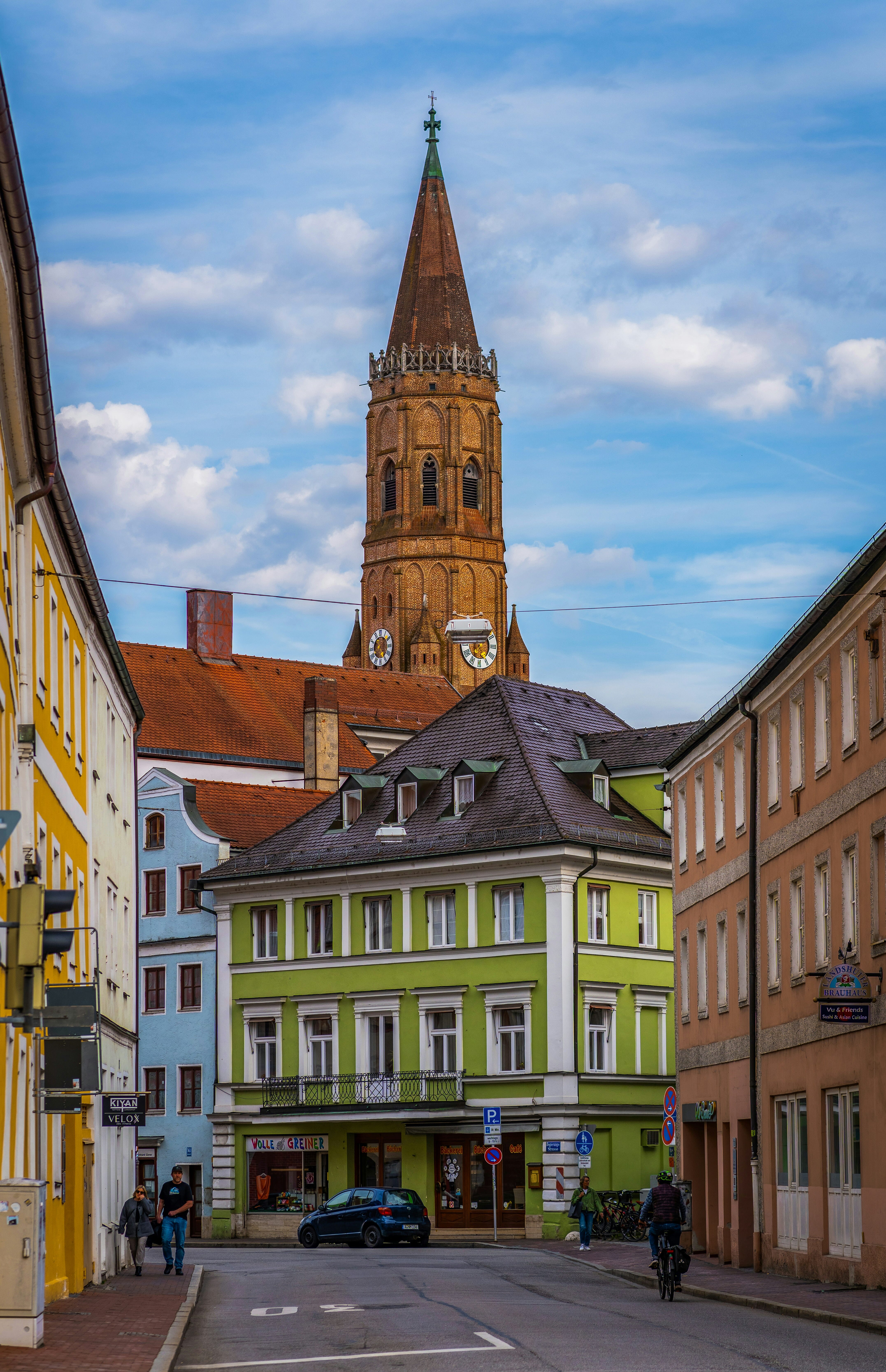
Landshut, Germany · 130.6 m (428 ft) · Brick Gothic · completed 1500. St. Martin’s in Landshut has the tallest brick tower in the world — built entirely of fired brick between 1389 and 1500, a triumph of medieval craftsmanship without a single stone block in its spire.
15. 🇪🇪 St. Olaf’s Church — 124 m
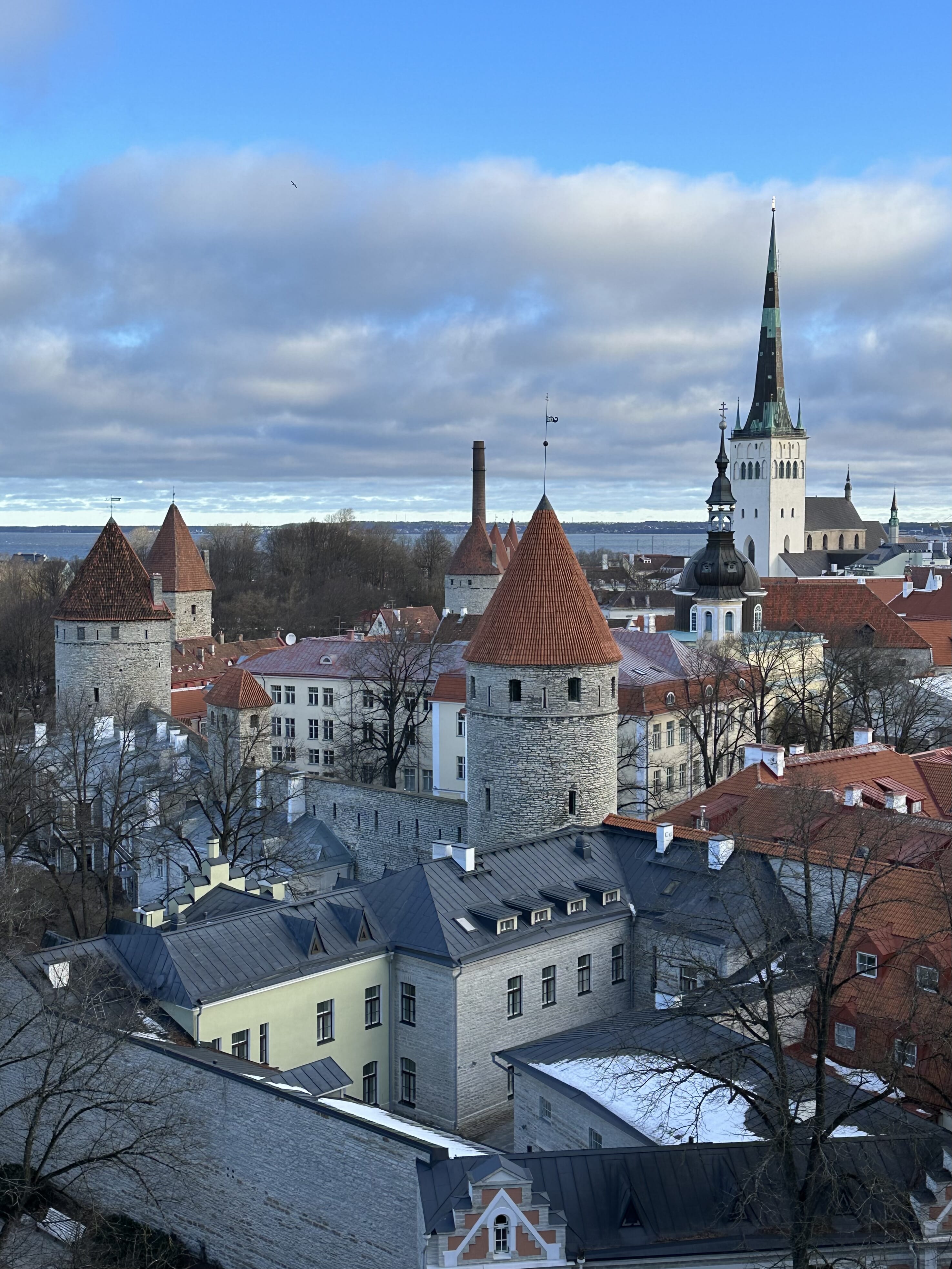
Tallinn, Estonia · 123.7 m (406 ft) · Gothic · completed 1500. Legend holds that St. Olaf’s may have been the tallest building in the world around 1500, when its spire is said to have topped 159 m. Repeatedly struck by lightning and rebuilt lower, it remains the landmark of Tallinn’s old town.
What counts as a church’s height?
These rankings measure architectural height — the distance from the ground to a building’s highest point, whether that’s a spire, a tower or a cross. That’s why slender Gothic cathedrals win: they were built to draw the eye (and the soul) upward. It also explains a famous near-miss. St. Peter’s Basilica in the Vatican, perhaps the most important church in the world, reaches “only” 136.6 m to the top of its cross — magnificent, but a dome is a wider, lower form than a Gothic spire. For sheer floor space, a different ranking applies — see our companion map of the largest churches in the world.
Church heights are architectural heights (to the tallest spire, tower or pinnacle), compiled from the standard reference list of tallest church buildings and individual church records; the Sagrada Família's 172.5 m final height is confirmed by the basilica's construction office. The map is a Mappr original.
Data Sources:
- Wikipedia — List of tallest church buildings – Architectural heights, completion dates and locations for the tallest churches.
- Sagrada Família — official construction updates – Final height of 172.5 m and the Tower of Jesus Christ.
Image Sources:
- Church photos — via SampleShots (Unsplash) – Individual church photographs by various Unsplash photographers, credited in each image caption.
- Map by Mappr – Map of the world's tallest churches — a Mappr original built from these sources and Natural Earth boundaries.