
Nuclear weapons are capable of inspiring fear in even the most powerful nations, and it’s for good reason. These weapons of mass destruction release huge amounts of energy either through a nuclear fission reaction or through a combination of fission and fusion. The latter are known as thermonuclear weapons or hydrogen bombs; these are the most powerful weapons of mass destruction.
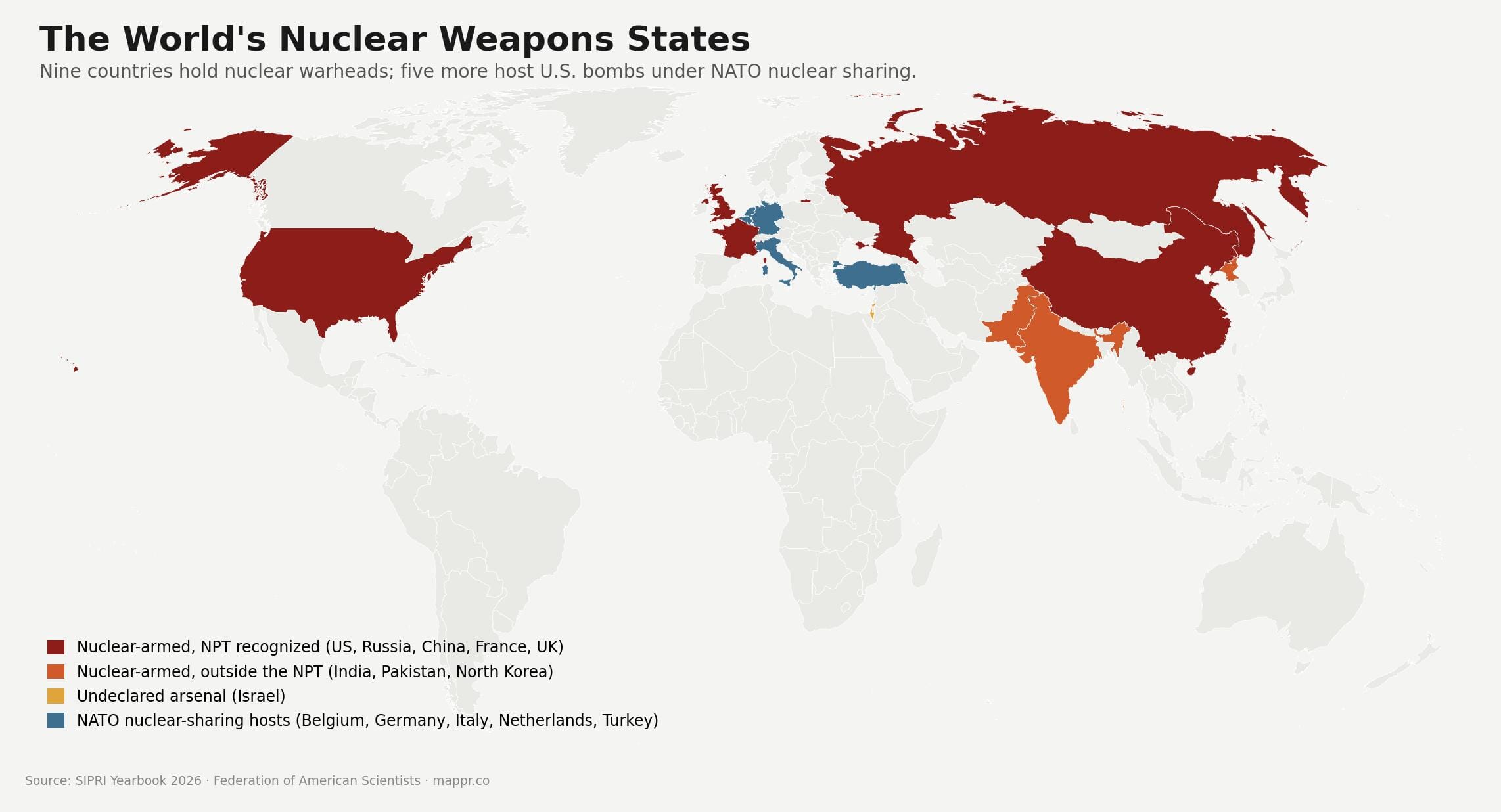
Both types of nuclear weapons are highly destructive and have the power to destroy entire cities and cause massive casualties. This makes any country in possession of such weapons a cause for concern among other nations. To see exactly who has these destructive tools, we’ll look at a map of countries with nuclear weapons.
The Greatest Danger of the New World
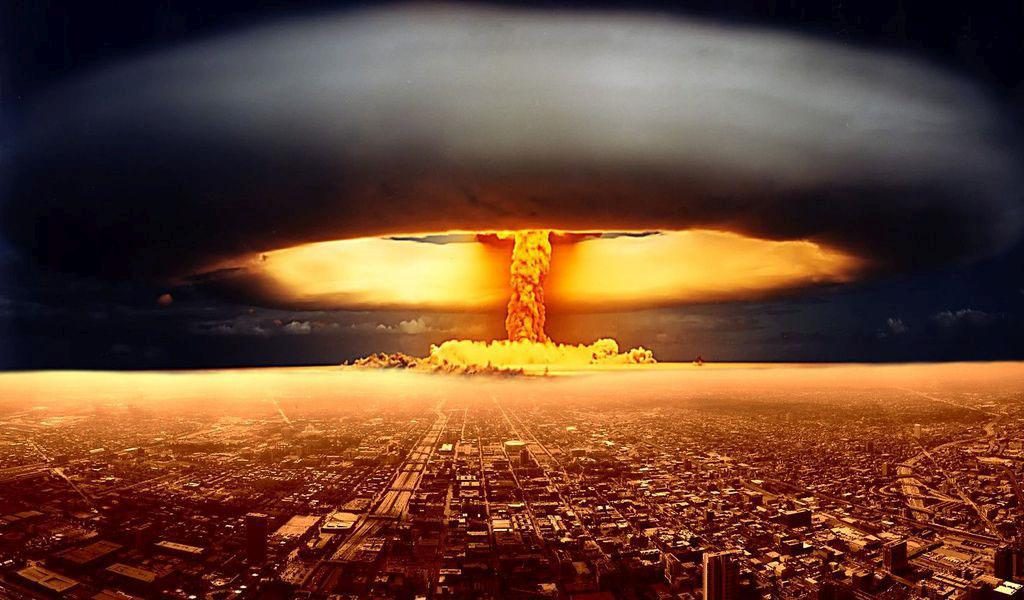
Nuclear weapons have only been used twice in war, in both instances by the United States. The first was dropped on the Japanese city of Hiroshima on August 6, 1945, and the second was dropped on Japan’s Nagasaki three days later. The use of these weapons caused hundreds of thousands of deaths and demolished the cities.
In addition to the severe damage caused by the initial blast of these weapons, the radiation released in the detonation has lasting negative effects on the area and any living things that are exposed to it. Depending on the level of exposure, people that come into contact with radiation can have long-term negative health effects including death, infertility, cancer, and cardiovascular disease.
Such severe consequences have caused a great deal of public opposition to the use of these weapons and has inspired intense, ongoing debates about the ethics surrounding possessing and using nuclear weapons. The magnitude of consequences for nuclear warfare has also prompted countries to develop nuclear strategies that focus on deterring other nations from using the weapons.
Countries With Nuclear Weapons
Fourteen countries have nuclear weapons on their soil. Nine of them own their arsenals; the other five host U.S. warheads under NATO nuclear sharing and do not control them independently. Below, the countries are ordered by the size of the arsenal on their territory.
1. Russia
Russia is estimated to hold about 5,420 nuclear warheads (SIPRI, 2026), which makes it the country with the most nuclear weapons in the world. This is of particular concern since Russia declared war on Ukraine in February 2022. Russian President Vladimir Putin has even said publicly that his country’s nuclear forces are on “high alert.” This is despite the security promises Russia made to Ukraine in 1994, when the country relinquished its Soviet-obtained nuclear weapons to Russia.
Russia’s nuclear arsenal is a major reason that other nations are reluctant to provide active military support to Ukraine during the war. If the North Atlantic Treaty Organization (NATO) goes to war with Russia, there are strong fears of nuclear war.
2. United States
The USA was the first country to develop nuclear weapons in a joint effort with the United Kingdom and Canada called the Manhattan Project during the 1940s. The initiative was taken in response to fears that Germany would develop the weapons first during World War II.
The USA is estimated to have about 5,042 nuclear warheads. This is far fewer than the roughly 31,000 it held at its 1967 peak, but one of the main reasons for the decline is due to the dismantling of retired warheads. It is second only to Russia in number of nuclear weapons.
3. China
China is now estimated to have about 620 nuclear warheads and is expanding its arsenal faster than any other country. China conducted its first test of a nuclear weapon in 1964 and continued testing until 1996. It has a no-first-use policy, meaning it pledges to not use a nuclear weapon unless it suffers a nuclear attack from another country.
It is believed that China is in the process of increasing its nuclear arms stockpile and could be aiming to have around 1,000 nuclear warheads by 2030. This is something that could inspire other Asian nations to increase their own stockpiles. If India increases its number of nuclear weapons because of its tense relationship with China, Pakistan may follow suit to keep up with India. Japan may also consider hosting US nuclear bombs in order to maintain its own security.
4. France
France is estimated to have around 290 nuclear weapons, most of which are deployed by the French Navy. The country’s navy maintains a continuously active presence at sea with nuclear-powered submarines. This ensures that the country always has second-strike capability (the ability to retaliate) even if it is targeted and suffers massive damage.
5. Britain
It is currently estimated that the United Kingdom is in possession of about 225 nuclear weapons. Like France, the UK always has at least one nuclear-armed submarine at sea as a method of nuclear deterrent.
The UK, like France, is part of NATO. This means that their nuclear program would also support the military objectives of NATO.
6. Pakistan
Pakistan has about 170 nuclear warheads at its disposal. The country ran its first nuclear test in 1998 and has been involved with an arms race with neighbor India.
7. India
India conducted its first nuclear weapon test in 1974 and is now thought to possess about 190 nuclear warheads, having recently moved ahead of neighboring Pakistan.
8. North Korea
The North Korean arsenal is estimated to contain around 50 assembled nuclear warheads, with enough fissile material produced for more. The country’s nuclear program began in the 1980s, and it is still conducting missile tests regularly.
9. Israel
Israel has never officially recognized its nuclear program or its possession of nuclear weapons, but the country has had these weapons since the mid 1960s. Because of Israel’s reluctance to acknowledge their weapons, most analysts put its arsenal at about 90 warheads.
10. Germany
Since the close of World War II, Germany has largely refrained from producing any nuclear weapons although the country possesses the technology to do so. While Germany does not currently have any weapons of its own, it holds about 20 nuclear warheads from the US. These warheads would be used if deemed necessary as part of its relationship with NATO.
11. Turkey
Turkey has not produced any nuclear weapons of its own, but it currently has 50 tactical nuclear weapons supplied by the US. This is because of its membership to NATO and is part of NATO’s nuclear umbrella.
The weapons they have are said to largely be a symbolic gesture of commitment by the USA to a good relationship with Turkey. This is because they are out of date and may not have much practical value. There is debate on whether the US will upgrade these weapons and continue to host weapons in the country.
12. Italy
Although Italy does not produce or have any nuclear weapons of its own, it does host some as part of the NATO nuclear sharing program. It hosts 40 nuclear warheads at two of its air bases.
13. Netherlands
The Netherlands is another country that does not create its own nuclear weapons, but it is thought to currently host around 20 nuclear bombs.
14. Belgium
As with Turkey, Italy, and the Netherlands, Belgium does not possess or produce nuclear weapons, but it does host around 10-15 weapons as part of its role in NATO. This is the country with the smallest number of nuclear weapons within its borders.
How Many Nuclear Warheads Each Country Has (2026)
| # | Country | Est. warheads (2026) | Status |
|---|---|---|---|
| 1 | Russia | 5,420 | NPT recognized |
| 2 | United States | 5,042 | NPT recognized |
| 3 | China | 620 | NPT recognized |
| 4 | France | 290 | NPT recognized |
| 5 | United Kingdom | 225 | NPT recognized |
| 6 | India | 190 | Outside the NPT |
| 7 | Pakistan | 170 | Outside the NPT |
| 8 | Israel | ~90 | Undeclared |
| 9 | North Korea | ~60 | Outside the NPT |
Total global inventory about 12,187 warheads. Source: SIPRI Yearbook 2026; Federation of American Scientists.
Categories of Nuclear Powers
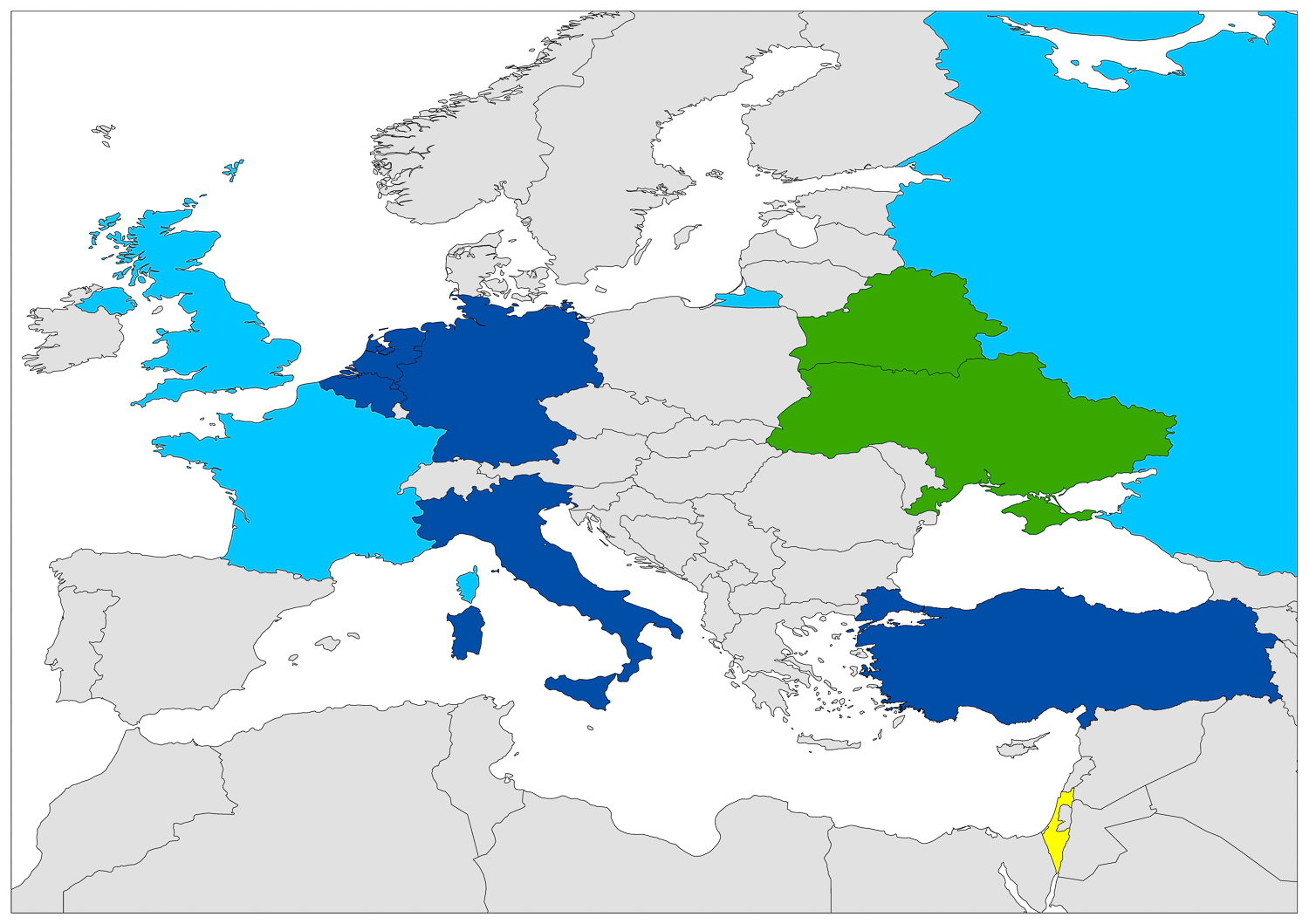
As illustrated in the above nuclear powers map, we can organize the countries that have or had nuclear weapons into a few categories: those that have signed a non-proliferation treaty, those that have not, those that are assumed to possess nuclear weapons, those that participate in the NATO nuclear sharing program, and countries that no longer have any nuclear weapons.
1. States with nuclear weapons in accordance with the Treaty on the Non-Proliferation of Nuclear Weapons (NPT)
- United States
- Russia
- China
- United Kingdom and
- France
The NPT is an international treaty that was created in an effort to stop the spread of nuclear weapons around the world. It was first drafted in 1968 and now has a total of 191 participating nations, although only five of these countries have their own nuclear weapons. This treaty has more participating nations than any other arms limitation and disarmament agreement.
In addition to stopping the spread of nuclear weapons, an objective of the treaty is to make progress toward disarmament of nuclear weapons. This requires a certain level of trust between member states, and safeguards and inspections are conducted by the International Atomic Energy Agency (IAEA) to this end.
The states without nuclear weapons that have signed the treaty agree not to acquire nuclear weapons as part of the agreement. In return, NPT states with nuclear weapons agree to share the benefits of peaceful nuclear technology and to continue nuclear disarmament.
2. Other States with Nuclear Weapons
- India
- North Korea
- Pakistan
The countries in this category are confirmed to have their own nuclear weapons, but they are not part of the NPT. North Korea officially announced its withdrawal from the treaty in 2003, just after performing detonations of nuclear devices, which violated its obligations according to the NPT.
India has never signed the NPT, and officials have expressed the feeling that the treaty is flawed and primarily serves to separate countries with nuclear weapons from those without, ensuring that the former maintains a certain level of power.
Taking a similar position as India, Pakistan has claimed that the NPT is a discriminatory treaty and has refused to sign. The greatest nuclear tension for Pakistan is with India, a relationship that continues to be complicated.
3. Assumed Nuclear Power
- Israel
It is part of the Israeli government’s policy to refrain from giving any concrete information about its nuclear programs. While it has not been confirmed, Israel has likely had nuclear weapons since the 1960s and is estimated to have about 90 nuclear warheads. The country is not part of the NPT.
4. States taking part in the NATO nuclear sharing program:
- Belgium
- Germany
- Italy
- Turkey
- Netherlands
The states in this category do not produce or possess their own nuclear weapons, but they do have such weapons within their borders. Each of these NATO member states is playing a strategic military role for NATO by enabling the organization to potentially launch nuclear weapons from a variety of locations. While these countries did not produce the weapons they host, they maintain trained teams that are capable of delivering the weapons if ever necessary.
5. Former Nuclear Weapon Holders
- South Africa
- Belarus
- Ukraine
- Kazakhstan
These are countries that no longer possess nuclear weapons.
Belarus, Ukraine, and Kazakhstan all had nuclear weapons when they were part of the Soviet Union. After the collapse of the union in 1991, these countries repatriated their nuclear weapons to Russia. The more than 3,000 nuclear warheads returned to Russia were dismantled, and the nuclear material was used to fuel civilian reactors.
South Africa is unique because it is the only country to have developed its own nuclear weapons and then to later dismantle them. The weapons were produced during the years of apartheid in the country, when the government’s fears of communism and a black uprising where high. A change in government and international pressure led the country to agree to disarm itself of nuclear weapons in 1993.
Nuclear Weapons in Europe Map
A European nuclear countries map:
Related: CERN (European Organization for Nuclear Research)
Estimated Number of Nuclear Warheads Worldwide in 2026
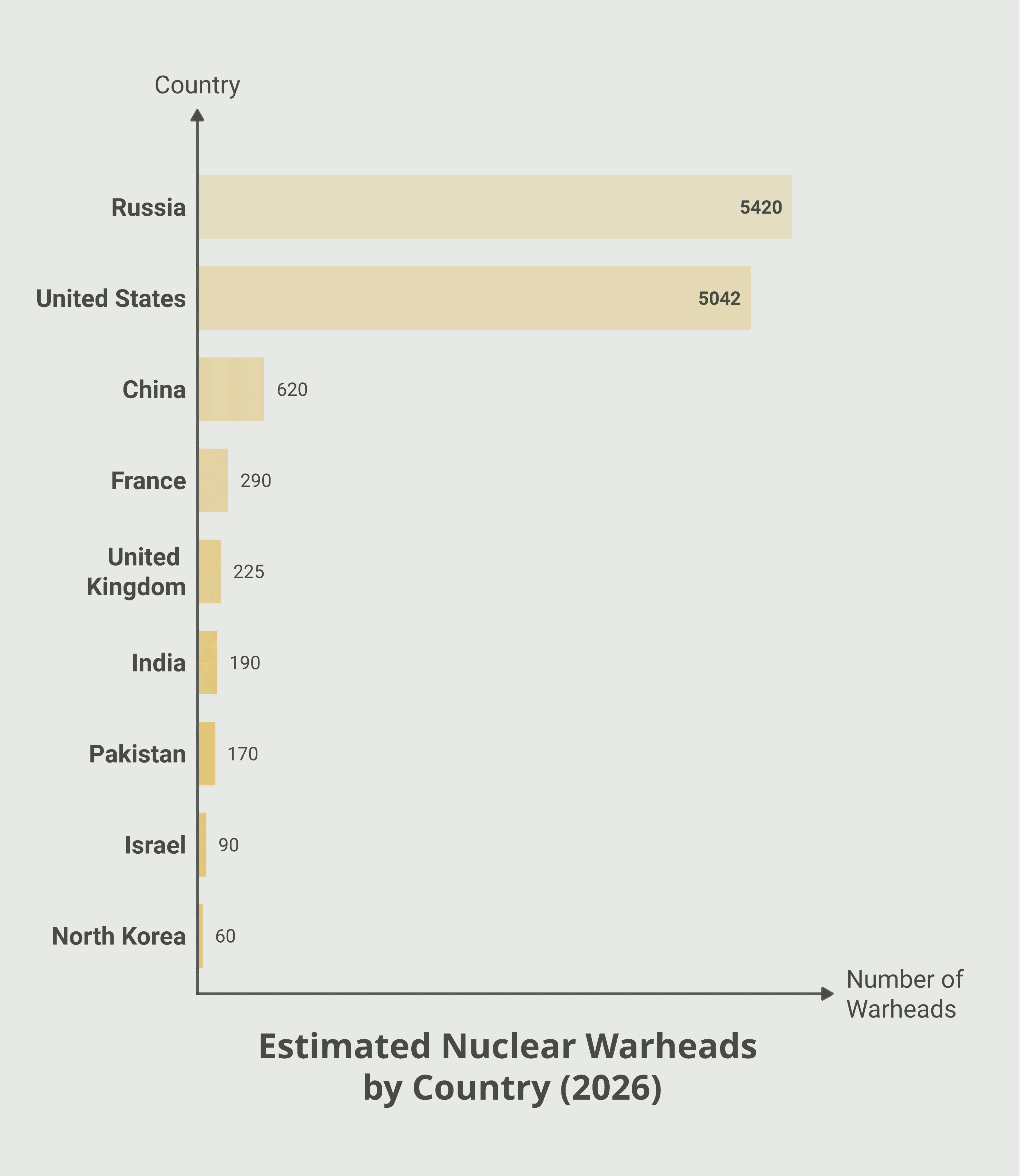
In 2026, roughly 80 years after their invention, there are an estimated 12,200 nuclear weapons in the world. About 9,700 of these are in military stockpiles, and around 4,000 are actively deployed on missiles and at bases ready for use. Of the nine countries that have nuclear weapons, the USA and Russia hold the vast majority. Russia has the most of any nation, with about 5,400 nuclear warheads.
Many countries have expressed some sort of commitment to gradual nuclear disarmament, but this isn’t a goal that many believe will be achieved any time soon. In fact, many countries are thought to be continually increasing their nuclear stockpiles.
Warheads are only one measure of military might. See who spends the most in our map of military spending by country.
Warhead estimates are inherently approximate; governments rarely disclose exact figures. Data on this page reflects the latest independent estimates:


