
Key Takeaways
- Caracas dominates the whole network. Simón Bolívar International Airport (CCS) at Maiquetía, the gateway to the capital Caracas, serves around 28 regularly-served nonstop destinations, far more than any other Venezuelan airport. It is the home hub of the state flag carrier Conviasa and the country's only real international and long-haul gateway.
- Flights to the US have just resumed. American Airlines restarted nonstop Miami to Caracas service on 30 April 2026, the first US carrier to return after a seven-year suspension. Caracas is the only Venezuelan airport with a direct US link, and the US State Department still keeps a Do Not Travel advisory in place.
- Margarita and the islands lead the leisure traffic. Porlamar on Isla Margarita (PMV) is the second-busiest airport, running an almost entirely domestic leisure network to Venezuela's main beach and duty-free island. Tourism, not long-haul connectivity, drives most of the airports outside Caracas.
- A largely domestic, regional system. Most Venezuelan airports fly mainly within the country, plus a handful of regional links to Panama City, Bogotá and the southern Caribbean. Long-haul service has thinned sharply during the long economic crisis, and many foreign airlines have pulled out.
- We rank by regularly-served routes, not raw counts. Venezuela's air network has shrunk and many routes are intermittent, so raw nonstop counts can mislead. Ranking by regularly-served destinations, routes flown often enough to count as scheduled service, gives a truer picture of which airports fly the same routes week in, week out.
Venezuela sits at the top of South America, with a long Caribbean coastline to the north, the Andes climbing along its western border with Colombia, and the vast Orinoco basin and Guayana highlands stretching south towards Brazil. Its airport map mirrors that geography: almost all the traffic clusters along the northern coast and in the central valleys where most people live, anchored by a single dominant hub serving the capital, Caracas.
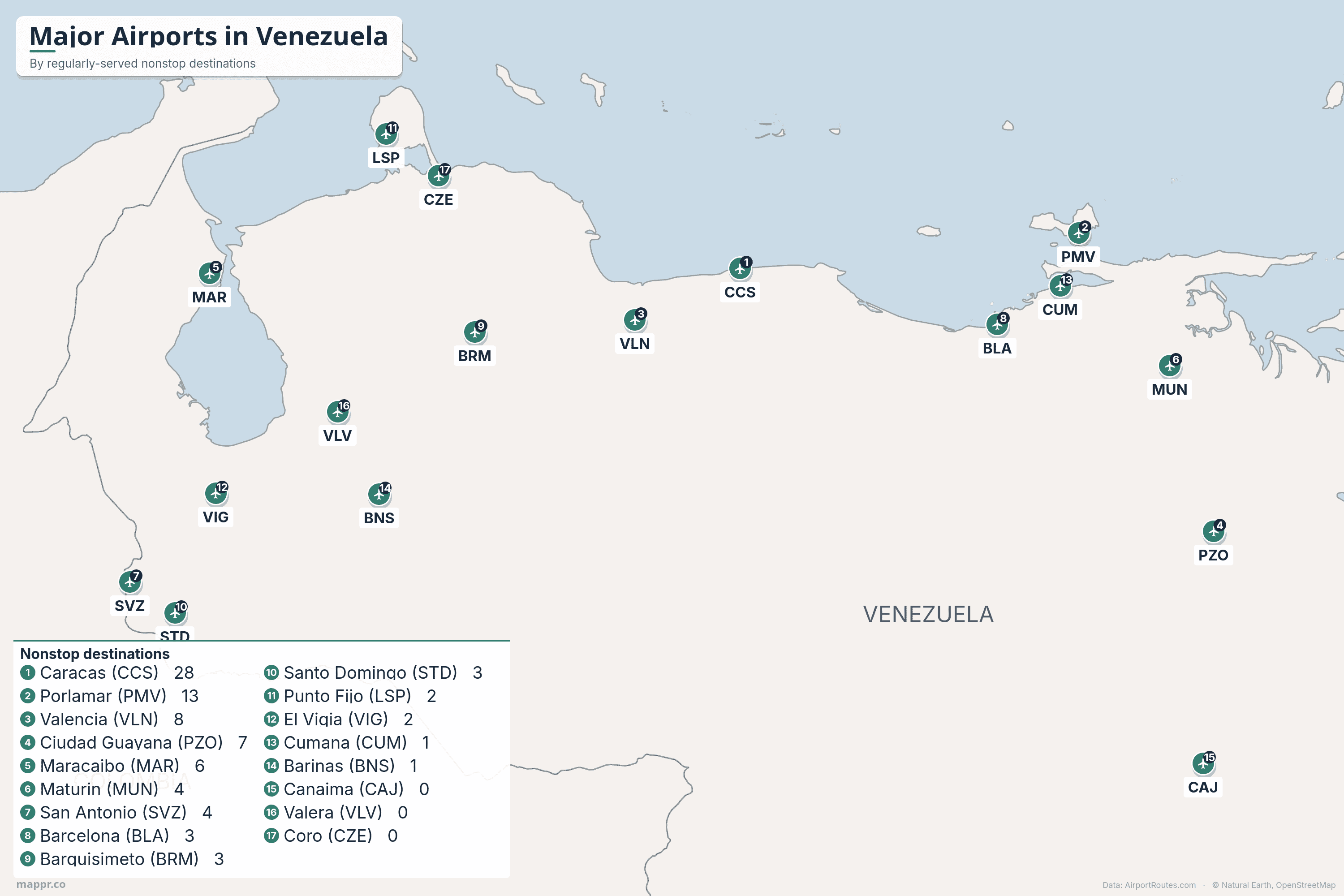
Below we map and rank Venezuela’s airports by the number of nonstop destinations each one serves, drawn from live route data on AirportRoutes. We rank by regularly-served destinations, routes flown often enough to count as scheduled service, rather than raw nonstop totals. The figures come from observed flight data, a large sample rather than a complete published timetable, so treat them as a guide to relative connectivity rather than official totals. They also reflect a network that has contracted during years of economic crisis, with conditions still changing quickly, so always check current schedules before booking.
Can you fly nonstop to the US from Venezuela?
Yes, but only from one airport, and only recently. American Airlines resumed nonstop Miami to Caracas flights on 30 April 2026, becoming the first US carrier to return after a seven-year gap. US airlines had been barred from Venezuela since 2019, so for most of that period there were no direct flights at all between the two countries. The Miami route, operated by American’s Envoy regional arm, is the only scheduled passenger link between Venezuela and the United States.
Everything funnels through Caracas: no other Venezuelan airport has a US route, and the state carrier Conviasa cannot fly to the US because of sanctions. Travellers from other cities, or anyone wanting more frequency, generally connect through a regional hub, most often Panama City on Copa Airlines, or Bogotá, alongside European options via Madrid and Istanbul. The US State Department still maintains a Do Not Travel advisory for Venezuela, so check entry requirements and current conditions carefully before planning a trip.
Ranked
Major Airports in Venezuela by Nonstop Destinations
Ranked by regularly-served nonstop destinations, busiest first.
| Airport | IATA | Nonstop | Region |
|---|---|---|---|
| 1. Caracas | CCS | 28 | Capital, Caribbean coast (Maiquetía) |
| 2. Porlamar | PMV | 13 | Isla Margarita (island) |
| 3. Valencia | VLN | 8 | Carabobo, north-central |
| 4. Ciudad Guayana | PZO | 7 | Bolívar, Orinoco (Puerto Ordaz) |
| 5. Maracaibo | MAR | 6 | Zulia, oil region (west) |
| 6. Maturin | MUN | 4 | Monagas, eastern oil region |
| 7. San Antonio del Tachira | SVZ | 4 | Andes, Colombia border |
| 8. Barcelona | BLA | 3 | Anzoátegui (Puerto La Cruz) |
| 9. Barquisimeto | BRM | 3 | Lara, west-central |
| 10. Santo Domingo | STD | 3 | Táchira, Andean south-west |
| 11. Punto Fijo | LSP | 2 | Falcón, Paraguaná Peninsula |
| 12. El Vigia | VIG | 2 | Mérida, Andes |
| 13. Cumana | CUM | 1 | Sucre, north-east coast |
| 14. Barinas | BNS | 1 | Barinas, western llanos |
| 15. Canaima | CAJ | 0 | Bolívar, Canaima National Park |
| 16. Valera | VLV | 0 | Trujillo, Andes |
| 17. Coro | CZE | 0 | Falcón, north-west coast |
A closer look at Venezuela’s airports
✈️ Caracas (CCS)
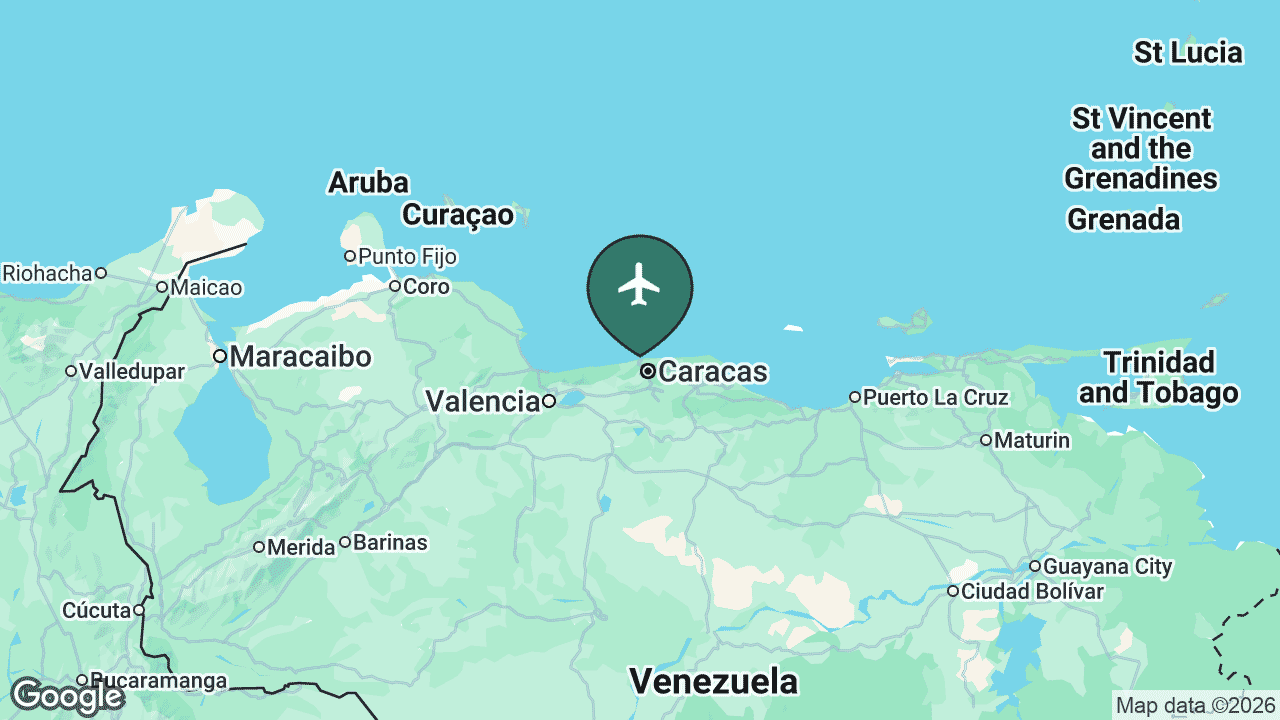
Simón Bolívar International Airport sits on the Caribbean coast at Maiquetía, about 21 km north of central Caracas. The two are separated by the steep Cordillera de la Costa, so the airport lies at sea level while the capital sits in a mountain valley roughly 900 metres higher, reached by a winding motorway. It is by a wide margin the largest and busiest airport in the country.
Serving Caracas and the densely populated north, CCS reaches around 28 regularly-served nonstop destinations and is Venezuela’s only genuine international and long-haul gateway. It is the home base of the state flag carrier Conviasa and handles the country’s sole US route (American Airlines to Miami), along with links to Panama City, Bogotá, Madrid, Istanbul and several Caribbean and Latin American cities.
Main airlines: Conviasa, Avior Airlines, Estelar, LASER Airlines, Rutaca Airlines. See the full route map for CCS on AirportRoutes →
🏝️ Porlamar, Isla Margarita (PMV)
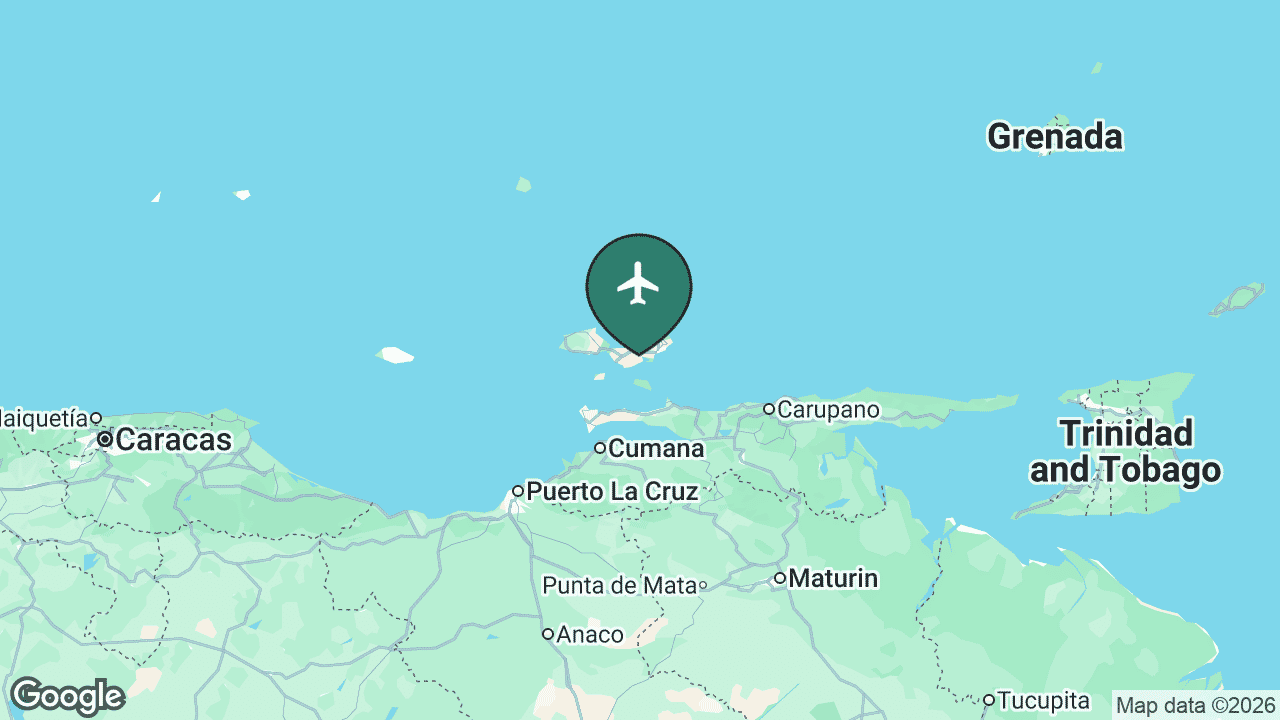
Del Caribe Santiago Mariño International Airport serves Porlamar and the island of Margarita, Venezuela’s premier beach and duty-free destination in the Caribbean off the north-east coast. The airport is the main way on and off the island for visitors from the mainland.
PMV reaches about 13 regularly-served destinations, almost all of them domestic. Its network is built around shuttle traffic to Caracas and other mainland cities feeding the island’s resorts and free-port shopping, making it the busiest leisure airport in the country.
Main airlines: Conviasa, Rutaca Airlines, LASER Airlines, Venezolana, Estelar, Avior Airlines. See the full route map for PMV on AirportRoutes →
🏭 Valencia (VLN)
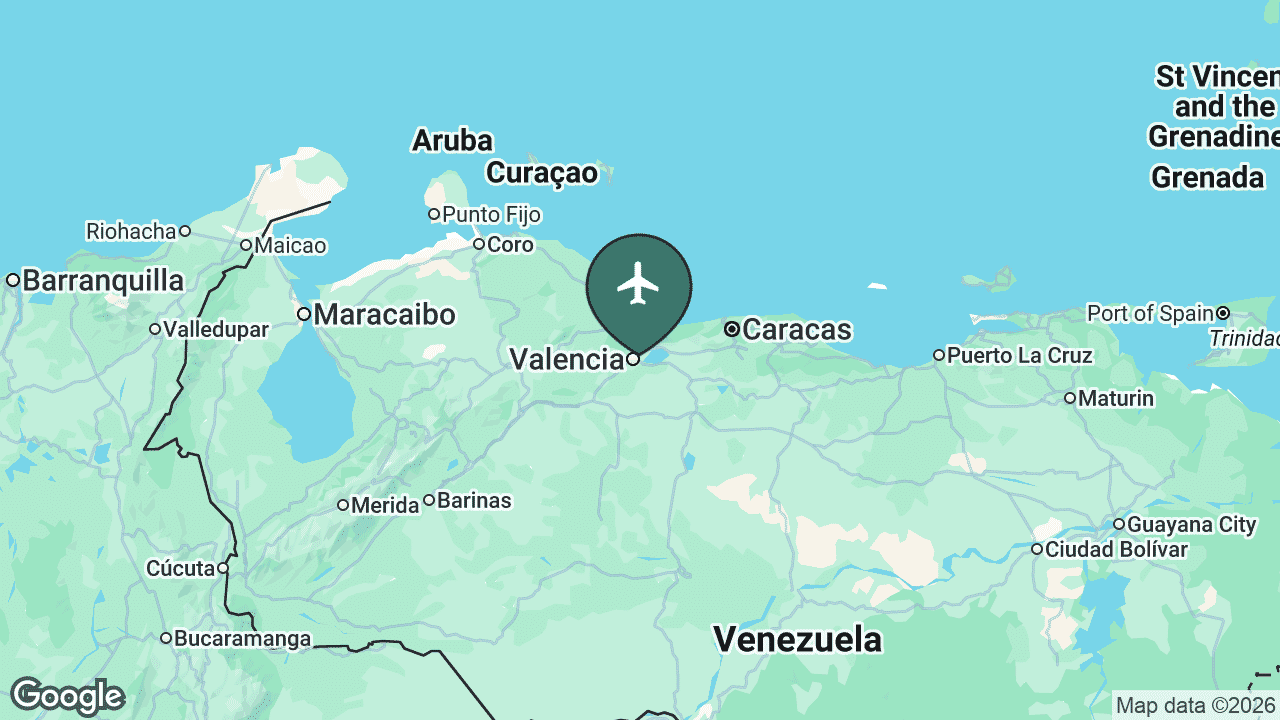
Arturo Michelena International Airport serves Valencia, the capital of Carabobo state and the heart of Venezuela’s industrial belt. It is one of the larger airports in the north-central region and a base for the carrier Turpial Airlines.
VLN runs around 8 regularly-served destinations, a mix of busy domestic links and a handful of international routes, including Bogotá and Havana. Its proximity to the industrial cities of the central valleys gives it more international reach than most non-coastal airports.
Main airlines: Turpial Airlines, Rutaca Airlines, Conviasa, SATENA. See the full route map for VLN on AirportRoutes →
⛏️ Ciudad Guayana / Puerto Ordaz (PZO)
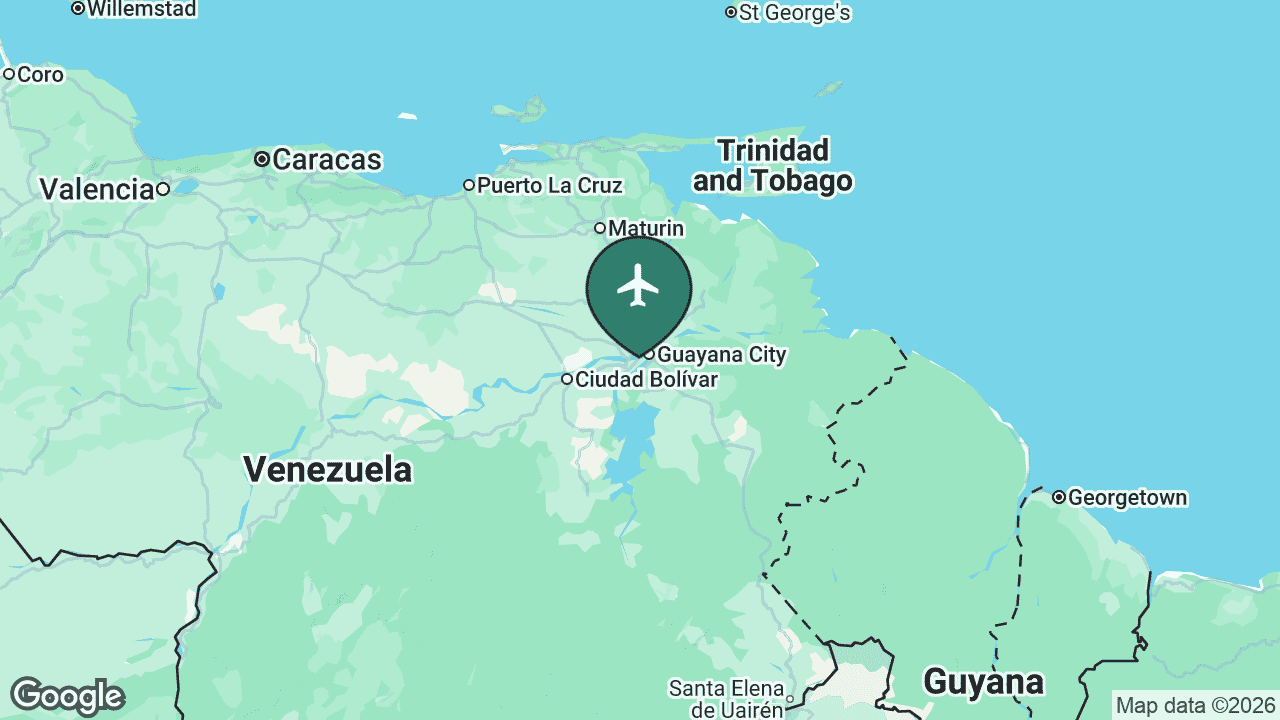
Manuel Carlos Piar Guayana Airport serves Ciudad Guayana, better known as Puerto Ordaz, the steel, aluminium and mining city built where the Caroní meets the Orinoco in Bolívar state. It is the main air gateway to Venezuela’s heavy-industry south-east and to the Gran Sabana beyond.
PZO reaches about 7 regularly-served destinations, overwhelmingly domestic, plus a cross-border link to Manaus in the Brazilian Amazon. It is also a common jumping-off point for travel deeper into the Guayana highlands.
Main airlines: Conviasa, LASER Airlines, Rutaca Airlines, Estelar, Avior Airlines, Turpial Airlines. See the full route map for PZO on AirportRoutes →
🛢️ Maracaibo (MAR)
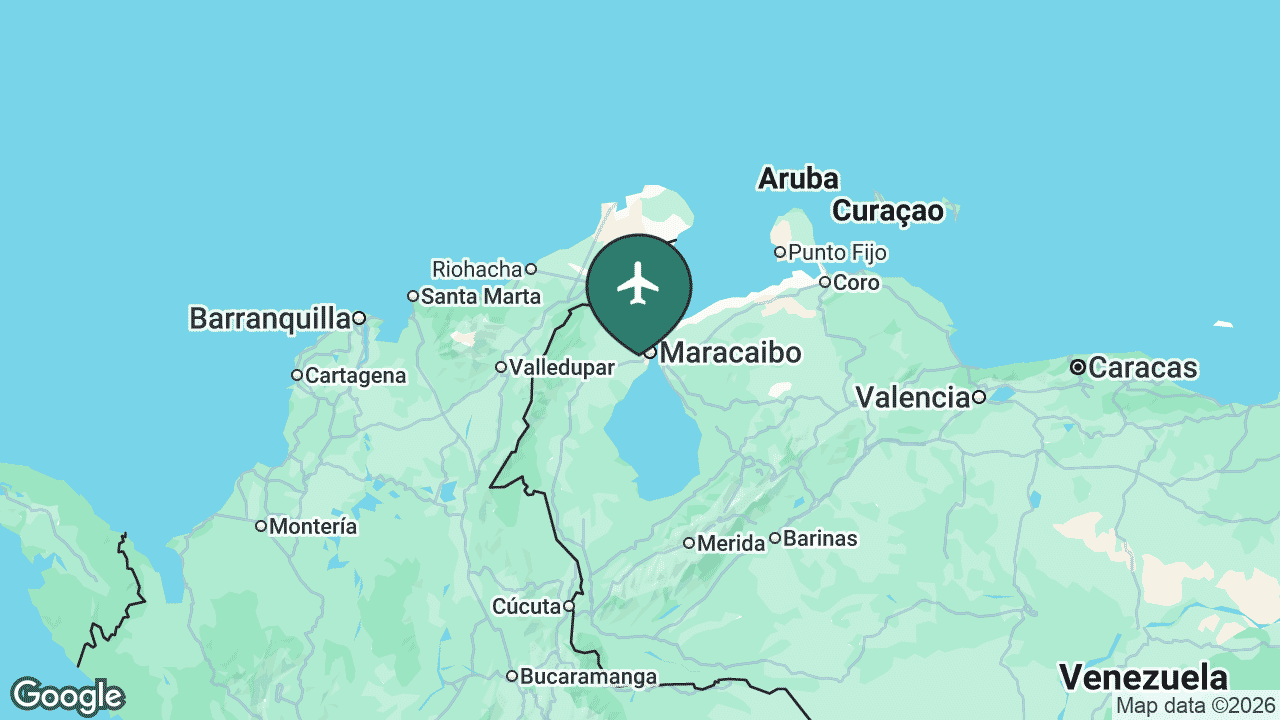
La Chinita International Airport serves Maracaibo, Venezuela’s second-largest city and the capital of Zulia state, on the western shore of Lake Maracaibo at the centre of the country’s oil industry. It takes its popular name from the city’s patron, the Virgin of Chiquinquirá (La Chinita).
MAR runs around 6 regularly-served destinations, mostly domestic links to Caracas and the islands, plus a regional connection to Panama City. Once a busier international gateway, its network has thinned along with the wider decline in Venezuelan aviation.
Main airlines: Conviasa, Venezolana, Avior Airlines, LASER Airlines, Estelar, Rutaca Airlines. See the full route map for MAR on AirportRoutes →
🛢️ Maturin (MUN)
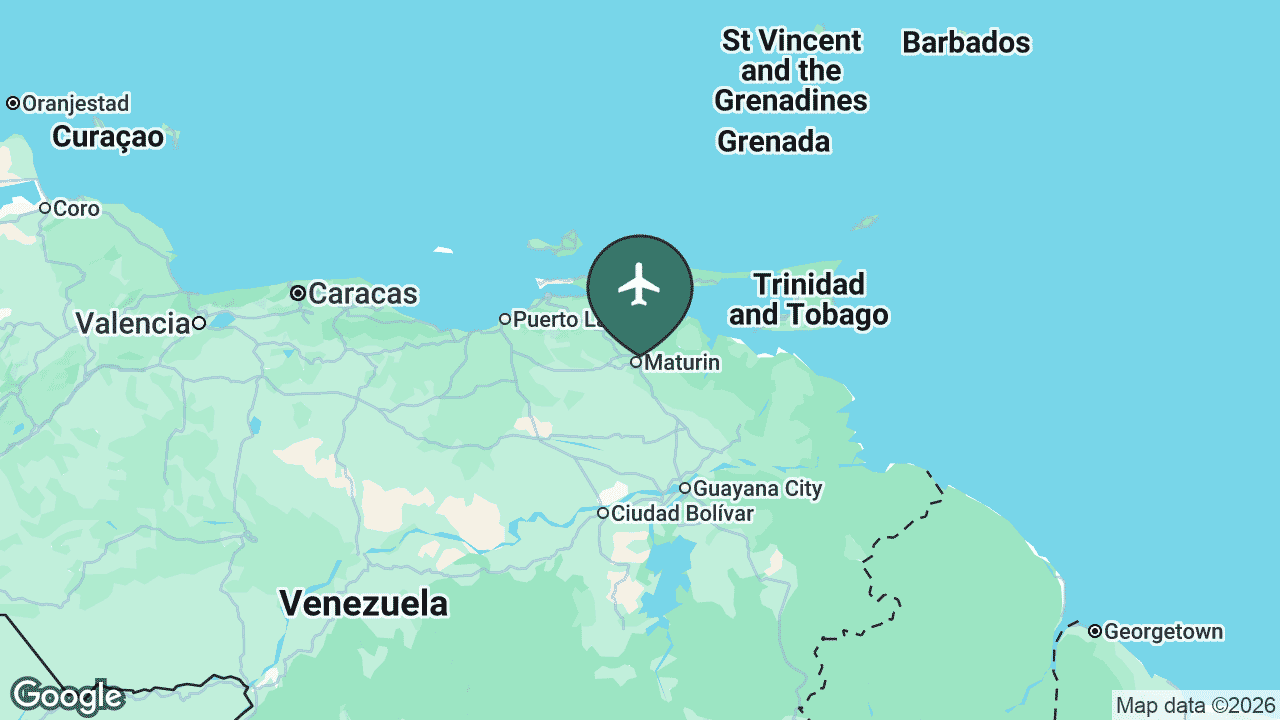
José Tadeo Monagas International Airport serves Maturín, the capital of Monagas state in the eastern oil-and-gas region. It is the main airport for the country’s eastern interior.
MUN reaches about 4 regularly-served destinations, all domestic, centred on Caracas with links to Maracaibo and Porlamar. Its traffic is driven largely by the energy industry and regional business travel.
Main airlines: Conviasa, Rutaca Airlines. See the full route map for MUN on AirportRoutes →
⛰️ San Antonio del Tachira (SVZ)
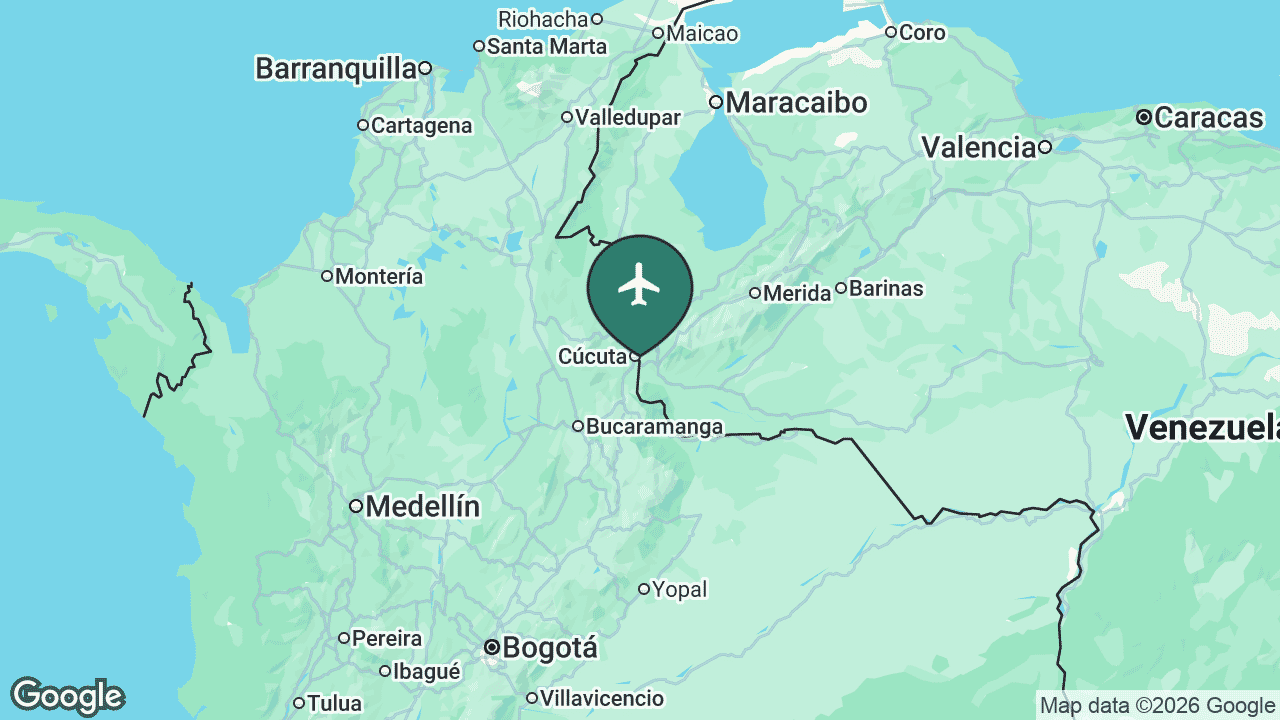
Juan Vicente Gómez International Airport sits at San Antonio del Táchira, right on the Andean border with Colombia, across from the Colombian city of Cúcuta. It serves the densely populated Táchira frontier and the heavy cross-border movement of people between the two countries.
SVZ runs around 4 regularly-served destinations, all domestic, connecting the border region to Caracas and other Venezuelan cities. The wider area is closely tied to Colombian Cúcuta, whose own airport handles much of the international traffic.
Main airlines: Rutaca Airlines, Conviasa, Estelar. See the full route map for SVZ on AirportRoutes →
🏖️ Barcelona / Puerto La Cruz (BLA)
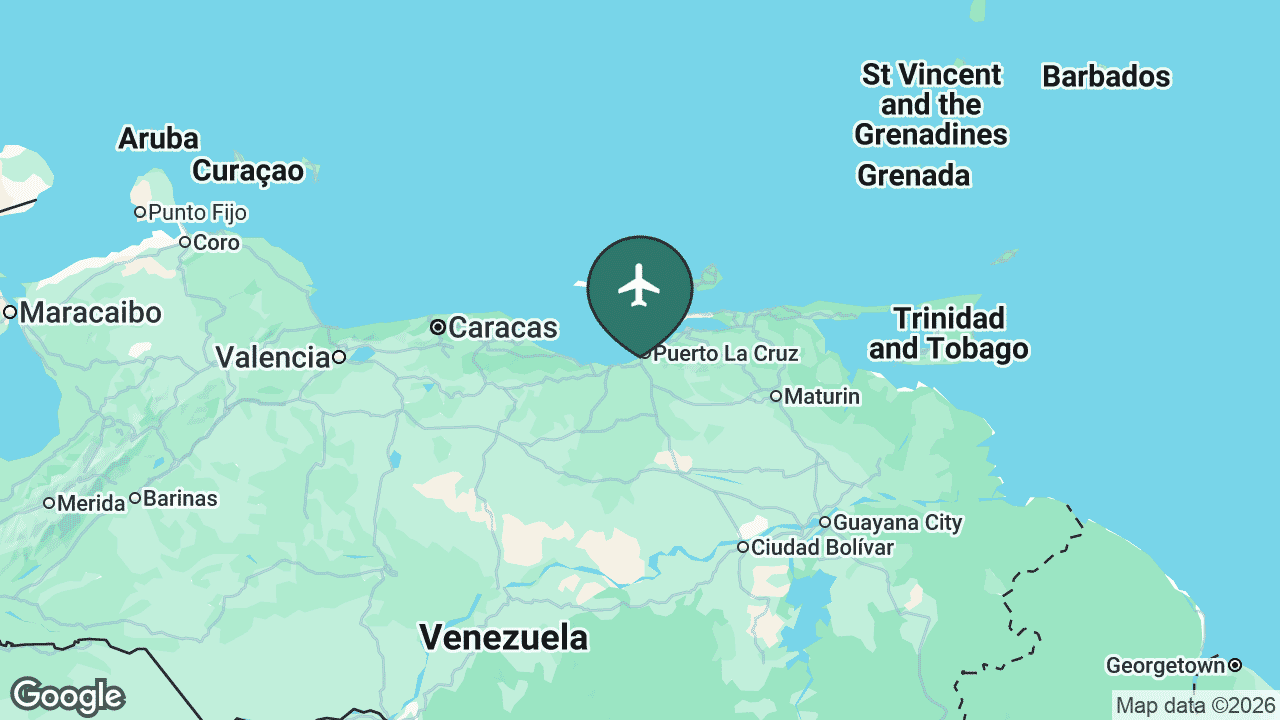
General José Antonio Anzoátegui International Airport serves the twin cities of Barcelona and Puerto La Cruz on the eastern Caribbean coast, in Anzoátegui state. The area is a popular mainland beach and boating destination and the gateway to the islands of Mochima National Park.
BLA reaches around 3 regularly-served destinations in the data, focused on domestic links to Caracas, Porlamar and Valencia. As one of the larger coastal airports it has the infrastructure for more, but scheduled service is currently modest.
Main airlines: Rutaca Airlines, Avior Airlines, LASER Airlines, Conviasa. See the full route map for BLA on AirportRoutes →
🎵 Barquisimeto (BRM)
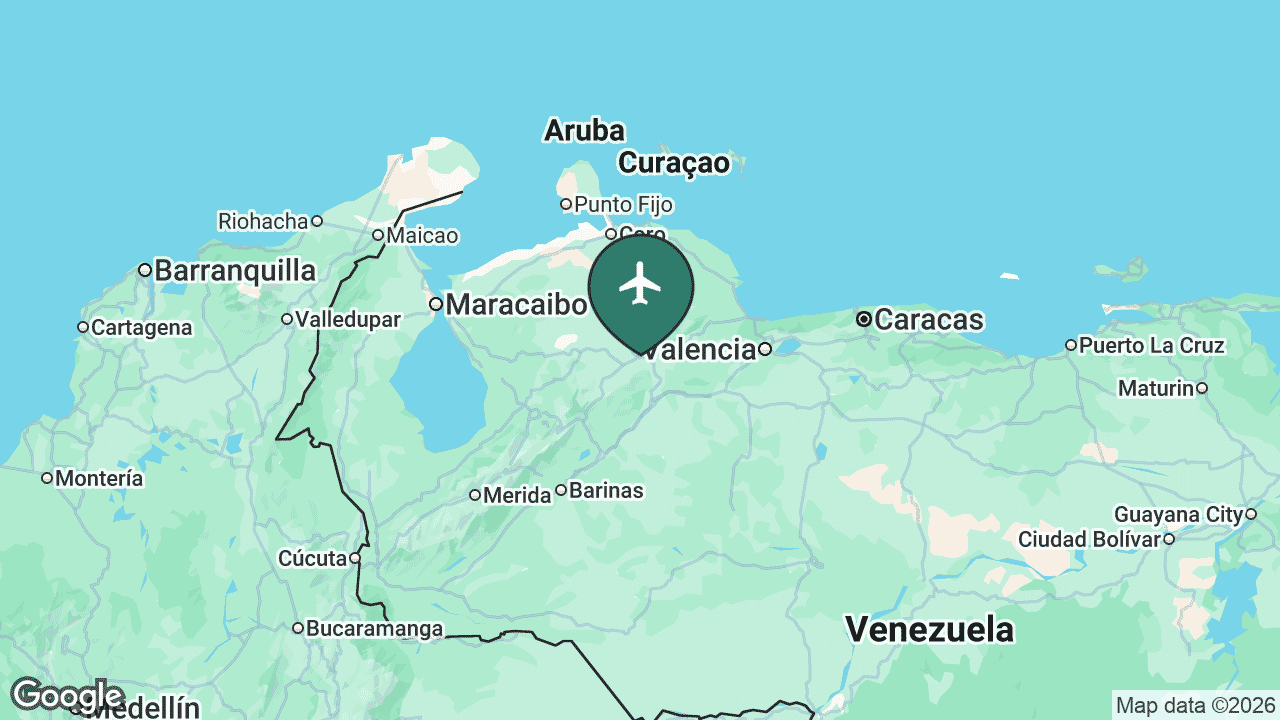
Barquisimeto International Airport serves Barquisimeto, the capital of Lara state and one of Venezuela’s largest cities, long known as the country’s musical capital. It sits in the west-central region between the coast and the Andes.
BRM runs around 3 regularly-served destinations, mainly domestic links to Caracas and the islands plus a regional connection to Panama City. It is an important node for the populous central-western interior.
Main airlines: Conviasa, Rutaca Airlines, Avior Airlines, Venezolana. See the full route map for BRM on AirportRoutes →
🏞️ Canaima (CAJ)
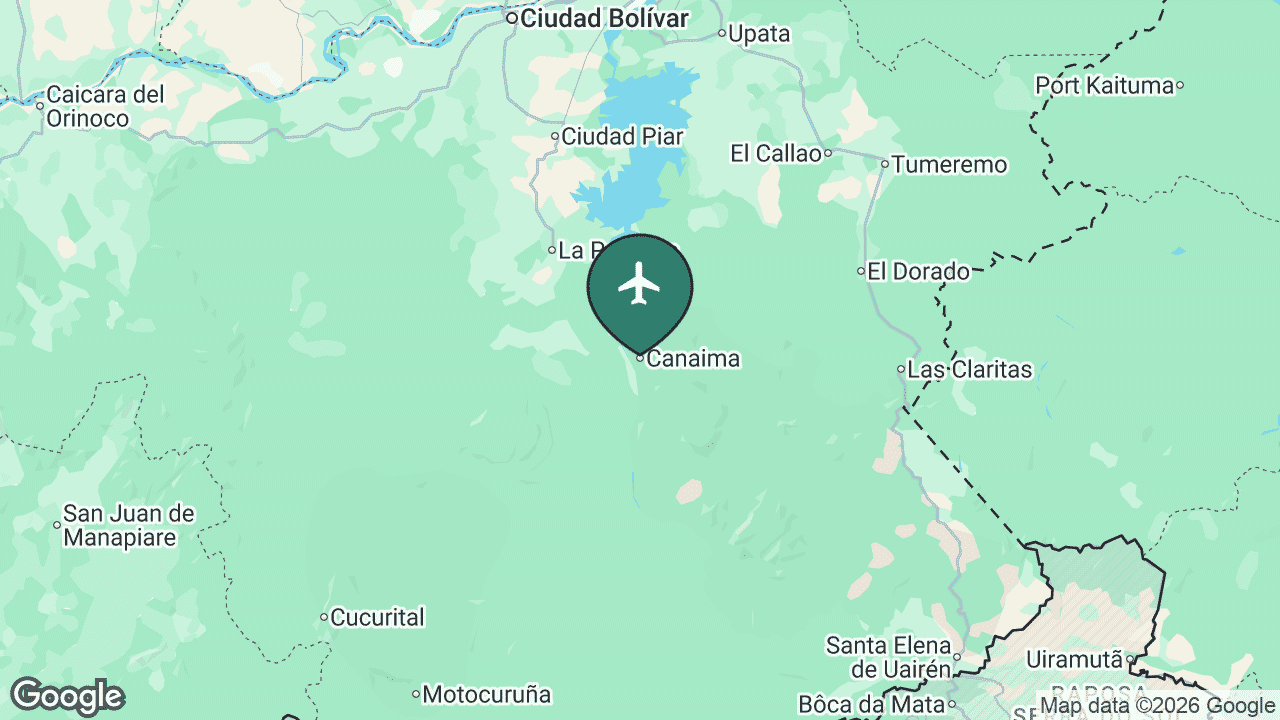
Canaima Airport is a small airstrip deep in Bolívar state, inside Canaima National Park, a UNESCO World Heritage site of table-top mountains (tepuis) and waterfalls. It is the main gateway to Angel Falls (Salto Ángel), the tallest waterfall on Earth, and to the Canaima lagoon.
Unlike the other airports here, Canaima shows no regularly-served scheduled routes in the data: it is reached mostly by light aircraft and charter flights from Ciudad Bolívar and Puerto Ordaz, often as part of an organised tour. We include it for its outsized role as the air gateway to one of South America’s great natural wonders.
Main airlines: Light-aircraft and charter operators (tour flights). See the full route map for CAJ on AirportRoutes →
Other regional airports
Beyond the airports above, several more carry scheduled service, almost all of it domestic. Santo Domingo (STD), in the Andean state of Táchira, actually ranks tenth by regularly-served routes, just behind Barquisimeto. Punto Fijo (LSP) serves the Paraguaná Peninsula in Falcón, a free-trade and refining zone with a link across to Curaçao. El Vigía (VIG) is the lowland gateway to the Andean city of Mérida, and Barinas (BNS) reaches into the western llanos.
On the coast, Cumaná (CUM) in Sucre is one of the oldest cities founded on the South American mainland, while Coro (CZE) in Falcón sits beside a UNESCO-listed colonial old town. Valera (VLV) serves the Andean state of Trujillo. Coro and Valera, like Canaima, show no regularly-served scheduled routes in the current data, a sign of how much Venezuela’s regional network has contracted.
Airport rankings, nonstop-destination counts, served regions, airline lists and connections are drawn from live AirportRoutes route data (observed AeroAPI flight data, a sample rather than a complete published schedule; we use the regularly-served figure, which filters one-off observations). Airport history, the resumption of US flights and other notable facts are cross-checked against the cited references. The ranked map is a Mappr original.
Primary Data Source:
- AirportRoutes: major airports and routes, Venezuela – Live route data: per-airport nonstop destinations, served cities, airlines and connections.
Reference:
- American Airlines: return to Venezuela (Miami to Caracas) – Resumption of nonstop US to Venezuela service on 30 April 2026, the first US carrier to return.
- Wikipedia: Venezuelan airports (Simón Bolívar, La Chinita, Del Caribe and others) – Airport history, location and notable facts referenced in the per-airport sections.
- Conviasa – Venezuela's state flag carrier; background on the domestic and international network.
- Locator maps: Google Maps / Google Static Maps – Per-airport location maps with airplane markers, generated via Google Static Maps.
Image Sources:
- Map by Mappr – Map of major airports in Venezuela, a Mappr original built from AirportRoutes data and Natural Earth boundaries.
🌍 More maps & data for Venezuela
Browse more: All airports by country


