
Key Takeaways
- Bogotá's El Dorado towers over everything. El Dorado International (BOG) reaches around 89 regularly-served nonstop destinations — more than the next four airports combined. It is the hub of flag carrier Avianca, a Star Alliance member, and one of Latin America's busiest airports for both passengers and cargo.
- Medellín has two airports. The main international gateway is José María Córdova (MDE), about 35 km from the city near Rionegro, while the in-city Enrique Olaya Herrera (EOH) handles short regional turboprop flights the big jets can't easily run. Don't confuse the two when booking.
- We rank by regularly-served routes, not raw counts. Colombia's network thins quickly after its big cities. Ranking by regularly-served destinations — routes flown often enough to count as scheduled service — gives a truer picture than raw nonstop totals, which can overstate airports with occasional seasonal or charter flights.
- Colombia has many US gateways, not one. Unlike most countries, Colombia has direct US flights from several cities. Bogotá leads with nine US destinations, but Medellín, Cartagena, Barranquilla, Cali and even Pereira and Armenia also fly nonstop to the US — reflecting one of Latin America's largest US travel markets.
- Tourism and remote regions shape the rest. Beyond the Andean cities, the standout airports are Caribbean tourism magnets (Cartagena, Santa Marta, the island of San Andrés), the Coffee Region (Pereira, Armenia) and remote lifeline fields reaching the Pacific (Quibdó, Bahía Solano) and the Amazon (Leticia).
Colombia is the gateway between Central and South America, and its airport network reflects a country split by three Andean mountain ranges, a long Caribbean coast, a Pacific shore and a vast Amazon and Llanos interior. Almost everything centres on Bogotá, whose high-altitude El Dorado International Airport (BOG) is one of Latin America’s busiest hubs and the main base of flag carrier Avianca.
After the capital come Medellín — which uniquely has two airports, the international José María Córdova (MDE) near Rionegro and the in-city Olaya Herrera (EOH) for regional flights — plus Cali in the southwest and the Caribbean tourist city of Cartagena. A wave of low-cost flying reshaped the market in recent years: after Avianca emerged from bankruptcy and the budget airlines Viva Air and Ultra Air both collapsed in 2023, Chile’s JetSMART, Copa’s Wingo and others moved in to fill the gap.
Below we map and rank Colombia’s airports by the number of nonstop destinations each one serves, drawn from live route data on AirportRoutes. We rank by regularly-served destinations — routes flown often enough to count as scheduled service — rather than raw nonstop totals, which can overstate airports with occasional seasonal flying. The figures come from observed flight data (a large sample rather than a complete published timetable), so treat them as a guide to relative connectivity, not official totals.
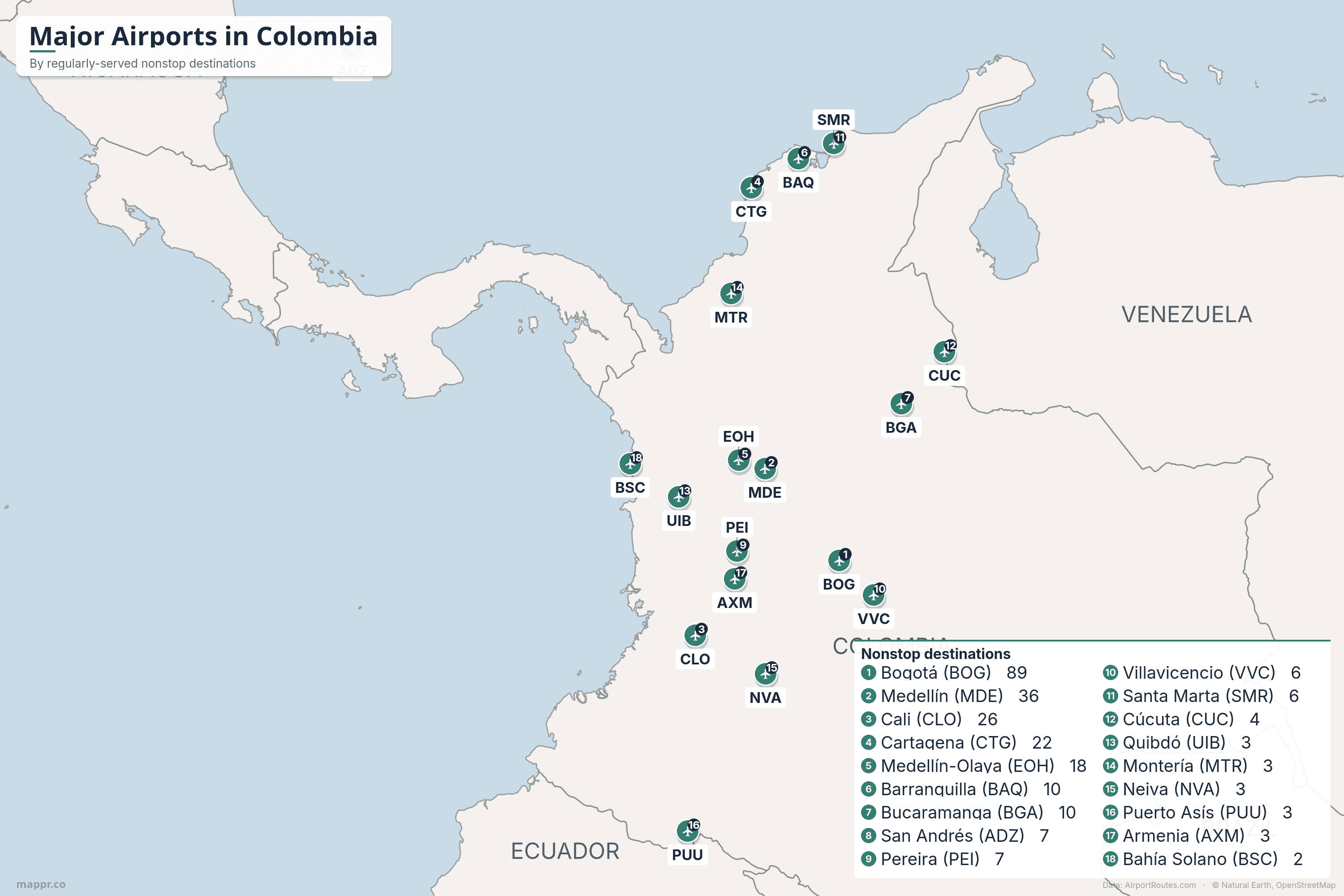
Which Colombian airports have direct flights to the US?
Colombia is one of Latin America’s biggest air markets to the United States, fed by a large Colombian-American community in Florida, New York and beyond — and unusually, nonstop US flights leave from several Colombian cities, not just the capital. Bogotá–El Dorado (BOG) leads by far, with nonstop service to Miami, New York, Washington, Houston, Los Angeles, Atlanta, Dallas-Fort Worth, Orlando and Chicago on Avianca, American, Delta, United, JetBlue and Spirit.
Medellín (MDE) is a strong second gateway — New York, Miami, Fort Lauderdale, Houston, Orlando and Los Angeles — followed by the Caribbean cities of Cartagena (CTG: Miami, Fort Lauderdale, New York, Atlanta) and Barranquilla (BAQ), plus Cali (CLO) to Florida and even smaller links such as Pereira to New York and Armenia to Fort Lauderdale. Many smaller cities also reach the US in one stop through Panama City, the Tocumen hub of Copa Airlines.
Ranked
Major Airports in Colombia by Nonstop Destinations
Ranked by regularly-served nonstop destinations, busiest first.
| Airport | IATA | Nonstop | Region |
|---|---|---|---|
| 1. Bogotá | BOG | 89 | Capital (Andes) |
| 2. Medellín (Rionegro) | MDE | 36 | Antioquia (Andes) |
| 3. Cali | CLO | 26 | Valle del Cauca |
| 4. Cartagena | CTG | 22 | Caribbean coast |
| 5. Medellín (Olaya Herrera) | EOH | 18 | Medellín (city airport) |
| 6. Barranquilla | BAQ | 10 | Caribbean coast |
| 7. Bucaramanga | BGA | 10 | Santander (Andes) |
| 8. San Andrés | ADZ | 7 | Caribbean island |
| 9. Pereira | PEI | 7 | Coffee Region |
| 10. Villavicencio | VVC | 6 | Los Llanos (Meta) |
| 11. Santa Marta | SMR | 6 | Caribbean coast |
| 12. Cúcuta | CUC | 4 | Venezuela border |
| 13. Quibdó | UIB | 3 | Chocó (Pacific) |
| 14. Montería | MTR | 3 | Córdoba (Caribbean) |
| 15. Neiva | NVA | 3 | Huila (south) |
| 16. Puerto Asís | PUU | 3 | Putumayo (Amazon) |
| 17. Armenia | AXM | 3 | Coffee Region |
| 18. Bahía Solano | BSC | 2 | Chocó (Pacific) |
A closer look at Colombia’s main airports
🛫 Bogotá (BOG)
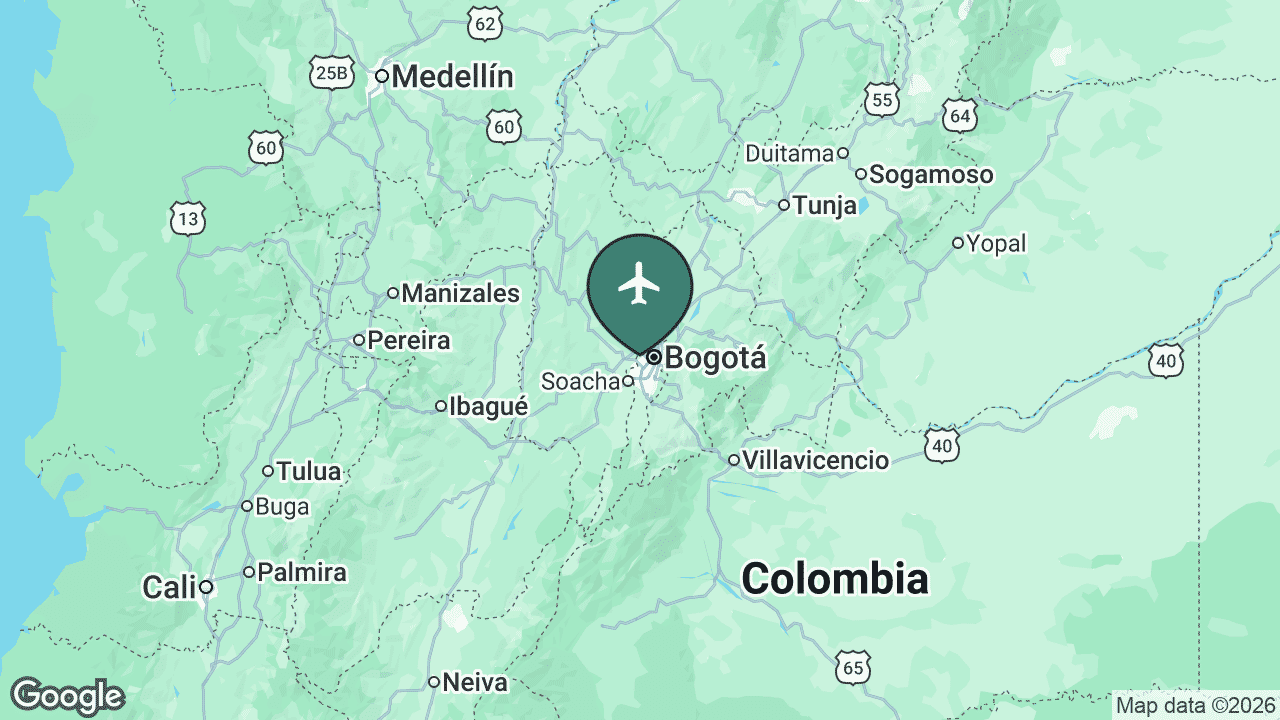
El Dorado International Airport sits about 15 km west of central Bogotá at an altitude of 2,548 m — one of the highest major airports in the world. It is Colombia’s dominant gateway, consistently among the busiest airports in Latin America for both passengers and cargo, and the principal hub of Avianca, the country’s Star Alliance flag carrier.
El Dorado reaches around 89 regularly-served nonstop destinations — far more than any other Colombian airport — spanning dense domestic links, the whole of the Americas and long-haul routes to Europe. It is also Colombia’s busiest cargo airport, a key conduit for the country’s cut-flower exports to the United States.
Main airlines: Avianca, LATAM, JetSMART, Wingo, Satena, Clic. See the full route map for BOG on AirportRoutes →
✈️ Medellín – Rionegro (MDE)
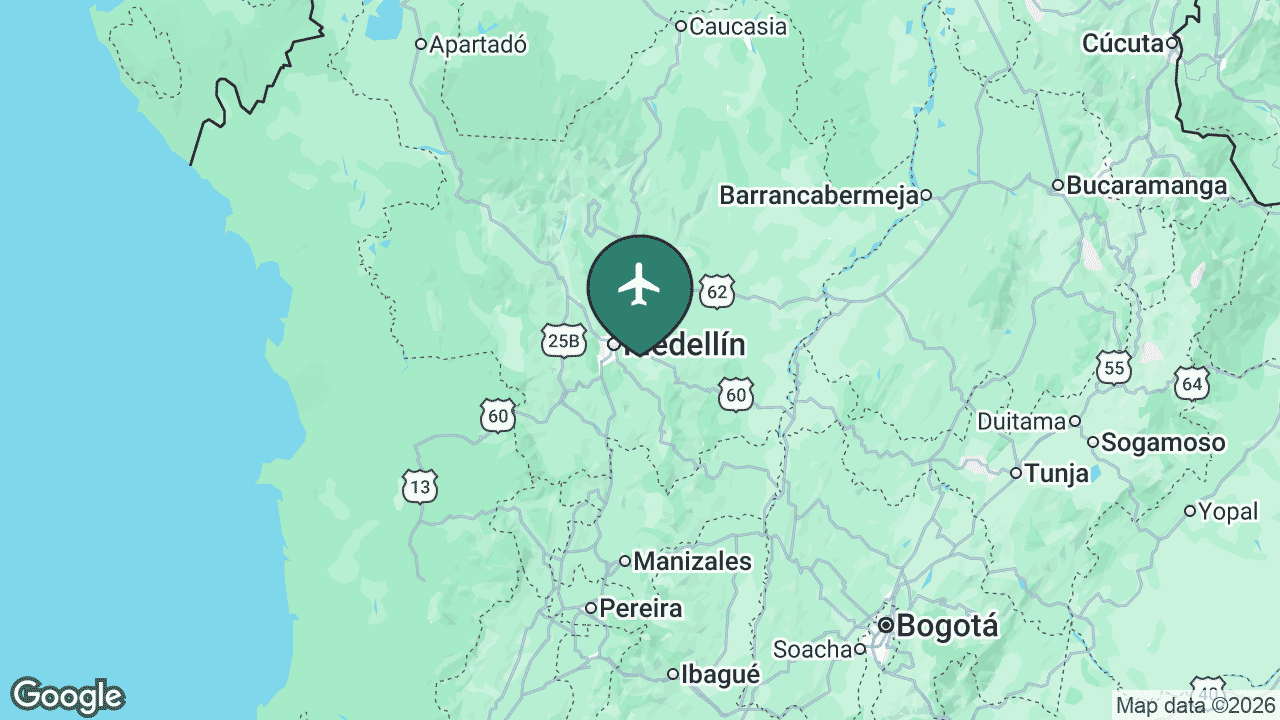
José María Córdova International Airport serves Medellín from the town of Rionegro, about 35 km southeast of the city on a high plateau. It is Colombia’s second-largest international gateway and the main long-haul airport for the Antioquia region, handling almost all of Medellín’s international and jet traffic.
Medellín’s Rionegro airport reaches about 36 regularly-served nonstop destinations, including direct flights to several US cities, Panama, the Dominican Republic and across Colombia. It is a focus city for Avianca and a base for low-cost carriers including JetSMART and the Dominican airline Arajet.
Main airlines: Avianca, LATAM, JetSMART, Wingo, Arajet, Spirit. See the full route map for MDE on AirportRoutes →
🛩️ Medellín – Olaya Herrera (EOH)
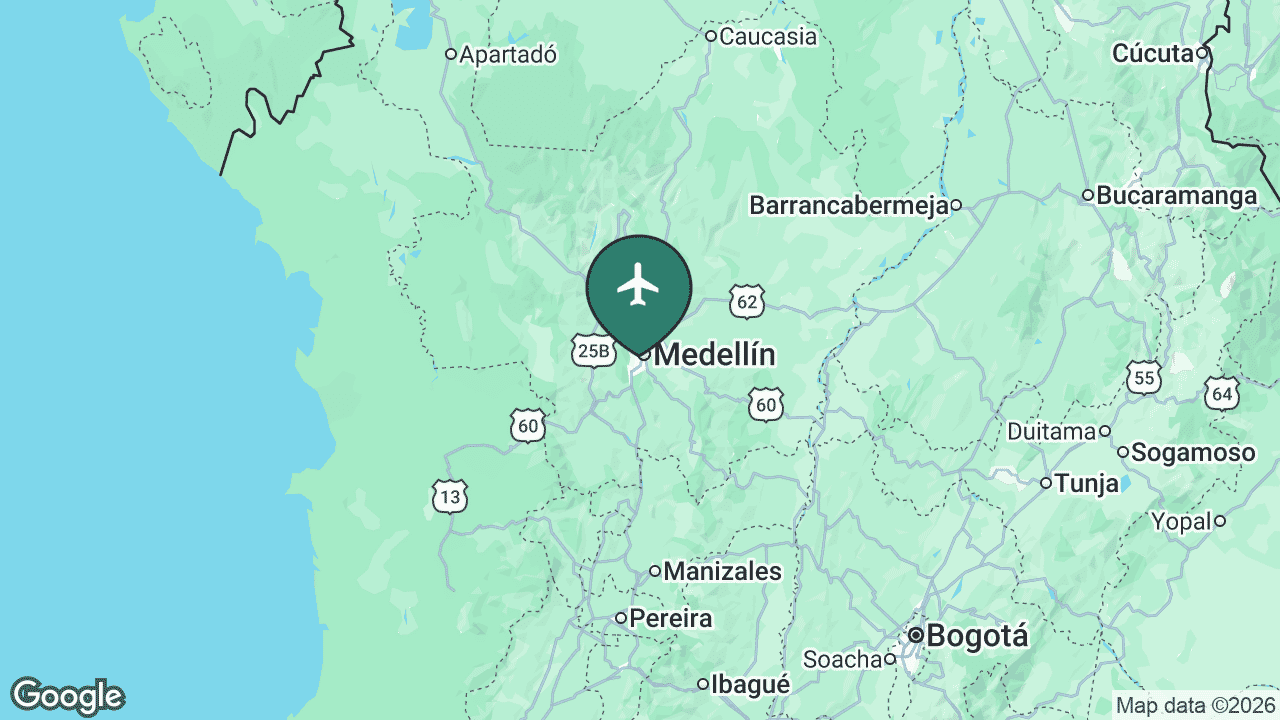
Enrique Olaya Herrera Airport sits right inside Medellín, in the Belén district, ringed by mountains and the city itself. With its short runway it can’t handle big jets, so it specialises in regional turboprop flights to smaller towns across Antioquia and the wider region that the larger Rionegro airport doesn’t serve.
Olaya Herrera reaches around 18 regularly-served destinations, all domestic, on regional carriers such as Satena and Clic flying turboprops to towns including Quibdó, Apartadó, Montería and across Antioquia. For travellers it’s a reminder to check which Medellín airport a flight uses — the two are about an hour apart.
Main airlines: Clic, Satena. See the full route map for EOH on AirportRoutes →
🏙️ Cali (CLO)
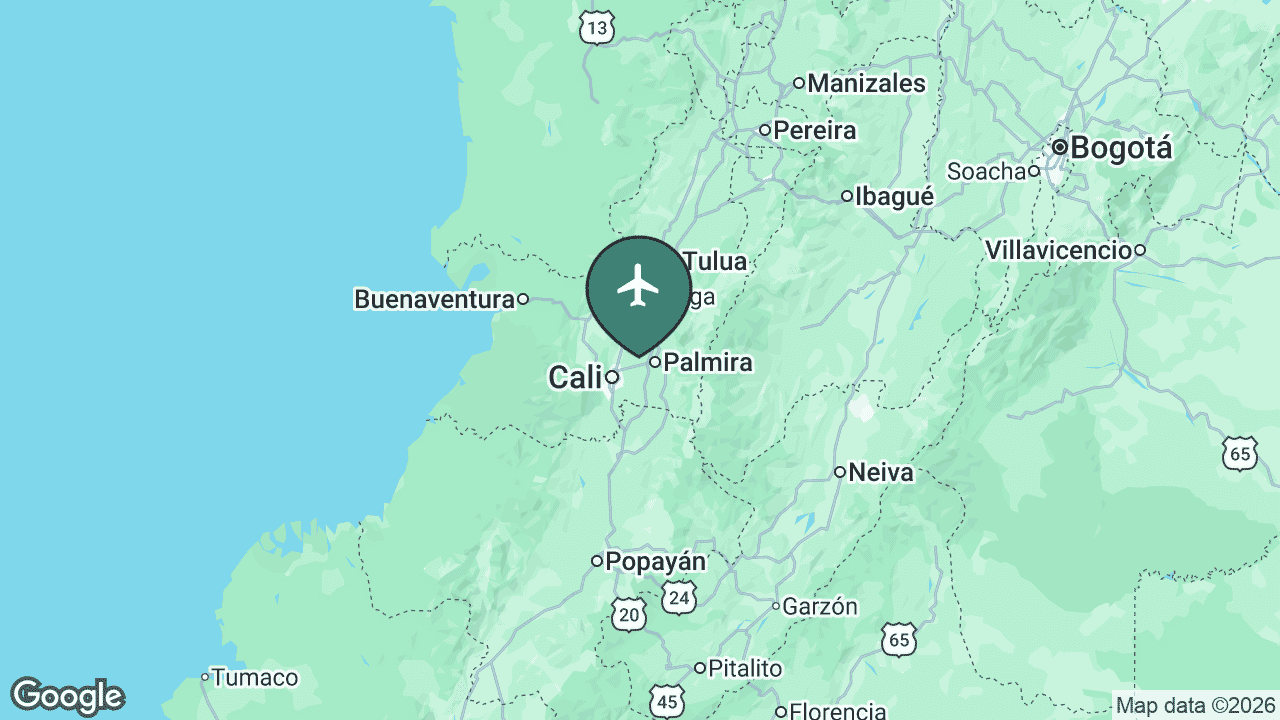
Alfonso Bonilla Aragón International Airport serves Cali from Palmira, about 16 km northeast of the city. As Colombia’s third-busiest airport, it is the gateway to the Valle del Cauca, the southwest and the Pacific region, and a secondary hub for the country’s main carriers.
Cali reaches about 26 regularly-served nonstop destinations, combining a dense domestic network with international flights to Panama, the US (Miami and Fort Lauderdale) and other regional points. It anchors air travel for southwestern Colombia and the Pacific coast.
Main airlines: Avianca, LATAM, JetSMART, Wingo, Satena, Clic. See the full route map for CLO on AirportRoutes →
🏖️ Cartagena (CTG)
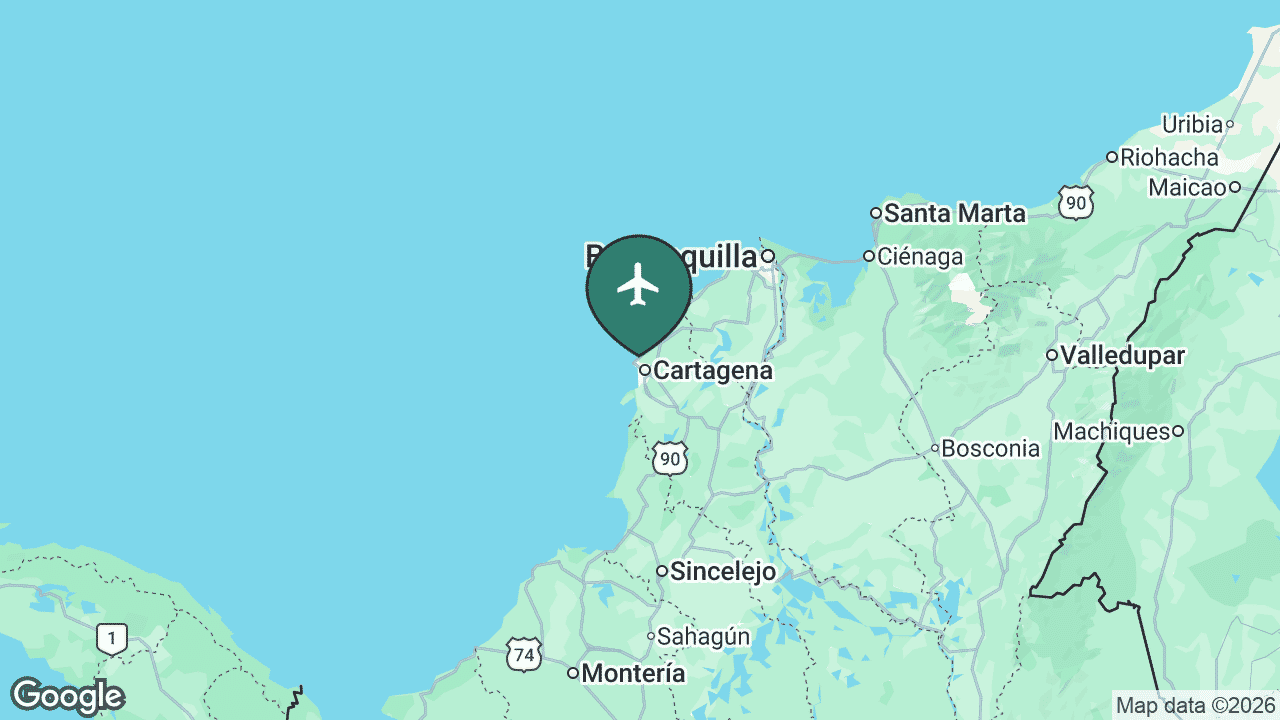
Rafael Núñez International Airport sits just minutes from the historic walled city of Cartagena, Colombia’s Caribbean tourism star. Its proportion of international flights is unusually high for a Colombian airport, reflecting the city’s popularity with visitors from the US, Canada and across the Americas.
Cartagena reaches around 22 regularly-served nonstop destinations, with a high share of international service — the US, Panama, and seasonal links to Canada on Air Transat alongside the domestic network. It is one of Colombia’s most important tourism airports.
Main airlines: Avianca, LATAM, JetSMART, Copa Airlines, Wingo, Air Transat. See the full route map for CTG on AirportRoutes →
🎭 Barranquilla (BAQ)
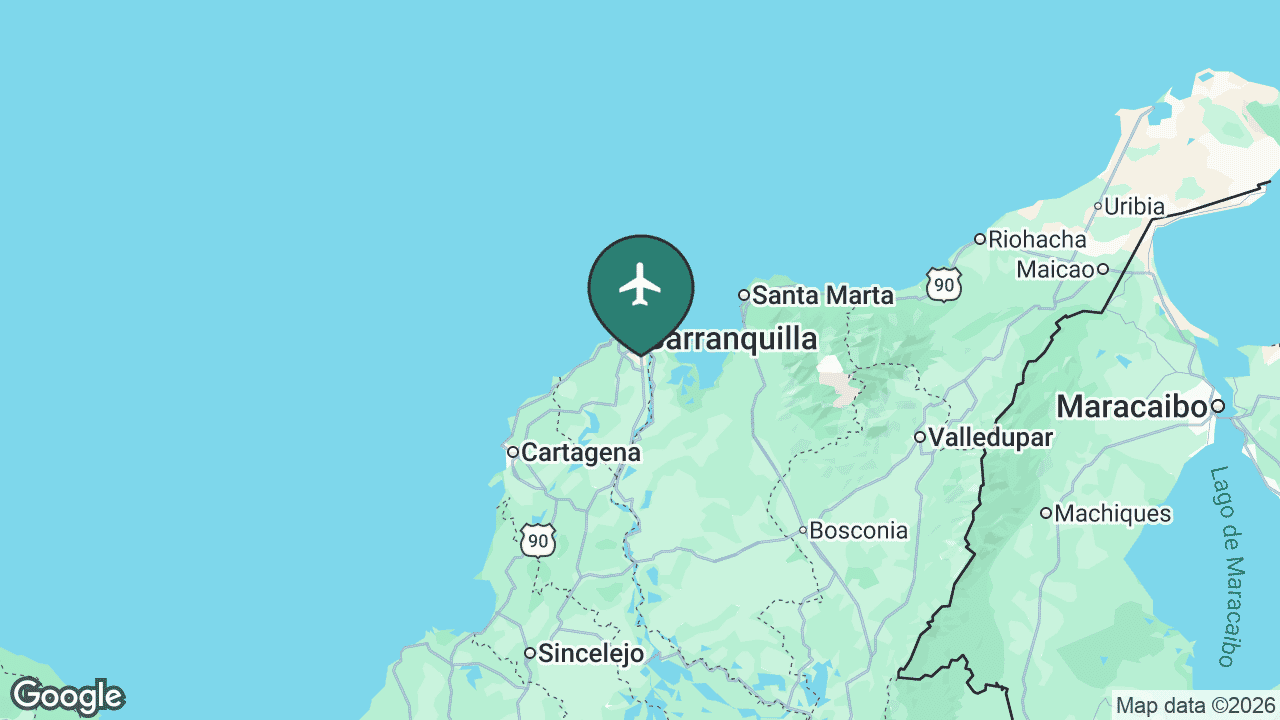
Ernesto Cortissoz International Airport serves Barranquilla, the big industrial port city at the mouth of the Magdalena River and home of Colombia’s most famous Carnival. It is one of the main airports of the Caribbean coast, with a solid mix of domestic and international service.
Barranquilla reaches about 10 regularly-served nonstop destinations, including nonstop flights to Miami and Fort Lauderdale on American and Spirit, plus Panama and a full domestic network. It shares the Caribbean-coast market with nearby Cartagena and Santa Marta.
Main airlines: Avianca, LATAM, Copa Airlines, American Airlines, Spirit, Wingo. See the full route map for BAQ on AirportRoutes →
⛰️ Bucaramanga (BGA)
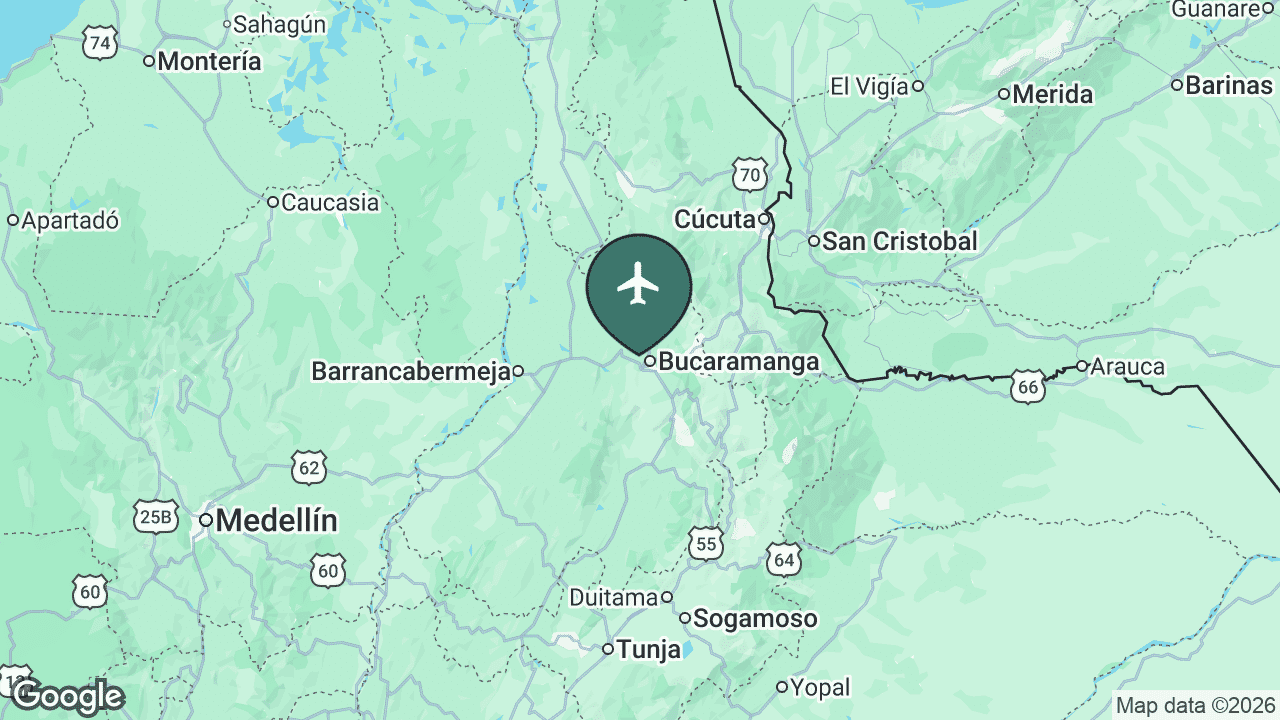
Palonegro International Airport serves Bucaramanga from a mesa at Lebrija in the northeastern Andes, the capital of Santander. It is a busy regional airport, focused on domestic flying with a handful of international links.
Bucaramanga reaches around 10 regularly-served nonstop destinations, overwhelmingly domestic, with international links to Panama City and Fort Lauderdale. It is the principal airport of Colombia’s northeast.
Main airlines: Avianca, LATAM, Copa Airlines, Wingo, Satena, Clic. See the full route map for BGA on AirportRoutes →
🏝️ San Andrés (ADZ)
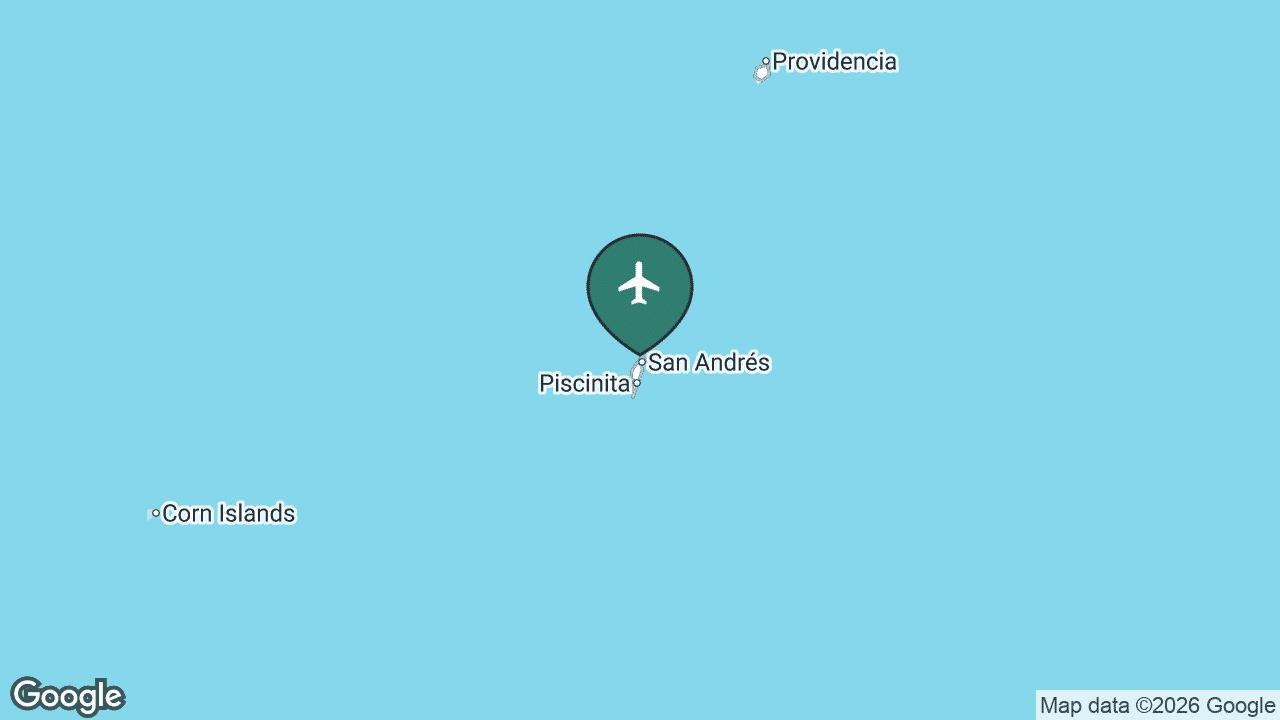
Gustavo Rojas Pinilla International Airport serves the island of San Andrés, a Colombian Caribbean territory roughly 700 km northwest of the mainland — closer to Nicaragua than to Colombia. The island is a duty-free shopping and beach-holiday magnet famous for its “Sea of Seven Colours”.
San Andrés reaches about 7 regularly-served nonstop destinations, almost all domestic flights from Bogotá, Medellín, Cali and the Caribbean cities carrying holidaymakers, plus an onward hop to the smaller island of Providencia. Traffic is heavily tourism-driven.
Main airlines: Avianca, LATAM, JetSMART, Copa Airlines, Wingo, Satena. See the full route map for ADZ on AirportRoutes →
☕ Pereira (PEI)
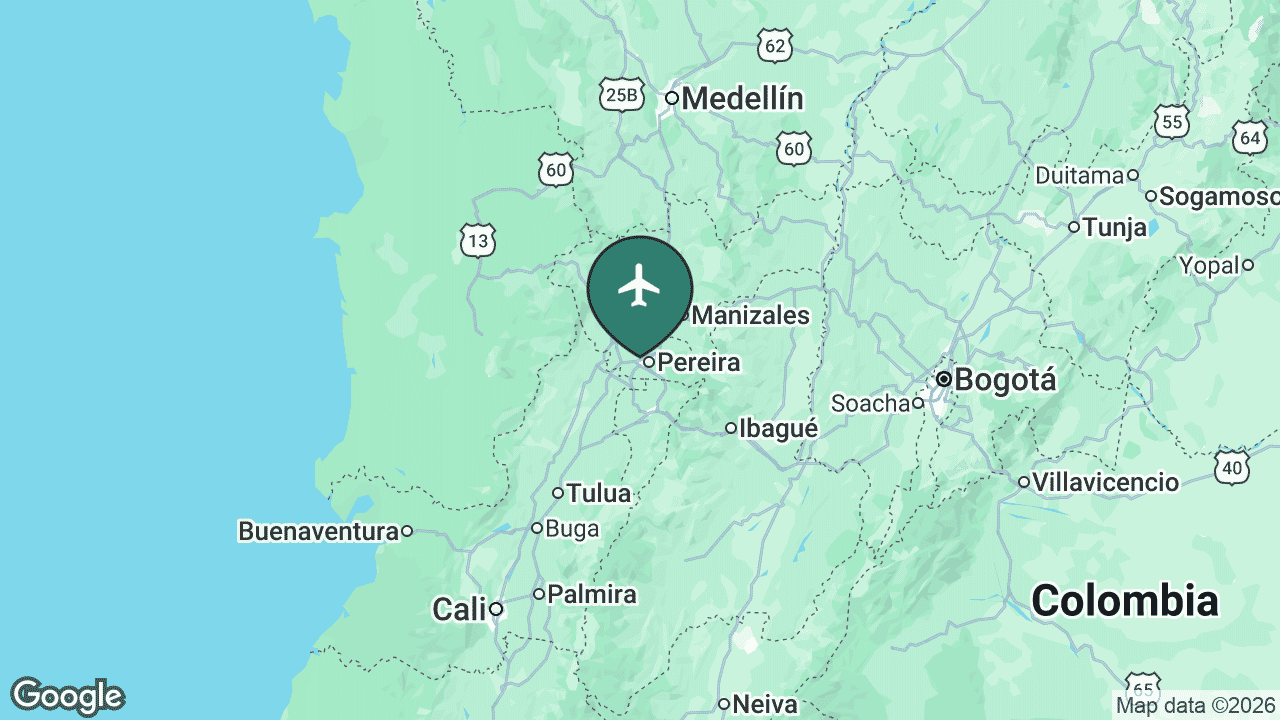
Matecaña International Airport serves Pereira, at the heart of Colombia’s Coffee Region (Eje Cafetero), a UNESCO-listed cultural landscape. The airport is the busiest of the three coffee-belt fields and a gateway for both tourism and the region’s strong diaspora ties to the US.
Pereira reaches around 7 regularly-served nonstop destinations, led by domestic links to Bogotá, Medellín and Cartagena, plus a nonstop to New York on Avianca and connections via Panama. It is the main air gateway to the coffee-growing heartland.
Main airlines: Avianca, LATAM, JetSMART, Copa Airlines, Clic. See the full route map for PEI on AirportRoutes →
🏝️ Santa Marta (SMR)
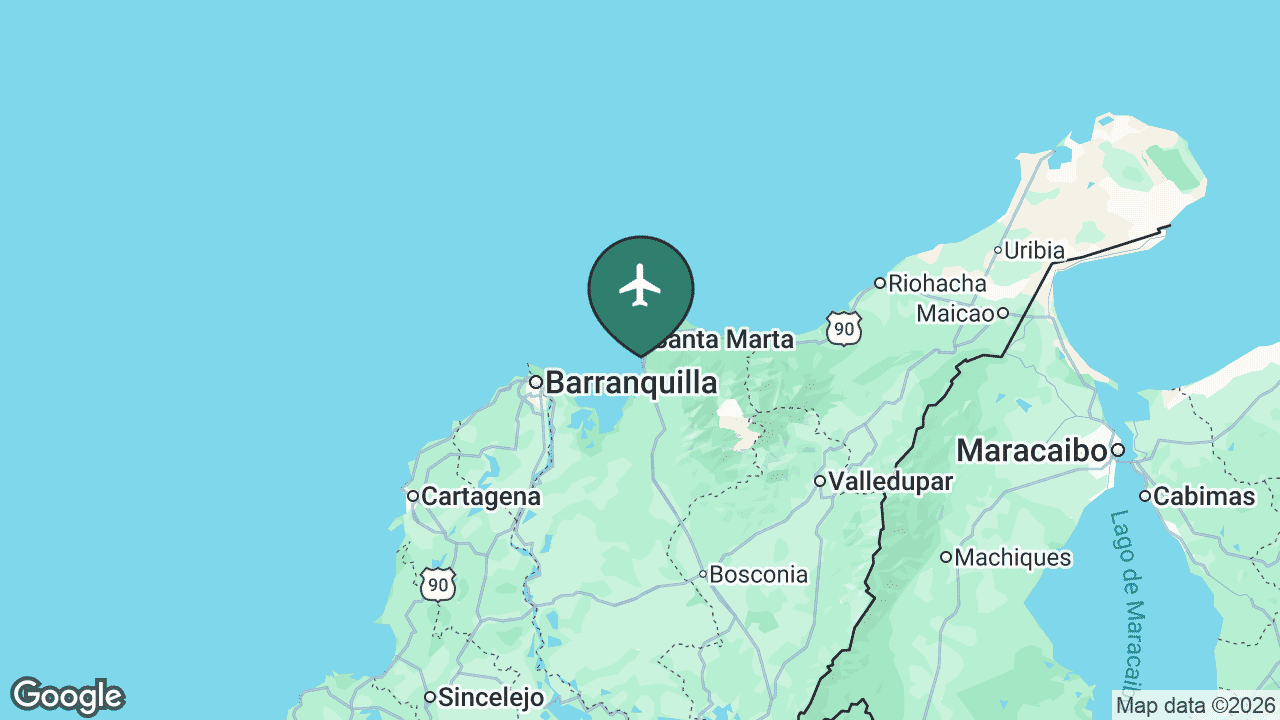
Simón Bolívar International Airport serves Santa Marta, the oldest surviving city in Colombia and the gateway to Tayrona National Park, the Sierra Nevada de Santa Marta and a string of Caribbean beaches. Tourism drives much of its traffic.
Santa Marta reaches about 6 regularly-served nonstop destinations, mostly domestic flights from Bogotá, Medellín and Cali, with a link to Panama. Its beaches and national parks make it one of the Caribbean coast’s busier leisure airports.
Main airlines: Avianca, LATAM, JetSMART, Copa Airlines, Wingo. See the full route map for SMR on AirportRoutes →
Colombia’s other regional airports
Beyond the busiest ten, Colombia’s rugged geography is held together by a wide web of regional airports — many of them lifelines to towns the mountains and jungle make hard to reach by road.
In the interior, Villavicencio (VVC) is the gateway to the eastern plains (Los Llanos), Cúcuta (CUC) sits on the busy Venezuelan border, and Neiva (NVA) serves Huila and the Tatacoa Desert. Armenia (AXM) and Manizales (MZL) complete the Coffee Region trio alongside Pereira, while Montería (MTR) serves the Caribbean savanna and cattle country of Córdoba.
On the remote fringes, Quibdó (UIB) and Bahía Solano (BSC) reach the rainforested Pacific department of Chocó — the latter a base for whale-watching — and Puerto Asís (PUU) and Pasto (PSO) serve the southern Andes and Putumayo. Deep in the rainforest, Leticia (LET) is Colombia’s Amazon gateway at the triple frontier with Brazil and Peru, reachable only by air or river. Most of these airports are served by Satena, the state-owned carrier that keeps Colombia’s most isolated communities connected.
Airport rankings, nonstop-destination counts, served regions, airline lists and US connections are drawn from live AirportRoutes route data (observed AeroAPI flight data — a sample, not a complete published schedule; we use the regularly-served figure, which filters one-off observations). Airport history and notable facts are cross-checked against the cited references. The ranked map is a Mappr original.
Primary Data Source:
- AirportRoutes — Major airports & routes, Colombia – Live route data: per-airport nonstop destinations, served cities, airlines and US connections.
Reference:
- Wikipedia — Colombian airports (El Dorado, José María Córdova & others) – Airport history, location and notable facts referenced in the per-airport sections.
- Aerocivil (Aeronáutica Civil de Colombia) – Colombia's civil aviation authority — background on the national airport network.
- Locator maps — Google Maps / Google Static Maps – Per-airport location maps with airplane markers, generated via Google Static Maps.
Image Sources:
- Map by Mappr – Map of major airports in Colombia — a Mappr original built from AirportRoutes data and Natural Earth boundaries.
🌍 More maps & data for Colombia
Browse more: All airports by country


