
Some countries never really thaw. Above the Arctic Circle, across Siberia and inside the high plateaus of Central Asia, the annual average stays close to or below freezing for the whole year, and record lows drop into −60 °C (−76 °F) territory. This page ranks the world’s twenty coldest countries by their annual mean surface-air temperature, using the Berkeley Earth country dataset built on the CRU TS climatological record (1991-2020 normal).
Two rankings run in parallel below. The first is that yearly average, which produces the ranked list of twenty countries covered in the deep-dive section. The second is the lowest temperature ever recorded in each country, taken from national meteorological archives compiled by the World Meteorological Organization and Wikipedia’s weather-records list. The two rankings overlap heavily at the top (Greenland, Russia, Canada) but diverge lower down, because a single Alpine mountain valley or a Central Asian glacier can generate a colder record than a country’s overall climate would suggest.
A note on Greenland and the Faroe Islands: neither is an independent country. Both are autonomous territories of the Kingdom of Denmark. We include them because omitting Greenland from a list of the coldest places on Earth would misrepresent the geography. Antarctica is left out for the same reason a list of the driest countries excludes the Sahara: it is a continent, not a country.
Key Takeaways
- Greenland leads by a wide margin. Its 1991-2020 annual mean is about minus 19 degrees Celsius, roughly 13 degrees colder than the next country on the list.
- Russia and Canada tie for continent-scale cold. Both national averages hover near minus 5 degrees Celsius, pulled down by vast interior sub-Arctic zones.
- Records diverge from averages. Countries like Switzerland and Austria only make the record-low list because of extreme readings in single Alpine sinkholes such as the Grunloch dolinen.
- Warming has shifted the baseline. Every country on this list is on average around a third of a degree Celsius warmer than in the 1961-1990 climatological normal, so today lived winters are milder than the historical record lows suggest.
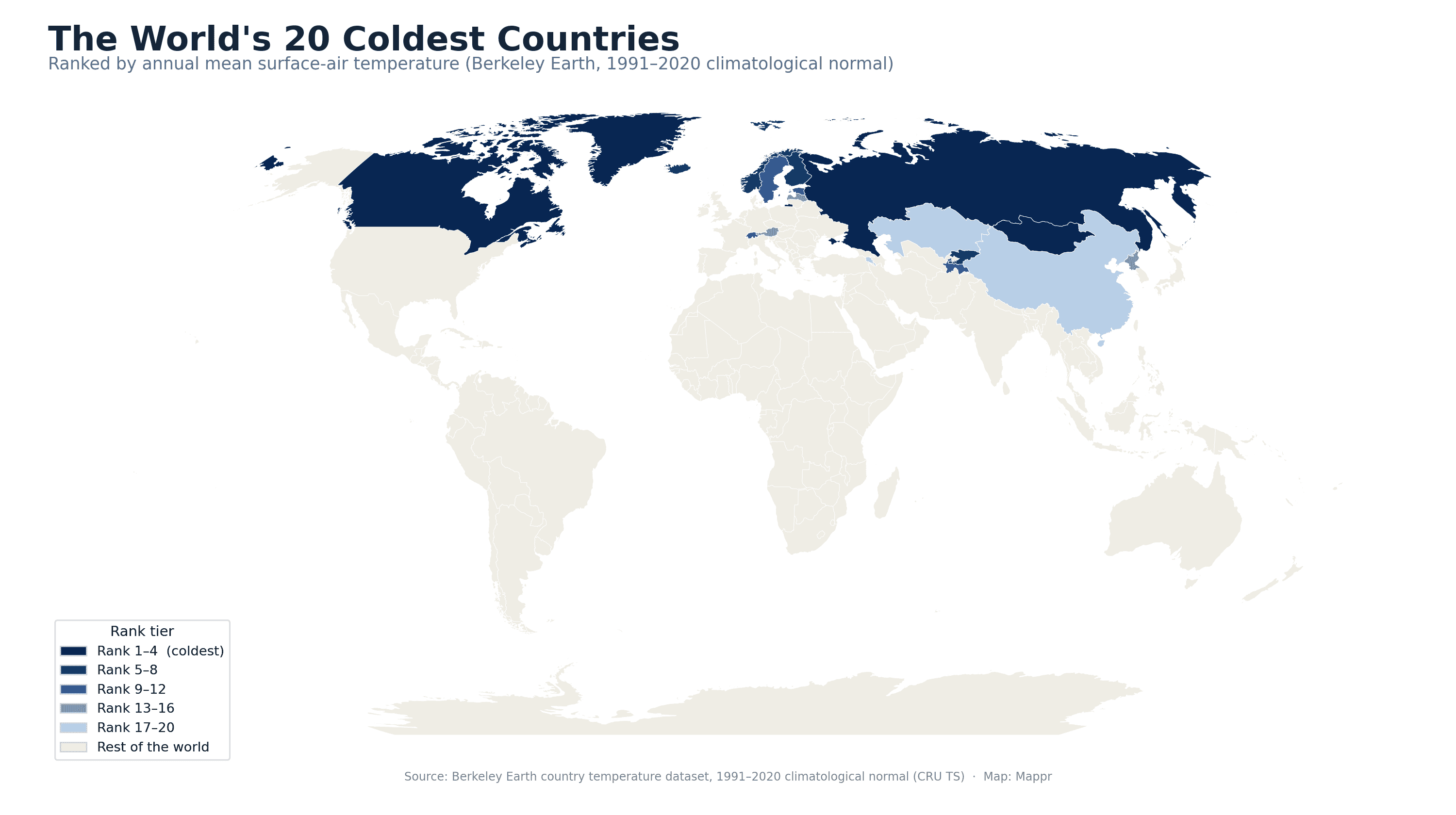
| Country | Celsius | Fahrenheit | |
|---|---|---|---|
| 1 | Greenland (Denmark) | -69.60 | -93.22 |
| 2 | Russia | -67.80 | -89.92 |
| 3 | Canada | -63.00 | -81.40 |
| 4 | Tajikistan | -63.00 | -81.40 |
| 5 | United States | -62.20 | -79.96 |
| 6 | China | -58.00 | -72.40 |
| 7 | Kazakhstan | -57.00 | -70.60 |
| 8 | Mongolia | -55.30 | -67.54 |
| 9 | Kyrgyzstan | -53.60 | -64.48 |
| 10 | Sweden | -53.00 | -63.40 |
| 11 | Austria | -52.60 | -62.72 |
| 12 | Afghanistan | -52.20 | -62.04 |
| 13 | Pakistan | -52.00 | -61.60 |
| 14 | Finland | -51.50 | -60.70 |
| 15 | Norway | -51.40 | -60.52 |
| 16 | Italy | -49.60 | -57.28 |
| 17 | India | -48.00 | -54.40 |
| 18 | Turkey | -46.40 | -51.52 |
| 19 | Germany | -46.90 | -52.34 |
| 20 | North Korea | -43.60 | -46.48 |
1. Greenland
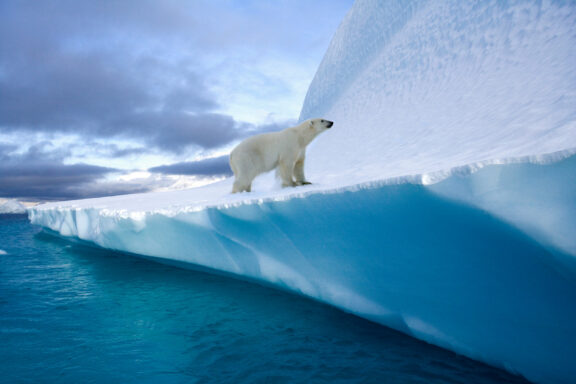
To start things off, we have the island with the lowest temperature in the world. Despite its misleading name, Greenland’s bitter cold temperatures evoke anything but visions of sunny pastures and verdant valleys. Eighty percent of the world’s largest island is blanketed in a 4-kilometer thick ice sheet.
Re-derive all 20 per-country annual-mean figures (Greenland through Austria) from the Berkeley Earth 1991-2020 country dataset the intro and summary box now claim, and update every body section consistently (e.g., Greenland ≈ -19°C per the summary box, not -17.18°C). If rank order shifts (summary box says Canada and Russia ‘tie near -5°C’ while the body has Canada at -6.36°C ahead of Russia at -5.16°C), section order, numbering, and map tiers must follow.
While Greenland is a fully autonomous region and the world’s largest island, it remains a part of Denmark. Hence, we can’t call Greenland the coldest country in the world.
So next up, we have the coldest country in the world:
2. Canada
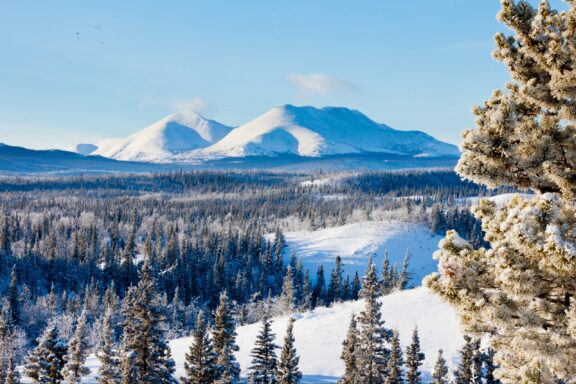
The coldest country in the world is Canada (in terms of average temperature). The lowest temperature ever recorded was -81.4 °F (-63 °C) in the Yukon Territory in 1947. Fortunately, the average sits at 20.55 °F (-6.36 °C), which seems positively toasty compared to that record low of -63 °C.
3. Russia
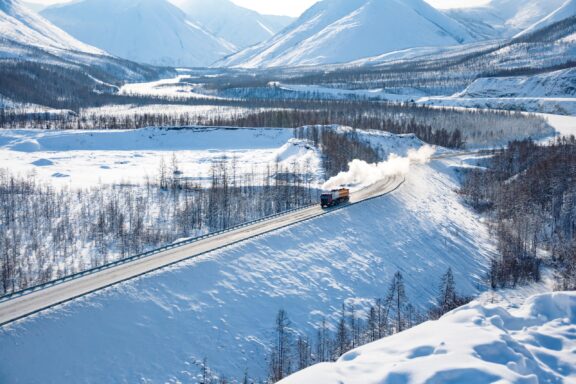
In addition to claiming the #3 spot for the lowest yearly average temperature of 22.71 °F (-5.16 °C), Russia also holds the title for the top three lowest temperatures ever recorded outside Antarctica.
In 1892, the temperature in Verkhoyansk plummeted to -90 °F (-67.8 °C) on February 5 and February 7. Then, on February 6, 1933, Russia went for the triple-play when the temperatures hit -90 °F once again, this time in Oymyakon.
4. Mongolia
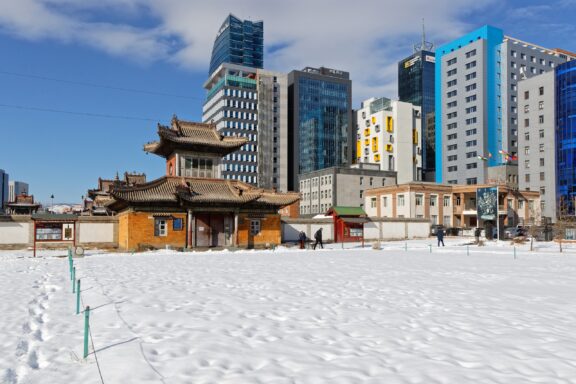
Ulaanbaatar, the capital of Mongolia, is called the Coldest National Capital, thanks to bone-chilling winters that can hit -40 °F/°C.
Because Mongolian summers soar to a sweltering 93 °F (33.9 °C), the yearly temperatures only average to a comparatively comfortable, but ultimately misleading, 33.2 °F (0.67 °C).
5. Norway
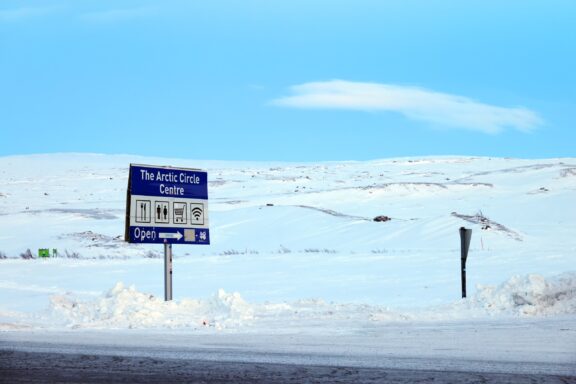
Joining the other chilly nations along the Arctic Circle, Norway ranks fifth with an average yearly temperature of 35.20 °F (1.78 °C). Unlike Mongolia’s steamy summer months, Norway’s summers average a sweater-worthy 65 °F (18.3 °C).
6. Kyrgyzstan
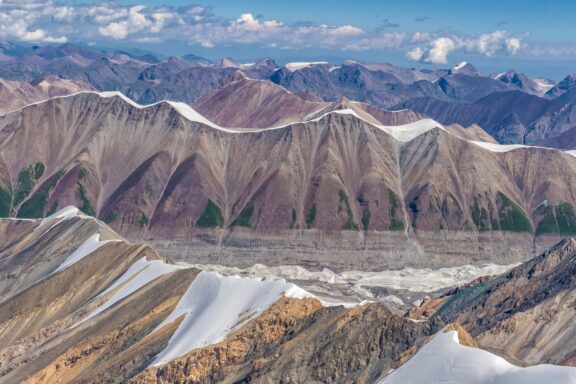
Head south from Russia through Kazakhstan, and you’ll run into a small Central Asian mountain nation called Kyrgyzstan, with an average of 35.96 °F (2.22 °C). In the valleys of the Tian Shan mountains, record readings have been as low as -64.5 °F (-53.6 °C).
7. Iceland
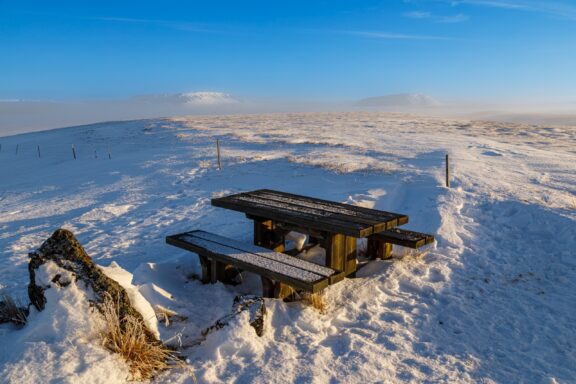
Unlike Greenland, it makes sense that a country with “ice” in its name would contend with a frosty climate. The North Atlantic island averages out to 36.15 °F (2.31 °C), with a record low of −38.0 °C (−36.4 °F), recorded at Möðrudalur in Northeast Iceland in January 1918.
8. Finland
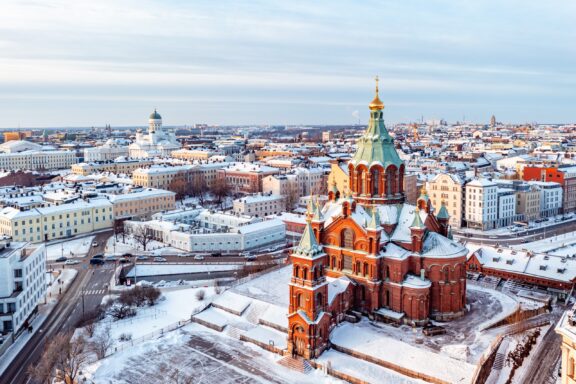
Finland is the second-coldest Scandinavian country, at 36.54 °F (2.52 °C). Lapland, the northernmost region of Finland, holds the record for lowest recorded temperature every month except December, when Eastern Finland reached -52.6 °F (-47.0 °C) in 1919.
9. Sweden
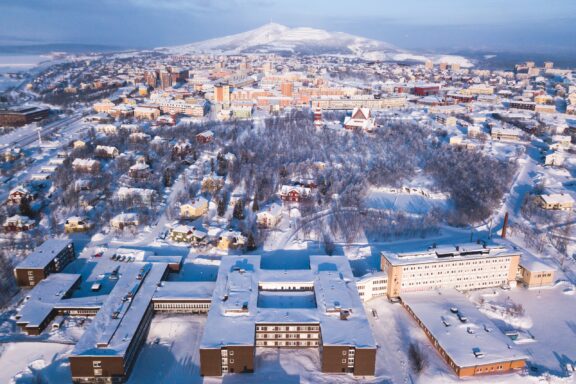
Rounding out the Scandinavian triplets, Sweden averages a mere seventeen-hundredths of a degree warmer than Finland, with a yearly average of 36.71 °F (2.62 °C). Sweden’s Lapland dominates the cold here, too. On February 2, 1966, the lowest recorded temperature peaked at -62.7 °F(-52.6 °C).
10. Tajikistan
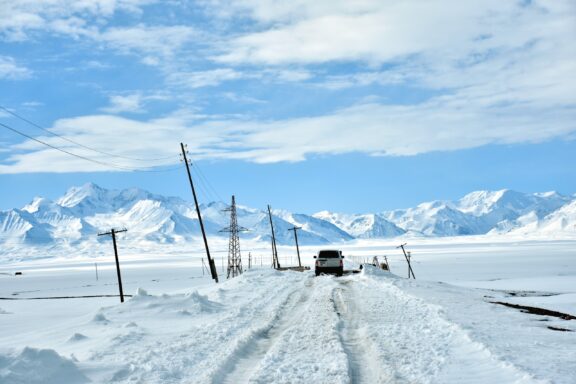
Directly under Kyrgyzstan is Tajikistan, where the yearly average is a crisp 38.75 °F (3.75 °C). Most of Tajikistan, which is 93% mountainous, is considered a subtropical climate, but the variance in elevation creates sharp temperature differences.
11. Switzerland
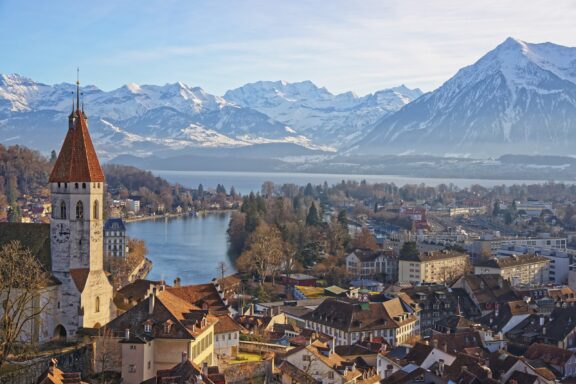
Switzerland is tightly nestled between France, Germany, Liechtenstein, Austria, and Italy. Without the temperature-regulating benefits of large bodies of water, the temperatures dip below its neighbors, reaching 42.94 °F (6.08 °C).
12. North Korea
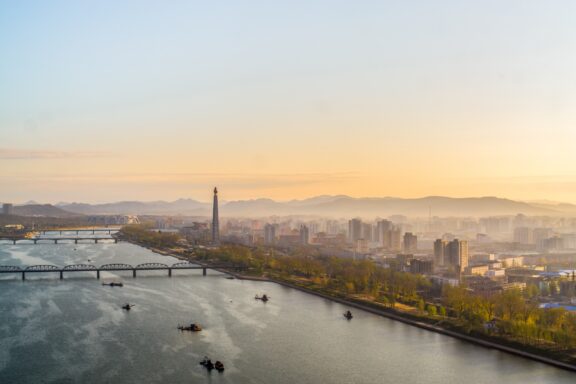
North Korea places as the 12th coldest country globally, where the yearly average reaches 43.14 °F (6.19 °C). The country has an interesting climate, especially for a relatively small nation. Near its short northeastern border with Russia, the average is 44.5 °F, but on the east coast, it’s nearly 10-degrees higher.
13. Estonia
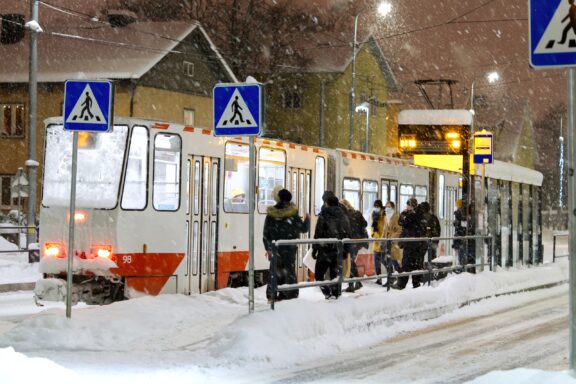
Estonia’s yearly average of 43.36 °F (6.31 °C) seems positively mild compared to the coldest countries in the world, at least until December rolls around. During the winter months, the warm, humid air from the Atlantic is no match for the bitterly cold polar cells that blow in from Russia.
14. Faroe Islands
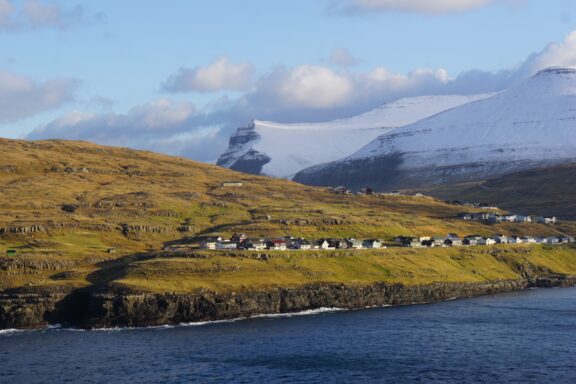
Between Iceland and Norway is an archipelago collectively called the Faroe Islands. It’s a Danish territory in a temperature “sweet spot,” between the warm Gulf Stream and the cool polar air masses moving south from the Arctic.
The yearly average of 43.74 °F (6.52 °C) represents the balance of mild winters, when temperatures typically reach 37-39 °F, with cool summers that rarely exceed 51 °F.
15. Liechtenstein
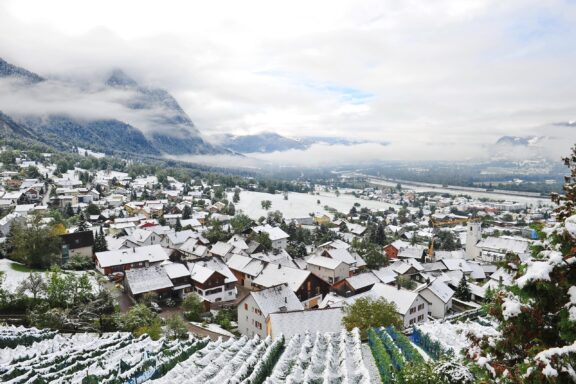
Along with Uzbekistan, Liechtenstein is one of only two doubly landlocked countries globally. This means that it is a landlocked nation wholly surrounded by other landlocked nations. Europe’s fourth-smallest nation averages temperatures of 44.08 °F (6.71 °C).
16. Latvia
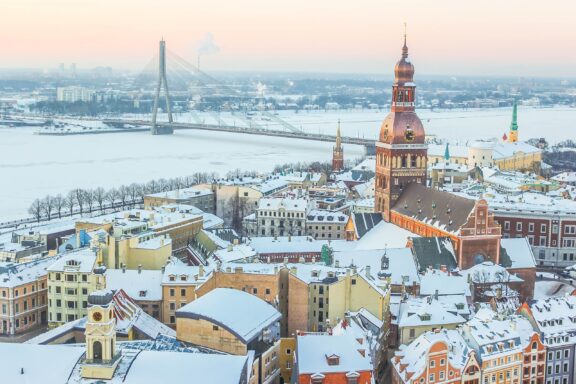
Latvia is a Baltic state with an extensive coastline in the Baltic Sea. The body of water regulates the West Coast’s climate, resulting in warmer summers and milder winters, while the interior has reached -46 °F(-43.2 °C). Everything balances out to an average temperature of 44.35 °F (6.86 °C).
17. Kazakhstan
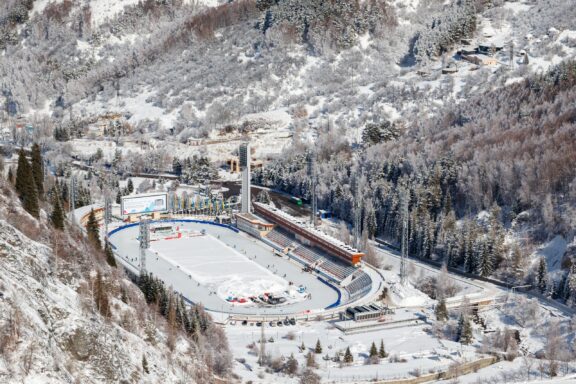
The world’s largest landlocked country is surrounded by countries that top the ranks of coldest countries, including Russia, Kyrgyzstan, and Mongolia, yet it has a perfectly temperate 44.44 °F (6.91 °C) yearly average temperature.
18. China
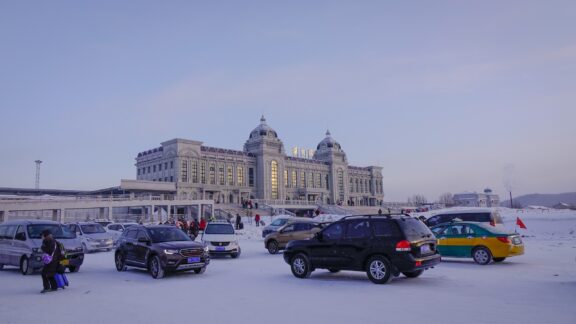
Due to its substantial size, China’s climate shifts from one side of the Asian nation to the other, resulting in an average of 44.78 °F (7.10 °C). In the north, frigid winters plummeted to a bitter -72 °F(-58 °C) in 2009, while the southern climate maintains a steady average of 59 °F(15 °C) year-round.
19. Armenia
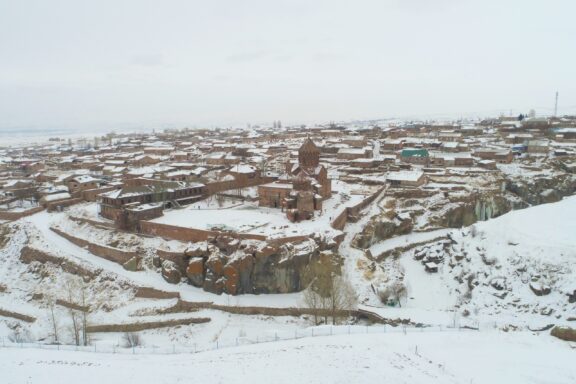
Located in the Caucasus Mountains that span the border between Europe and Asia, Armenia is a mountainous country that experiences summer temperatures soaring to 97 °F (36), then snowy winters ranging from 14-23 °F(-10 °C).
These intense differences in seasons result in a modest annual mean of 44.87 °F (7.15 °C).
20. Austria
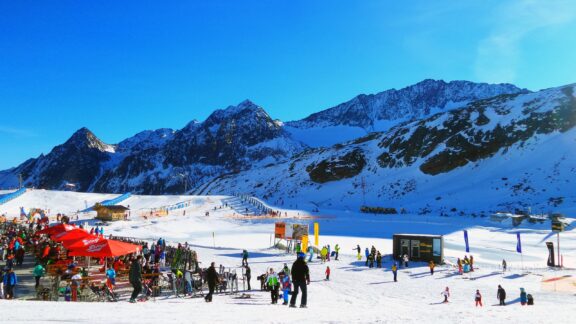
Rounding out the top 20 coldest countries in the world is Austria, which has a yearly average temperature of 45.05 °F (7.25 °C).
Austria shares borders with two other countries on this list – Liechtenstein and Switzerland. The nation is 74% mountainous, with three chains of the Alps crossing through.
Wrapping Up
While Greenland’s yearly average temperature makes it the coldest country, the record for “World Lowest Temperature Country” goes to Russia.
It was here that the temperature plunged to a glacial -90 °F, a mere 38-degrees warmer than the coldest temperature ever recorded.
Brr… Do you feel a slight chill?


- Polar Bear on Iceberg Edge — © Steve Allen/Shutterstock
- Winter Landscape in Yukon Territory, Canada — © Pi-Lens/Shutterstock
- Train Passing Through Snowy Verkhoyansk Mountain Range — © Piu_Piu/Shutterstock
- Traditional Building Amidst Modern Skyscrapers in Ulaanbaatar, Mongolia with Snow Cover — © P. J. Durieu/Shutterstock
- Arctic Circle Signpost in Snowy Landscape, Norway — © Mikadun/Shutterstock
- Central Tian Shan Mountain Range with Snow Patches — © imageBROKER/Shutterstock
- Winter Landscape with Snow-Covered Picnic Table in Northern Iceland — © KajzrPhotography/Shutterstock
- Winter View of Helsinki Cityscape with Cathedral — © ArtBBNV/Shutterstock
- Aerial View of Snow-Covered Town in Winter — © Tsuguliev/Shutterstock
- Vehicle on Snow-Covered Road with Mountain Range in the Background — © MoSiwa/Shutterstock
- Bern Cityscape with Snow-Capped Alps in the Background — © Roman Babakin/Shutterstock
- Sunrise Over Pyongyang Cityscape with River — © JHVEPhoto/Shutterstock
- Winter Commute: People Boarding Tram at Snowy Station — © Valeri Pavljuk/Shutterstock
- Winter Landscape of the Faroe Islands — © Anne Kramer/Shutterstock
- Snow-covered Valley in Liechtenstein — © Jordan Tan/Shutterstock
- Winter View of Riga Skyline with Snow — © Sergey Fomenko/Shutterstock
- Winter Sports Complex in Almaty, Kazakhstan — © R. Chekhovskoi/Shutterstock
- Mountain Restaurant and Skiers on Austria’s Glacier — © fokke baarssen/Shutterstock