
Key Takeaways
- Havana is the only real hub. José Martí International (HAV) serves around 27 regularly-served nonstop destinations, far more than any other Cuban airport. It is Cuba's sole intercontinental gateway and its main link to the United States.
- The resort airports are Canadian, not American. Varadero, Holguín, Cayo Coco and Santa Clara are winter-sun leisure airports dominated by Canadian carriers (WestJet, Air Transat, Air Canada) and a thread of Russian charters, not US airlines.
- US flights exist, but tourism does not. American Airlines flies from Miami to six Cuban airports, and Delta and Southwest serve Havana, yet US tourism to Cuba is banned: travellers must qualify under one of 12 authorised categories, and Cuba sits on the US State Sponsors of Terrorism list.
- 2026 sanctions are shrinking the map fast. A May 2026 US executive order and new sanctions on the GAESA conglomerate triggered a wave of suspensions: eleven airlines cut Cuba service in 2026 and visitor numbers fell by more than half, so the network below reflects the recent picture and is contracting.
- Cubana de Aviación is largely grounded. Starved of spare parts and squeezed by sanctions, the flag carrier has cancelled most international flying, including its last Madrid link in May 2026, leaving its fleet mostly idle.
Cuba is the largest island in the Caribbean, and for decades its airports have been shaped by two forces that have little to do with each other: a huge European and Canadian package-holiday trade, and the long shadow of the United States embargo. The result is an air map unlike any other in the region, where the resort airports fill with Canadians and Russians while a separate, tightly regulated set of flights connects the island to Miami.
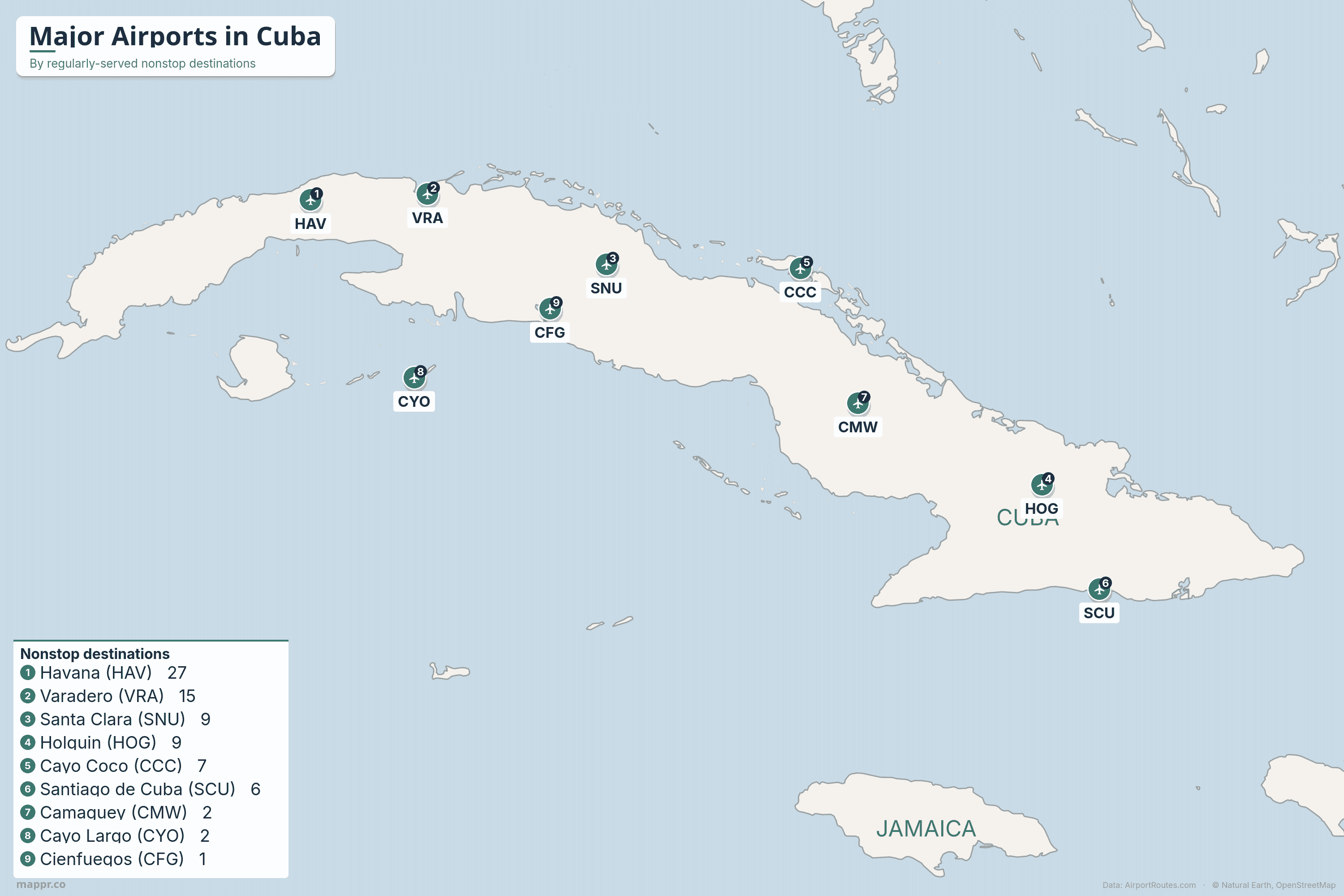
Nine airports carry scheduled passenger service, strung along the island from Havana in the west to Santiago de Cuba in the south-east, plus a pair of resort cays offshore. The map and table below rank them by the number of destinations they serve with regular flights, using live AirportRoutes route data. One caveat matters more here than almost anywhere else: a wave of 2026 sanctions is cutting Cuban air service quickly, so this reflects the recent network and several routes shown below are being trimmed or suspended.
Can you fly direct from Cuba to the United States?
Yes, and from more than one airport, but with strings attached that exist for no other country. American Airlines operates the bulk of US-Cuba flying, all from Miami, reaching six Cuban airports: Havana, Varadero, Santa Clara, Holguín, Camagüey and Santiago de Cuba. Delta serves Havana from Miami, and Southwest flies Tampa to Havana. JetBlue, once a major operator here, has dropped its Cuba service.
The catch is legal, not logistical. Travel to Cuba for ordinary tourism remains prohibited for US travellers: a trip has to fit one of 12 authorised categories (such as support for the Cuban people, family visits or journalism), Cuba is back on the US State Sponsors of Terrorism list, and the broader embargo restricts spending on the island. The flights are real and frequent, but who may legally board them is not the same question as whether the planes fly.
RANKED BY DESTINATIONS
Cuba's airports with scheduled service
By regularly-served nonstop destinations (live AirportRoutes data). Havana is the only real hub; the rest are resort and regional airports dominated by Canadian and, increasingly thinly, Cuban carriers.
| Airport | IATA | Serves | City / region |
|---|---|---|---|
| 1. Havana (José Martí) | HAV | 27 | Havana |
| 2. Varadero (Juan Gualberto Gómez) | VRA | 15 | Varadero / Matanzas |
| 3. Santa Clara (Abel Santamaría) | SNU | 9 | Santa Clara / Villa Clara |
| 4. Holguín (Frank País) | HOG | 9 | Holguín |
| 5. Cayo Coco (Jardines del Rey) | CCC | 7 | Cayo Coco / Jardines del Rey |
| 6. Santiago de Cuba (Antonio Maceo) | SCU | 6 | Santiago de Cuba |
| 7. Camagüey (Ignacio Agramonte) | CMW | 2 | Camagüey |
| 8. Cayo Largo (Vilo Acuña) | CYO | 2 | Cayo Largo del Sur |
| 9. Cienfuegos (Jaime González) | CFG | 1 | Cienfuegos |
A closer look at Cuba’s airports
✈️ José Martí International Airport (HAV)
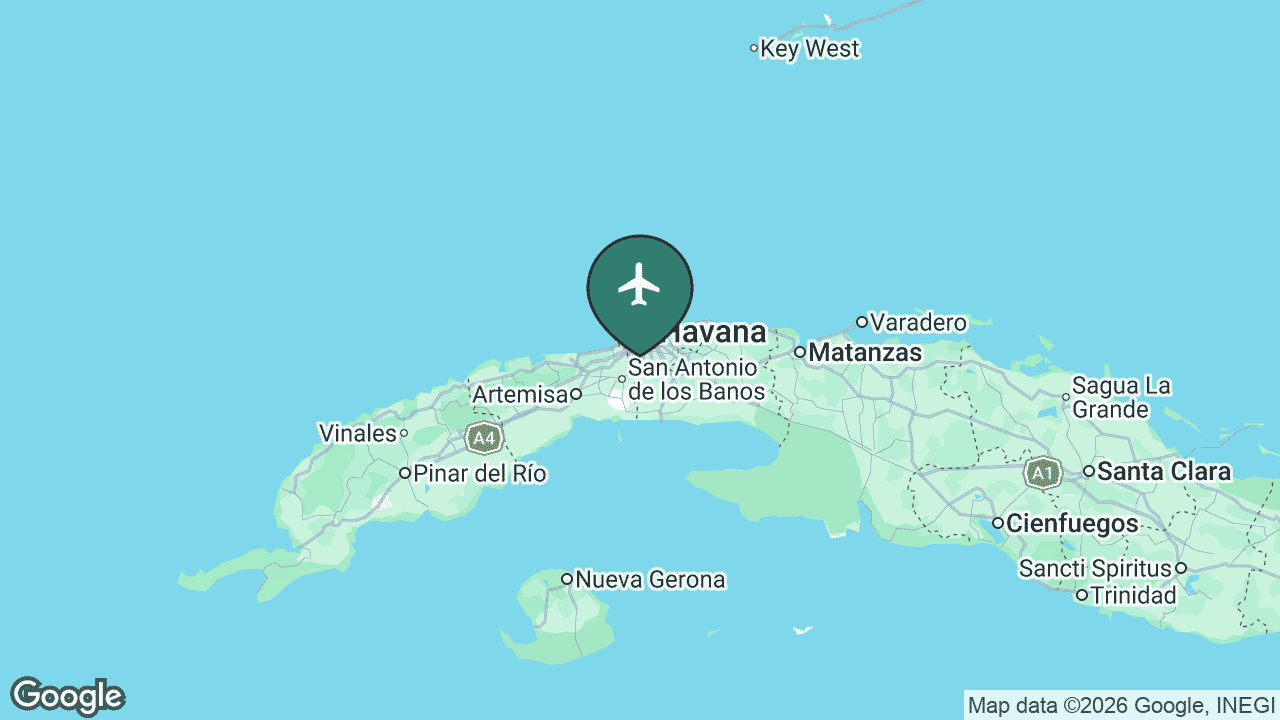
José Martí International sits about 15 km south of central Havana and is, by a wide margin, Cuba’s main airport. It is the country’s only true hub and the only field with meaningful long-haul reach, with roughly a dozen intercontinental routes alongside its Caribbean, Mexican and Central American links.
Havana carries around 27 regularly-served nonstop destinations, far more than any other Cuban airport, and is the home base of the flag carrier Cubana de Aviación. It is also Cuba’s primary gateway to the United States: American Airlines runs frequent Miami flights, Delta links it to Miami, and Southwest flies in from Tampa.
Main airlines: American Airlines, Delta Air Lines, Southwest, Copa Airlines, VivaAerobus, Wingo and Cubana de Aviación. See HAV’s full route map on AirportRoutes →
✈️ Juan Gualberto Gómez International Airport (VRA)
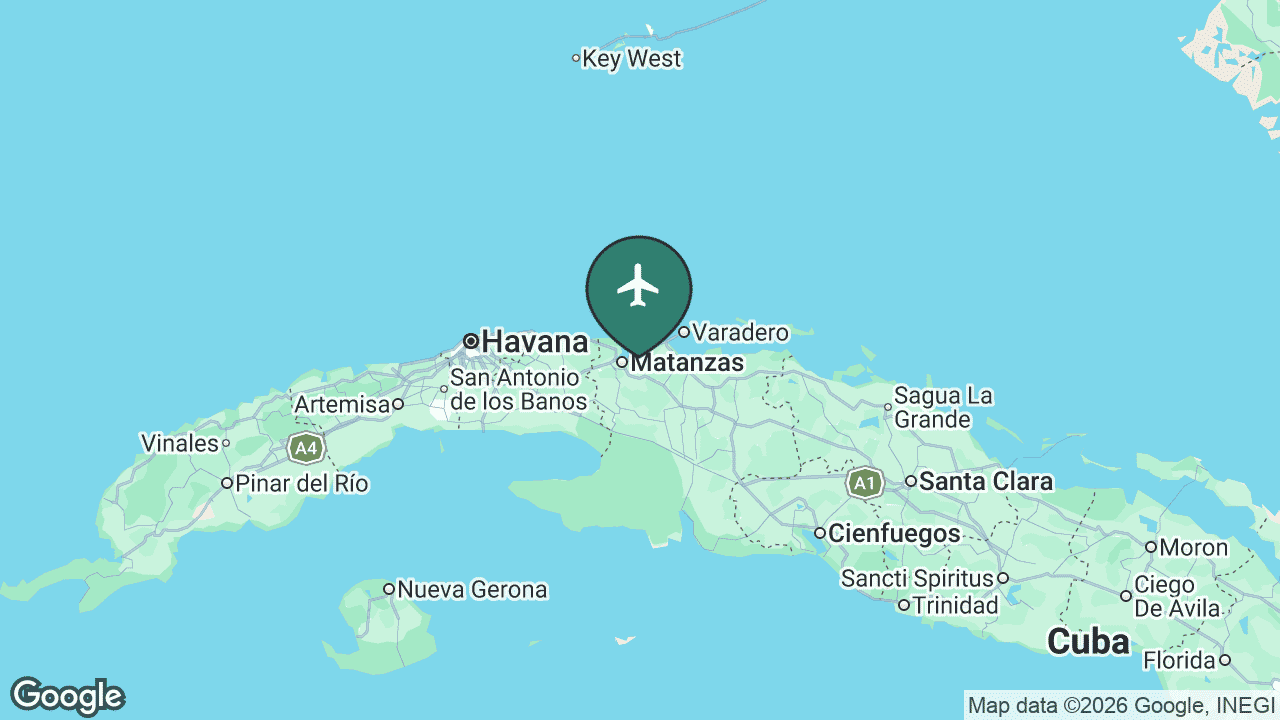
Juan Gualberto Gómez International serves Varadero, the long beach peninsula east of Matanzas that is Cuba’s flagship resort destination. It is the second-busiest airport in the country and overwhelmingly a leisure gateway.
Varadero reaches around 15 regularly-served nonstop destinations, and its route map tells the story of who actually holidays in Cuba. The traffic is dominated by Canada (Toronto, Montreal, Quebec City, Ottawa, Calgary and Winnipeg) with a strand of Russian charter flights to Moscow, plus a single scheduled US link from Miami. It is intensely seasonal, peaking in the northern winter.
Main airlines: WestJet, Air Transat, Air Canada, Air Canada Rouge, American Airlines and Rossiya Airlines. See VRA’s full route map on AirportRoutes →
✈️ Abel Santamaría Airport (SNU)
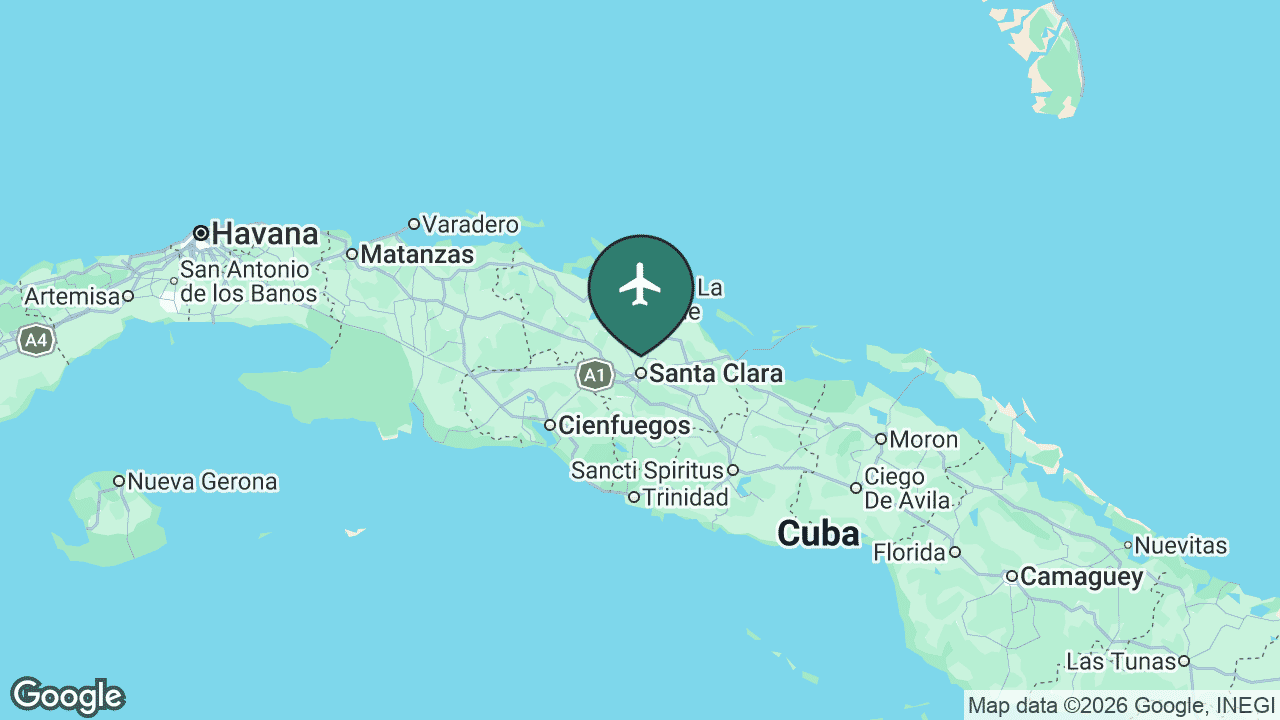
Abel Santamaría Airport serves Santa Clara in central Cuba, the city of the Che Guevara mausoleum, and doubles as the air gateway to the Cayo Santa María resort cays off the north coast.
Santa Clara handles around 9 regularly-served nonstop destinations. Like the other resort airports it leans heavily on Canadian winter-sun charters, but it also carries one of Cuba’s wider US route sets after Havana, with flights to Miami, Tampa and Fort Myers.
Main airlines: WestJet, Air Transat, American Airlines, Eastern Airlines, Copa Airlines and Air Canada Rouge. See SNU’s full route map on AirportRoutes →
✈️ Frank País International Airport (HOG)
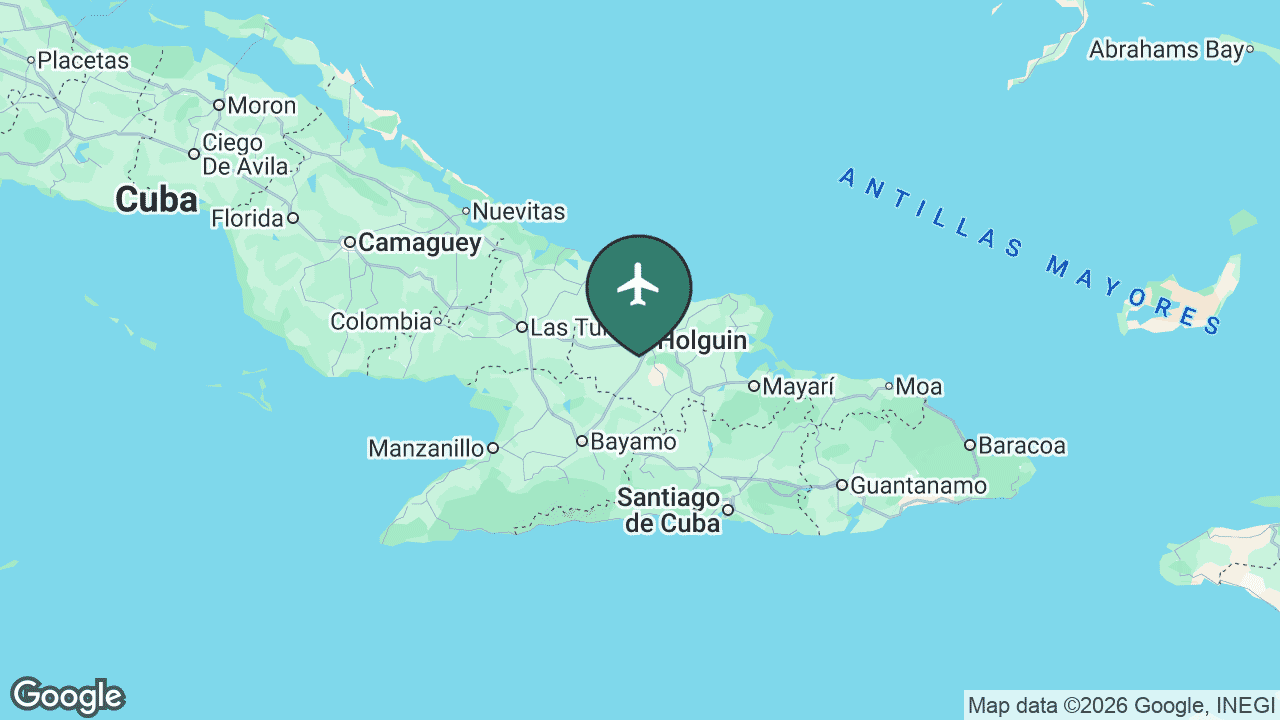
Frank País International serves Holguín in eastern Cuba and is the gateway to the Guardalavaca beach resorts on the north-east coast.
Holguín records around 9 regularly-served nonstop destinations. It is another mostly Canadian leisure airport, fed by Air Transat, WestJet and Air Canada Rouge from Montreal, Toronto, Quebec City and beyond, with a Miami link on American Airlines and, historically, seasonal charters from Frankfurt and Moscow.
Main airlines: Air Transat, WestJet, American Airlines, Eastern Airlines and Air Canada Rouge. See HOG’s full route map on AirportRoutes →
✈️ Jardines del Rey Airport (CCC)
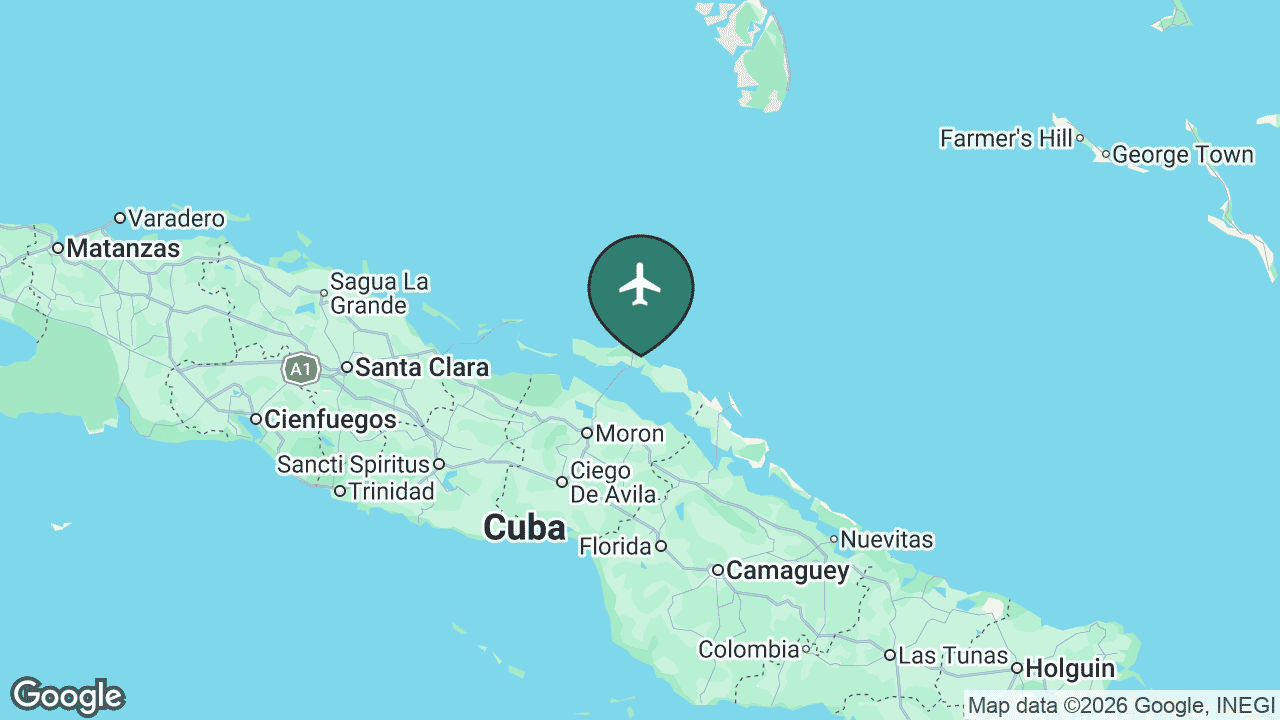
Jardines del Rey Airport sits on Cayo Coco, one of the northern cays of the Jardines del Rey archipelago, reached from the mainland by a long causeway. It exists purely to feed the all-inclusive resorts of Cayo Coco and Cayo Guillermo.
Cayo Coco serves around 7 regularly-served nonstop destinations, almost all of them Canadian charter routes, with a thread of Russian charter flights. There is no scheduled US service: this is a pure winter-sun resort airport.
Main airlines: WestJet, Air Transat, Air Canada, Air Canada Rouge and Nordwind Airlines. See CCC’s full route map on AirportRoutes →
✈️ Antonio Maceo International Airport (SCU)
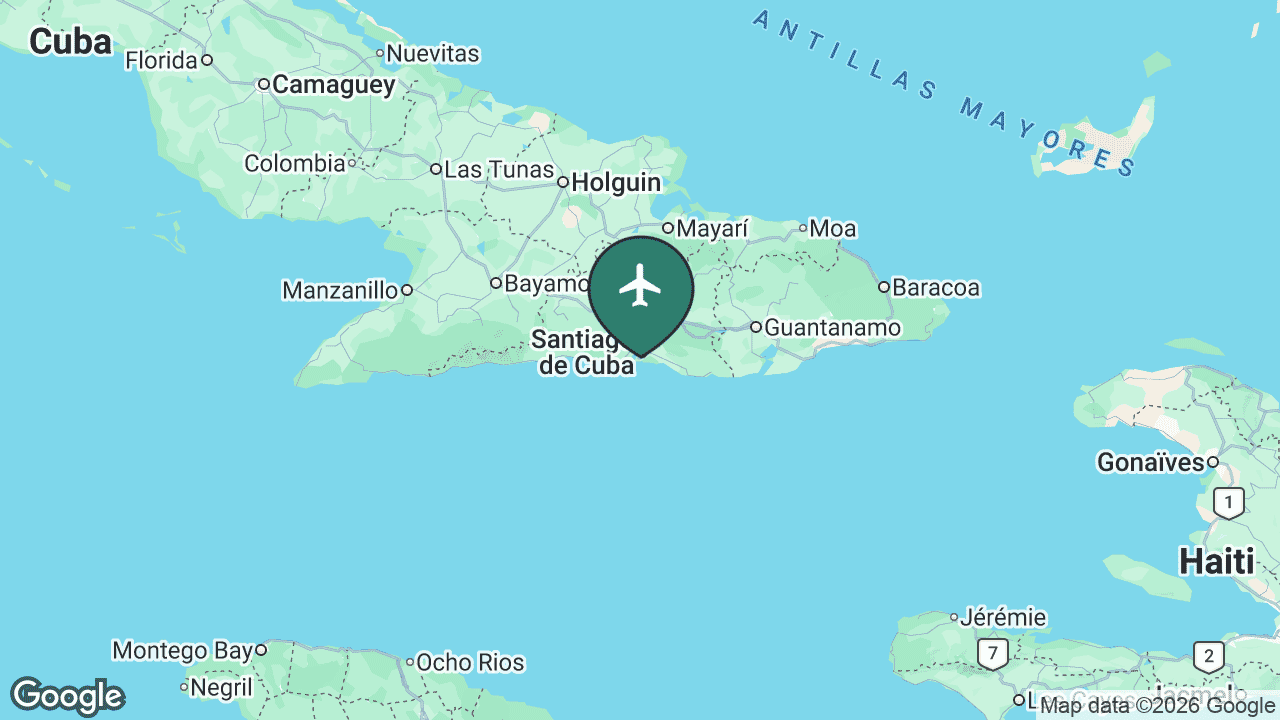
Antonio Maceo International serves Santiago de Cuba, the country’s second city and cultural capital in the far south-east, cradled between the Sierra Maestra and the Caribbean.
Santiago handles around 6 regularly-served nonstop destinations. Its mix is unusual for Cuba: alongside an American Airlines link to Miami and Cubana domestic flights to Havana, it carries dense Caribbean routes to Santo Domingo and Kingston, and historically a Madrid link that has fallen victim to the 2026 cutbacks.
Main airlines: Cubana de Aviación, American Airlines, interCaribbean Airways, Sky High and Air Century. See SCU’s full route map on AirportRoutes →
✈️ Ignacio Agramonte International Airport (CMW)
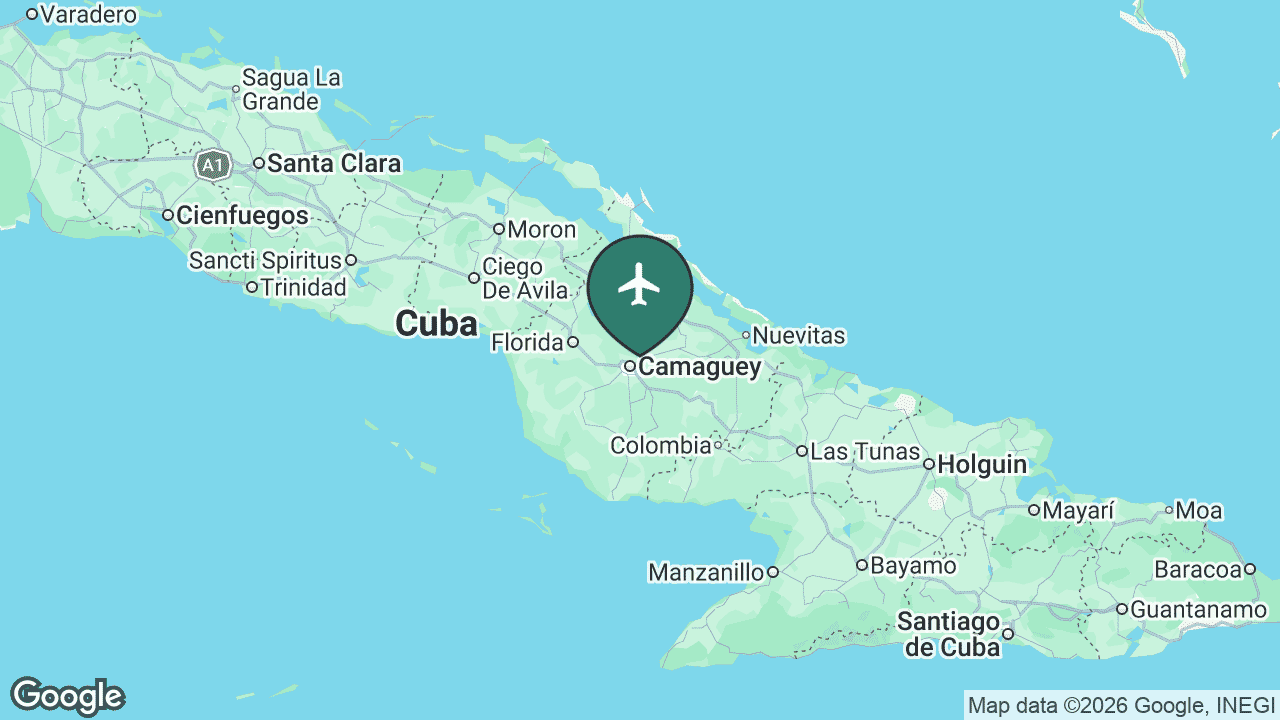
Ignacio Agramonte International serves Camagüey, Cuba’s third-largest city in the centre-east, and the nearby Santa Lucía beach resort.
Camagüey records about 2 regularly-served nonstop destinations once one-off observations are filtered out. Its core service is an American Airlines link to Miami, plus VivaAerobus flights to Cancún and Cubana domestic hops to Havana.
Main airlines: American Airlines, Eastern Airlines, VivaAerobus and World Atlantic Airlines. See CMW’s full route map on AirportRoutes →
✈️ Vilo Acuña International Airport (CYO)
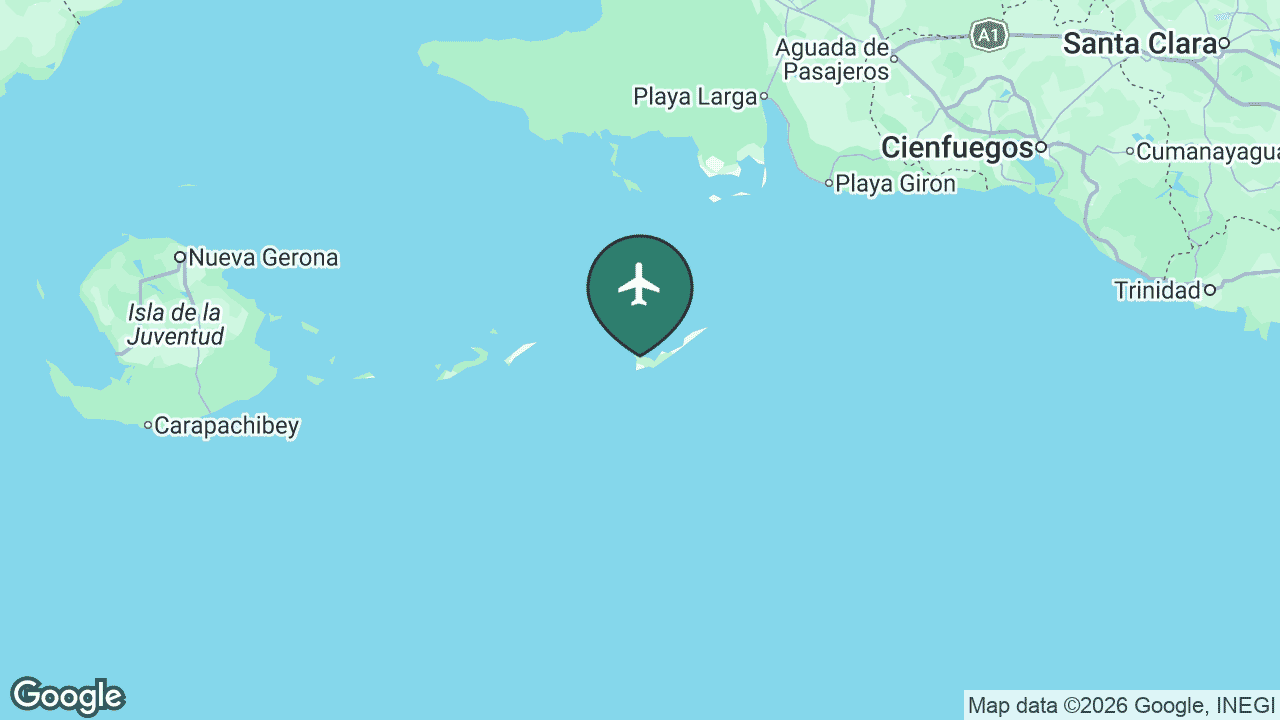
Vilo Acuña International sits on Cayo Largo del Sur, a small resort island in the Caribbean off Cuba’s southern coast, well away from the main island.
Cayo Largo serves about 2 regularly-served nonstop destinations. It is a charter-only beach airport: its scheduled traffic is essentially WestJet flights from Montreal and Quebec City feeding the island’s resorts. There is no US service.
Main airlines: WestJet. See CYO’s full route map on AirportRoutes →
✈️ Jaime González Airport (CFG)
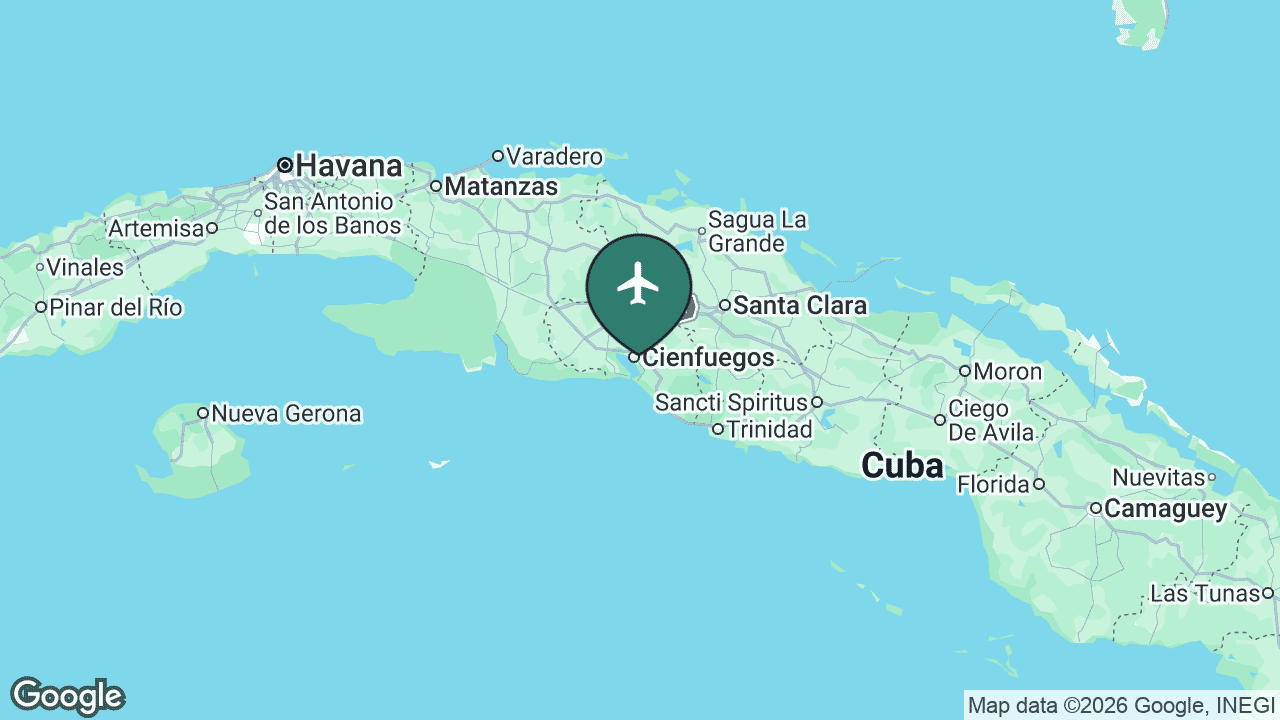
Jaime González Airport serves Cienfuegos, the elegant bay city on the south-central coast known as the Pearl of the South.
Cienfuegos is the smallest of Cuba’s airports with scheduled passenger service, recording about 1 regularly-served nonstop destination. Its thin route map runs mainly to Montreal on WestJet, with an occasional Miami link, making it a marginal leisure and diaspora field.
Main airlines: WestJet. See CFG’s full route map on AirportRoutes →
What is happening to Cuba’s flights in 2026?
The network mapped above is shrinking in real time. In May 2026 the US administration signed an executive order tightening sanctions on Cuba and formally designated GAESA, the military-run conglomerate that controls much of the economy, including key tourism and aviation interests. Foreign companies were given a short deadline to wind down dealings with it, and the effect on flying was immediate.
By mid-2026, eleven airlines had suspended Cuba routes during the year, with well over a thousand flights cancelled and only a handful of carriers still operating. Cubana de Aviación, already crippled by a spare-parts shortage, cancelled its last link to Madrid; Spain’s Iberia halted its direct Havana service; and Canadian leisure operators including Air Transat and Sunwing cut or paused flights into the winter season. Compounding the squeeze, Cuba’s chronic fuel shortages have disrupted operations on the ground.
The human result shows up in the visitor numbers: international arrivals fell by more than half in the first months of 2026. For now the US carriers from Miami and Tampa have kept flying and Canadian winter-sun traffic remains the backbone of the resort airports, but anyone planning a trip should treat the routes above as a snapshot and check current schedules before booking.
Airport rankings, nonstop-destination counts, served cities, airline lists and US connections are drawn from live AirportRoutes route data (observed AeroAPI flight data, a sample rather than a complete published schedule; we use the regularly-served figure, which filters one-off observations). Travel-restriction and 2026 sanctions details are cross-checked against the cited US government and news references. The maps are Mappr originals.
Primary Data Source:
- AirportRoutes: Major airports and routes, Cuba – Live route data: per-airport nonstop destinations, served cities, airlines and US connections.
References:
- US Department of State: Cuba travel information – Authorised travel categories, the tourism ban and the embargo framework.
- US Treasury (OFAC): Cuba sanctions – Cuban Assets Control Regulations and the 2026 sanctions on GAESA.
- Cubana de Aviación – Cuba's flag carrier and its 2026 route cancellations.
- Wikipedia: Airports in Cuba – Airport background, IATA/ICAO codes and operational history.
- Google Static Maps – Base maps for the per-airport locator images.


