Six weeks into the region’s worst aviation crisis in decades, Middle East airspace remains largely closed. The European Union Aviation Safety Agency has extended its Conflict Zone Information Bulletin (CZIB 2026-03-R6) for the Middle East and Persian Gulf through 24 April 2026, advising EU operators to avoid 11 Flight Information Regions at all altitudes. Iran, Iraq, Syria, Bahrain, and Kuwait remain fully closed to civil aviation; Israel maintains a limited special-operations posture; and the UAE is gradually recovering, with Emirates and flydubai operating more than 220 combined daily departures from Dubai on April 8 and 9.
The crisis traces to February 28, 2026, when the United States and Israel launched coordinated strikes on Iran. What began as rolling 48-72-hour closures has hardened into a weeks-long shutdown that has cost airlines an estimated 27,000+ canceled flights and forced every Europe-to-Asia carrier to reroute through Turkey, the Caucasus, or the southern Saudi-Omani corridor. As of April 10, there is no clear endpoint.
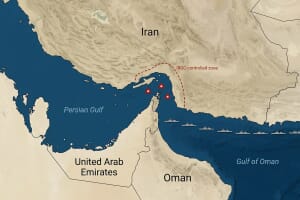
Interactive Map: Middle East Airspace Status (April 10, 2026)
Click on any country or airport marker below to see its current airspace status. The map reflects the situation as of April 10, 2026, with the EASA Conflict Zone Information Bulletin extended through April 24.
Which Countries Have Closed Their Airspace? (April 10 Update)
As of April 10, 2026, the Middle East airspace picture has two layers: national closures (airspace is legally shut to all or most civil operations) and the EASA advisory (EU operators are told to avoid 11 FIRs regardless of whether the airspace is technically open). Here is where each country stands:
- 🇮🇷 Iran — Closed: Total airspace closure since late February. All civil aviation halted. On the EASA advisory list.
- 🇮🇶 Iraq — Closed: Total airspace closure since early March, now entering its sixth consecutive week of rolling extensions. The Iraqi Civil Aviation Authority continues to renew the closure in 48-72-hour increments. On the EASA advisory list.
- 🇸🇾 Syria — Closed: Complete airspace closure, reviewed daily.
- 🇮🇱 Israel — Closed to Civil Aviation: Limited freighter and repatriation flights operating under special government approval. On the EASA advisory list.
- 🇧🇭 Bahrain — Closed: Emergency Security Control of Air Traffic remains active. Very limited approved departures only; no overflights. On the EASA advisory list.
- 🇰🇼 Kuwait — Closed: Airspace shut to all civilian flights, added to the closure list in early April. On the EASA advisory list.
- 🇦🇪 UAE — Partial Recovery: Airspace technically open via designated waypoint corridors. Emirates and flydubai operated 216 departures from DXB on April 8 and 225 on April 9 — the highest combined totals since the crisis began. On the EASA advisory list (operators are warned to avoid overflight).
- 🇶🇦 Qatar — Open, Under Advisory: Doha’s Hamad International continues to operate, but Qatar Airways is routing carefully. On the EASA advisory list.
- 🇸🇦 Saudi Arabia — Open, Under Advisory: One of the main southern reroute corridors. On the EASA advisory list.
- 🇯🇴 Jordan — Open, Under Advisory: Airspace operating under heightened security posture. On the EASA advisory list.
- 🇱🇧 Lebanon — Open, Under Advisory: Beirut’s Rafic Hariri International continues limited operations. On the EASA advisory list.
- 🇴🇲 Oman — Open, Under Advisory: Part of the southern reroute corridor. On the EASA advisory list.
- 🇪🇬 Egypt — Open (Elevated Posture): Airports on high alert with contingency measures in place. Not on the EASA advisory list.
- 🇹🇷 Turkey — Open: The main northern reroute corridor for Europe-Asia traffic. Not on the EASA advisory list.
April 10 Update: EASA Extends the Conflict Zone Bulletin to April 24
The headline update on April 10 is regulatory rather than military: the European Union Aviation Safety Agency has extended the validity of Conflict Zone Information Bulletin CZIB 2026-03-R6 for the Middle East and Persian Gulf through 24 April 2026. The extension was approved after a joint review by EU Member States, the European Commission, and EASA, and the content of the bulletin itself was not changed — only its duration.
The CZIB covers 11 Flight Information Regions (FIRs) across the Middle East and Persian Gulf and recommends that EU operators avoid the airspace at all altitudes. The affected FIRs are:
- 🇧🇭 Bahrain
- 🇮🇷 Iran (Tehran FIR)
- 🇮🇶 Iraq (Baghdad FIR)
- 🇮🇱 Israel (Tel Aviv FIR)
- 🇯🇴 Jordan (Amman FIR)
- 🇰🇼 Kuwait
- 🇱🇧 Lebanon (Beirut FIR)
- 🇴🇲 Oman (Muscat FIR)
- 🇶🇦 Qatar (Doha FIR)
- 🇸🇦 Saudi Arabia (Jeddah FIR)
- 🇦🇪 UAE (Emirates FIR)
EASA’s reasoning is unchanged from the original bulletin: the presence of all-altitude air defense systems, cruise and ballistic missiles, and military aircraft capable of interception significantly raises the risk of spill-over effects into civil aviation. The agency has advised operators to avoid these FIRs entirely or operate only under strict conditions with specific risk-mitigation measures.
The previous version of the bulletin was set to expire on April 10. The extension gives the situation another two weeks to develop before the next formal review, though EASA has the option to issue further extensions or revisions at any time.
Why Middle East Airspace Matters to Global Aviation
Iraq, Iran, and Syria sit at the crossroads of major international flight corridors connecting Europe and South/Southeast Asia. Flights from London, Frankfurt, or Istanbul to destinations like Mumbai, Bangkok, or Singapore would normally traverse this airspace. With all three closed simultaneously — and the EASA bulletin now advising operators to avoid the rest of the Persian Gulf — airlines face a geographic wall stretching from the Mediterranean to Central Asia.
The closures have forced carriers to adopt two main rerouting strategies:
- Southern route: Flying south through Saudi Arabian and Omani airspace, then east — adding 2-4 hours to typical Europe-Asia flight times.
- Northern route: Routing through Turkey, the Caucasus, and Central Asian airspace — longer in distance but avoiding the conflict zone entirely.
Both alternatives carry significant cost implications. Extended flight times mean higher fuel burn, crew scheduling complications, and in many cases, the need for additional fuel stops.
Dubai’s Gradual Recovery
The brightest spot in the April 10 picture is Dubai. After weeks of reduced operations and occasional suspensions, Dubai International Airport (DXB) is fully open across its three terminals, and its two home carriers have pushed daily departures back to levels not seen since the crisis began.
- April 8: Emirates and flydubai operated 216 combined departures from DXB.
- April 9: The combined total climbed to 225 departures, the highest since late February.
- Emirates capacity: Running at roughly 70% of pre-crisis levels, with service restored to approximately 125 destinations (70-80% of its normal network).
- flydubai capacity: Operating at about 40% of pre-crisis levels, with a growing schedule targeted at routes not affected by the closures.
- DXB status: Fully open across three terminals with no new security incidents as of April 9. Passengers are being advised to arrive up to four hours early for international flights because of additional verification processes.
The Dubai recovery is notable because the UAE is on the EASA advisory list — meaning EU operators are formally warned away, even as Emirates, flydubai, and other Gulf carriers continue to operate. The practical effect is a two-tier system: Gulf-based carriers are running close-to-normal schedules within and out of the region, while European and many Asian carriers are still avoiding UAE airspace in line with EASA guidance. That divergence is likely to persist until the bulletin is lifted or significantly narrowed.
The Ripple Effects: 27,000+ Cancellations and Counting
The scale of disruption has been staggering:
- 27,000+ flights canceled to West Asia during the wider period of disruption since late February.
- 170 Indian airline flights canceled on March 1 alone, with another 281 suspended two days later.
- Major carriers affected: Emirates, Qatar Airways, Etihad, Air India, British Airways, Lufthansa, Cathay Pacific, Virgin Atlantic, and dozens more.
- Air India flight AI101 (Delhi–New York JFK) was forced to return after departure due to sudden airspace closure.
- Jet fuel prices surged during the peak disruption period.
- Extended routings added 2-4 hours to many long-haul flight times.
Emirates gradually resumed a reduced schedule by early March with over 100 daily departures, while budget carriers like IndiGo and SpiceJet arranged special flights to assist stranded passengers.
Background: How We Got Here
The airspace closures trace directly to February 28, 2026, when the United States and Israel launched coordinated strikes against Iran. The strikes triggered a chain reaction across the region:
- February 28: Joint U.S.-Israeli strikes on Iran begin. EASA issues CZIB 2026-03 the same day.
- Late February / Early March: Iran and its regional allies respond with attacks on Israeli and U.S. interests across the Middle East. Iraq, Iran, Syria, and Israel close their airspace to civil traffic.
- Early March: Iraq closes airspace as a “temporary precautionary measure.” Bahrain follows with emergency security control of air traffic.
- March 5-6: Some carriers begin partial resumption. Emirates runs a reduced schedule with just over 100 daily departures.
- March 22-28: Iraq extends its closure in rolling 72-hour increments. The Iraqi Civil Aviation Authority frames each extension as a “continuous assessment of the security situation.”
- Late March: EASA issues revised CZIB 2026-03-R6 covering 11 FIRs across the Middle East and Persian Gulf.
- Early April: Kuwait joins the hard-closure list. Iraq’s rolling extensions continue without interruption.
- April 7-8: Emirates and flydubai cross 200+ combined daily departures from DXB for the first time since the crisis began.
- April 9: EASA extends CZIB 2026-03-R6 through April 24, with no changes to the content.
- April 10 (today): Middle East airspace remains in crisis. Five countries fully closed. Eleven FIRs under EASA advisory. Week six.
The Iraqi Civil Aviation Authority described each extension as a “temporary precautionary measure” based on “continuous assessment of the security situation and developments in the regional environment.” The authority has committed to reviewing the suspension in accordance with any updates and notifying all airlines and relevant agencies.
What Happens Next?
The EASA Conflict Zone Information Bulletin is now valid through April 24, 2026. National-level closures in Iran, Iraq, Syria, Bahrain, and Kuwait continue to be renewed in 48-72-hour increments, with each extension announced only hours before the previous one expires. Travelers and airlines should plan for the possibility that the current posture extends well beyond April 24.
Key factors to watch:
- Diplomatic developments between the U.S., Israel, and Iran — any de-escalation would likely be followed rapidly by EASA narrowing or lifting the bulletin.
- Activity by Iran-aligned groups in Iraq, Syria, and Yemen — further incidents could trigger additional national-level closures.
- NOTAM updates from Iraq, Iran, Kuwait, Bahrain, and Syria — these are the daily signal on whether rolling extensions continue.
- The April 24 EASA review — the next formal checkpoint on whether the bulletin is extended again, narrowed, or allowed to expire.
- Gulf carrier schedules — if Emirates, flydubai, Qatar Airways, and Etihad continue to grow operations, it signals Gulf capitals see the worst as past.
For now, the skies over much of the Middle East remain restricted, the EASA bulletin has another two weeks to run, and a vital link in global aviation’s network stays severed. Dubai is the exception that proves the rule: regional carriers can continue to operate inside the advisory zone, but EU operators (and many of their Asian counterparts) are staying out until Brussels says otherwise.


Sources used for this article:
Featured image and interactive map: Mappr.co original data visualization.