Football (soccer) is the world’s most popular sport, drawing an estimated 3.5 billion fans worldwide. The stadiums that host the beautiful game are architectural marvels — from North Korea’s colossal Rungrado 1st of May Stadium (114,000 seats) to Europe’s legendary Camp Nou and Wembley. Below, we rank the 20 biggest football stadiums in the world by seating capacity, map their locations, and explore what makes each venue special.
Whether you’re planning a football pilgrimage or simply curious about where the world’s largest crowds gather, this guide covers every stadium that seats 78,000+ spectators — spanning four continents and 15 countries.
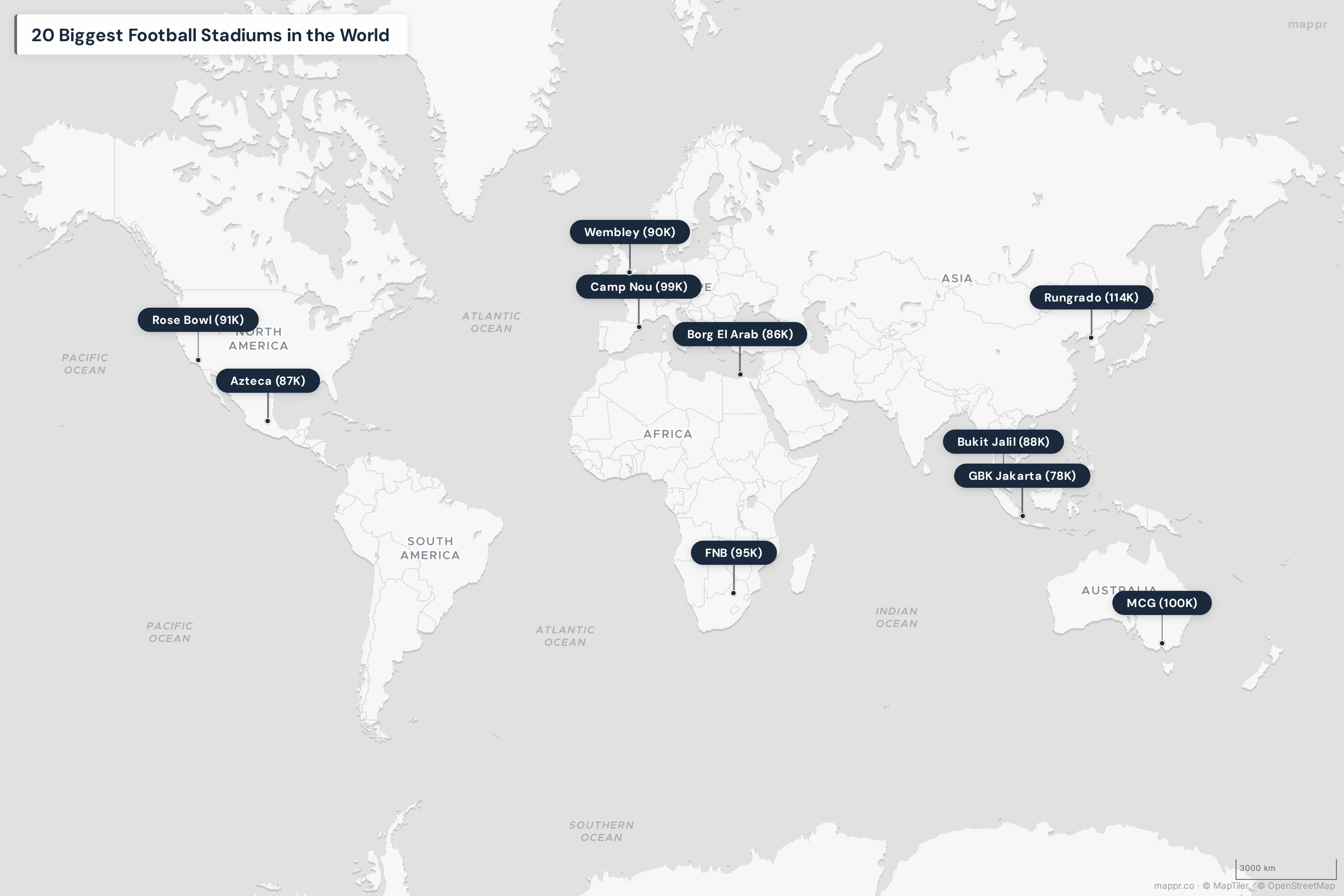
Map: Biggest Football Stadiums in the World
The map below shows the global distribution of the 20 largest football stadiums. Notice how they cluster in Europe, with significant venues in South America, Asia, and Africa as well.
Key Takeaways
- Rungrado 1st of May Stadium in Pyongyang, North Korea is the world’s largest football stadium with 114,000 seats — originally built for 150,000 before 2014 renovations.
- Camp Nou in Barcelona (99,354) is the largest in Europe and is expanding to 105,000+ seats by 2026, which will make it the world’s second-largest.
- Europe dominates the list with 7 of the top 20 stadiums, including Wembley, Santiago Bernabéu, Signal Iduna Park, Stade de France, and Luzhniki Stadium.
- Asia has 5 entries — including two in Malaysia, two in China, and one in Iran — showing the sport’s massive popularity across the continent.
- Every stadium on this list seats at least 78,000 people, with the combined capacity of all 20 venues exceeding 1.68 million.
Complete Rankings: 20 Biggest Football Stadiums
| # | Stadium | City | Country | Capacity | Opened |
|---|---|---|---|---|---|
| 1 | Rungrado 1st of May Stadium | Pyongyang | 🇰🇵 North Korea | 114,000 | 1989 |
| 2 | Camp Nou | Barcelona | 🇪🇸 Spain | 99,354 | 1957 |
| 3 | FNB Stadium (Soccer City) | Johannesburg | 🇿🇦 South Africa | 94,736 | 1989 |
| 4 | Wembley Stadium | London | 🏴 England | 90,000 | 2007 |
| 5 | Lusail Stadium | Lusail | 🇶🇦 Qatar | 88,966 | 2022 |
| 6 | Estadio Azteca | Mexico City | 🇲🇽 Mexico | 87,523 | 1966 |
| 7 | Bukit Jalil National Stadium | Kuala Lumpur | 🇲🇾 Malaysia | 87,411 | 1998 |
| 8 | Borg El Arab Stadium | Alexandria | 🇪🇬 Egypt | 86,000 | 2007 |
| 9 | Estadio Más Monumental | Buenos Aires | 🇦🇷 Argentina | 84,567 | 1938 |
| 10 | Santiago Bernabéu | Madrid | 🇪🇸 Spain | 83,186 | 1947 |
| 11 | Signal Iduna Park | Dortmund | 🇩🇪 Germany | 81,365 | 1974 |
| 12 | Stade de France | Saint-Denis | 🇫🇷 France | 81,338 | 1998 |
| 13 | Luzhniki Stadium | Moscow | 🇷🇺 Russia | 81,000 | 1956 |
| 14 | Shah Alam Stadium | Shah Alam | 🇲🇾 Malaysia | 80,372 | 1994 |
| 15 | Estadio Monumental | Lima | 🇵🇪 Peru | 80,093 | 2000 |
| 16 | Stadio Giuseppe Meazza (San Siro) | Milan | 🇮🇹 Italy | 80,018 | 1926 |
| 17 | Guangdong Olympic Stadium | Guangzhou | 🇨🇳 China | 80,012 | 2001 |
| 18 | Stade des Martyrs | Kinshasa | 🇨🇩 DR Congo | 80,000 | 1994 |
| 19 | Maracanã | Rio de Janeiro | 🇧🇷 Brazil | 78,838 | 1950 |
| 20 | Azadi Stadium | Tehran | 🇮🇷 Iran | 78,116 | 1971 |
1. Rungrado 1st of May Stadium 🇰🇵
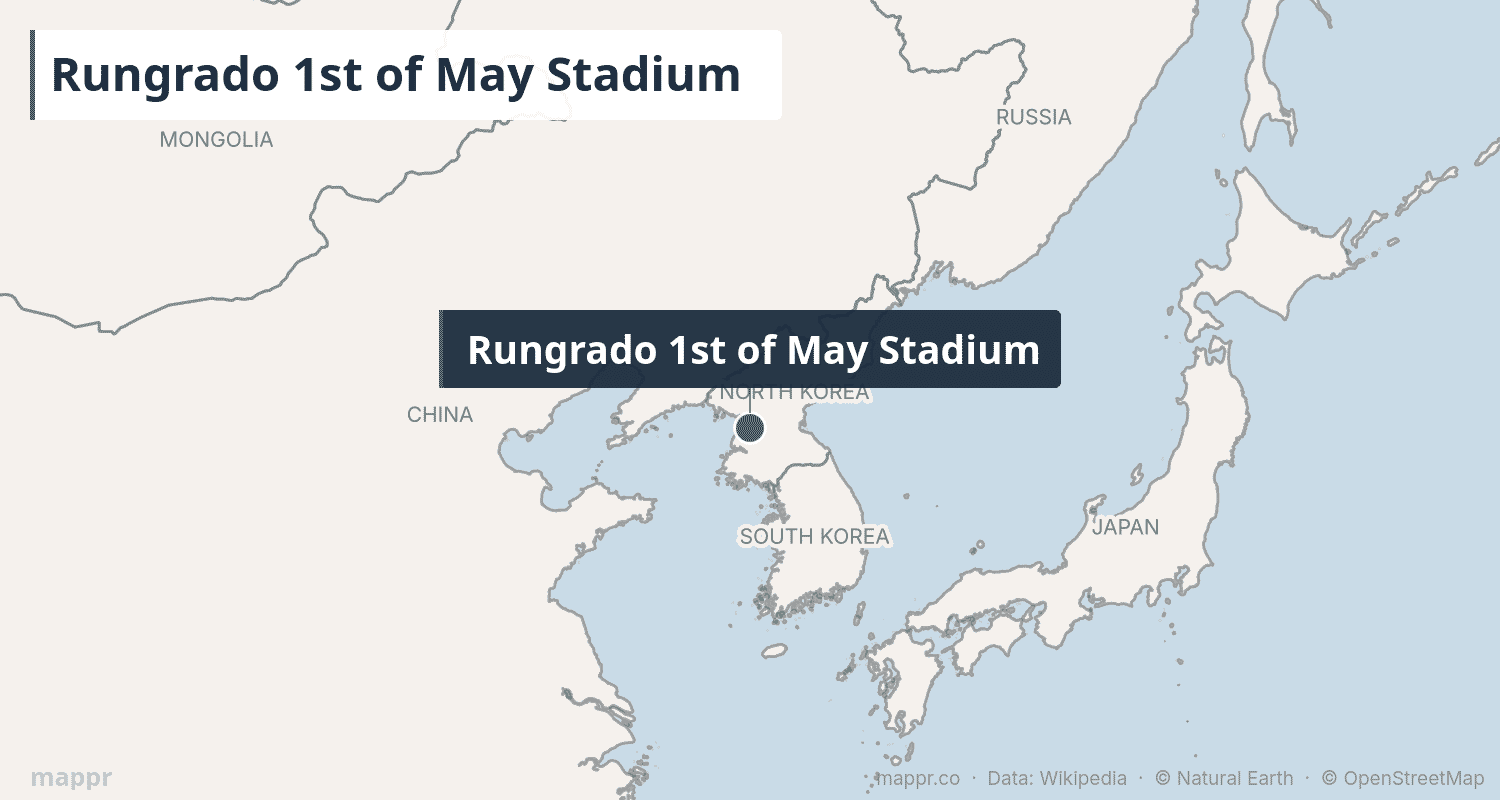
Towering above all others, the Rungrado 1st of May Stadium in Pyongyang, North Korea, holds 114,000 spectators, making it the largest football stadium on Earth. Opened on May 1, 1989, its distinctive scalloped roof resembles a magnolia blossom — North Korea’s national flower. The stadium originally held an estimated 150,000 before renovations in 2014 reduced the capacity by adding more comfortable seating.
While primarily used for the North Korean national football team’s home matches, the venue also hosts the famous Mass Games — elaborate choreographed performances involving tens of thousands of participants. Due to the country’s isolation, very few international visitors have experienced the stadium firsthand, adding to its mystique.
2. Camp Nou 🇪🇸
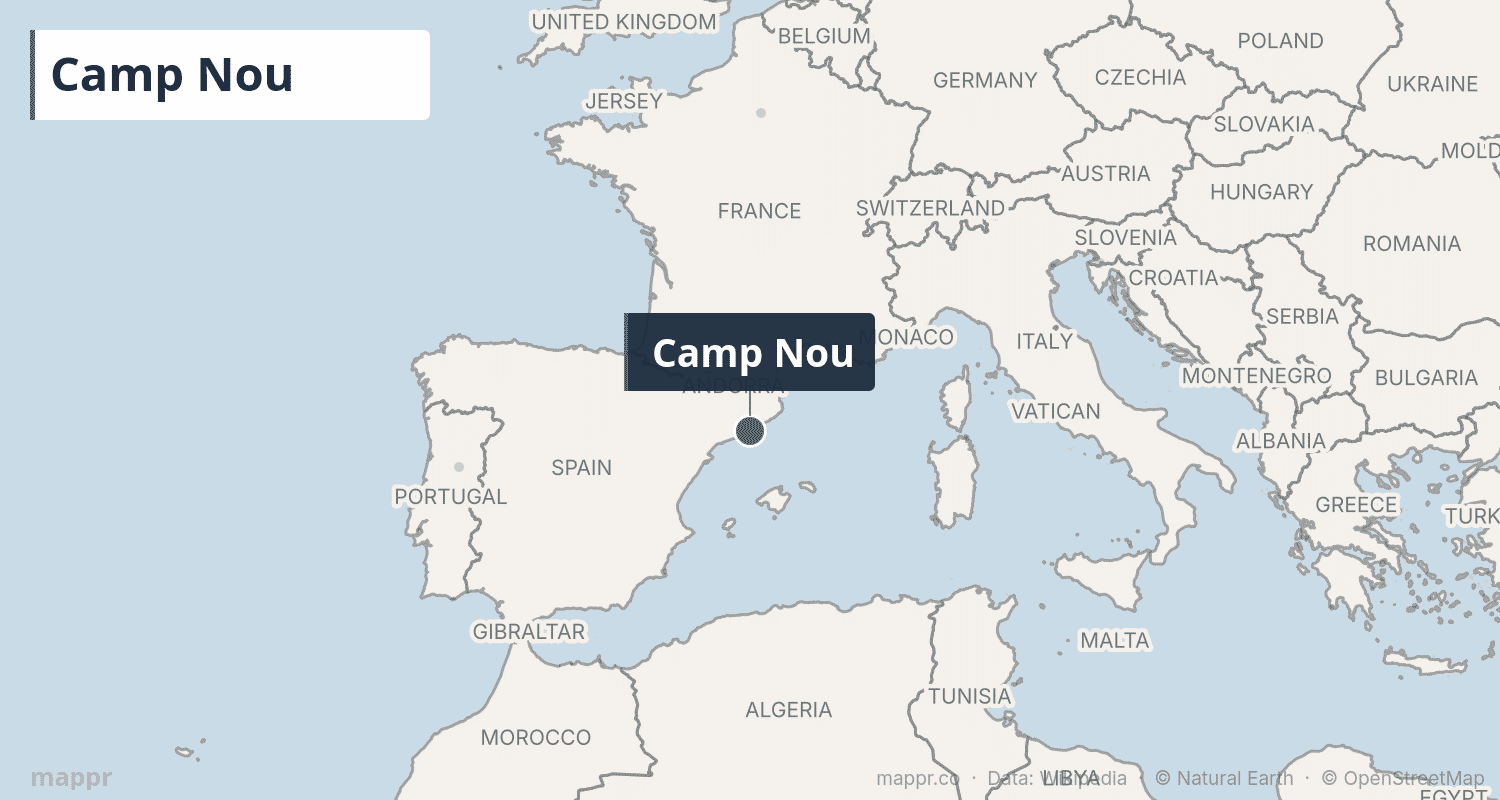
Camp Nou in Barcelona, Spain, is the largest football stadium in Europe with a current capacity of 99,354. Home to FC Barcelona since 1957, it has witnessed some of the most iconic moments in football history — from Lionel Messi’s record-breaking goals to dramatic Champions League nights.
The stadium is currently undergoing a massive renovation project called “Espai Barça,” which will expand capacity to over 105,000 seats by 2026. The rebuild includes a retractable roof, modernized facilities, and improved accessibility. When complete, it will be the second-largest football stadium in the world and the undisputed cathedral of European football.
3. FNB Stadium (Soccer City) 🇿🇦
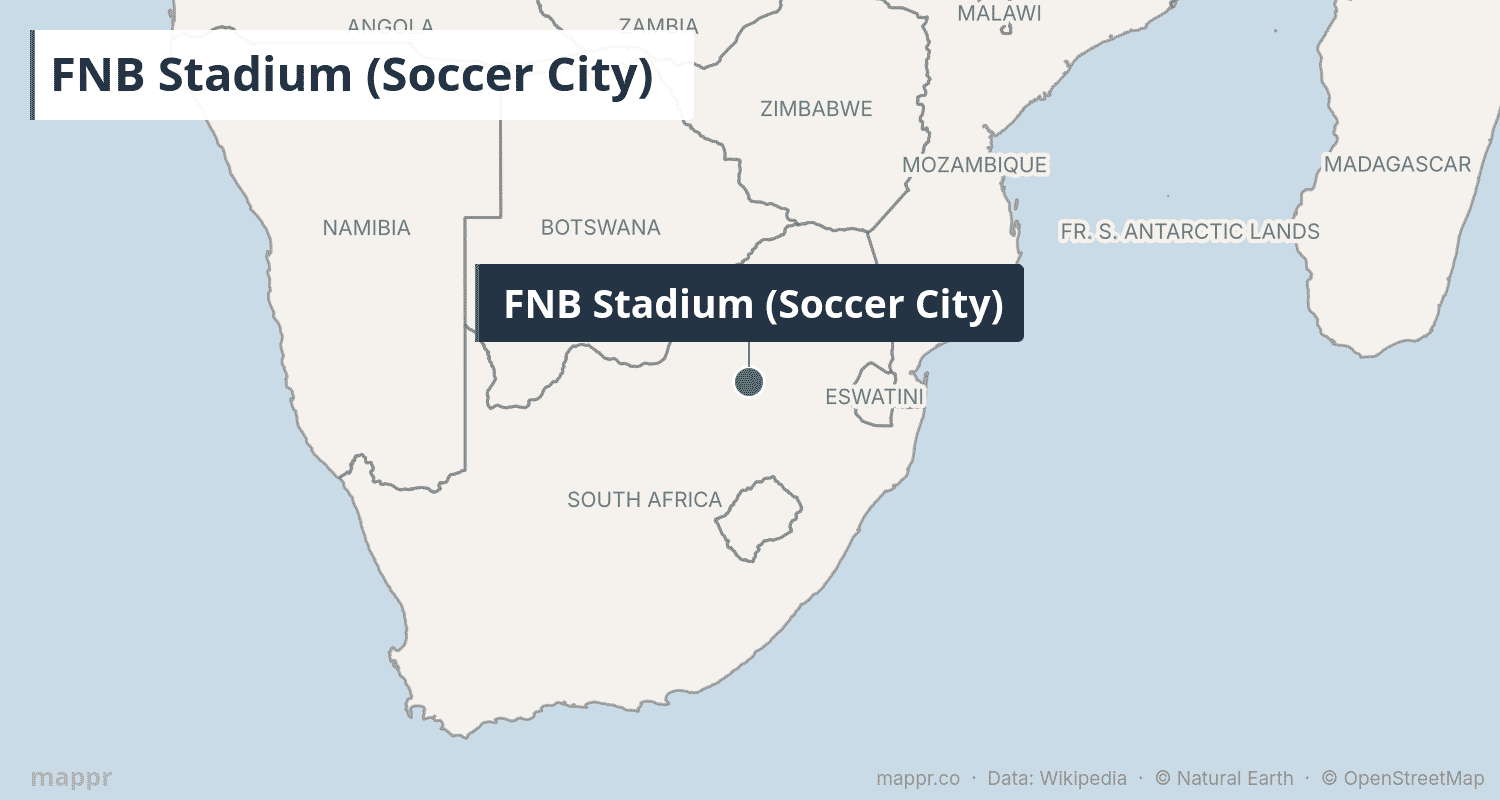
Known as Soccer City, the FNB Stadium in Johannesburg, South Africa, seats 94,736 spectators. Its distinctive calabash (African pot) exterior design makes it one of the most recognizable stadiums in the world. The venue earned global fame as the host of the 2010 FIFA World Cup Final, where Spain defeated the Netherlands 1-0.
Beyond football, the stadium holds deep historical significance — it was here that Nelson Mandela made his first public speech after being released from prison in 1990. Today it serves as the home ground of South Africa’s national football team, Bafana Bafana.
4. Wembley Stadium 🏴
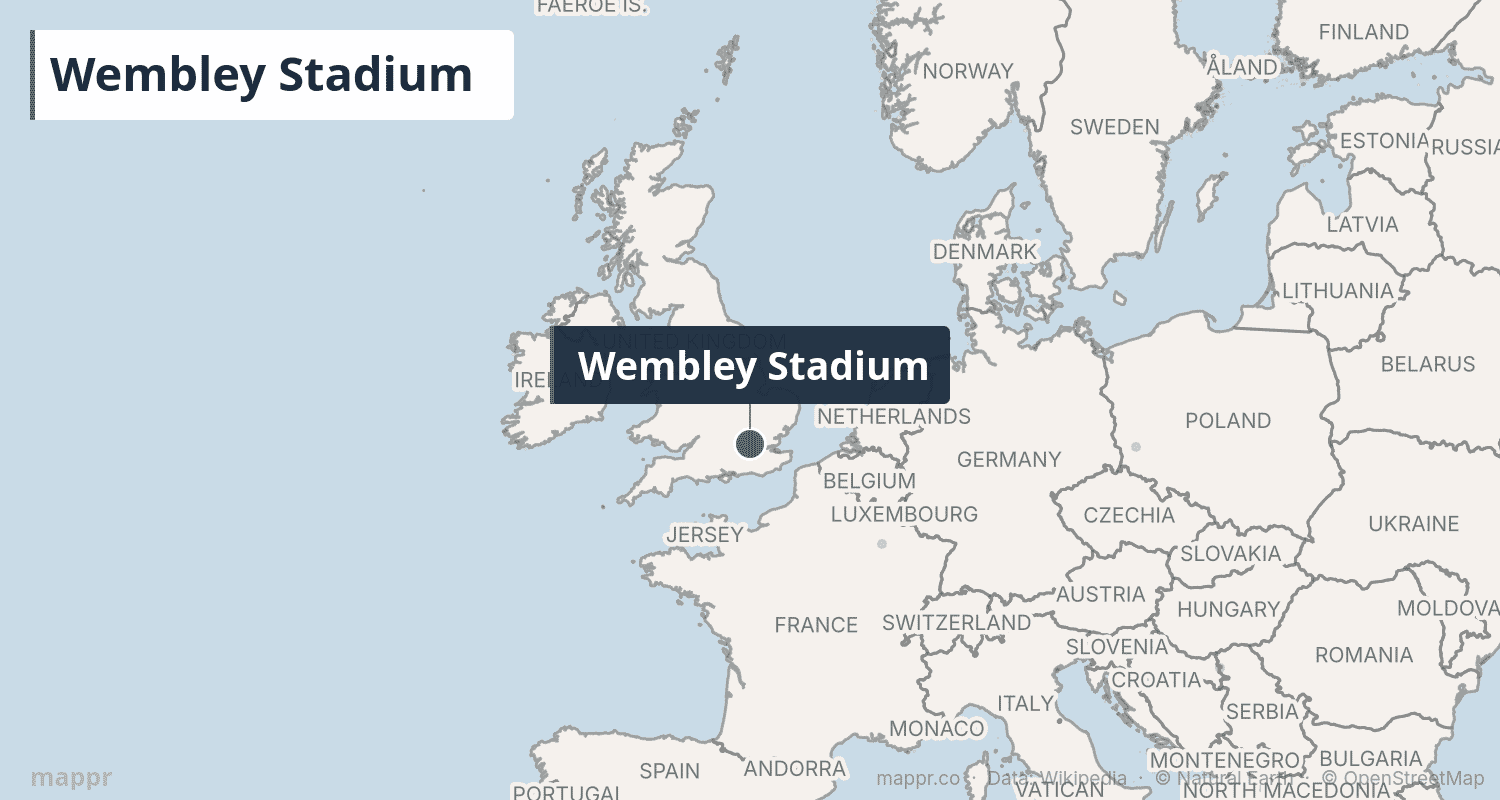
Wembley Stadium in London, England, is the home of English football with a capacity of 90,000. Often called “The Home of Football,” the current Wembley opened in 2007, replacing the legendary original venue where England won the 1966 World Cup. Its signature 133-meter arch is visible across northwest London.
Wembley hosts the FA Cup Final, League Cup Final, England international matches, and the Community Shield. It also regularly hosts the NFL London Games and major concerts. The stadium cost £798 million to build and features 2,618 toilets — more than any other venue in the world.
5. Lusail Stadium 🇶🇦
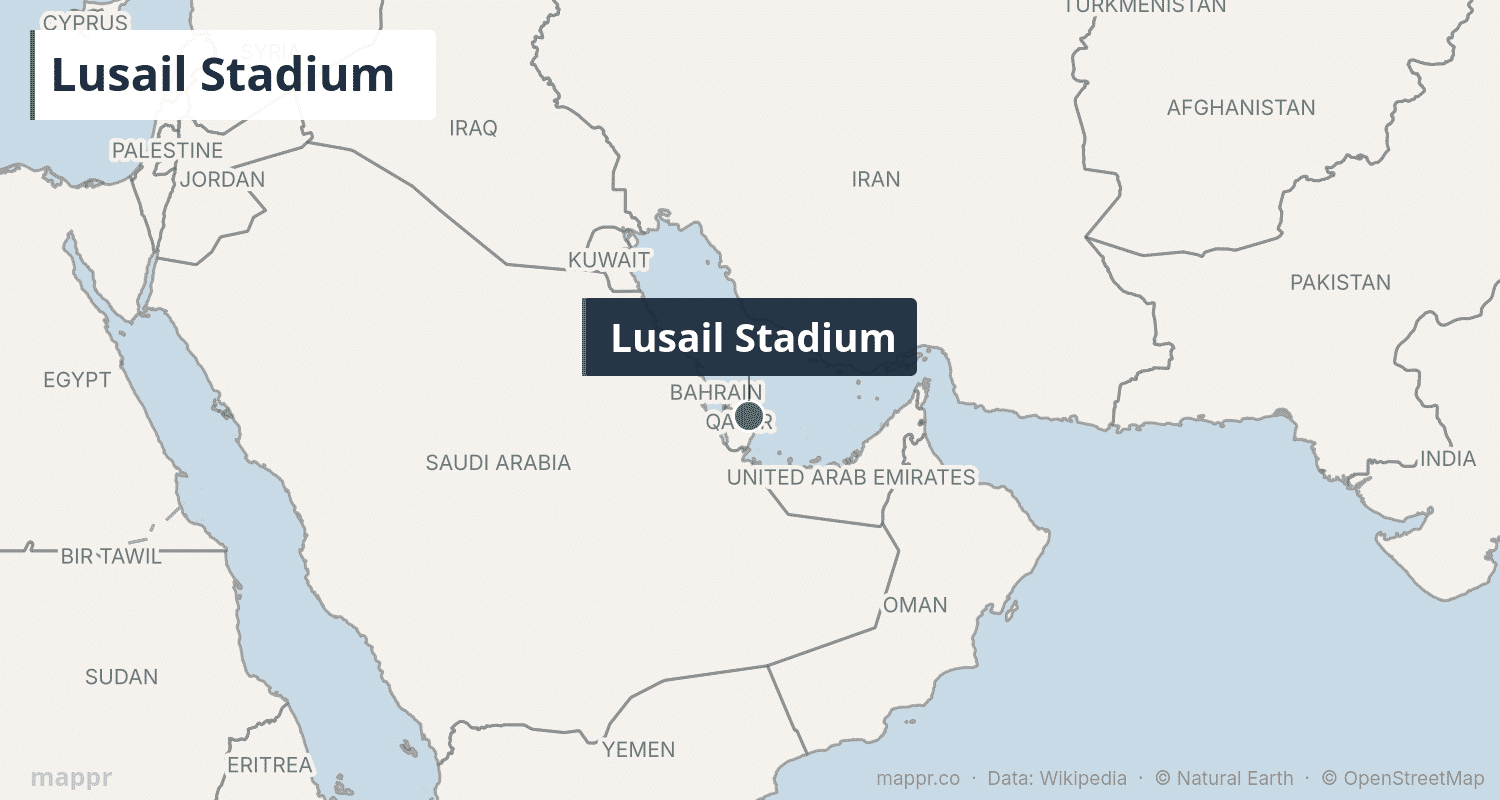
The Lusail Stadium in Qatar is the newest mega-stadium on this list, opened in 2022 specifically for the FIFA World Cup. With 88,966 seats, it hosted the 2022 World Cup Final — the epic match where Argentina defeated France on penalties, with Lionel Messi lifting the trophy at last.
The stadium’s golden façade is inspired by the interplay of light and shadow on traditional Middle Eastern lanterns. Its innovative cooling system keeps the interior comfortable despite Qatar’s extreme heat. Plans for the stadium’s post-World Cup future include converting it into a mixed-use community space with schools, shops, and a smaller stadium.
6. Estadio Azteca 🇲🇽
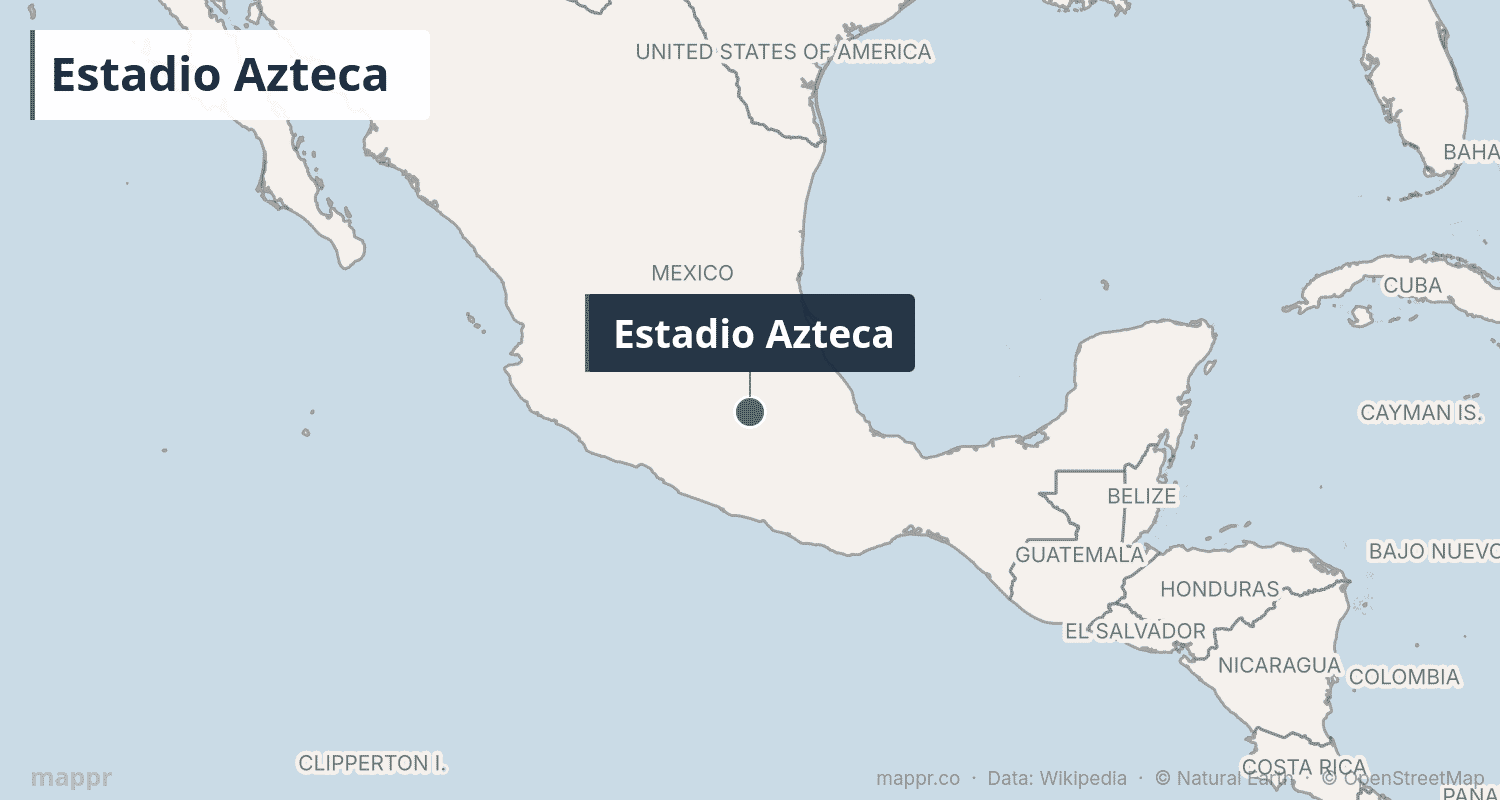
The Estadio Azteca in Mexico City, Mexico, seats 87,523 and holds a unique distinction: it is the only stadium to have hosted two FIFA World Cup Finals (1970 and 1986). It was here that Diego Maradona scored his famous “Hand of God” and “Goal of the Century” against England in 1986.
Opened in 1966 and sitting at an altitude of 2,200 meters above sea level, the Azteca is one of the most intimidating venues for visiting teams. It serves as the home ground for Club América and the Mexican national team. The stadium is set to host matches during the 2026 FIFA World Cup, making it the first venue to participate in three World Cups.
7. Bukit Jalil National Stadium 🇲🇾
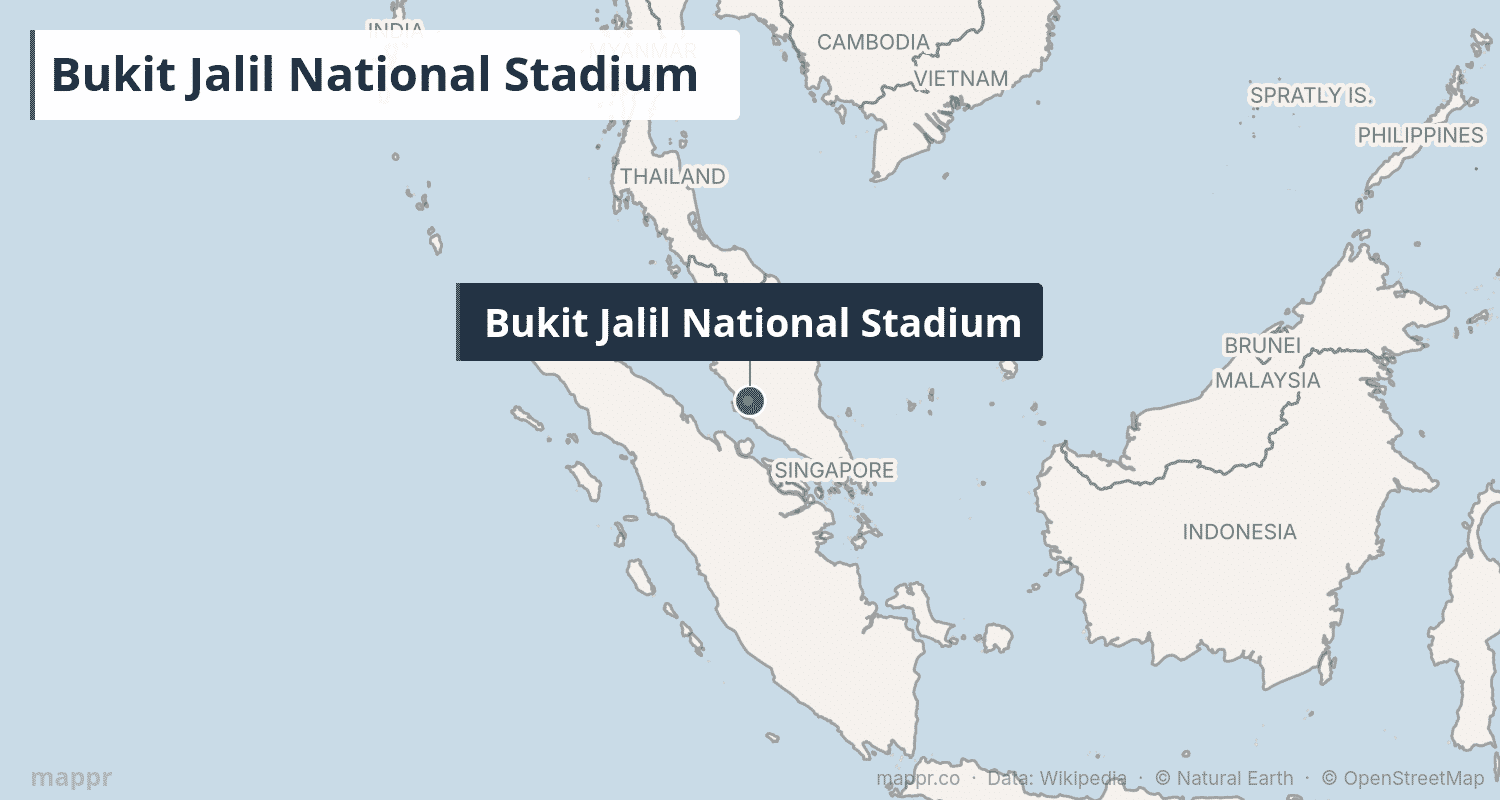
The Bukit Jalil National Stadium in Kuala Lumpur, Malaysia, holds 87,411 spectators. Built for the 1998 Commonwealth Games, it is Southeast Asia’s largest stadium and the home ground of the Malaysian national football team.
The stadium is part of the Bukit Jalil National Sports Complex, which includes an aquatics center, hockey stadium, and tennis courts. It has hosted major events including the 2017 Southeast Asian Games and regularly draws massive crowds for international friendlies and football tournaments.
8. Borg El Arab Stadium 🇪🇬
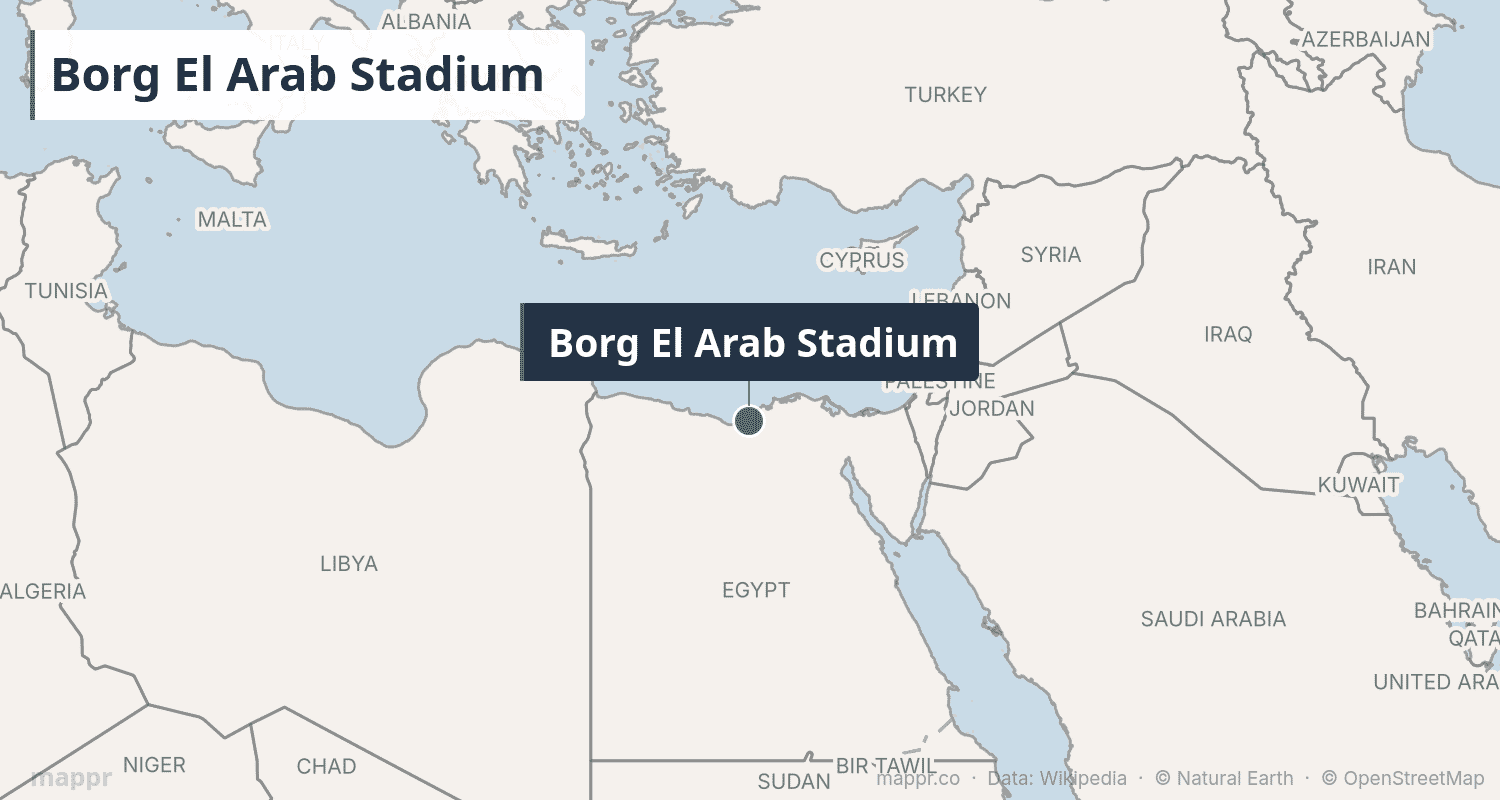
The Borg El Arab Stadium near Alexandria, Egypt, seats 86,000. Opened in 2007 as part of Egypt’s bid for the 2010 FIFA World Cup (which went to South Africa), it is the largest stadium in Egypt and one of the largest in Africa.
Located about 50 km west of Alexandria, the stadium has hosted numerous Africa Cup of Nations matches and serves as a venue for Egyptian Premier League clubs. Despite its impressive size, its remote location means it often operates below capacity for regular league matches.
9. Estadio Más Monumental 🇦🇷
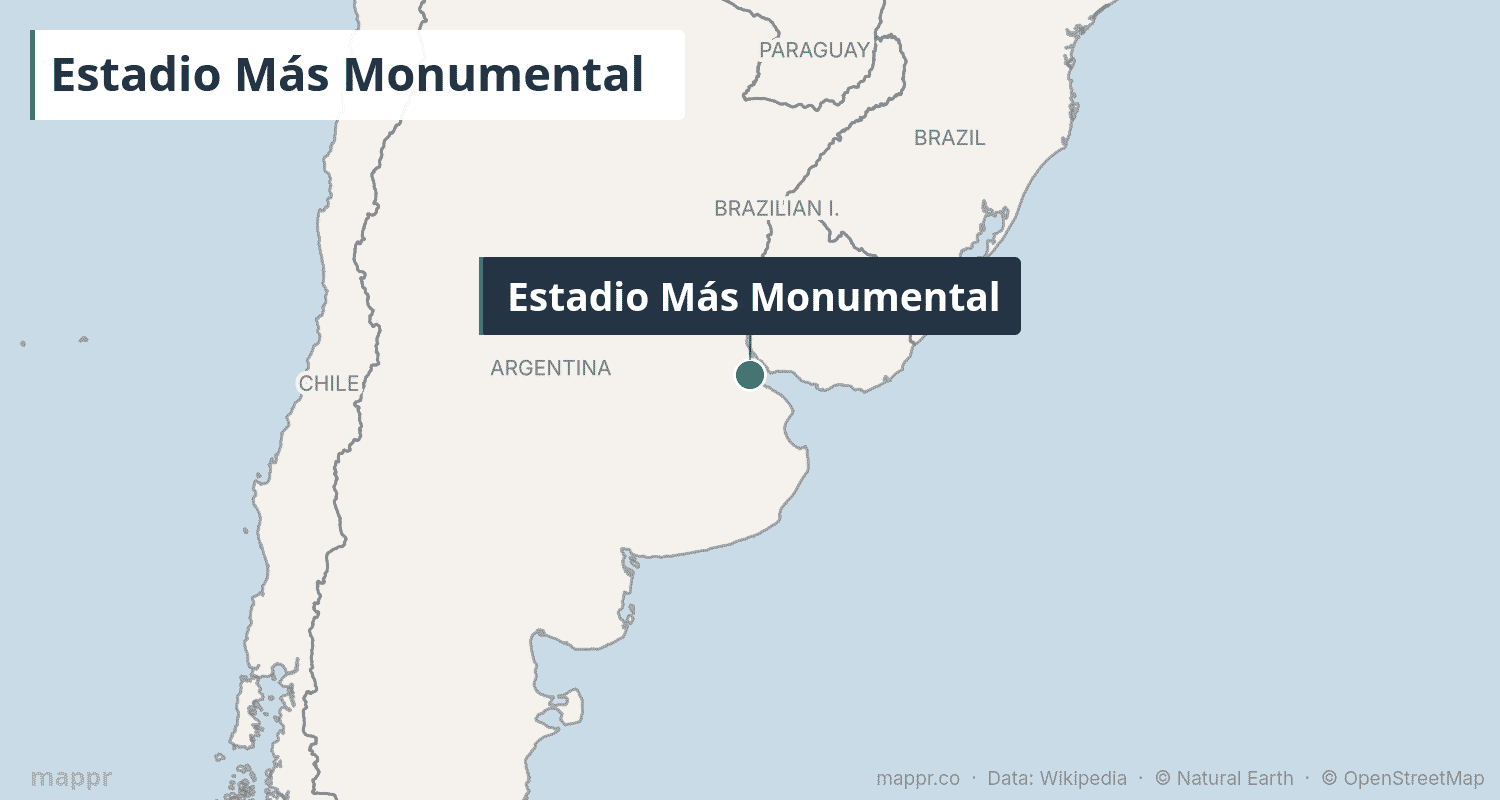
The Estadio Más Monumental (formerly Estadio Monumental Antonio Vespucio Liberti) in Buenos Aires, Argentina, holds 84,567 fans. It is the home ground of River Plate, one of South America’s most successful clubs, and the largest stadium in Argentina.
Opened in 1938, the Monumental hosted the 1978 World Cup Final where Argentina won their first title. After recent expansions completed in 2023, it reclaimed its status as the largest stadium in South America. The atmosphere during River Plate matches — especially against arch-rivals Boca Juniors — is among the most electric in world football.
10. Santiago Bernabéu 🇪🇸
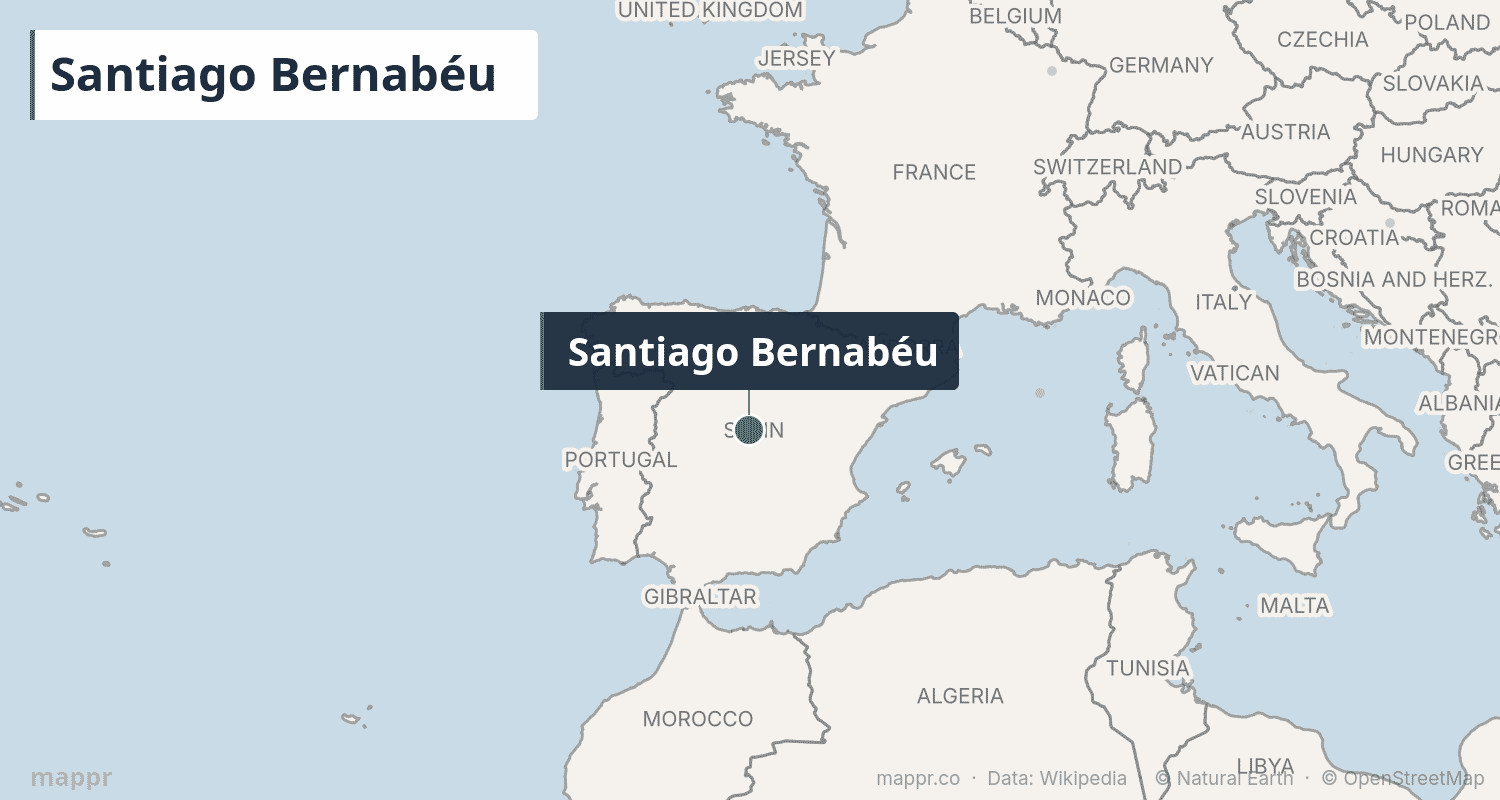
The Santiago Bernabéu in Madrid, Spain, is Real Madrid’s legendary home with a capacity of 83,186. After a massive €1.85 billion renovation completed in 2024, the stadium now features a retractable pitch, a 360-degree wraparound video screen, and a retractable roof.
The Bernabéu has hosted four European Cup/Champions League finals, a World Cup final (1982), and a Euro final (1964). The renovated stadium is designed to be a year-round entertainment venue, hosting concerts, NFL games, and tennis matches alongside Spain’s most successful club. It is set to host the 2030 World Cup Final.
11. Signal Iduna Park 🇩🇪
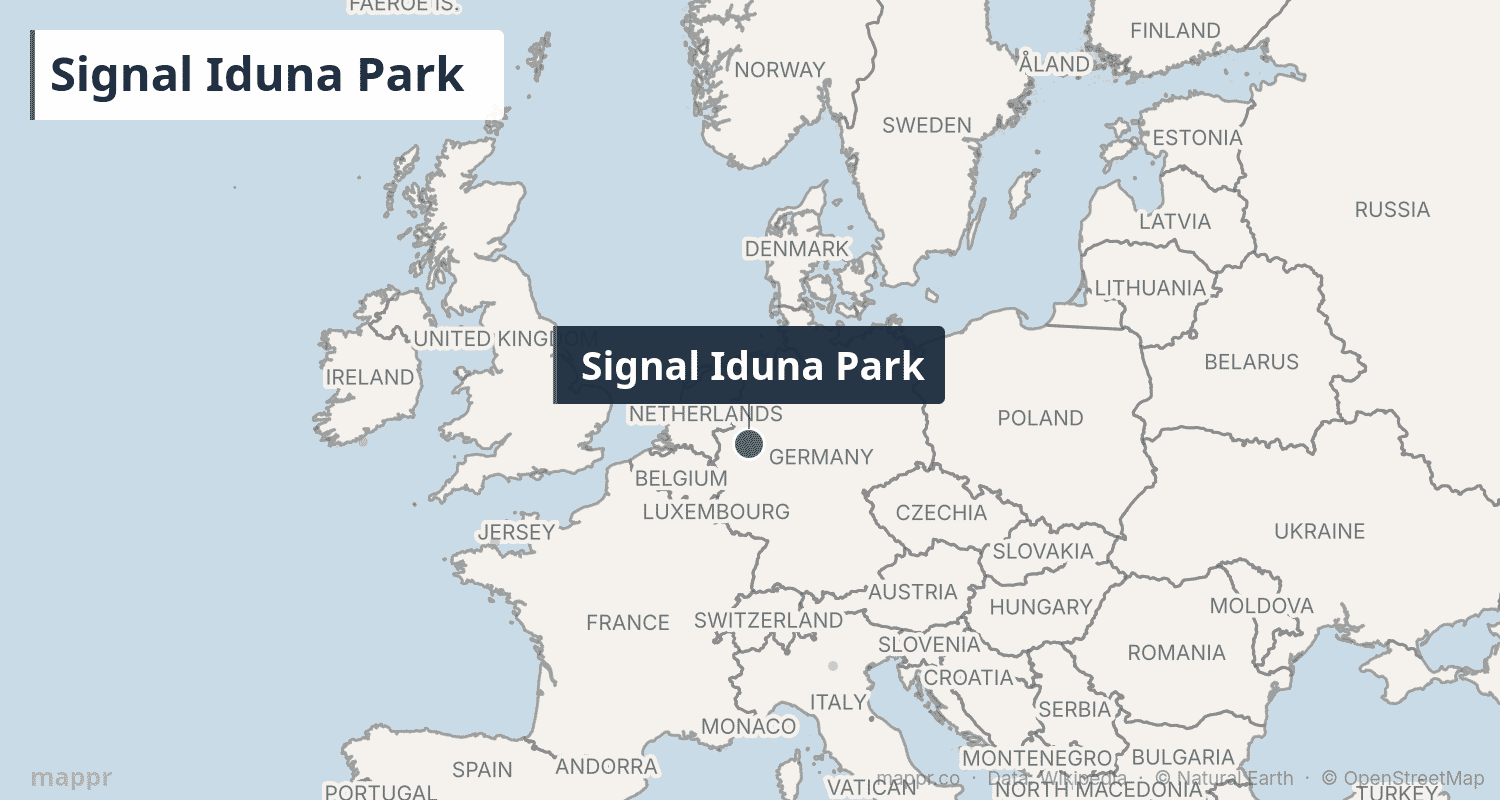
Signal Iduna Park in Dortmund, Germany, seats 81,365 for domestic matches (65,829 for international games when the standing “Yellow Wall” is converted to seats). Home to Borussia Dortmund, it is famous for having the largest standing terrace in European football — the Südtribüne, which holds 24,454 standing fans.
The “Yellow Wall” creates one of the most intimidating atmospheres in world football, with Dortmund consistently recording the highest average attendance in Germany. The stadium hosted matches during the 2006 World Cup and Euro 2024.
12. Stade de France 🇫🇷
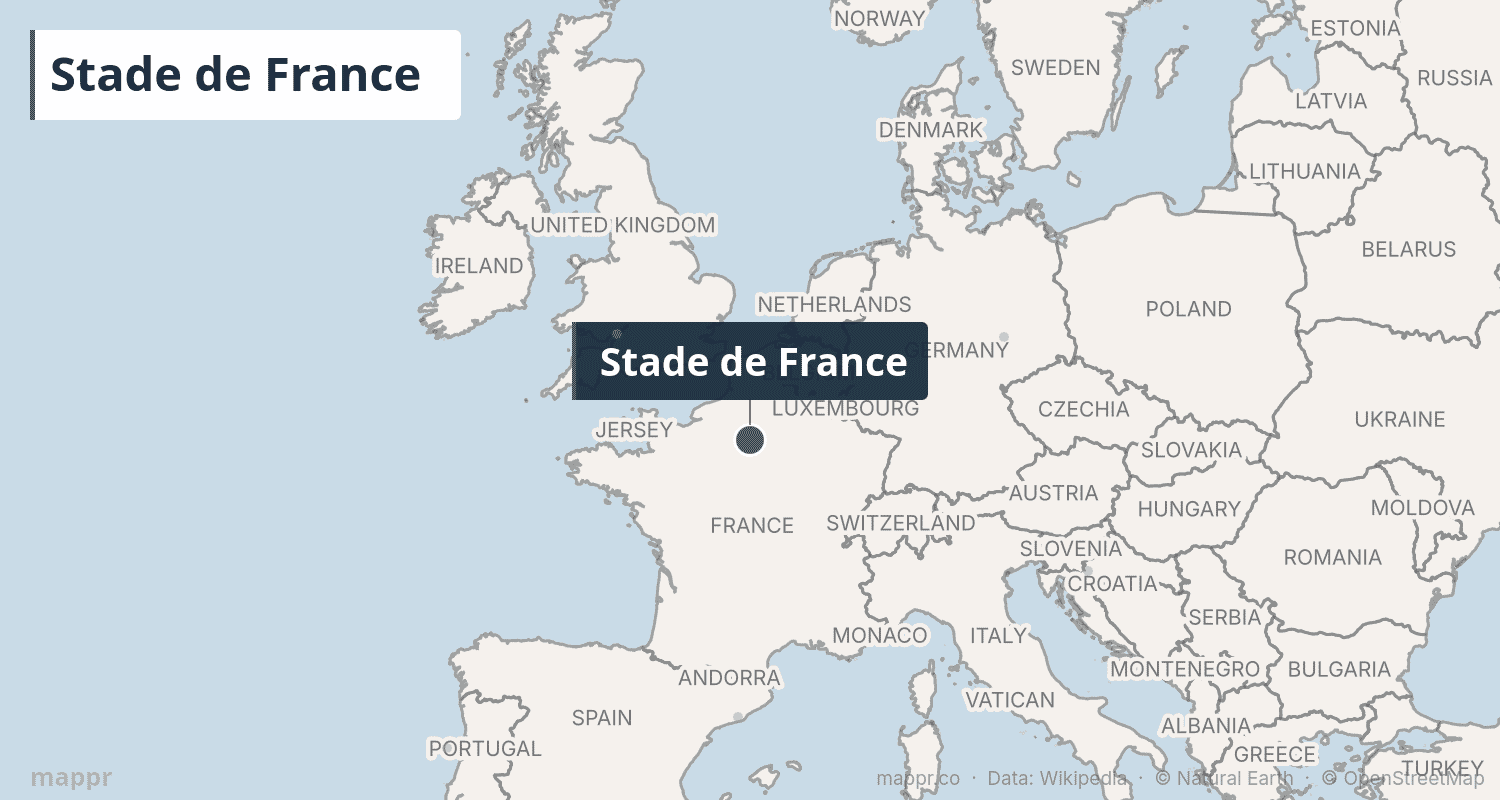
The Stade de France in Saint-Denis, near Paris, France, holds 81,338 spectators. Built for the 1998 FIFA World Cup, it was the stage for one of football’s most iconic moments — France’s 3-0 victory over Brazil in the 1998 final, with Zinédine Zidane scoring twice.
The stadium serves as the home venue for both the French national football and rugby teams. It hosted the 2024 Paris Olympics athletics events and the Champions League finals in 2000, 2006, and 2022. The versatile design allows the lower tier to retract, revealing an athletics track.
13. Luzhniki Stadium 🇷🇺
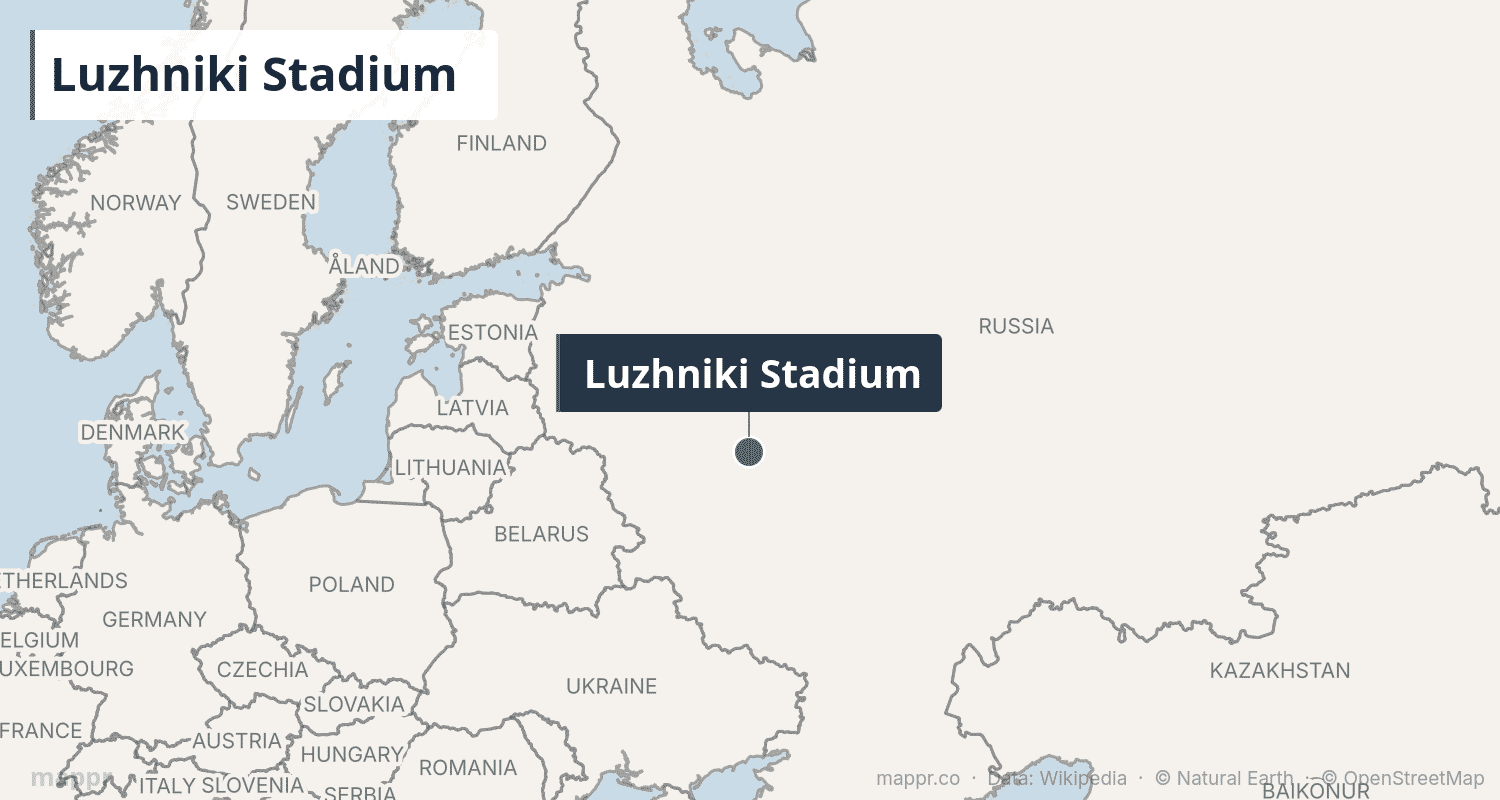
The Luzhniki Stadium in Moscow, Russia, seats 81,000 after its comprehensive renovation for the 2018 FIFA World Cup. Originally built in 1956 as the Central Lenin Stadium, it is Russia’s largest and most important sports venue.
The Luzhniki hosted the 2018 World Cup Final (France vs. Croatia), the 2008 Champions League Final, and was a major venue during the 1980 Moscow Olympics. The stadium sits within a sprawling sports complex along the Moscow River, surrounded by 145 hectares of parkland.
14. Shah Alam Stadium 🇲🇾
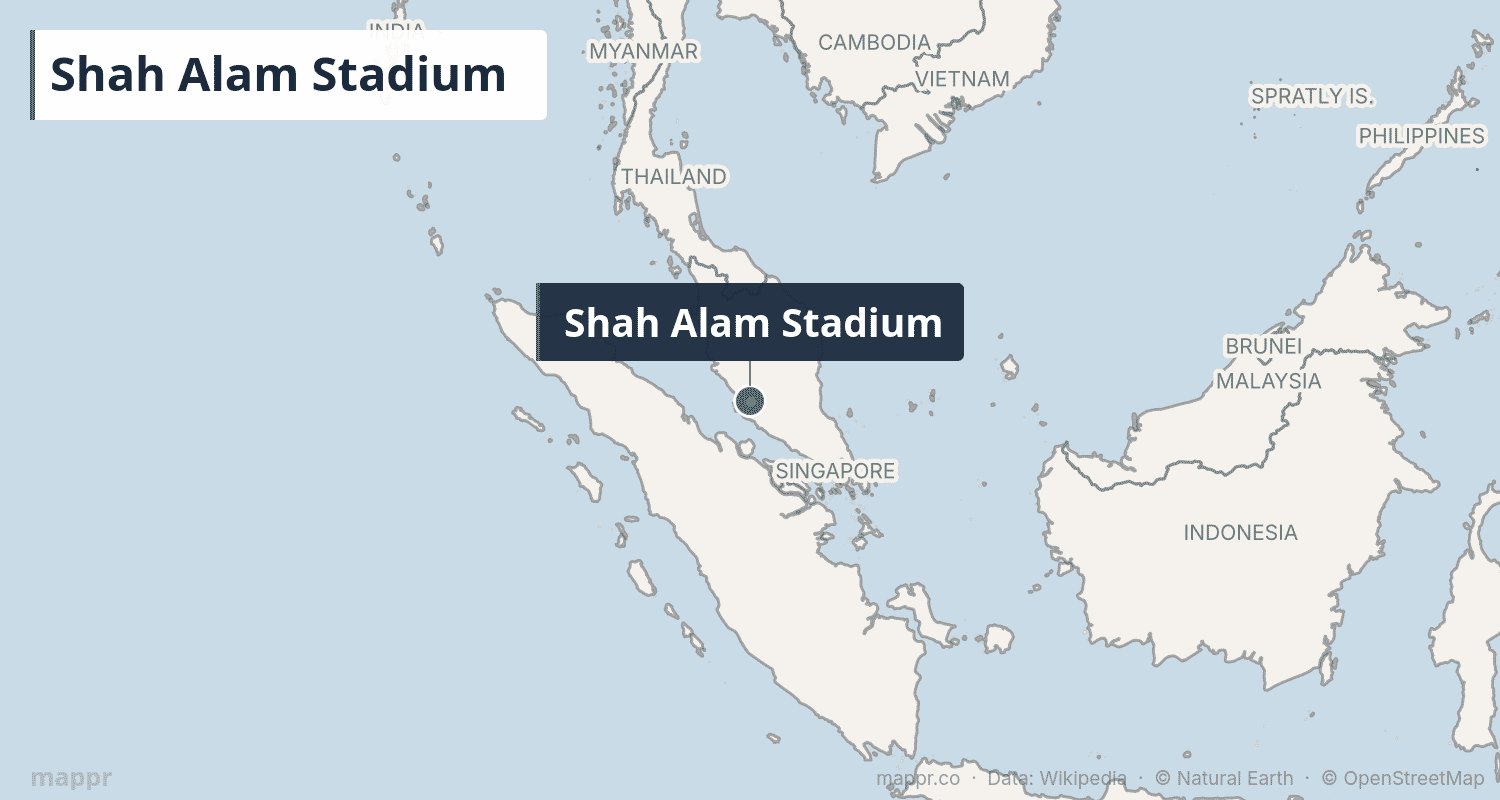
The Shah Alam Stadium in Malaysia’s Selangor state holds 80,372 spectators, making it the second-largest stadium in the country. Opened in 1994, it has served as the home ground of Selangor FC and was Malaysia’s main sporting venue before the Bukit Jalil National Stadium was built.
The stadium’s distinctive circular design and ribbed exterior make it a local landmark. While it has been partially overshadowed by newer venues, it remains an important venue for Malaysian football and occasionally hosts the national team’s matches.
15. Estadio Monumental 🇵🇪
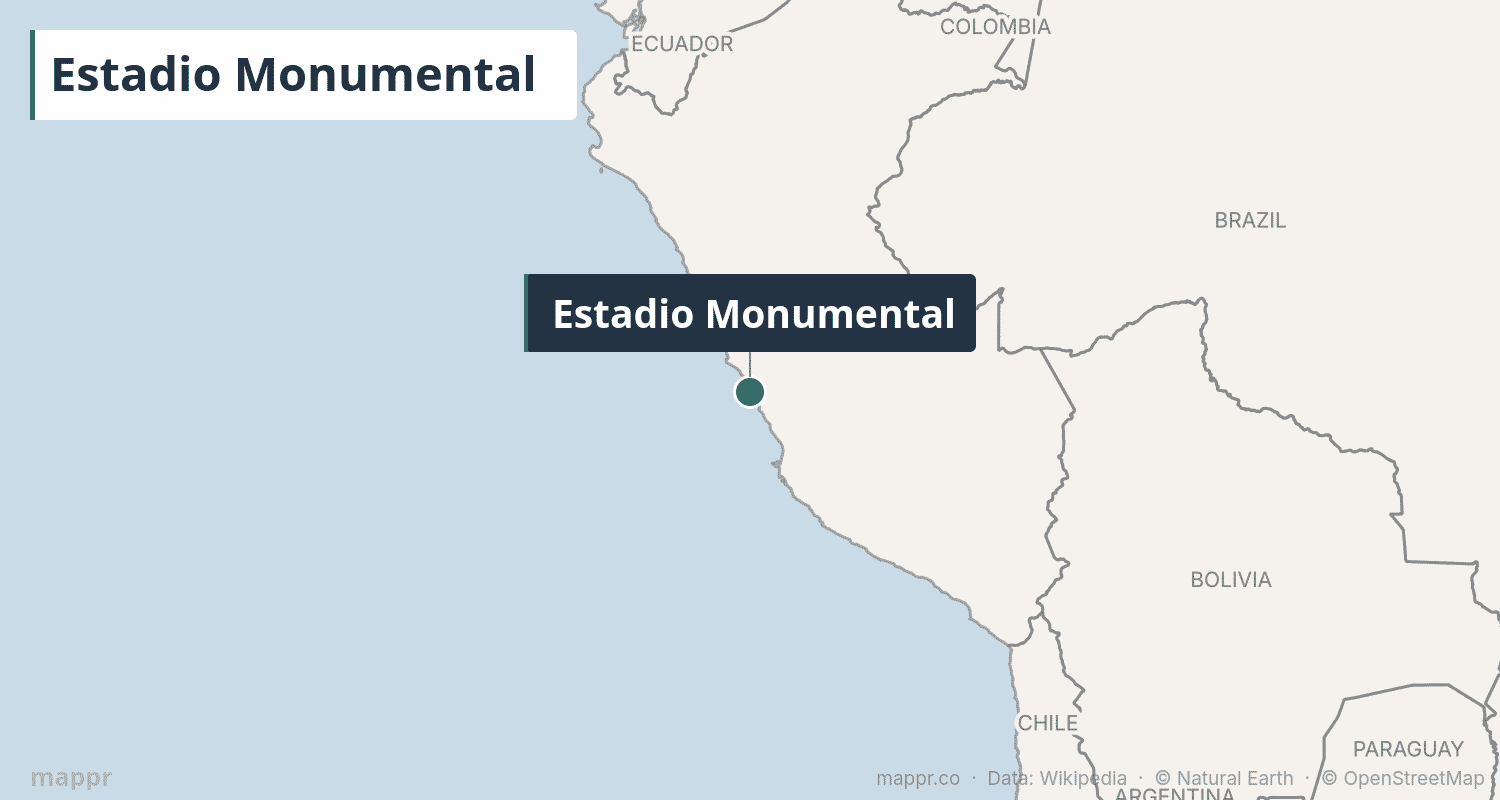
The Estadio Monumental in Lima, Peru, seats 80,093. Home to Club Universitario de Deportes (commonly known as “La U”), it is the largest stadium in South America after Buenos Aires’ Monumental. Completed in 2000, it often hosts Peru’s national team matches.
Located in the Ate district of Lima, the stadium features an open-bowl design typical of South American football venues. The passionate Peruvian fanbase fills the stadium for major matches, creating an atmosphere that ranks among the most intense on the continent.
16. Stadio Giuseppe Meazza (San Siro) 🇮🇹
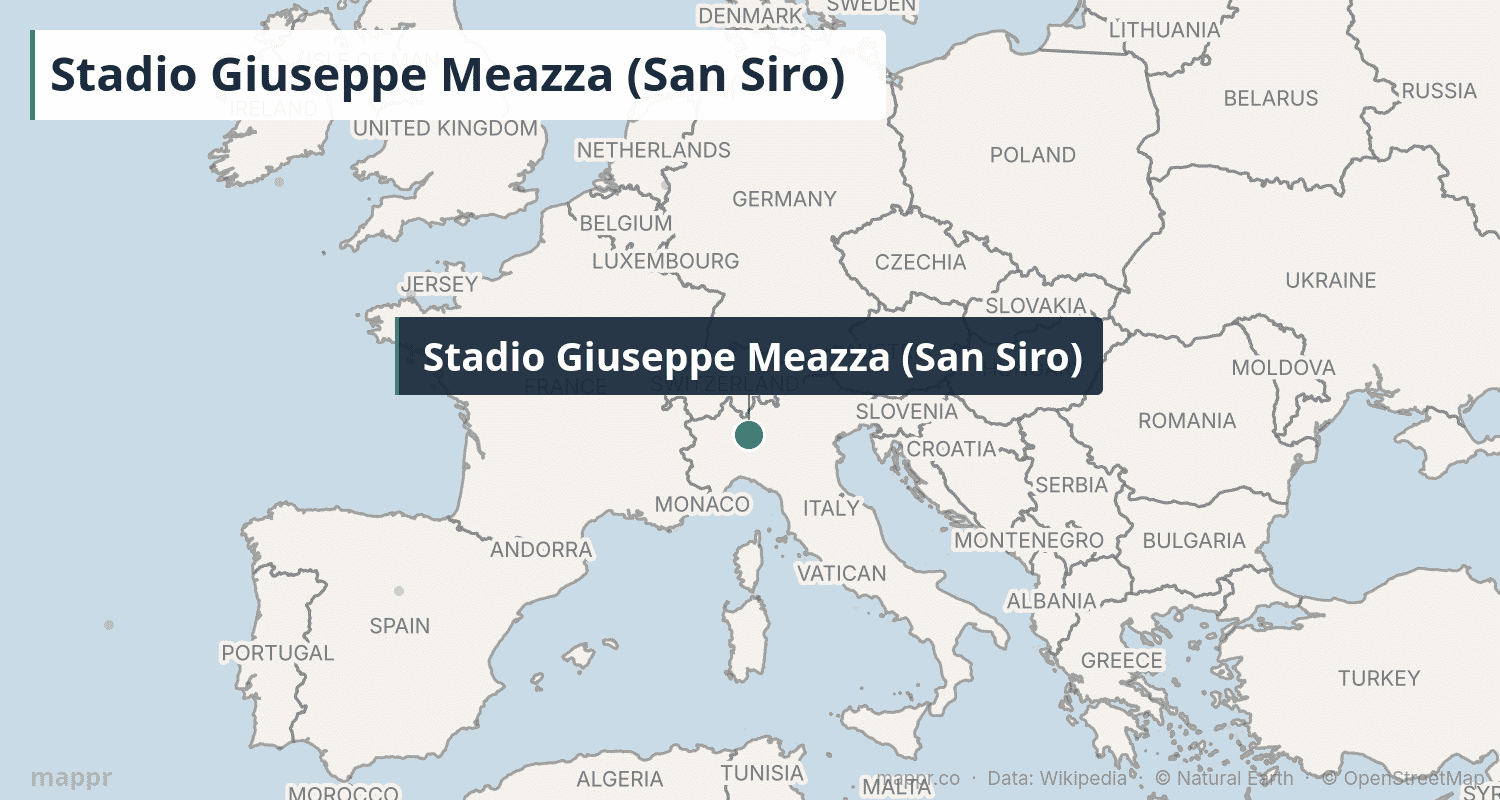
The San Siro (officially Stadio Giuseppe Meazza) in Milan, Italy, seats 80,018 and is one of the most iconic stadiums in world football. Uniquely, it is shared by two of Italy’s biggest clubs — AC Milan and Inter Milan.
Opened in 1926 and expanded multiple times (most notably for the 1990 World Cup when the distinctive spiral towers were added), the San Siro has hosted four European Cup/Champions League finals. Its future is uncertain — both clubs have explored building new stadiums, though plans keep evolving. The three-tiered tower design remains one of football’s most recognizable silhouettes.
17. Guangdong Olympic Stadium 🇨🇳
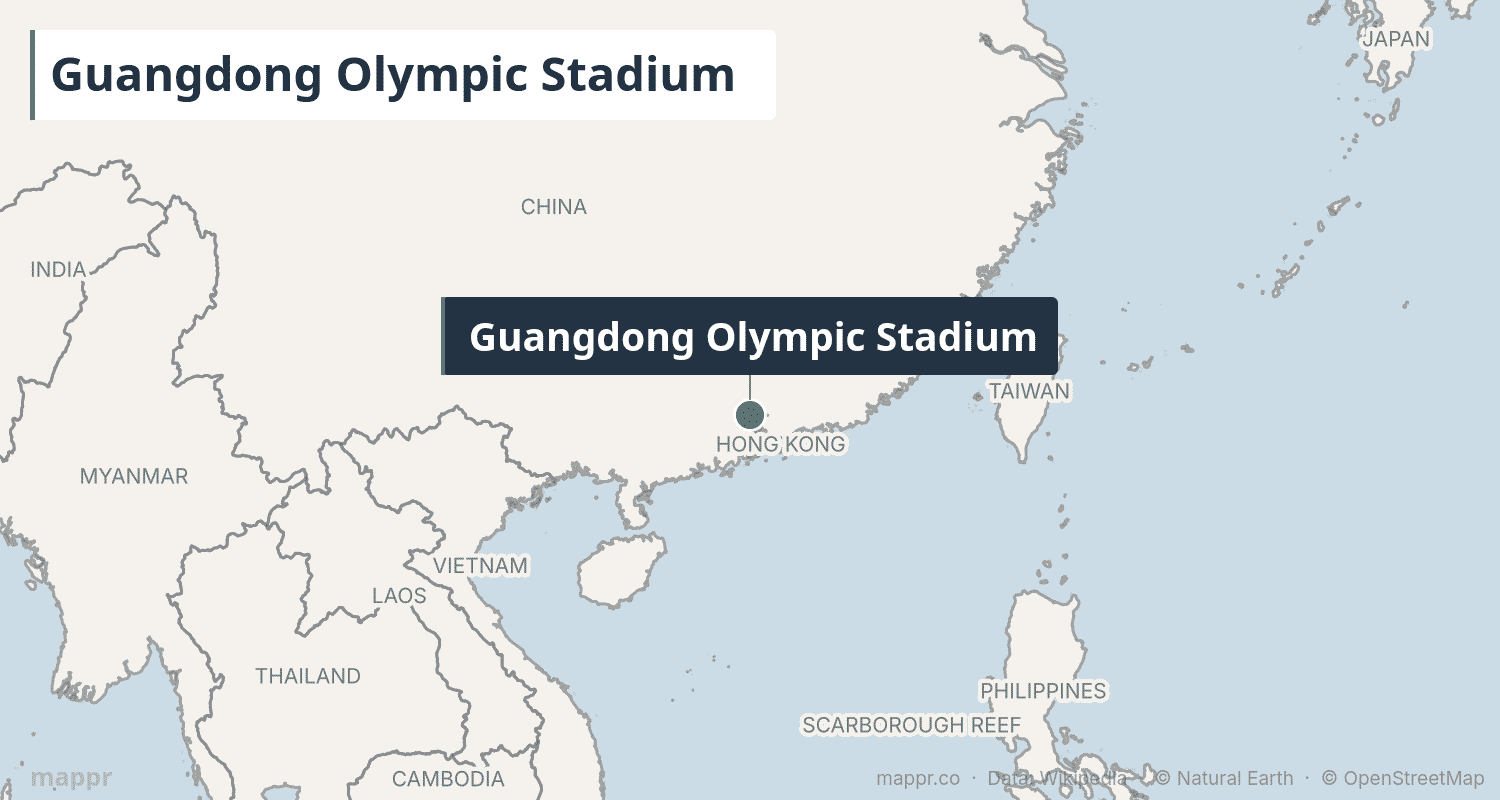
The Guangdong Olympic Stadium in Guangzhou, China, seats 80,012. Built for the 2001 National Games of China, it is one of several 80,000+ capacity venues in the country. The stadium features a distinctive saddle-shaped roof.
China has been investing heavily in football infrastructure as part of its long-term goal to host the FIFA World Cup. The Guangdong Olympic Stadium, along with newer venues like the Guangzhou Evergrande Stadium, showcases this ambition.
18. Stade des Martyrs 🇨🇩
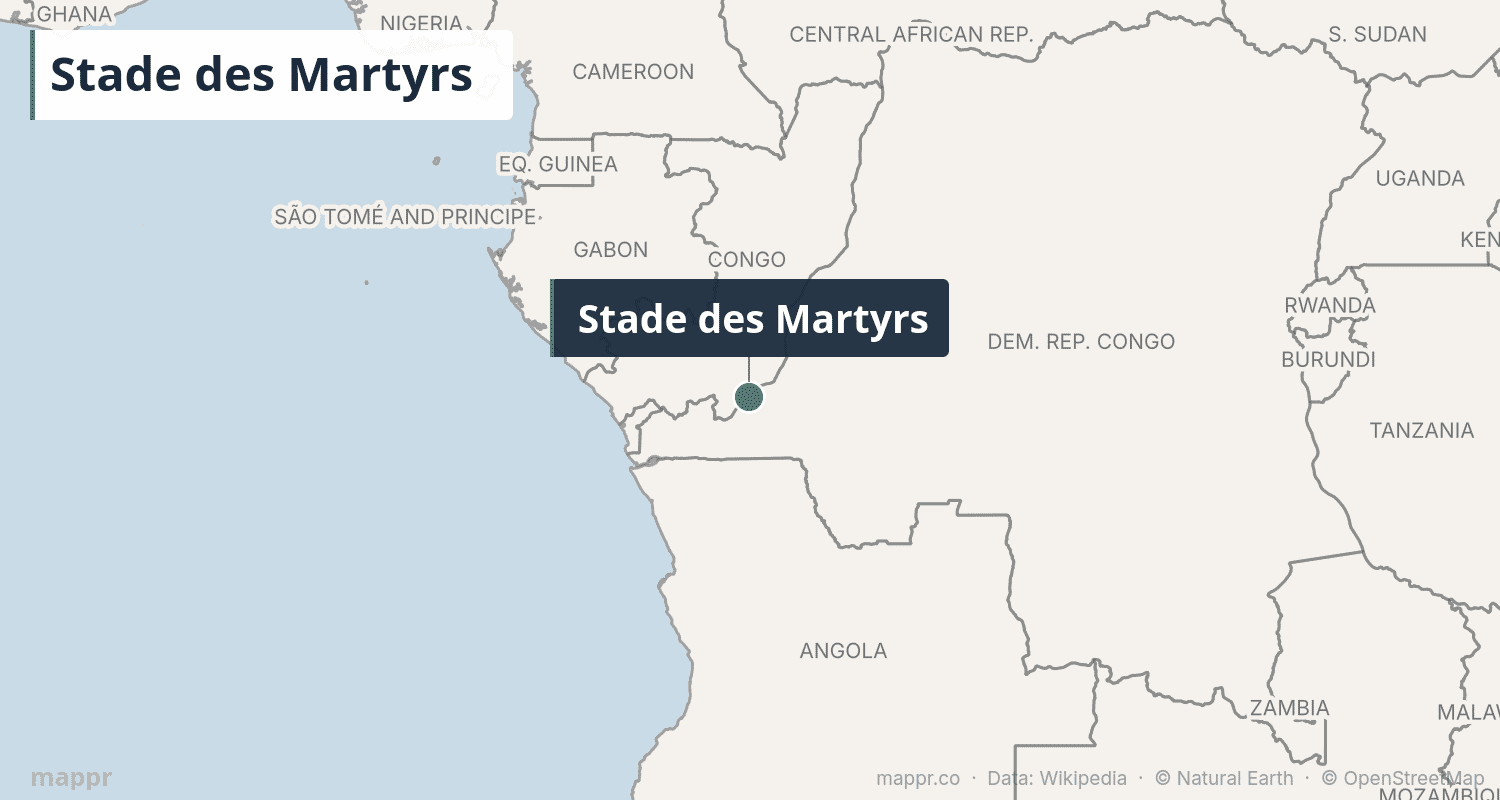
The Stade des Martyrs in Kinshasa, DR Congo, seats 80,000 and is the largest stadium in Central Africa. Built by the Chinese government as a gift to what was then Zaire, it opened in 1994 and is named in honor of the martyrs of the country’s independence movement.
The stadium serves as the home ground of the DR Congo national team (the Leopards) and hosts major Africa Cup of Nations qualifiers. The atmosphere during home matches is legendary — the passionate Congolese fans are known to create an almost unbearable wall of noise for visiting teams.
19. Maracanã 🇧🇷
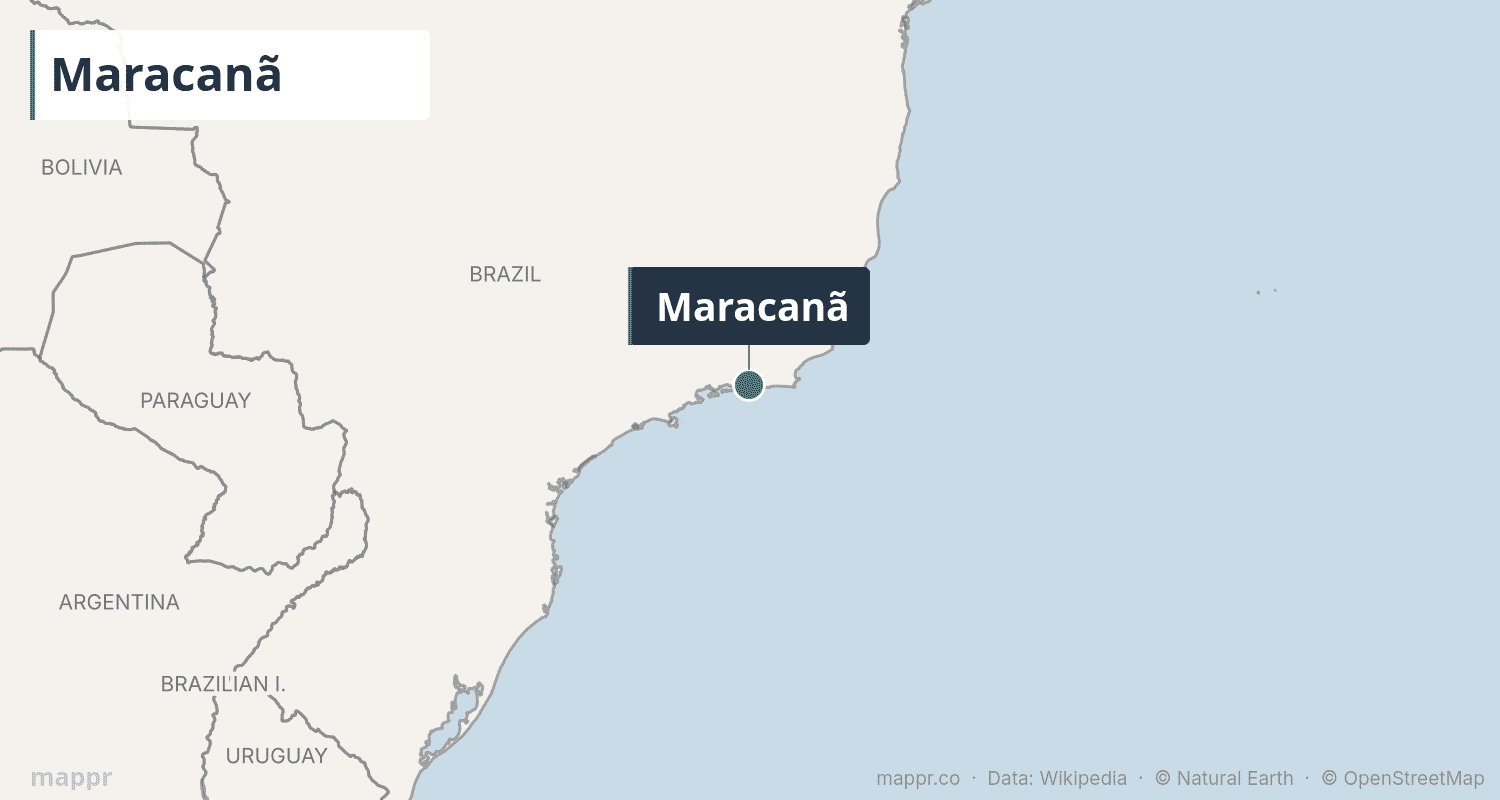
The Maracanã in Rio de Janeiro, Brazil, is perhaps the most famous football stadium in the world. Its current capacity is 78,838, though it once held a record-breaking crowd of nearly 200,000 during the 1950 World Cup Final — the infamous “Maracanazo” where Uruguay shocked Brazil.
Extensively renovated for the 2014 World Cup and 2016 Olympics, the Maracanã is home to Rio’s four major clubs: Flamengo, Fluminense, Botafogo, and Vasco da Gama. The stadium’s name alone evokes the passion and artistry of Brazilian football — it is, without question, the spiritual home of the beautiful game.
20. Azadi Stadium 🇮🇷
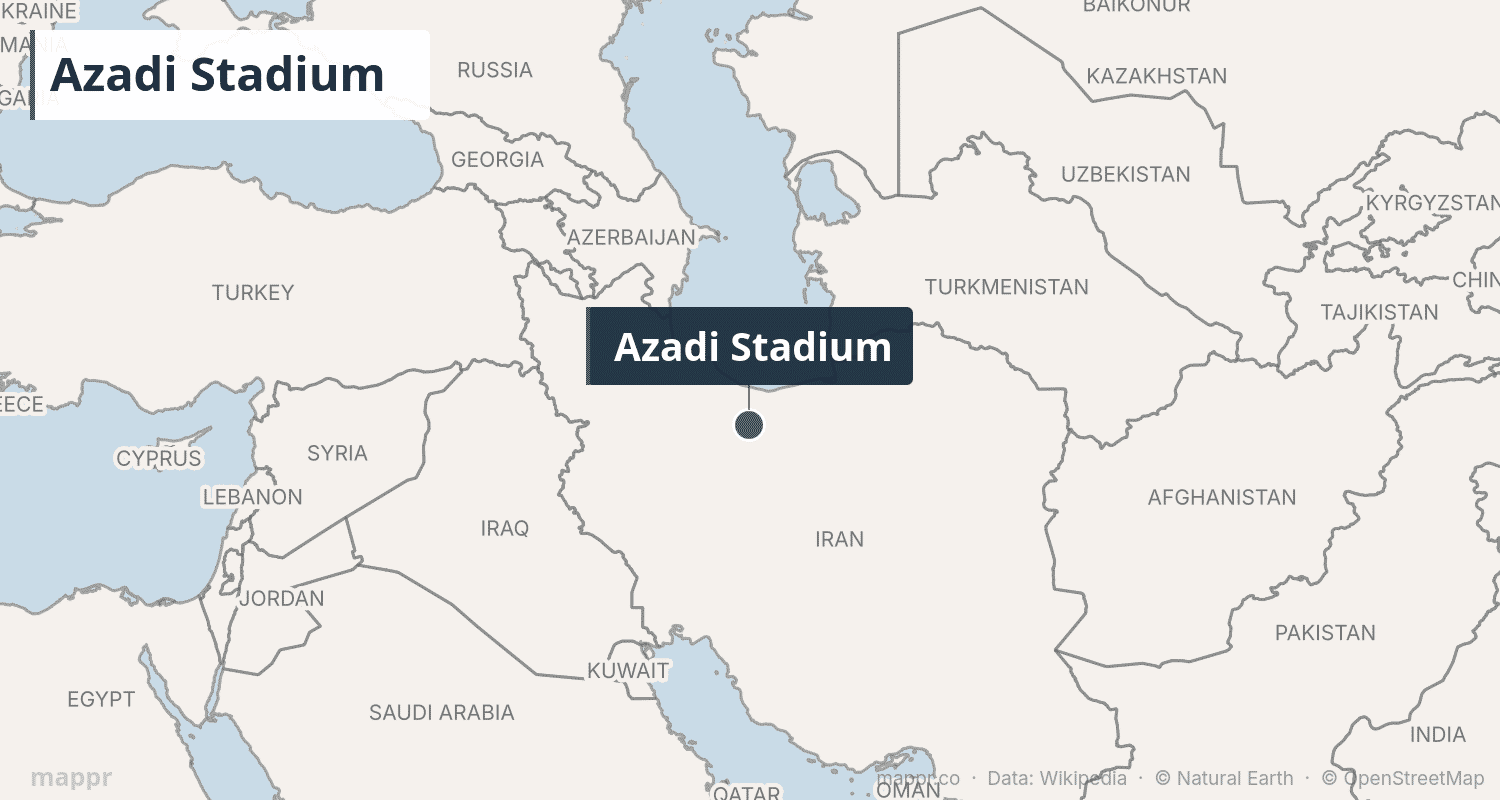
The Azadi Stadium (“Freedom Stadium”) in Tehran, Iran, rounds out our list with a capacity of 78,116. Opened in 1971 and originally named Aryamehr Stadium, it was renamed after the 1979 Islamic Revolution. It is the largest stadium in West Asia and one of the most important football venues in the Middle East.
The Azadi Stadium is home to Iran’s national team as well as Tehran giants Esteghlal and Persepolis — whose rivalry is one of the most heated in Asian football. In 2019, the stadium made headlines when Iranian women were officially allowed to attend football matches there for the first time in nearly 40 years.
Regional Breakdown
The distribution of the world’s largest football stadiums reflects the sport’s global reach:
- Europe (7 stadiums): Camp Nou, Wembley, Santiago Bernabéu, Signal Iduna Park, Stade de France, Luzhniki, San Siro
- Asia (5 stadiums): Rungrado, Lusail, Bukit Jalil, Shah Alam, Azadi
- South America (3 stadiums): Estadio Más Monumental, Estadio Monumental, Maracanã
- Africa (3 stadiums): FNB Stadium, Borg El Arab, Stade des Martyrs
- North America (1 stadium): Estadio Azteca
- Middle East (1 stadium): Lusail Stadium
Notably absent from the top 20 are stadiums from Oceania and much of Sub-Saharan Africa. However, with the 2030 World Cup spread across Spain, Portugal, and Morocco (with centenary matches in Uruguay, Argentina, and Paraguay), expect African and South American stadium infrastructure to continue growing.
Stadiums Under Construction or Expansion
Several major projects are set to reshape this list in the coming years:
- Camp Nou expansion (Barcelona) — expanding to 105,000+ by 2026, which would make it #2 globally
- New Manchester United stadium — plans for a 100,000-seat venue targeting 2030, which would become the UK’s largest
- Grand Stade de Tanger (Morocco) — a new 115,000-seat stadium being built for the 2030 World Cup, which could challenge Rungrado for #1
- New Everton stadium (Bramley-Moore Dock) — 52,888 capacity, opened in 2025
Methodology
Rankings are based on current official seating capacity as reported by stadiums, national football associations, and verified by sources including Wikipedia’s stadium database and WorldStadiums.com. Only stadiums regularly used for association football (soccer) are included — multi-purpose venues that primarily host other sports (like American football or cricket) are excluded unless they regularly host football matches. Capacities reflect 2025 figures and may change as renovations complete.


This post uses data from the following sources.
Data Sources:
- List of association football stadiums by capacity – Wikipedia
- The 20 Biggest Soccer Stadiums in the World – Sports Illustrated
- Biggest Football Stadiums in the World in 2025 – Scores24