
📅 Last updated: September 1, 2026 · Spot prices as of: August 25, 2026 · Source: U.S. EIA (Brent & WTI). Updated monthly.
Brent & WTI crude oil prices today
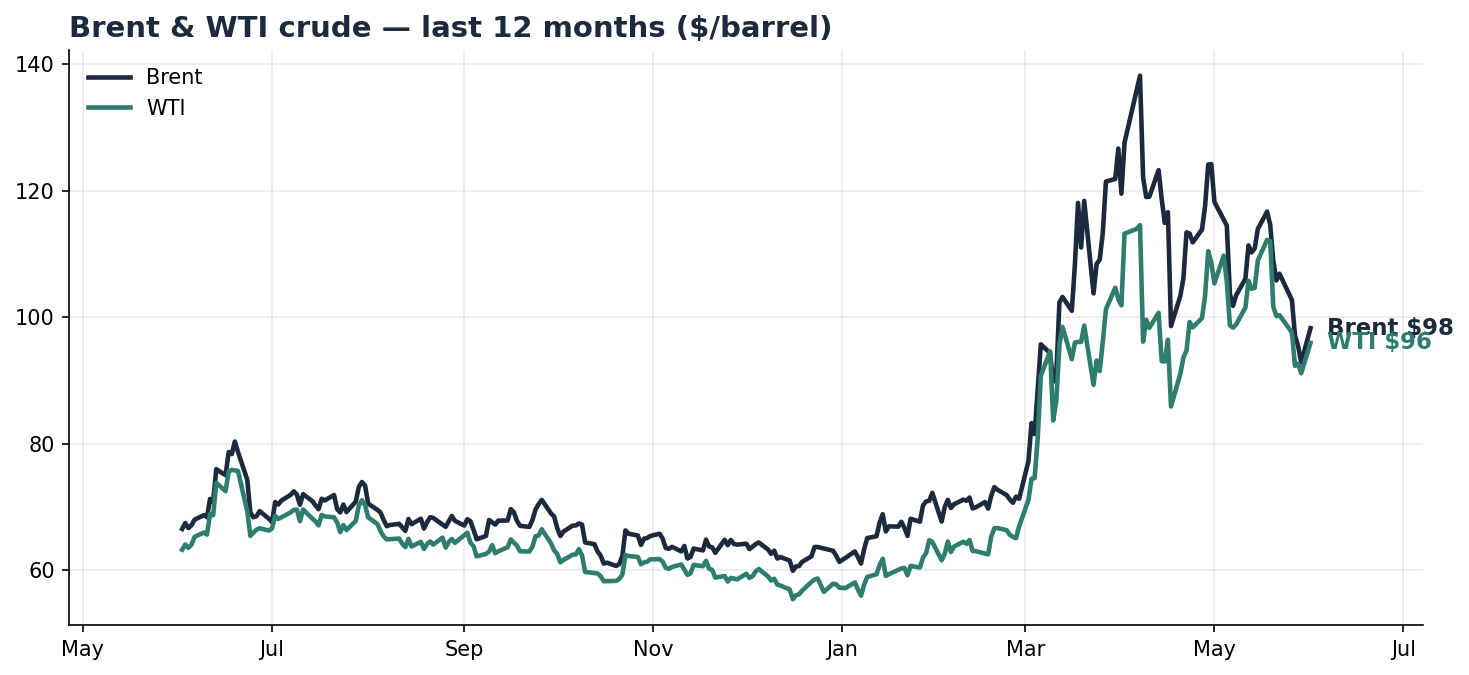
Brent crude: $88.24 ▼ 12.0% (1mo) · ▲ 29.2% (1yr)
WTI crude: $83.90 ▼ 8.5% (1mo) · ▲ 28.7% (1yr)
What’s shaping oil prices right now
Crude prices are being supported by OPEC+ keeping a cautious grip on supply, even after its September quota increase, with the group signaling no rush to flood the market further. Demand remains steady but not especially strong, with traders watching whether late-summer consumption and any economic slowdown limit upside. Geopolitical risk is still adding a premium: Middle East tensions keep supply-disruption fears alive, while tighter sanctions pressure on Russian oil exports also leaves the market vulnerable to further upside spikes.
Where the world’s oil comes from
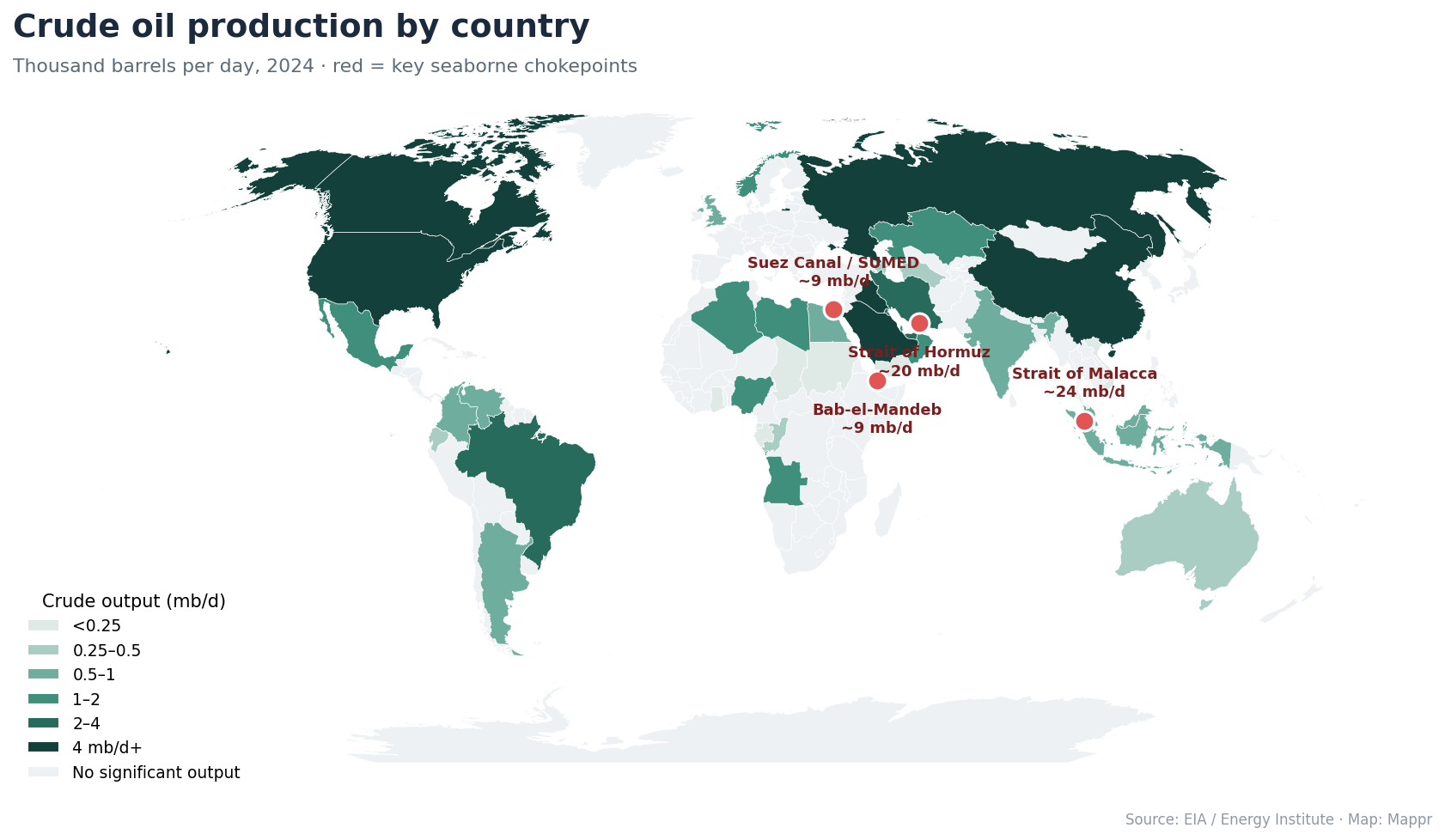
Crude is a single global market, so one barrel’s price moves the whole world — but it is pumped in a handful of places and shipped through a few narrow corridors. The map shows crude output by country, with the seaborne chokepoints (in red) whose disruption sends prices spiking far more than a localised conflict does.
Top 15 crude oil producers
| # | Country | Crude output (mb/d) |
|---|---|---|
| 1 | United States | 13.2 |
| 2 | Russia | 10.1 |
| 3 | Saudi Arabia | 9.0 |
| 4 | Canada | 4.9 |
| 5 | Iraq | 4.3 |
| 6 | China | 4.2 |
| 7 | Iran | 3.4 |
| 8 | Brazil | 3.4 |
| 9 | UAE | 3.3 |
| 10 | Kuwait | 2.7 |
| 11 | Mexico | 1.9 |
| 12 | Norway | 1.8 |
| 13 | Kazakhstan | 1.8 |
| 14 | Qatar | 1.8 |
| 15 | Nigeria | 1.4 |
The chokepoints that move oil prices
About a fifth of the world’s oil passes through the Strait of Hormuz between the Gulf and the Indian Ocean — the single most important oil artery on Earth. The Strait of Malacca carries crude to East Asia, Bab-el-Mandeb and the Suez Canal/SUMED link the Gulf to Europe. A threat to any of these moves prices far more than a strike that doesn’t touch oil infrastructure or transit — which is why markets price chokepoint risk so quickly.
For what this means at the pump, see our US gas prices by state and European fuel prices trackers.


