Key Takeaways
- Russia is in a class of its own. With about 26,655 cumulative sanctions designations, Russia is by far the most-sanctioned country in history, more than Iran, Venezuela, Myanmar and Cuba combined, several times over. Most of it came after the February 2022 invasion of Ukraine.
- The gap is enormous. Iran, the second-most-sanctioned country, sits at roughly 6,027 designations, less than a quarter of Russia's total. Then come Syria (2,893), North Korea (2,239) and Belarus (1,900). The rest of the world trails far behind.
- Count is not the same as reach. A high designation count means many named targets, not necessarily a total embargo. Cuba, Iran, North Korea and Syria face comprehensive embargoes on their whole economies; Russia's programme is broad and sectoral but not a full embargo, despite the record number of listings.
- Still escalating. The EU adopted its 21st Russia package on 23 July 2026, its largest batch of individual listings in four years (218). Its heaviest measures phase in through August, with 33 more Russian banks cut off from 13 August and new crypto restrictions from 25 August.
- A concentrated map. Serious sanctions programmes cluster on a few dozen states, from a handful of comprehensive embargoes to targeted measures against specific individuals, entities and sectors in conflict-hit and authoritarian states.
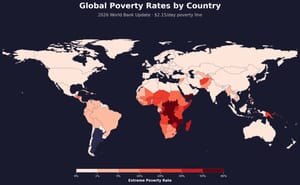
Sanctions have become the West’s weapon of choice, and one country now absorbs more of them than any nation in history. As of 2026, Russia carries roughly 26,655 sanctions designations, more than Iran, Venezuela, Myanmar and Cuba combined, several times over. The map below shows where the world’s sanctions land, by intensity.
The world’s most-sanctioned countries
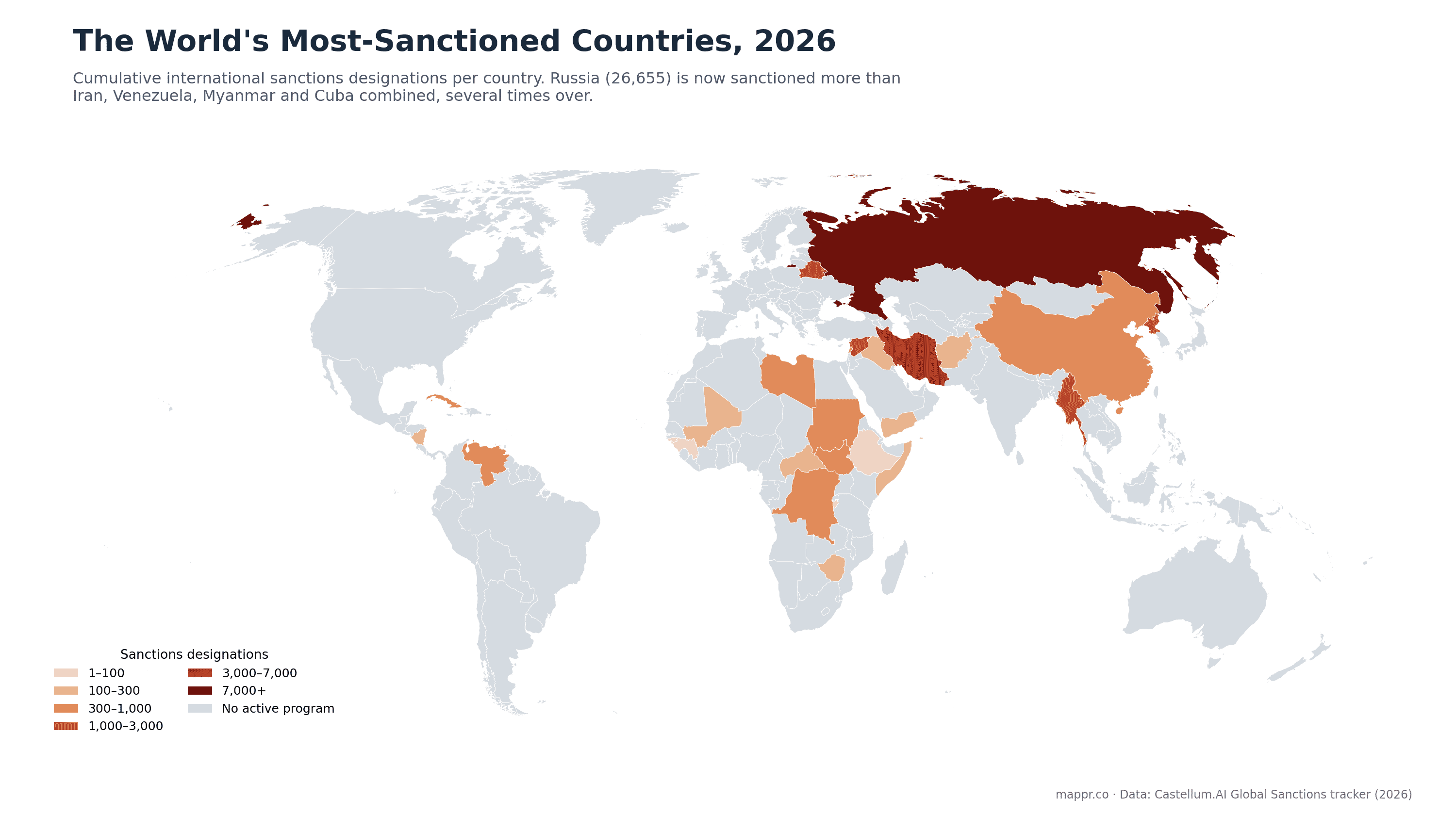
The story of this map is the gradient, not the binary of sanctioned versus not. For most of the last century, Iran was the archetype of a heavily sanctioned state, its measures built up over four decades. Russia overtook that entire accumulation in a fraction of the time. Since the 2022 invasion of Ukraine, the US, EU, UK and their allies have added tens of thousands of designations, and Russia now sits alone at the top of the scale.
Behind Russia, the drop is steep. Iran is a distant second at about 6,027 designations, followed by Syria (2,893), North Korea (2,239) and Belarus (1,900), the last of these largely for enabling Russia’s war. Everyone else, from Myanmar and Venezuela to the conflict-hit states of the Sahel and Horn of Africa, trails well behind.
Comprehensive, sectoral or targeted?
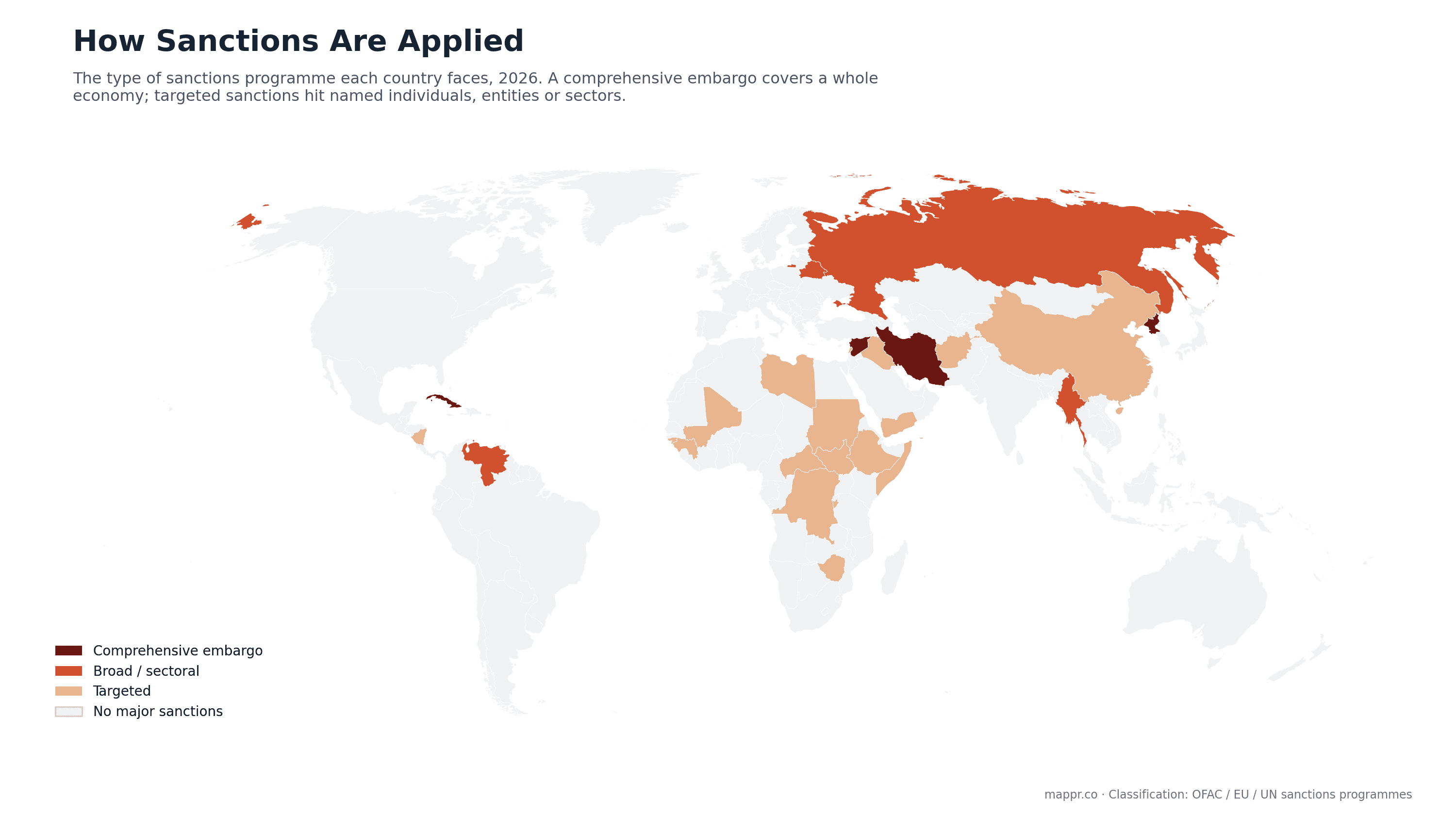
The number of designations is only half the picture. It counts named targets, not the breadth of the restrictions, and those are two different things. A country can rack up thousands of individual listings without its entire economy being cut off, and another can face a near-total embargo with relatively few names on a list.
Comprehensive embargoes, which restrict nearly all trade and financial dealings with a whole economy, apply to a small club: Cuba, Iran, North Korea and Syria. Russia, Belarus, Venezuela and Myanmar face broad, sectoral programmes that hit finance, energy, defence and technology hard but stop short of a total embargo. Most other sanctioned states face targeted measures aimed at specific individuals, companies or sectors, often tied to a conflict or a coup.
That is why Cuba, under a US embargo since 1962, sits in the darkest category on this map but nowhere near the top of the designation count: the embargo is total, but the list of named targets is short.
The numbers, ranked
The ranking
The world's most-sanctioned countries
Cumulative sanctions designations (Castellum.AI), the type of programme, and when major sanctions began.
| Country | Designations | Type | Since |
|---|---|---|---|
| 🇷🇺 Russia | 26,655 | Sectoral | 2014, escalated 2022 |
| 🇮🇷 Iran | 6,027 | Comprehensive | 1979 |
| 🇸🇾 Syria | 2,893 | Comprehensive | 1979 / 2011 |
| 🇰🇵 North Korea | 2,239 | Comprehensive | 2006 |
| 🇧🇾 Belarus | 1,900 | Sectoral | 2020 |
| 🇲🇲 Myanmar | 1,046 | Sectoral | 2021 |
| 🇻🇪 Venezuela | 861 | Sectoral | 2017 |
| 🇨🇺 Cuba | 430 | Comprehensive | 1962 |
Still escalating: the EU’s 21st package
The pace is the point. The EU alone is now on its twenty-first Russia package in under four years, and the US, UK and other allies have moved in parallel. Each round adds more names to a list that is already the longest ever aimed at a single country, and the measures increasingly chase the workarounds, third-country intermediaries, crypto rails, and the “shadow fleet” of tankers moving sanctioned oil.
Whether all of this is changing Russia’s behaviour is fiercely debated. What is not in doubt is the scale: the sanctions map of 2026 is dominated by a single country to a degree the world has never seen before. For the wider economic backdrop, see our maps of global interest rates and gold reserves by country, where sanctioned states have been among the most aggressive buyers. We’ll keep this page updated as sanctions expand.