
Key Takeaways
- Kuala Lumpur towers over the network. Kuala Lumpur International (KLIA) serves about 116 regularly-served nonstop destinations — roughly 3.7 times its nearest rival. It is the home base of AirAsia, one of the world's biggest low-cost carriers, and of the flag carrier Malaysia Airlines.
- Two Malaysias, split by the South China Sea. Peninsular Malaysia and East Malaysia — the Borneo states of Sabah and Sarawak — lie about 600 km apart across the sea. Kota Kinabalu and Kuching are the two big East Malaysian hubs, and only flying realistically links the halves.
- A rural air lifeline in Borneo. MASwings flies small Twin Otter and ATR turboprops to remote Sarawak highland airstrips such as Bario, Mulu and Ba'kelalan that have little or no road access — a genuinely distinctive part of Malaysian aviation.
- Kuala Lumpur has two airports. The giant KLIA at Sepang handles almost all jet traffic, while the older Subang airport (Sultan Abdul Aziz Shah) now focuses on turboprops and business aviation — and is being redeveloped to take on more city-centre flights.
- Singapore is the other gateway next door. Many southern Malaysians fly internationally from Singapore's Changi, one of the world's biggest hubs, just across the strait from Johor Bahru. Johor's own Senai airport markets itself as the budget alternative.
- No nonstop flights to the United States. Malaysia currently has no direct flights to the US; travellers connect through an Asian or Gulf hub such as Tokyo, Seoul, Taipei, Hong Kong, Doha or Dubai.
Malaysia runs one of Southeast Asia’s busiest aviation markets, and its geography splits the country cleanly in two. Peninsular Malaysia hangs off the bottom of mainland Asia, while East Malaysia — the states of Sabah and Sarawak — sits across the South China Sea on the island of Borneo. With the two halves around 600 km apart, flying does the heavy lifting, and Malaysia has grown into a low-cost-carrier powerhouse: Kuala Lumpur International (KLIA) is the home of AirAsia, one of the largest budget airlines on earth, alongside the oneworld flag carrier Malaysia Airlines, its turboprop arm Firefly, Batik Air Malaysia (the former Malindo Air) and the long-haul low-cost AirAsia X.
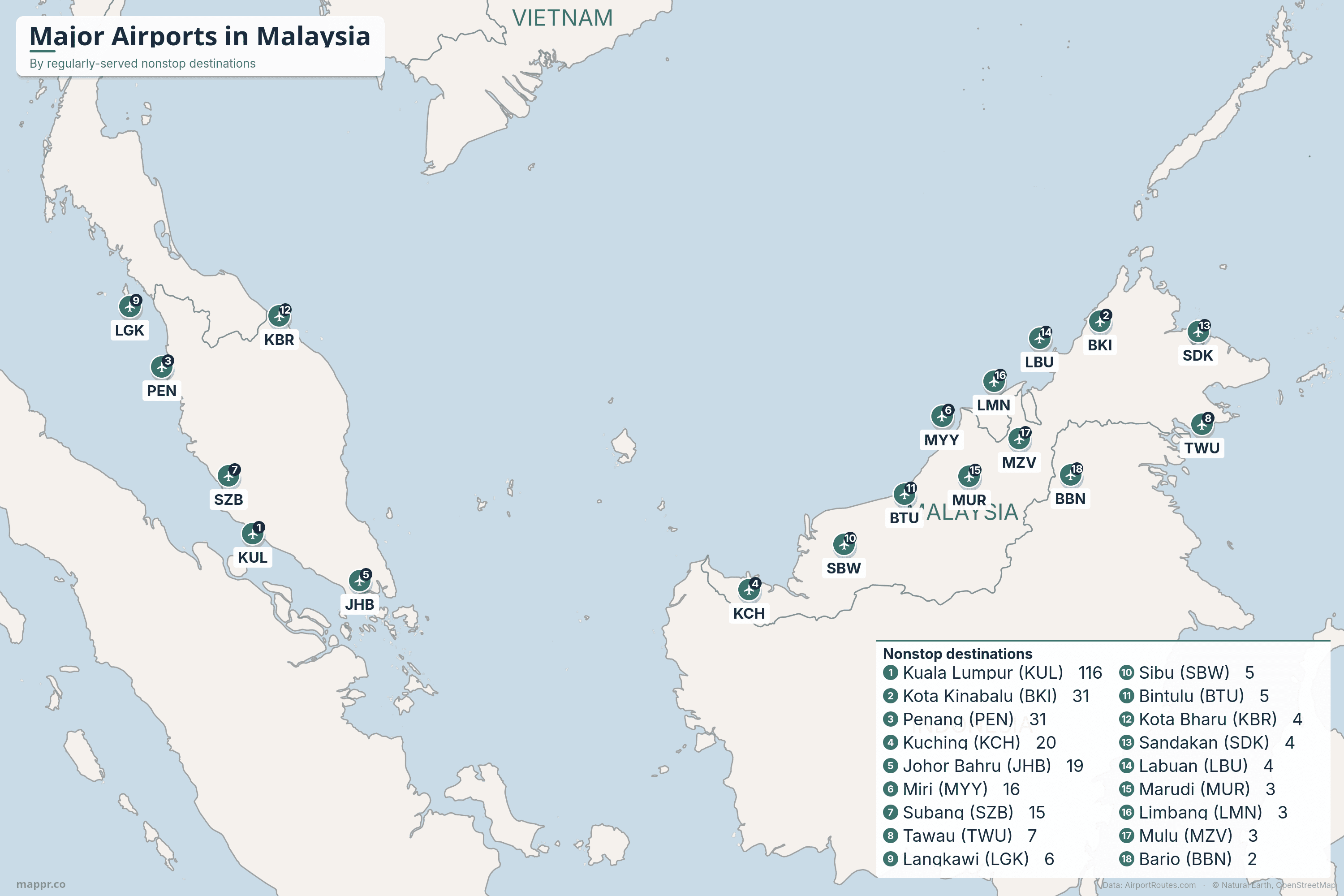
Below we map and rank Malaysia’s airports by the number of nonstop destinations each one serves, drawn from live route data on AirportRoutes. We rank by regularly-served destinations — routes flown often enough to count as scheduled service — rather than raw nonstop totals, which inflate the seasonal and low-frequency airports. The figures come from observed flight data (a large sample rather than a complete published timetable), so treat them as a guide to relative connectivity, not official totals.
Ranked
Major Airports in Malaysia by Nonstop Destinations
Ranked by regularly-served nonstop destinations, busiest first.
| Airport | IATA | Nonstop | Region |
|---|---|---|---|
| 1. Kuala Lumpur | KUL | 116 | Selangor / Klang Valley |
| 2. Kota Kinabalu | BKI | 31 | Sabah (Borneo) |
| 3. Penang | PEN | 31 | Penang Island |
| 4. Kuching | KCH | 20 | Sarawak (Borneo) |
| 5. Johor Bahru | JHB | 19 | Johor (South) |
| 6. Miri | MYY | 16 | Sarawak (Borneo) |
| 7. Subang (Kuala Lumpur) | SZB | 15 | Selangor / Klang Valley |
| 8. Tawau | TWU | 7 | Sabah (Borneo) |
| 9. Langkawi | LGK | 6 | Kedah (resort island) |
| 10. Sibu | SBW | 5 | Sarawak (Borneo) |
| 11. Bintulu | BTU | 5 | Sarawak (Borneo) |
| 12. Kota Bharu | KBR | 4 | Kelantan (East Coast) |
| 13. Sandakan | SDK | 4 | Sabah (Borneo) |
| 14. Labuan | LBU | 4 | Labuan (F.T., island) |
| 15. Marudi | MUR | 3 | Sarawak (rural) |
| 16. Limbang | LMN | 3 | Sarawak (rural) |
| 17. Mulu | MZV | 3 | Sarawak (rural) |
| 18. Bario | BBN | 2 | Sarawak (highlands) |
A closer look at Malaysia’s main airports
✈️ Kuala Lumpur International (KUL)
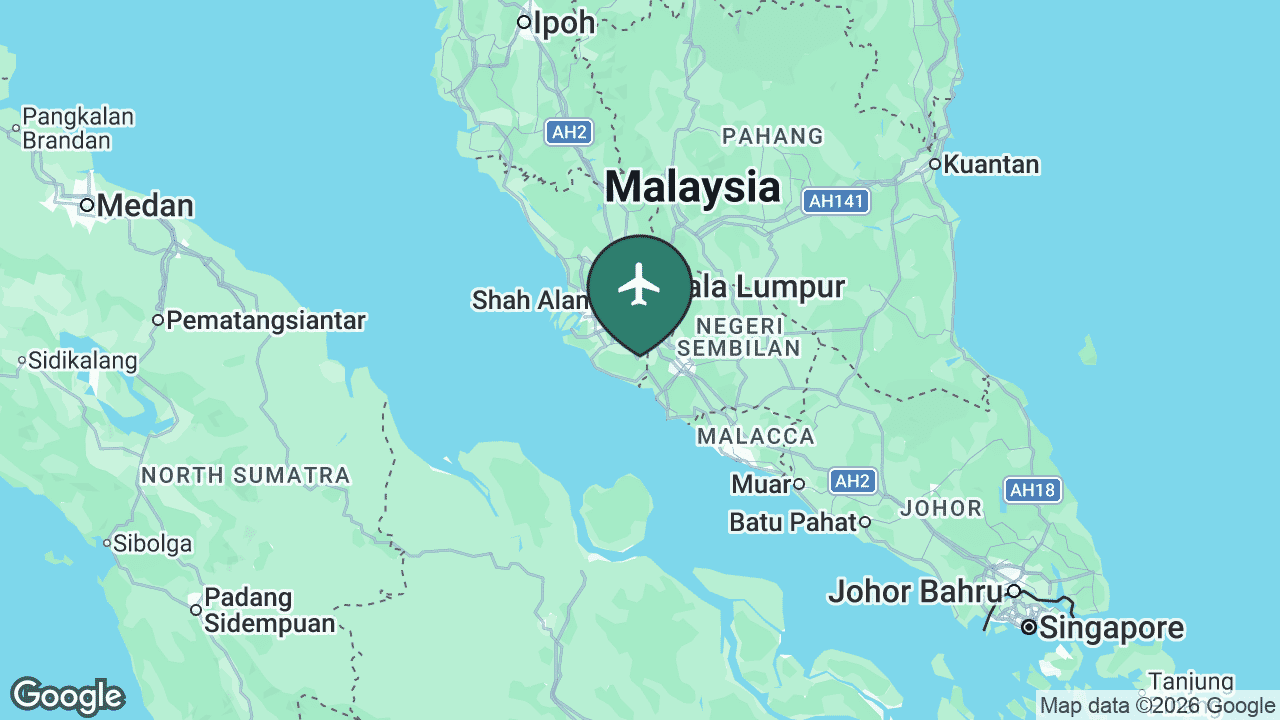
Kuala Lumpur International Airport (KLIA) lies about 45 km south of the city at Sepang and is by far Malaysia’s busiest airport. It is the main hub of Malaysia Airlines and the global home of the AirAsia group, and it is split across two terminals: the full-service KLIA Terminal 1 and klia2, one of the world’s largest purpose-built low-cost terminals. From here the country reaches the rest of Asia, the Gulf, Europe and Australasia.
Serving Kuala Lumpur and the Klang Valley, KLIA reaches about 116 regularly-served nonstop destinations — the great majority of Malaysia’s international flying. Top routes include Kota Kinabalu, Singapore, Tawau, Langkawi, Miri, Kuching and Guangzhou.
Main airlines: Malaysia Airlines, AirAsia, Batik Air Malaysia, AirAsia X, Firefly, China Eastern. See the full route map for KUL on AirportRoutes →
🛬 Subang – Sultan Abdul Aziz Shah (SZB)
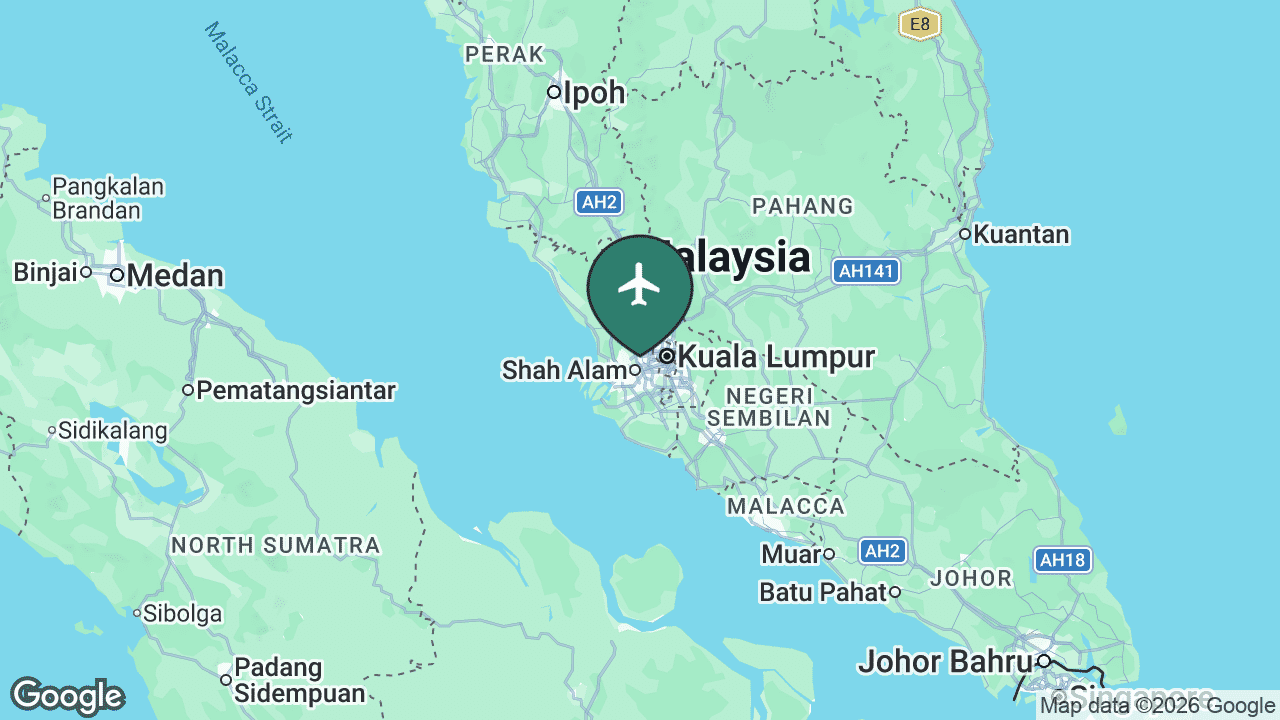
Sultan Abdul Aziz Shah Airport in Subang was Kuala Lumpur’s main international gateway until KLIA opened in 1998. Far closer to the city than KLIA, it now specialises in turboprops, regional jets and business aviation — it is the main base of Firefly — and is the subject of a major regeneration plan to revive it as a convenient city airport.
Serving central Kuala Lumpur and Shah Alam, Subang reaches around 15 regularly-served nonstop destinations, mostly short domestic and regional turboprop hops. Top routes include Singapore, Penang, Kota Bharu, Johor Bahru, Kuala Terengganu and Langkawi.
Main airlines: Firefly, Batik Air Malaysia, Scoot, Hong Kong Express. See the full route map for SZB on AirportRoutes →
🏙️ Penang International (PEN)
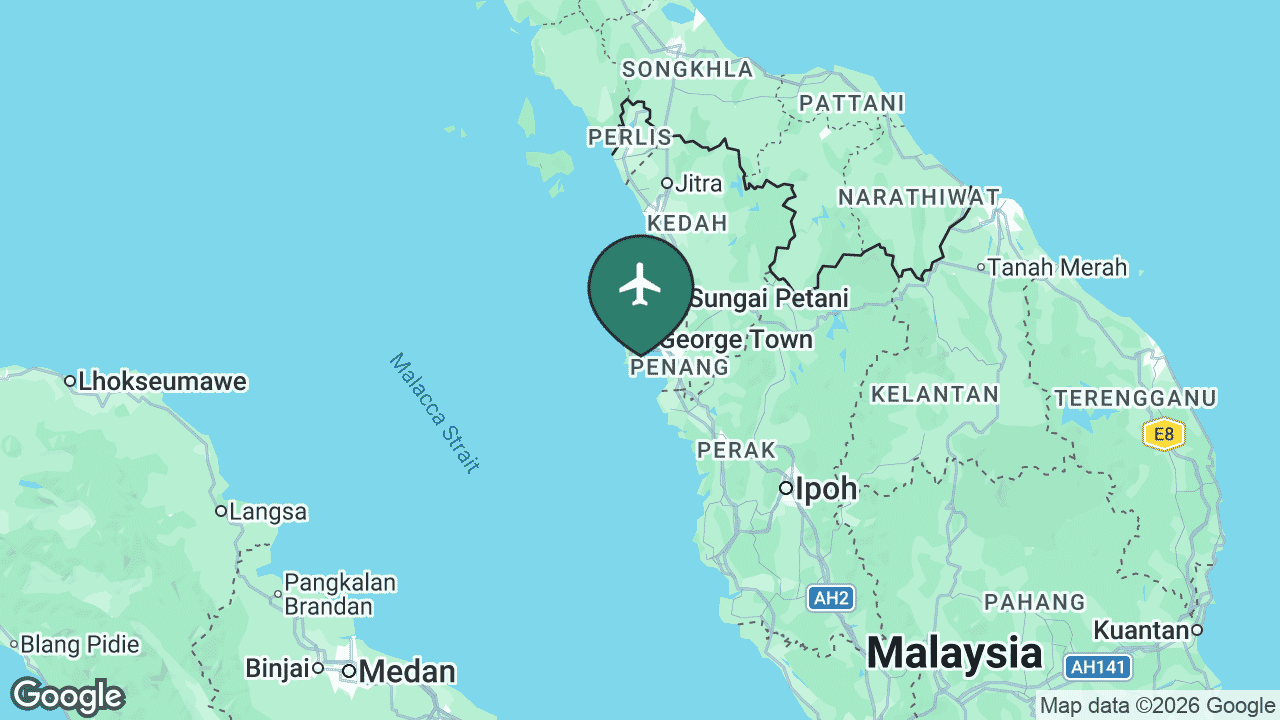
Penang International Airport, at Bayan Lepas on the south of the island, is Malaysia’s second international gateway. It serves the UNESCO heritage city of George Town and the dense electronics and semiconductor manufacturing belt around it — often dubbed the “Silicon Valley of the East” — which drives a steady business-travel and air-cargo flow alongside the tourists.
Serving Penang and the northern peninsula, PEN reaches about 31 regularly-served nonstop destinations, with an unusually international mix for a second city. Top routes include Kuala Lumpur, Subang, Johor Bahru, Singapore, Guangzhou and Bangkok, plus links to Taiwan and Hong Kong.
Main airlines: AirAsia, Firefly, Batik Air Malaysia, China Airlines, Cathay Pacific, EVA Air. See the full route map for PEN on AirportRoutes →
🛫 Johor Bahru – Senai (JHB)
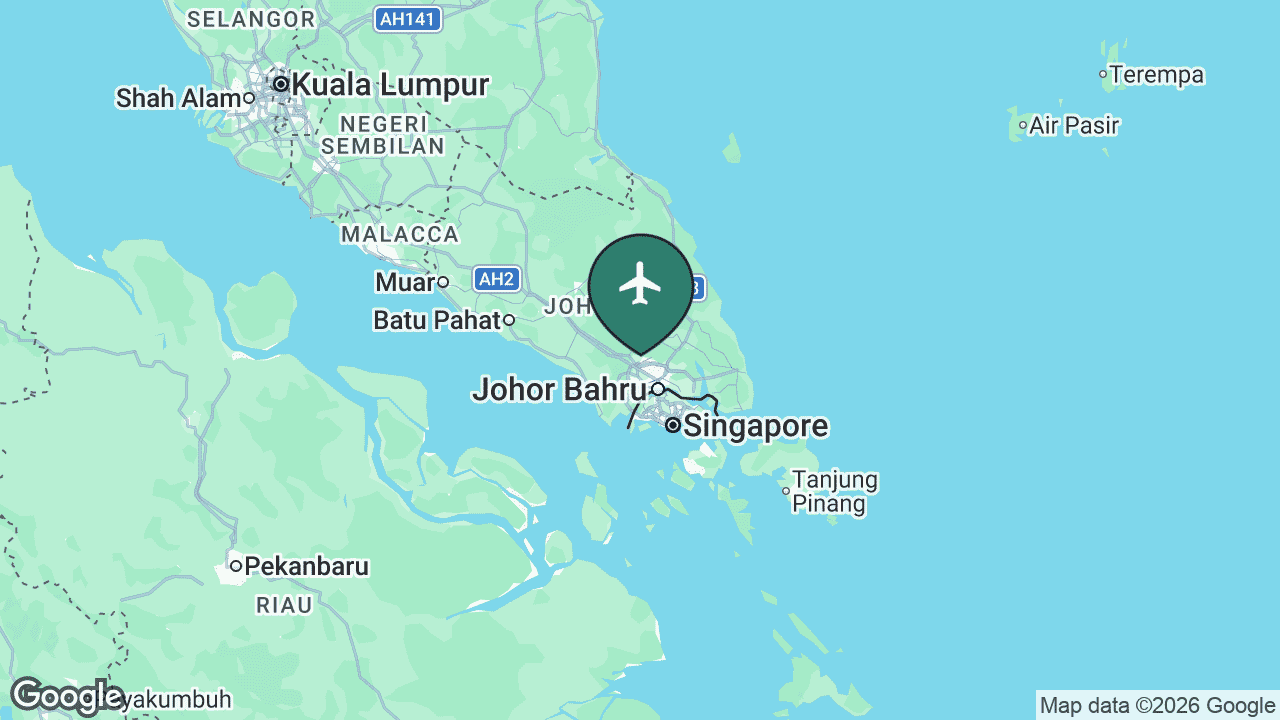
Senai International Airport serves Johor Bahru, Malaysia’s southern gateway city, right across the strait from Singapore. It anchors the fast-growing Iskandar Malaysia economic corridor and is a major AirAsia base, positioning itself as a lower-cost alternative to Singapore’s Changi — a pitch that should strengthen when the Johor Bahru–Singapore Rapid Transit System (RTS) rail link opens.
Serving Johor and the south, Senai reaches about 19 regularly-served nonstop destinations, weighted towards the domestic trunk plus regional ASEAN markets. Top routes include Kuala Lumpur, Kuching, Penang, Subang, Kota Kinabalu and Ho Chi Minh City.
Main airlines: AirAsia, Firefly, Malaysia Airlines, Batik Air Malaysia, Indonesia AirAsia, Thai AirAsia. See the full route map for JHB on AirportRoutes →
🏝️ Langkawi International (LGK)
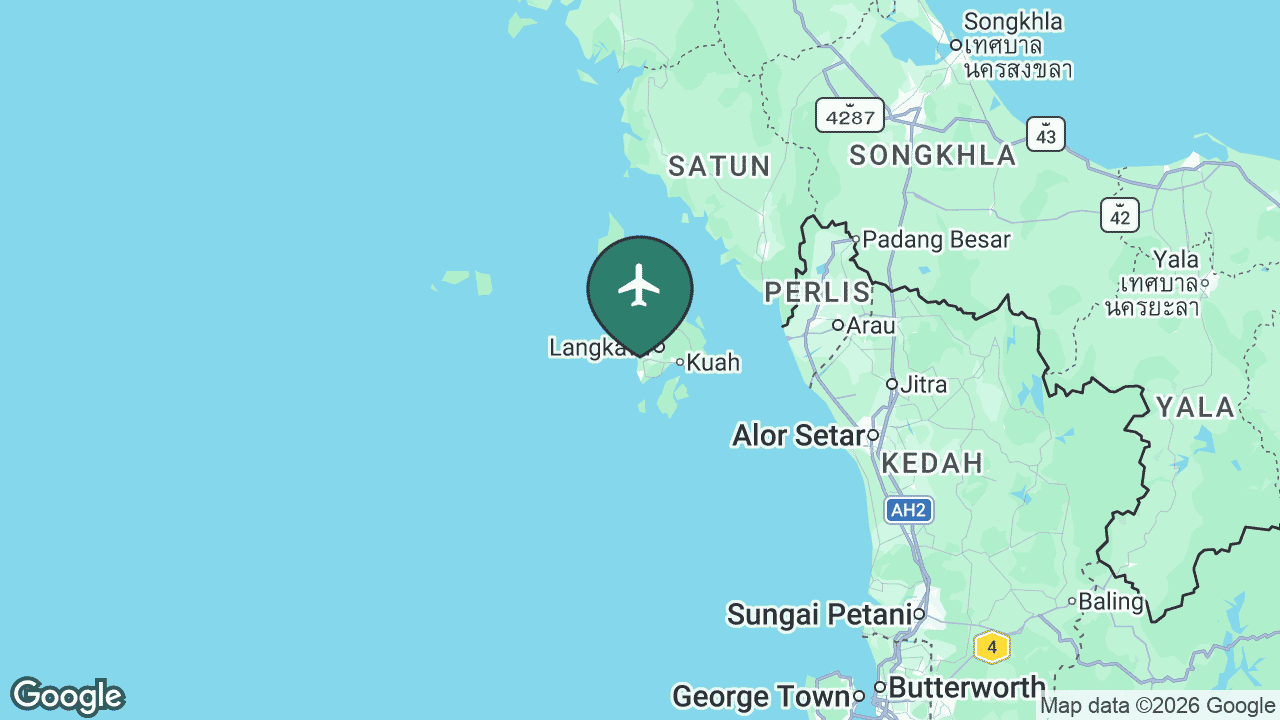
Langkawi International Airport sits on the duty-free resort archipelago of Langkawi in the Andaman Sea, off the north-west coast of the peninsula. Its traffic is overwhelmingly leisure-driven — beaches, island-hopping and the famous Langkawi Sky Bridge — with a seasonal rhythm of domestic holidaymakers and a growing band of international visitors.
Serving the Langkawi islands, LGK reaches about 6 regularly-served nonstop destinations. Top routes include Kuala Lumpur, Penang, Subang, Singapore and Johor Bahru, plus a direct link to Bangalore in India flown by IndiGo.
Main airlines: AirAsia, Firefly, Malaysia Airlines, Batik Air Malaysia, IndiGo, Scoot. See the full route map for LGK on AirportRoutes →
🌏 Kota Kinabalu International (BKI)
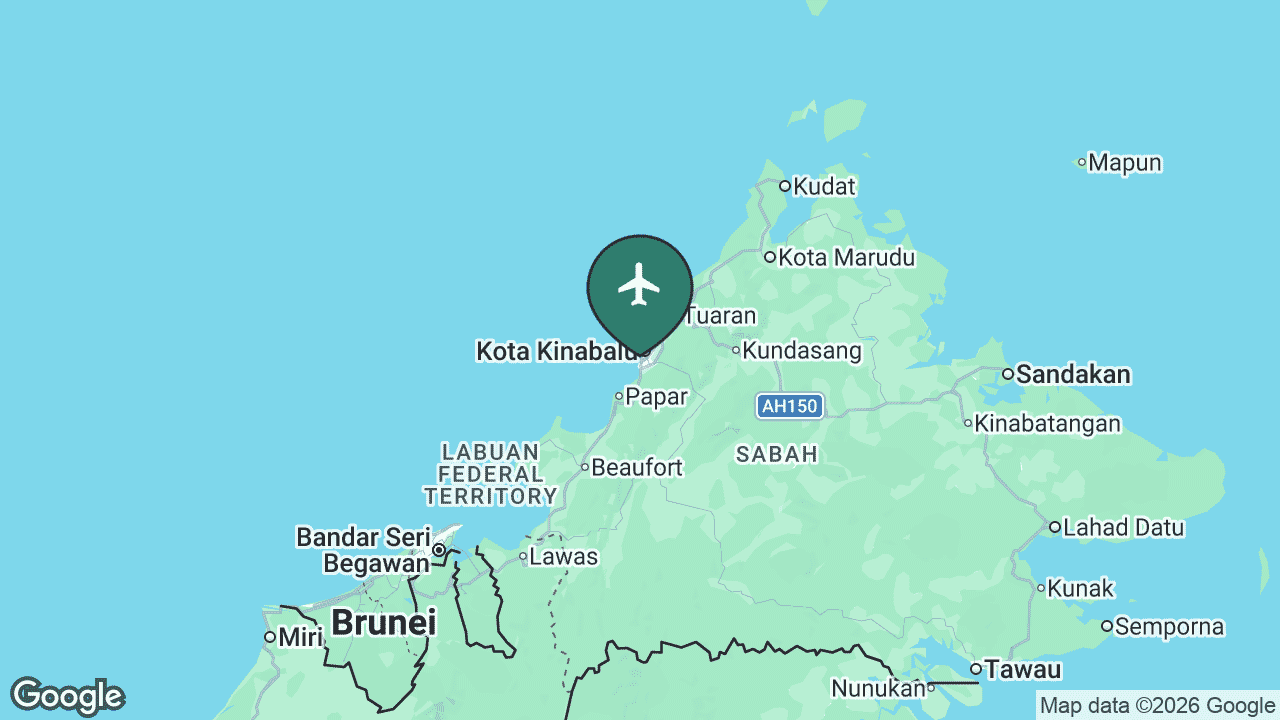
Kota Kinabalu International Airport is the capital airport of Sabah and the busiest in East Malaysia. It is the gateway to Borneo’s north — Mount Kinabalu, the islands of Tunku Abdul Rahman park and the diving around the Coral Triangle — and draws heavy leisure traffic from China, South Korea, Japan and Taiwan as well as the domestic network.
Serving Sabah, BKI reaches about 31 regularly-served nonstop destinations, balanced between a dense Borneo and peninsular domestic web and North-Asian leisure markets. Top routes include Kuala Lumpur, Tawau, Sandakan, Kuching, Lahad Datu and Miri.
Main airlines: AirAsia, Firefly, MASwings, Malaysia Airlines, Batik Air Malaysia. See the full route map for BKI on AirportRoutes →
🌿 Kuching International (KCH)
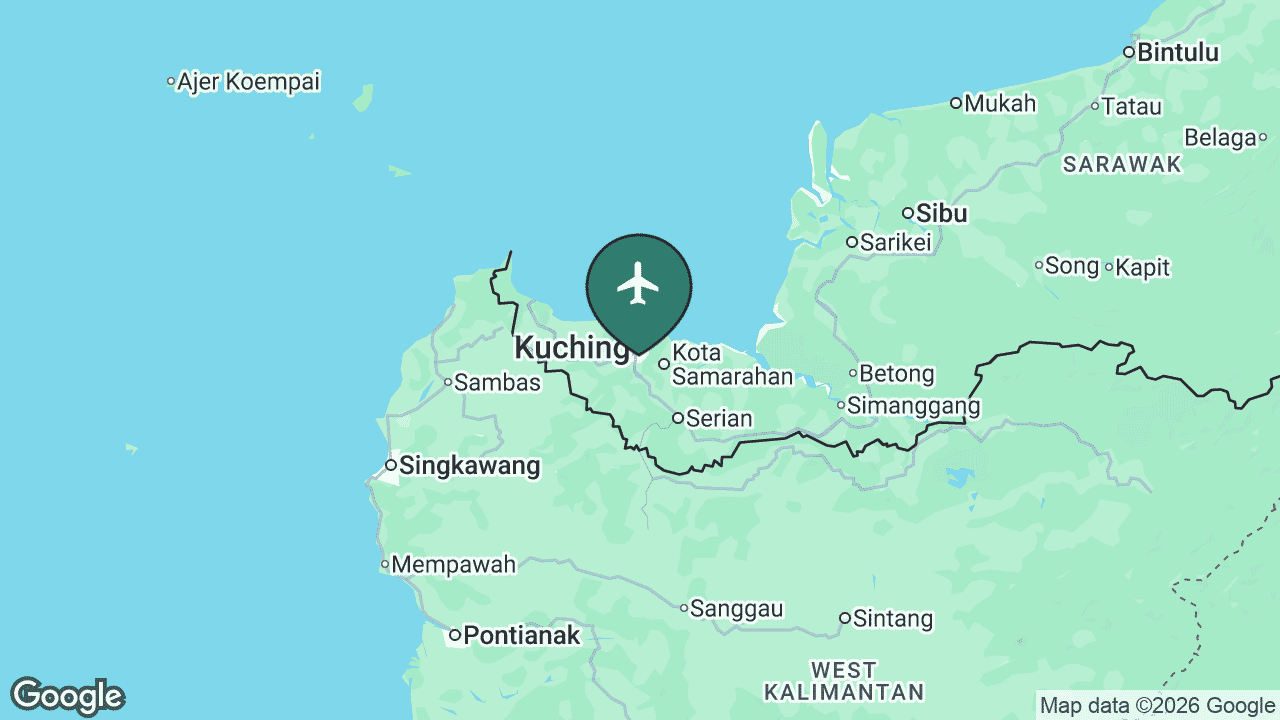
Kuching International Airport serves the Sarawak capital, the largest city in East Malaysia. It is the gateway to Sarawak’s rainforests, national parks and longhouse country, and runs a heavily domestic network tying the state’s scattered towns back to the capital and across to the peninsula, with a handful of regional international links.
Serving Sarawak, KCH reaches about 20 regularly-served nonstop destinations, mostly domestic. Top routes include Kuala Lumpur, Bintulu, Miri, Sibu, Kota Kinabalu, Johor Bahru and Singapore.
Main airlines: AirAsia, Malaysia Airlines, MASwings, Batik Air Malaysia, Firefly, Scoot. See the full route map for KCH on AirportRoutes →
🛢️ Miri (MYY)
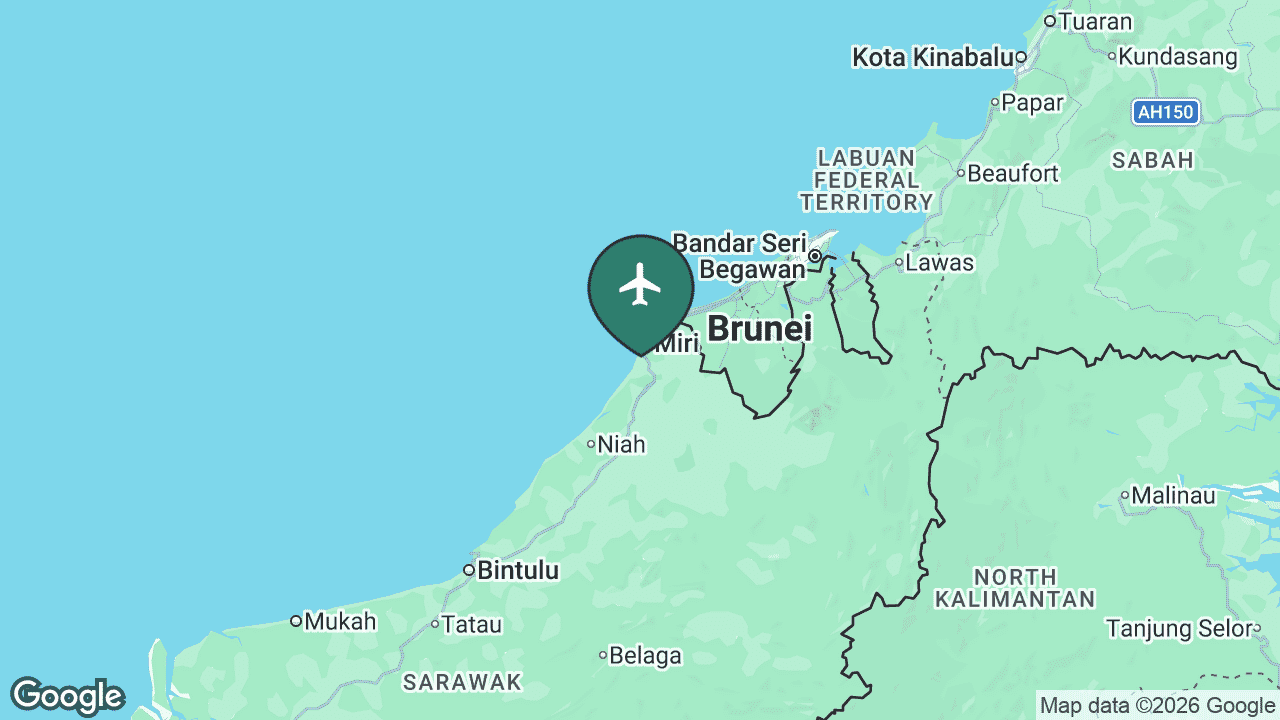
Miri Airport serves the oil town of Miri in northern Sarawak, near the Brunei border. It is the main base of MASwings, the rural air service that keeps Sarawak’s remote interior connected — and the usual jumping-off point for Gunung Mulu National Park and its giant caves. Almost all of its flying is domestic.
Serving Miri and northern Sarawak, MYY reaches about 16 regularly-served nonstop destinations, virtually all domestic. Top routes include Kuching, Kuala Lumpur, Lawas, Kota Kinabalu, Bario and Marudi.
Main airlines: MASwings, Malaysia Airlines, AirAsia, Batik Air Malaysia, Scoot. See the full route map for MYY on AirportRoutes →
🐢 Tawau (TWU)
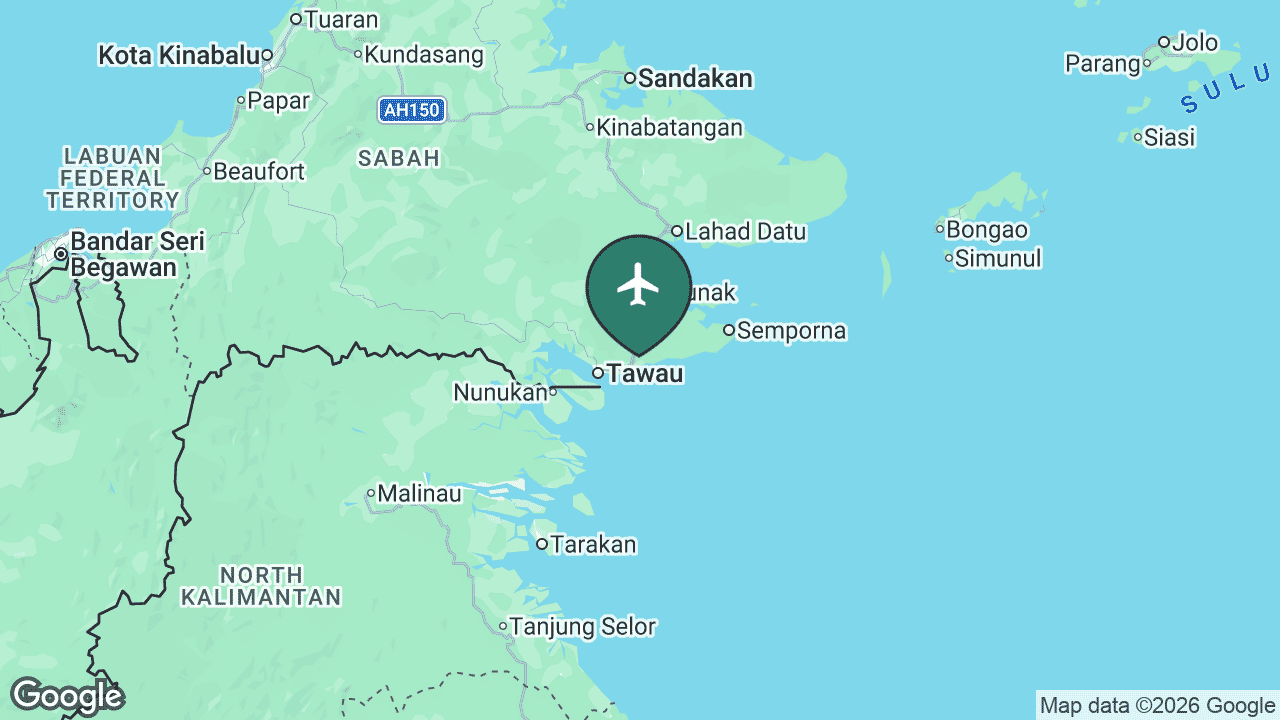
Tawau Airport sits on the east coast of Sabah and is the gateway to some of the best diving on earth — Sipadan, Mabul and the islands off Semporna — as well as the Tawau Hills. Unusually for a smaller Malaysian airport it carries a clutch of direct China links, reflecting the area’s popularity with Chinese divers and tour groups.
Serving south-east Sabah, TWU reaches about 7 regularly-served nonstop destinations. Top routes include Kota Kinabalu, Kuala Lumpur, Sandakan and Johor Bahru, plus direct flights to Guangzhou, Shanghai, Shenzhen and Macau.
Main airlines: AirAsia, Batik Air Malaysia, Firefly, Malaysia Airlines, MASwings. See the full route map for TWU on AirportRoutes →
🦇 Mulu (MZV)
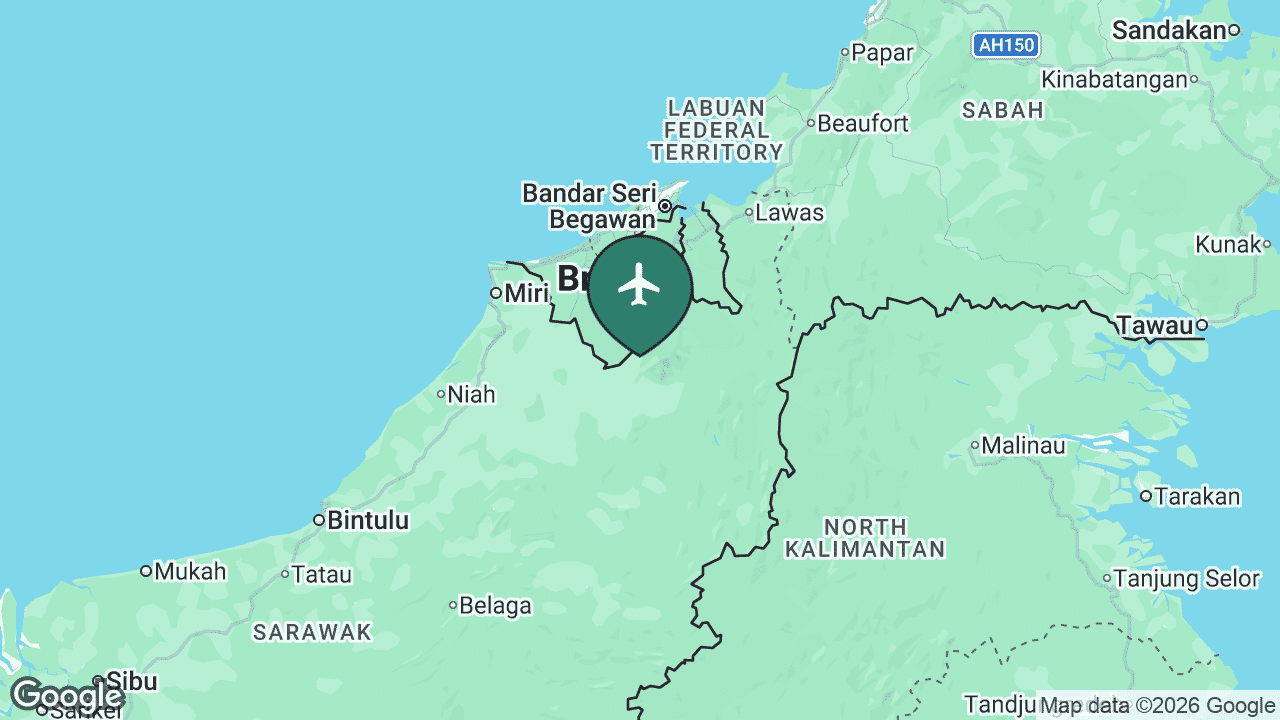
Mulu Airport is one of Malaysia’s most remarkable airfields: it exists to serve Gunung Mulu National Park, a UNESCO World Heritage site of vast caves — including the Sarawak Chamber, the largest cave chamber in the world — and razor-sharp limestone pinnacles. There are no roads in; the park is reachable only by air or a long river journey, so the little MASwings turboprops are its lifeline.
Serving Gunung Mulu National Park, MZV reaches just 3 regularly-served nonstop destinations — but they are the only practical way in. Top routes are Miri, Kuching and Kota Kinabalu.
Main airlines: MASwings, Malaysia Airlines. See the full route map for MZV on AirportRoutes →
Malaysia’s other regional airports
Beyond the busiest handful, Malaysia has a long tail of regional fields. In Borneo, Sibu (SBW) and Bintulu (BTU) serve Sarawak’s central coast and its oil-and-gas industry, while Sandakan (SDK) in eastern Sabah is the gateway to the Sepilok orang-utan sanctuary and the Kinabatangan river. Labuan (LBU), a federal-territory island off Sabah, is an offshore-finance and oil hub, and a string of tiny Sarawak strips — Marudi (MUR), Limbang (LMN), Mukah (MKM), Bario (BBN) in the Kelabit Highlands and Lahad Datu (LDU) in Sabah — are flown by MASwings’ Twin Otters and rank surprisingly high on route count precisely because they live on short domestic hops.
On the peninsula, the east-coast trio of Kota Bharu (KBR) in Kelantan, Kuala Terengganu (TGG) — the gateway to the Redang and Perhentian islands — and Kuantan (KUA) in Pahang connect the quieter eastern states, while Alor Setar (AOR) in Kedah and Ipoh (IPH) in Perak handle the northern interior, Ipoh increasingly busy on the low-cost Singapore run flown by Scoot.
What about Singapore?
Any map of Malaysia’s airports comes with an asterisk in the south: Singapore Changi, one of the world’s biggest and best-connected hubs, sits just across the strait from Johor Bahru. For millions of people in southern Malaysia it is effectively their international airport — a short hop over the Causeway or Second Link — and a great deal of long-haul travel from the region simply starts at Changi rather than at a Malaysian airport. Because Changi is in Singapore, not Malaysia, it does not appear in the ranking above.
Malaysia’s answer is Johor Bahru’s Senai airport, which pitches itself as the cheaper, less-crowded alternative for budget travellers — and the new Johor Bahru–Singapore Rapid Transit System (RTS) rail link, due to open in the coming years, will make crossing the border far quicker, sharpening the competition between the two airports for the southern catchment.
Can you fly nonstop from Malaysia to the United States?
No — there are currently no nonstop flights between Malaysia and the United States on any airline. Malaysia Airlines ran services to Los Angeles and Newark years ago (latterly routed through Tokyo and Stockholm), but it pulled out of the US market in the mid-2010s, and no carrier has since restored a direct link. The ultra-long range from Kuala Lumpur to the US mainland, and the strength of competing one-stop options, have kept the route off the schedules.
In practice, travellers from Malaysia reach the US with one stop through a major Asian or Gulf hub — Tokyo, Seoul, Taipei or Hong Kong in East Asia, or Doha and Dubai in the Gulf — typically on a single through-ticket. From Kuala Lumpur, partners of Malaysia Airlines (oneworld) and the big Gulf and East-Asian carriers all offer convenient connections onward to the major US gateways.
Airport rankings, nonstop-destination counts, served regions, airline lists and connections are drawn from live AirportRoutes route data (observed AeroAPI flight data — a sample, not a complete published schedule; we use the regularly-served figure, which filters one-off observations). Airport history and notable facts are cross-checked against the cited references. The ranked map is a Mappr original.
Primary Data Source:
- AirportRoutes — Major airports & routes, Malaysia – Live route data: per-airport nonstop destinations, served cities and airlines.
Reference:
- Wikipedia — Malaysian airports (KLIA, Kota Kinabalu, Penang & others) – Airport history, location and notable facts referenced in the per-airport sections.
- Malaysia Airports Holdings Berhad (MAHB) – Operator of most Malaysian airports — background on the national airport network.
- Locator maps — Google Maps / Google Static Maps – Per-airport location maps with airplane markers, generated via Google Static Maps.
Image Sources:
- Map by Mappr – Map of major airports in Malaysia — a Mappr original built from AirportRoutes data and Natural Earth boundaries.
🌍 More maps & data for Malaysia
Browse more: All airports by country


