
⚠️ Airspace advisory (June 2026): Libya’s airspace is currently under a “Do Not Fly” advisory. A civil war that has run since 2014 has left armed militia groups operating across the country, posing a high risk to civil aircraft, and many international carriers have suspended or rerouted flights. The routes and schedules below may not reflect live operations, so always check current status before booking. Source: safeairspace.net.
Key Takeaways
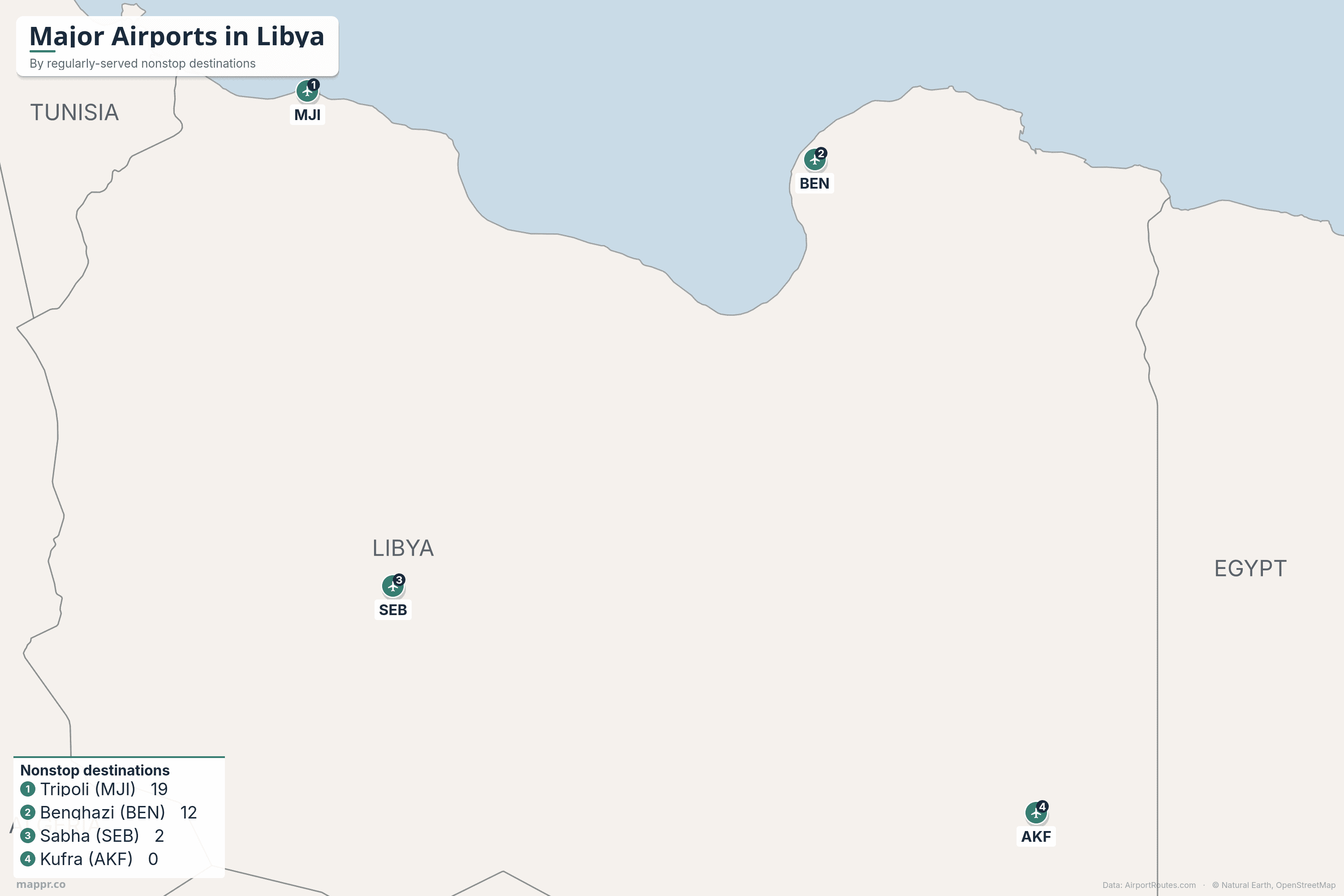
- Tripoli's Mitiga is the busiest airport. Mitiga International (MJI) serves around 19 regularly-served nonstop destinations, more than any other Libyan airport. A former military airbase in eastern Tripoli, it became the capital's only working civil airport after the old Tripoli International was wrecked in the 2014 fighting. Its busiest links run to Tunis, Istanbul, Cairo, Amman and the Gulf.
- Benghazi anchors the east. Benina International (BEN), about 20 km east of Benghazi, is the main gateway for eastern Libya at roughly 12 regularly-served destinations. Its network mirrors Tripoli's, pointing toward Tunis, Istanbul, Cairo, Amman and Dubai, plus the domestic link across the country to Tripoli.
- Two desert airports keep the south connected. Sabha (SEB), in the Fezzan, and Kufra (AKF), a remote south-eastern oasis, run almost entirely on domestic flights to the coastal cities. They are lifelines that tie Libya's vast interior to Tripoli and Benghazi rather than international gateways.
- We rank by regularly-served routes, not raw counts. The figures come from observed route data, a sample rather than a full timetable, and Libya's conflict makes that sample patchy. We rank by regularly-served destinations (routes flown often enough to count as scheduled service), which gives a truer picture of connectivity than raw nonstop totals.
- There are no direct flights to the United States. Libya has no scheduled nonstop service to North America, and Libyan carriers are barred from European Union airspace under the EU air safety list. Travellers connect through a regional hub such as Istanbul, Cairo, Tunis, Amman or Dubai.
Libya runs a small aviation network shaped by geography and more than a decade of conflict. Its busiest airport sits in the capital, Tripoli, but not at the airport you might expect: the old Tripoli International was destroyed in the 2014 fighting and has never reopened, so the city is served by Mitiga, a former military airbase on its eastern edge. In the east, Benghazi is served by Benina, and far to the south two desert airports, Sabha and Kufra, keep the interior connected to the coast. Almost all of Libya’s international flying points toward Tunisia, Turkey, Egypt, Jordan and the Gulf.
Below we map and rank Libya’s airports by the number of nonstop destinations each one serves, drawn from live route data on AirportRoutes. We rank by regularly-served destinations, routes flown often enough to count as scheduled service, rather than raw nonstop totals, which can overstate one-off and seasonal flying. The figures come from observed flight data (a sample rather than a complete published timetable), and for a country in active conflict that sample is especially partial, so treat the numbers as a guide to relative connectivity rather than official totals.
Can you fly nonstop from Libya to the US?
No. None of Libya’s airports has a scheduled nonstop flight to the United States, and there is no direct service between Libya and North America. The country’s airlines, among them Libyan Airlines, Afriqiyah Airways, Libyan Wings and the newer Berniq Airways and Medsky Airways, are also barred from operating in European Union airspace under the EU air safety list, which keeps even their long-haul reach close to home. With the security situation described above and most traffic short and medium-haul, a transatlantic route has never had the demand or the clearance to take hold.
Travellers heading to the US connect through a regional hub. The most common options are Istanbul on Turkish Airlines, Cairo on EgyptAir, Tunis on Tunisair, Amman on Royal Jordanian and Dubai in the Gulf, all of which serve Tripoli or Benghazi and offer wide onward coverage to North America.
Ranked
Major Airports in Libya by Nonstop Destinations
Ranked by regularly-served nonstop destinations, busiest first.
| Airport | IATA | Nonstop | Region |
|---|---|---|---|
| 1. Tripoli (Mitiga) | MJI | 19 | Capital, main hub |
| 2. Benghazi (Benina) | BEN | 12 | Eastern Libya |
| 3. Sabha | SEB | 2 | Southern desert (domestic) |
| 4. Kufra | AKF | 0* | Remote SE oasis (domestic) |
A closer look at Libya’s airports
✈️ Tripoli Mitiga International Airport (MJI)
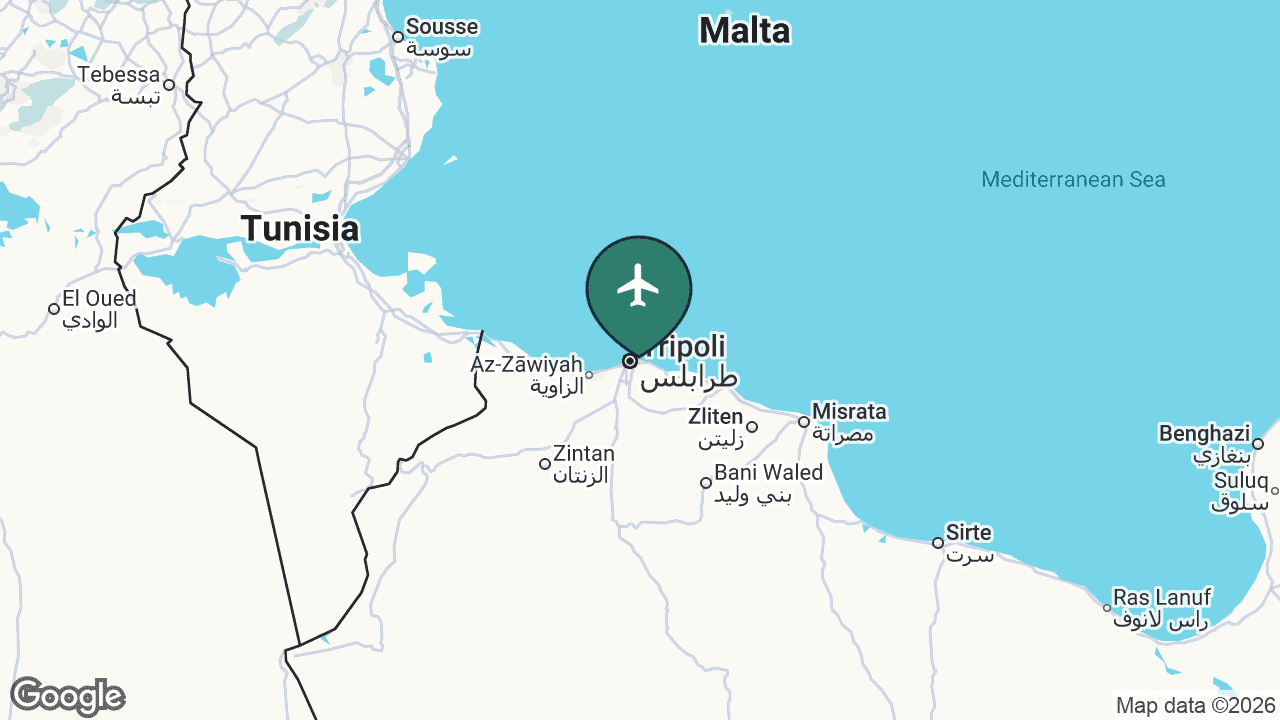
Mitiga sits on the eastern edge of Tripoli and is the busiest airport in Libya. Originally a military airbase, it took over as the capital’s civil airport after the old Tripoli International, around 24 km to the south, was overrun and badly damaged in the 2014 battle for the airport and never reopened. Today Mitiga handles almost all of Tripoli’s scheduled, government and connecting traffic, even though it has itself been forced to close at times when fighting reached the capital.
Serving the capital region, MJI reaches around 19 regularly-served nonstop destinations. Its busiest links run to Tunis, Istanbul, Cairo, Amman and Dubai, alongside domestic flights to Benghazi and Sabha. Most of its network points toward North Africa, Turkey and the Gulf rather than further afield.
Main airlines: Libyan Wings, Afriqiyah Airways, Libyan Airlines, Medsky Airways, Fly OYA, EgyptAir. See the full route map on AirportRoutes →
🛬 Benghazi Benina International Airport (BEN)
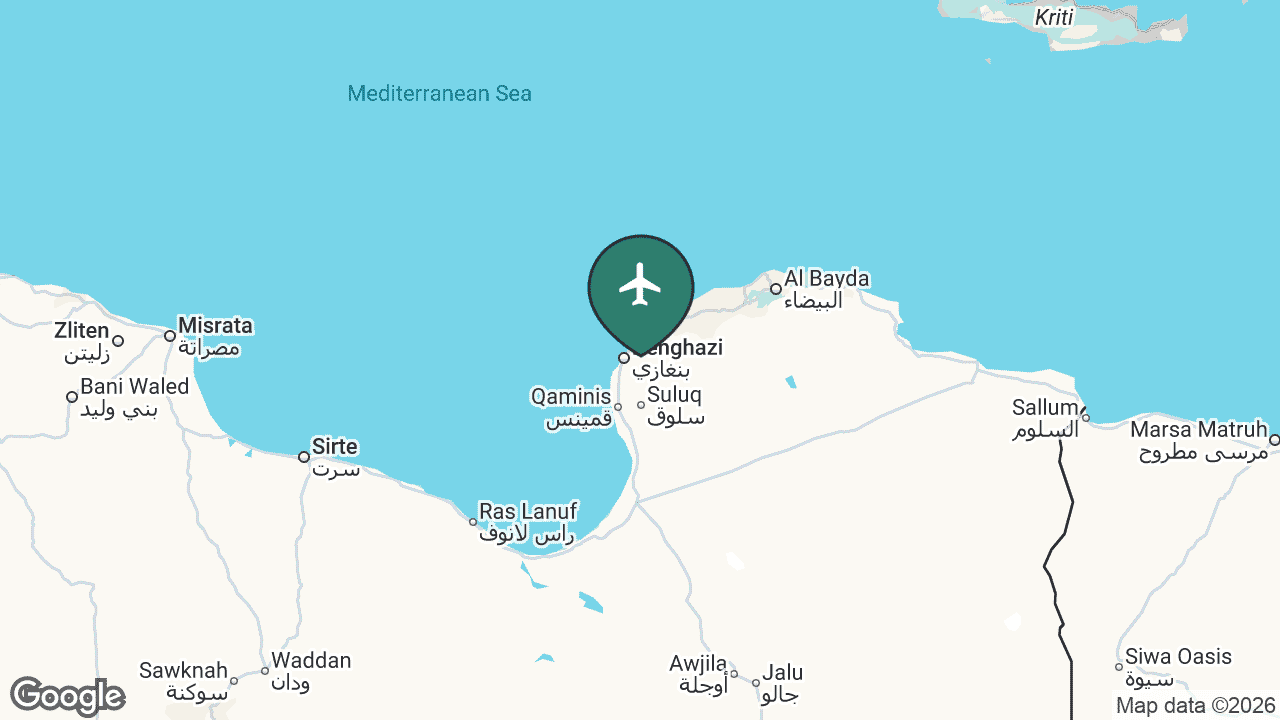
Benina International lies about 20 km east of Benghazi and is the main gateway for eastern Libya, the second busiest airport in the country. It carries the bulk of the east’s scheduled and connecting traffic and has seen investment in a new terminal as Benghazi has rebuilt after years of conflict. For much of the country’s east it is the practical alternative to flying via Tripoli.
Serving Benghazi and the surrounding Cyrenaica region, BEN reaches about 12 regularly-served nonstop destinations. Its busiest links run to Tunis, Istanbul, Cairo, Amman and Alexandria, plus Dubai and a domestic connection to Tripoli, giving the east its own direct reach into North Africa, Turkey and the Gulf.
Main airlines: Afriqiyah Airways, Berniq Airways, Libyan Airlines, Medsky Airways, EgyptAir. See the full route map on AirportRoutes →
🏜️ Sabha Airport (SEB)
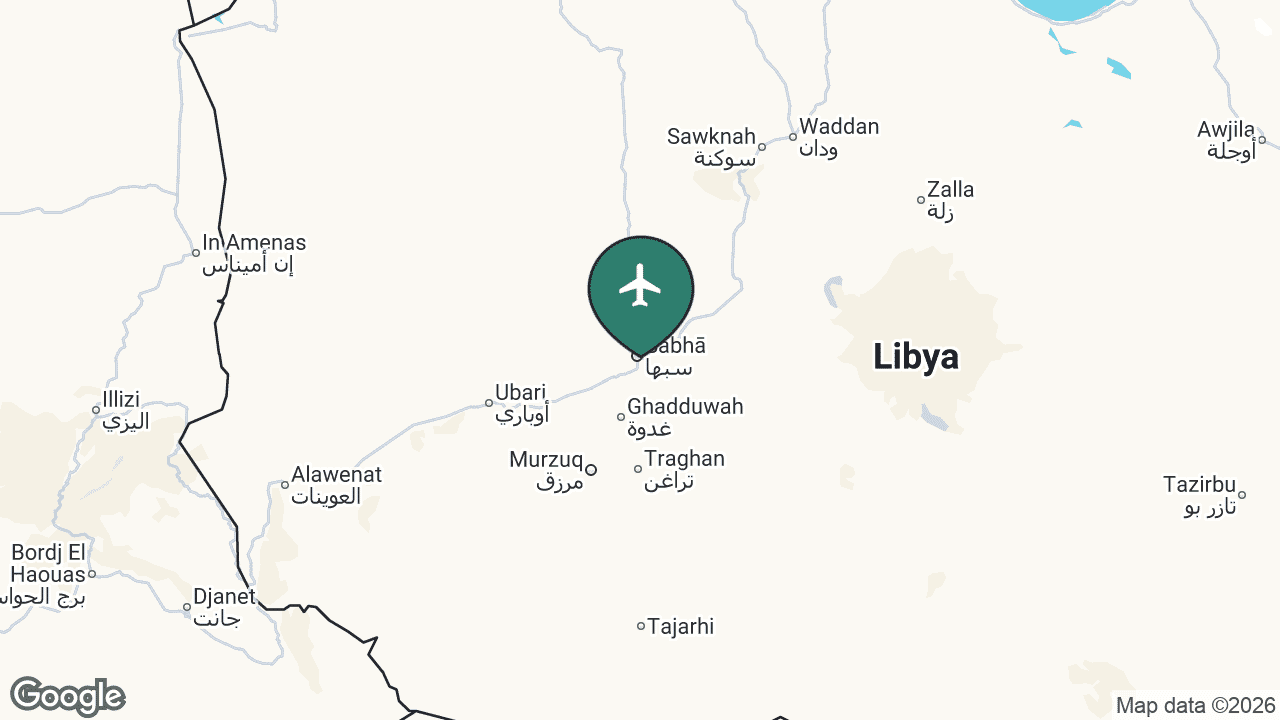
Sabha is the main city of the Fezzan, the vast desert region of south-western Libya, and its airport is the principal air link for the country’s interior. Far from the Mediterranean coast where Libya’s population and trade are concentrated, Sabha depends on aviation to stay connected, and the airport has at times been caught up in the fighting between rival forces over control of the south.
SEB reaches just two regularly-served destinations, and both are domestic: Tripoli and Benghazi. There is effectively no international service here. The airport’s job is to shuttle residents, officials and workers between the southern desert and Libya’s two main coastal cities.
Main airlines: Afriqiyah Airways, Fly OYA. See the full route map on AirportRoutes →
🏜️ Kufra Airport (AKF)
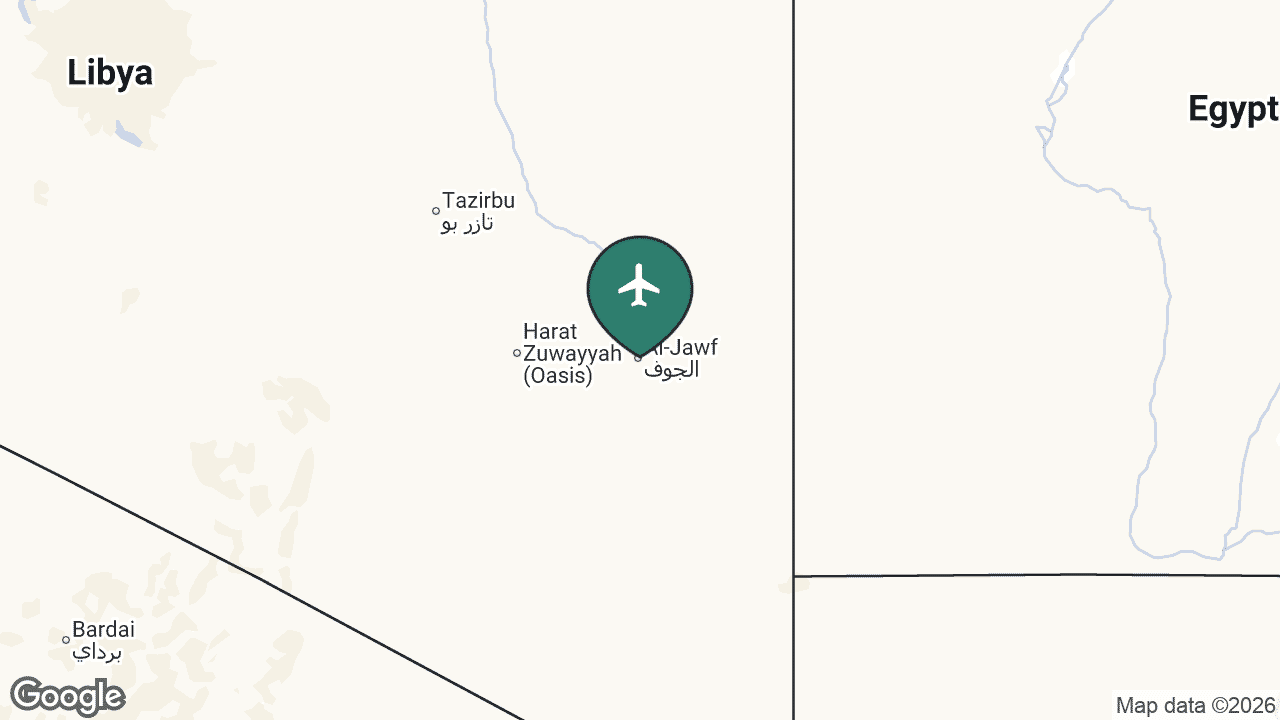
Kufra serves one of the most isolated inhabited places in Libya, a cluster of oases deep in the south-eastern Sahara, hundreds of kilometres from any other town. For Kufra, the airport is not a convenience but a necessity, the quickest way in or out of a region that is otherwise reached only by long desert tracks.
In the route sample, Kufra shows a single domestic link, to Benghazi, which falls just below our regularly-served threshold (hence the 0 in the table). In practice that connection is the oasis town’s lifeline to the rest of the country, flown by Libya’s domestic operators rather than any international carrier.
See the full route map on AirportRoutes →
What happened to Tripoli International Airport?
For decades the capital’s main gateway was Tripoli International Airport (HLLT), about 24 km south of the city centre. It was Libya’s flagship airport and the home base of the national carriers, with ambitious expansion plans drawn up before 2011. Then, in the summer of 2014, it became the front line in a battle between rival militias for control of Tripoli. The fighting destroyed terminals, parked aircraft and much of the infrastructure, and the airport has stood largely ruined and closed ever since. Reconstruction has been announced more than once, but it has not returned to service.
That is why Mitiga, the former military airbase on the other side of the city, now carries all of Tripoli’s civil traffic. Libya has a number of other airfields that do not appear in the route sample above, including Misrata along the western coast and Tobruk and Al Abraq in the east, which handle intermittent or limited flights, plus smaller southern fields such as Ghat and Ubari. As the security situation evolves, the map of which Libyan airports are operating, and how far you can fly from them, can change quickly.
Airport rankings, nonstop-destination counts, served regions and airline lists are drawn from live AirportRoutes route data (observed AeroAPI flight data, a sample rather than a complete published schedule; we use the regularly-served figure, which filters one-off observations). Airport locations and notable facts are cross-checked against the cited references, and the airspace note reflects current advisories. The ranked map is a Mappr original.
Primary Data Source:
- AirportRoutes: Major airports and routes, Libya – Live route data: per-airport nonstop destinations, served cities and airlines.
References:
- Safe Airspace (OPSGROUP): Libya risk assessment – Do Not Fly airspace risk advisory referenced in the warning at the top of the page.
- Wikipedia: Libyan airports (Mitiga, Benina, Sabha and Kufra) – Airport history, location, status and notable facts referenced in the per-airport sections.
- Locator maps: Google Maps and Google Static Maps – Per-airport location maps with airplane markers, generated via Google Static Maps.
Image Sources:
- Map by Mappr – Map of major airports in Libya, a Mappr original built from AirportRoutes data and Natural Earth boundaries.
🌍 More maps & data for Libya
Browse more: All airports by country


