
⚠️ Airspace advisory (June 2026): Parts of Iraq’s airspace carry conflict-zone risk advisories (the main risk is missile and drone activity linked to regional conflicts, along with the chance of an aircraft being misidentified by air-defence systems), and Iraq has closed its airspace at short notice during recent regional escalations. Some routes may be suspended or rerouted, so the schedules below may not reflect live operations. Verify operational status before booking. Source: safeairspace.net.
Key Takeaways
- Baghdad is the country’s main hub. Baghdad International (BGW) serves around 33 regularly-served nonstop destinations, more than any other Iraqi airport, and is the home base of the national carrier Iraqi Airways. Its busiest links run to Amman, Istanbul, Doha, Beirut and the Gulf, with a handful of domestic hops to the rest of the country.
- Erbil has the widest international reach. Erbil International (EBL), the main airport of the Kurdistan Region in the north, is a close second at about 32 destinations but carries the most long-haul and European routes of any Iraqi airport, including direct flights to Germany for the large Kurdish diaspora.
- Najaf is Iraq’s pilgrimage airport. Al Najaf International (NJF) reaches around 19 destinations, a network built almost entirely around religious pilgrimage to the Shia holy city of Najaf, with heavy traffic to and from Iran and the Gulf states.
- We rank by regularly-served routes, not raw counts. The figures come from observed route data, a sample rather than a full timetable. Ranking by regularly-served destinations (routes flown often enough to count as scheduled service) gives a truer picture of connectivity than raw nonstop totals.
- There are no direct flights to the United States. Iraq has no scheduled nonstop service to North America, and Iraqi Airways is barred from European Union airspace. Travellers connect through a hub such as Istanbul, Doha, Dubai, Amman or Frankfurt.
Iraq runs a compact aviation network shaped by geography, oil and more than a decade of rebuilding. Its busiest airport sits in the capital, Baghdad, home of the national carrier Iraqi Airways, but the country’s most internationally connected airport is actually Erbil, in the semi-autonomous Kurdistan Region in the north. Alongside them sit Najaf, the gateway for Shia pilgrims, Basra, the southern oil city near the Gulf, and Sulaymaniyah, the Kurdistan Region’s second airport. Almost all of Iraq’s air traffic is regional, pointing toward Turkey, the Gulf, the Levant and Iran.
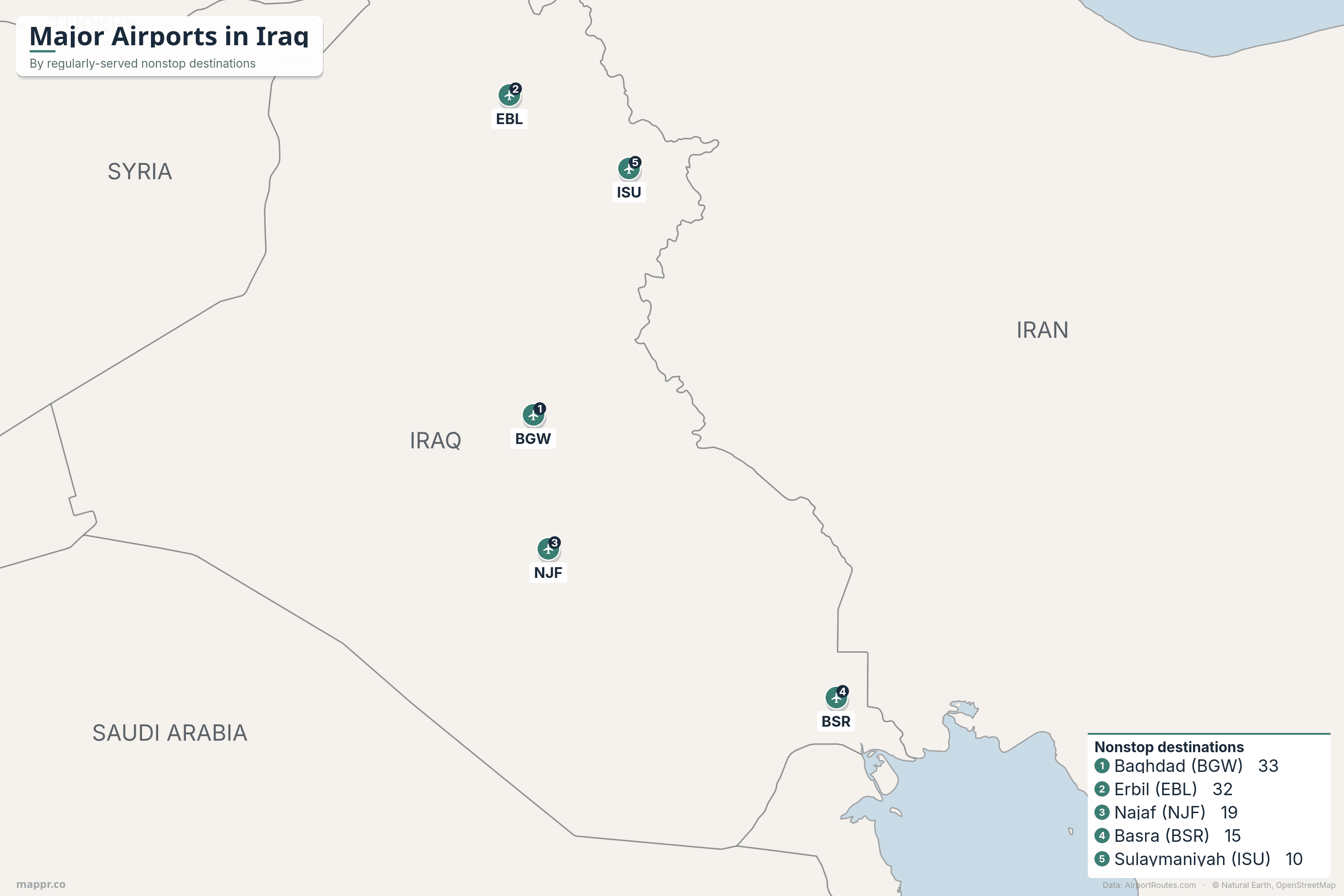
Below we map and rank Iraq’s airports by the number of nonstop destinations each one serves, drawn from live route data on AirportRoutes. We rank by regularly-served destinations, routes flown often enough to count as scheduled service, rather than raw nonstop totals, which can overstate one-off and seasonal flying. The figures come from observed flight data (a large sample rather than a complete published timetable), so treat them as a guide to relative connectivity, not official totals.
Can you fly nonstop from Iraq to the US?
No. None of Iraq’s airports has a scheduled nonstop flight to the United States, and there is no direct service between Iraq and North America. Iraqi Airways, the national carrier, does not fly to the US, and it is also barred from operating in European Union airspace under the EU air safety list, which limits its long-haul network. With Iraqi traffic overwhelmingly short and medium-haul, and with the security picture described above, a direct transatlantic route has never had the demand or the clearance to take hold.
Travellers heading to the US connect through a hub. The most common options are Istanbul on Turkish Airlines, Doha on Qatar Airways, Dubai on Emirates or flydubai, and Amman on Royal Jordanian, all of which serve several Iraqi airports and offer wide North American coverage. A one-stop connection through Frankfurt or another European gateway is also possible from Erbil and Baghdad, where European carriers operate.
Ranked
Major Airports in Iraq by Nonstop Destinations
Ranked by regularly-served nonstop destinations, busiest first.
| Airport | IATA | Nonstop | Region |
|---|---|---|---|
| 1. Baghdad | BGW | 33 | Baghdad (main hub) |
| 2. Erbil | EBL | 32 | Kurdistan Region |
| 3. Najaf | NJF | 19 | Pilgrimage gateway |
| 4. Basra | BSR | 15 | Southern oil hub |
| 5. Sulaymaniyah | ISU | 10 | Kurdistan Region |
A closer look at Iraq’s airports
✈️ Baghdad International Airport (BGW)
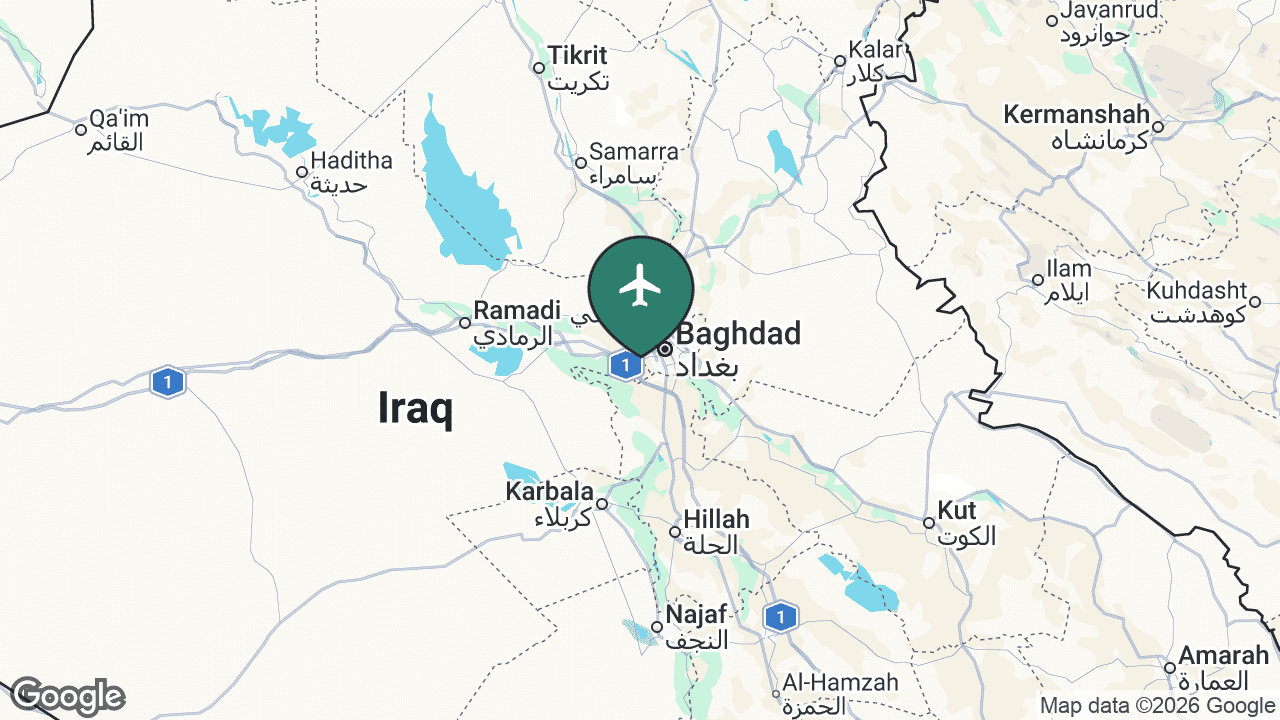
Baghdad International sits on the western edge of the capital and is the busiest airport in Iraq. It is the home base of Iraqi Airways, the national carrier and one of the oldest airlines in the Middle East, and it handles the bulk of the country’s scheduled, government and connecting traffic. The airport has been steadily rebuilt and re-equipped since 2003 and remains the symbolic gateway to the country.
Serving the capital region, BGW reaches around 33 regularly-served nonstop destinations. Its busiest links run to Amman, Istanbul (both the main airport and Sabiha Gokcen), Doha, Beirut and the Gulf cities of Sharjah, Dubai and Kuwait, with domestic flights to Basra, Erbil and Sulaymaniyah. Most of its network points toward the Levant, Turkey and the Gulf rather than further afield.
Main airlines: Iraqi Airways, Turkish Airlines, Oman Air, Caspian Airlines, Sepehran Airlines. See the full route map on AirportRoutes →
🛫 Erbil International Airport (EBL)
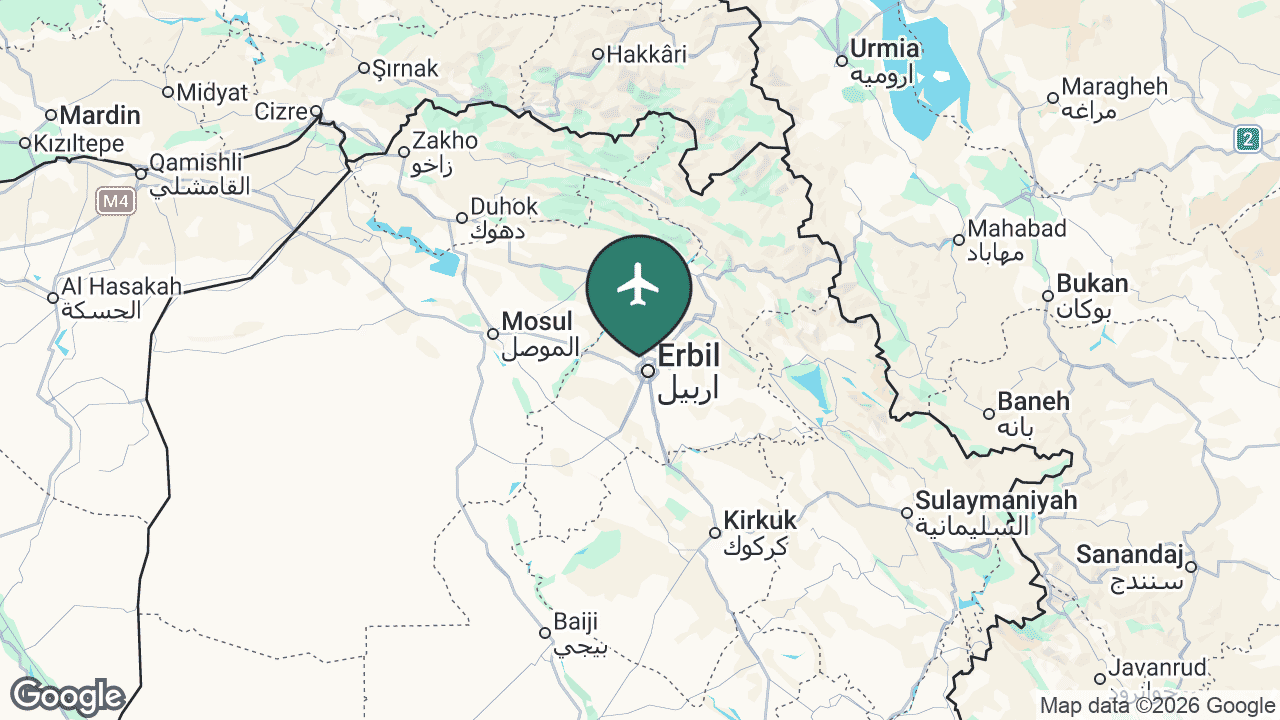
Erbil International serves the capital of the Kurdistan Region, in the relatively stable north of the country, and is Iraq’s second airport by destinations. It has one of the longest commercial runways in the world and was developed into a modern gateway during the Kurdistan Region’s investment boom, positioning itself as the business and diaspora hub of northern Iraq.
Although it ranks just behind Baghdad at about 32 regularly-served destinations, Erbil carries the widest international and long-haul network of any Iraqi airport. It has the strongest links to Europe, including direct flights to Germany at Frankfurt and Dusseldorf for the large Kurdish diaspora, alongside the usual heavy traffic to Istanbul, the Gulf and Jordan. It is the airport where most of Iraq’s connections beyond the immediate region begin.
Main airlines: Iraqi Airways, UR Airlines, Turkish Airlines, Pegasus Airlines, Eurowings. See the full route map on AirportRoutes →
🕌 Al Najaf International Airport (NJF)
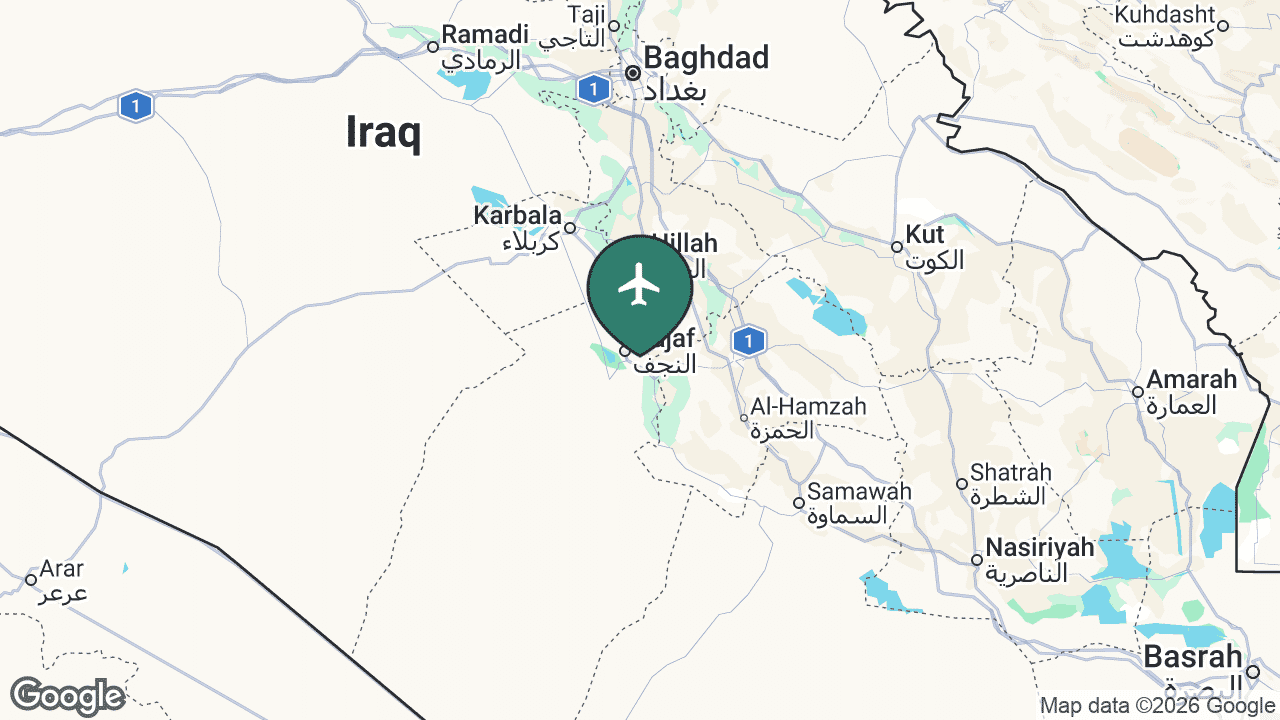
Al Najaf International lies near the holy city of Najaf, one of the most important pilgrimage destinations in Shia Islam and the site of the shrine of Imam Ali. Opened in 2008, the airport exists largely to move religious pilgrims, and its traffic rises and falls with the pilgrimage calendar rather than with business or tourism.
NJF reaches around 19 regularly-served destinations, an unusually international network for a regional airport because so much of it is pilgrimage traffic. Its busiest links run to Iran, at Tehran and Mashhad, and to the Gulf, including Bahrain, Dubai, Sharjah, Dammam, Kuwait and Doha, carrying pilgrims to and from the shrines of southern Iraq. Iranian carriers feature heavily here in a way they do not at most other Iraqi airports.
Main airlines: Iraqi Airways, Caspian Airlines, Iran Air, Iran Aseman Airlines, Gulf Air. See the full route map on AirportRoutes →
🛢️ Basra International Airport (BSR)
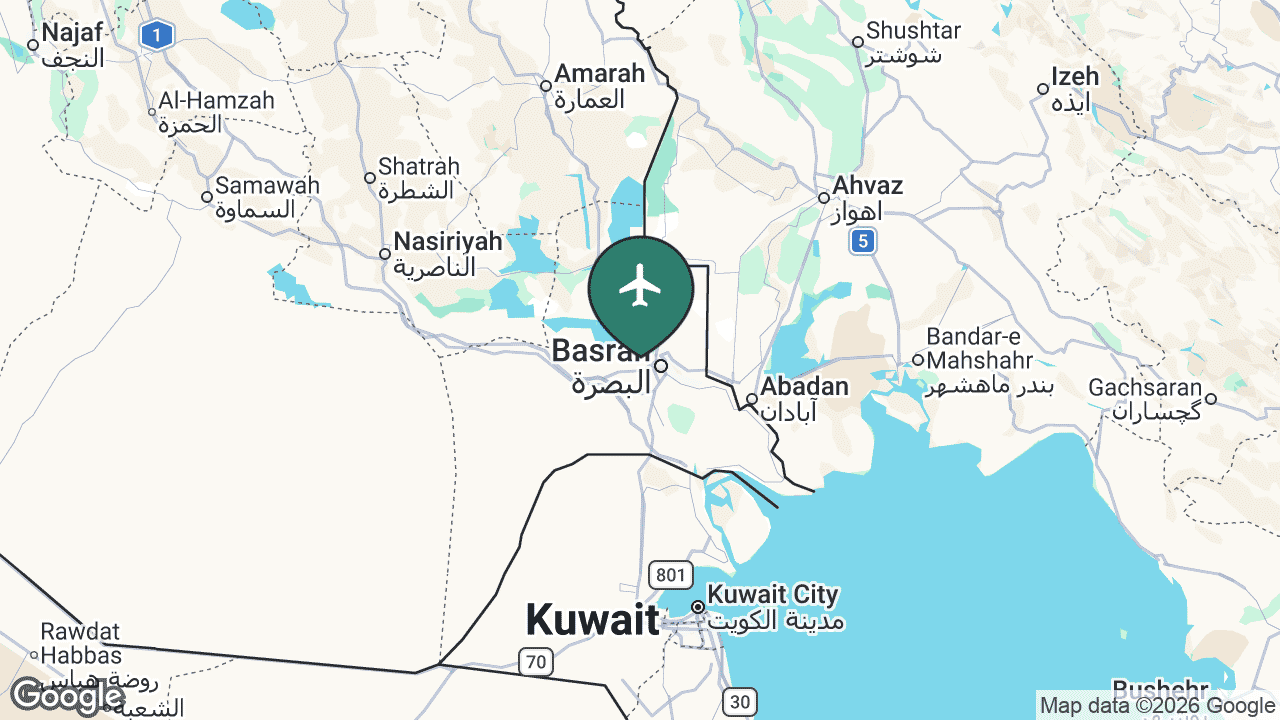
Basra International serves Iraq’s main southern city and the heart of the country’s oil industry, close to the Gulf and the Kuwaiti border. As the gateway to the oilfields and the port of Umm Qasr, it carries a steady mix of energy-sector workers, business travellers and Gulf-bound passengers, making it the busiest airport in the south.
Serving Basra and the surrounding oil region, BSR reaches about 15 regularly-served nonstop destinations. Its network is firmly Gulf-focused, with frequent flights to Dubai, Doha, Sharjah and beyond, alongside Istanbul, Amman and a domestic link to Baghdad. A New Delhi service reflects the South Asian workforce in the oil sector. The full range of Gulf carriers, from Emirates and Qatar Airways to flydubai, serve the airport.
Main airlines: Iraqi Airways, flydubai, Qatar Airways, Turkish Airlines, Emirates, Royal Jordanian. See the full route map on AirportRoutes →
🏔️ Sulaymaniyah International Airport (ISU)
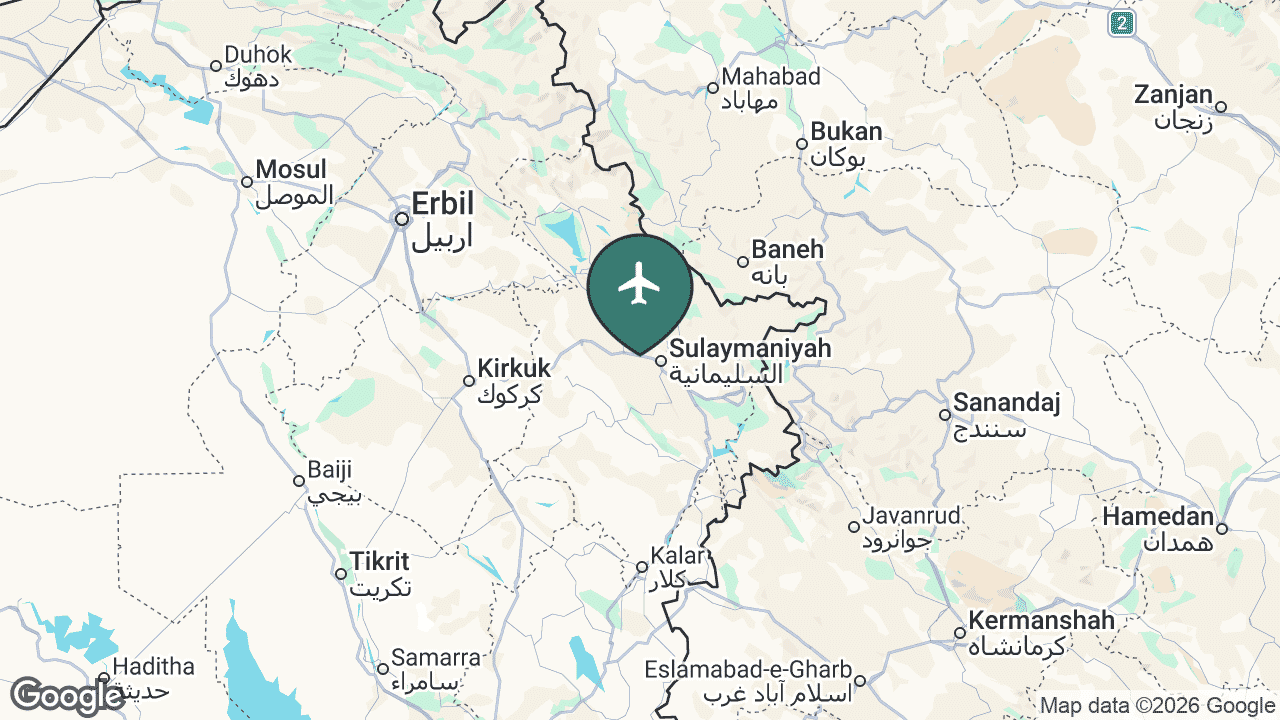
Sulaymaniyah International is the second airport of the Kurdistan Region, serving the city of Sulaymaniyah in the mountainous north-east, near the Iranian border. Opened to international flights in 2005, it gives the eastern half of the Kurdistan Region its own direct connections rather than routing everything through Erbil or Baghdad.
ISU reaches around 10 regularly-served destinations, the smallest network of Iraq’s five main airports but still firmly international. Its busiest links run to Doha, Amman, Istanbul, Tehran, Dubai and Beirut, plus a domestic connection to Baghdad, serving both the local population and the Kurdish diaspora in the Gulf and beyond.
Main airlines: Iraqi Airways, Turkish Airlines, Qatar Airways, Royal Jordanian, Caspian Airlines, flydubai. See the full route map on AirportRoutes →
What about the Kurdistan Region’s airports?
Two of Iraq’s five main airports, Erbil and Sulaymaniyah, sit in the Kurdistan Region, the semi-autonomous area of northern Iraq that has its own regional government. Both are fully Iraqi airports, but they operate in a slightly different world from Baghdad, Najaf and Basra. They were developed quickly during the Kurdistan Region’s investment boom, lean heavily on links to Turkey, the Gulf and Europe, and have become the main air bridge for the large Kurdish diaspora, especially in Germany.
Their status has not always been smooth. After the Kurdistan independence referendum in September 2017, the Iraqi federal government banned international flights to and from Erbil and Sulaymaniyah, leaving them reachable only via Baghdad until the ban was lifted in March 2018. Flights to both airports have at times also been affected by tensions with neighbouring Turkey and Iran. Today they operate normally, but the episode is a reminder that, in Iraq, the map of who flies where is shaped as much by politics as by passenger demand.
Airport rankings, nonstop-destination counts, served regions and airline lists are drawn from live AirportRoutes route data (observed AeroAPI flight data, a sample rather than a complete published schedule; we use the regularly-served figure, which filters one-off observations). Airport locations and notable facts are cross-checked against the cited references, and the airspace note reflects current advisories. The ranked map is a Mappr original.
Primary Data Source:
- AirportRoutes: Major airports and routes, Iraq – Live route data: per-airport nonstop destinations, served cities and airlines.
References:
- Safe Airspace (OPSGROUP): Iraq risk assessment – Conflict-zone airspace risk advisory referenced in the airspace note at the top of the page.
- Wikipedia: Iraqi airports (Baghdad, Erbil, Najaf, Basra and Sulaymaniyah) – Airport history, location, status and notable facts referenced in the per-airport sections.
- Locator maps: Google Maps / Google Static Maps – Per-airport location maps with airplane markers, generated via Google Static Maps.
Image Sources:
- Map by Mappr – Map of major airports in Iraq, a Mappr original built from AirportRoutes data and Natural Earth boundaries.


