
Key Takeaways
- Incheon dominates the country's air traffic. Incheon International (ICN), west of Seoul, handles almost all of South Korea's international and long-haul flights, with around 115 regularly-served nonstop destinations – far more than any other Korean airport.
- Seoul is served by two airports. Incheon (ICN) handles long-haul and international flights, while Gimpo (GMP), close to the city, runs domestic routes plus short-haul shuttles to Tokyo, Osaka, Shanghai, Beijing and Taipei.
- Seoul to Jeju is the world's busiest air route. The short hop from Gimpo to the holiday island of Jeju (CJU) carries more passengers than any other route on the planet, anchoring a very large domestic market.
- Korean Air and Asiana lead, low-cost carriers rising. Korean Air and Asiana Airlines are the full-service majors, now merging into one carrier. A strong low-cost sector – Jeju Air, Jin Air, T'way Air, Air Busan, Eastar Jet and Aero K – drives much of the domestic and regional flying.
- US flights run almost entirely from Incheon. Nonstop flights to the United States – Los Angeles, San Francisco, Seattle, New York, Atlanta, Chicago and more – depart almost exclusively from Incheon. Travellers from other cities connect through ICN.
South Korea packs a dense, modern aviation network into a compact, mountainous peninsula. A single airport – Incheon, on reclaimed land west of Seoul – handles the overwhelming majority of the country’s international and long-haul traffic, while a web of regional airports feeds a huge domestic market built around one dominant link: Seoul to the holiday island of Jeju, by passenger numbers the busiest air corridor on Earth.
✈️ See also: Most Active Airlines in South Korea — which carriers fly the most routes from South Korea, mapped.
Below we map and rank South Korea’s major airports by the number of nonstop destinations each one serves, drawn from live route data on AirportRoutes. Because the figures come from observed flight data – a large sample rather than a complete published timetable – we treat them as a strong guide to relative connectivity rather than exact, official totals.
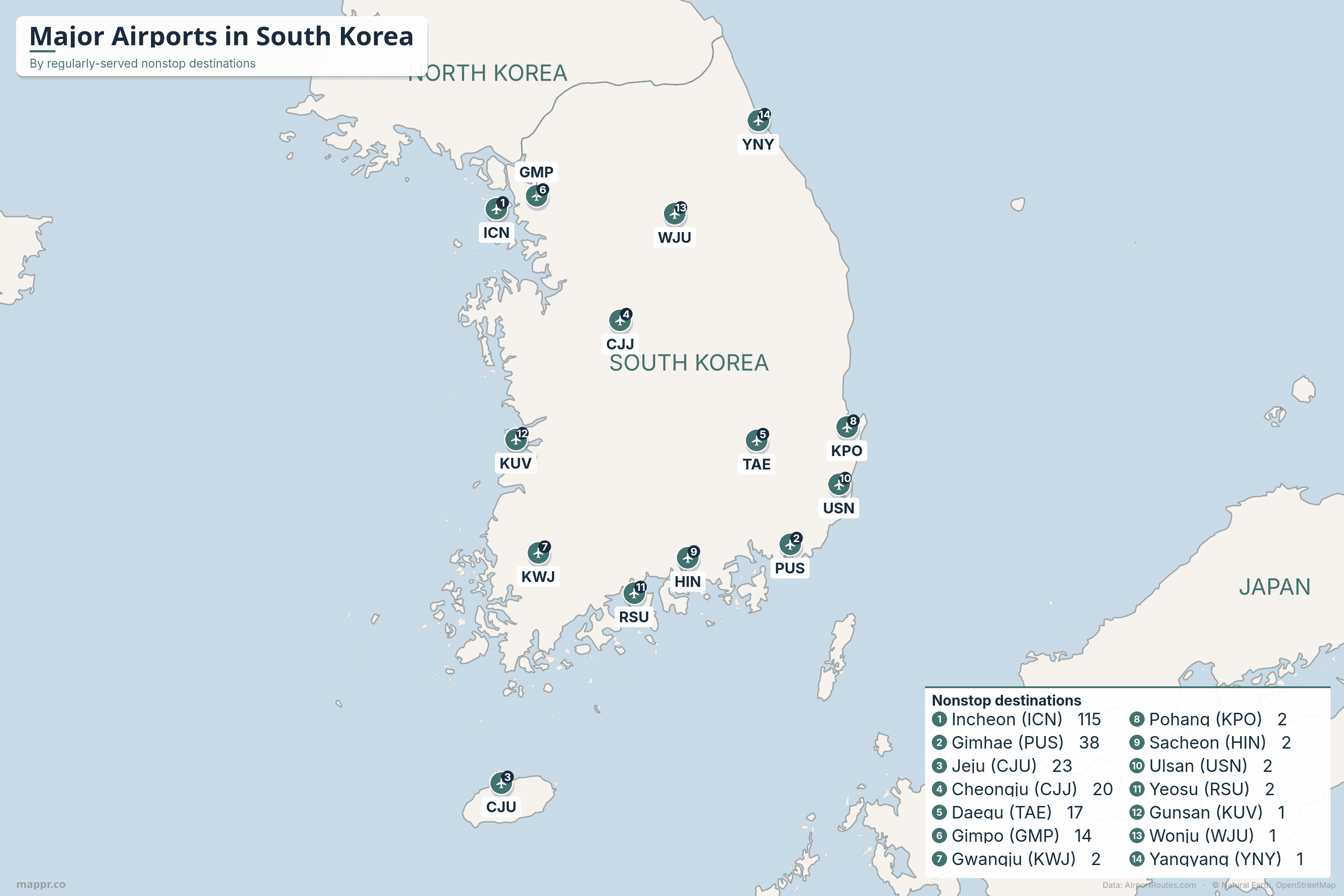
Which South Korean airports fly to the US – and internationally?
South Korea’s long-haul flying is concentrated almost entirely at Incheon (ICN). Korean Air and Asiana Airlines – the two full-service majors, now merging into a single carrier – run their global networks from there, alongside US airlines Delta, United, American and Hawaiian and a wide range of foreign and low-cost carriers.
Nonstop flights to the United States run almost exclusively from Incheon. ICN connects nonstop to Los Angeles, San Francisco, Seattle, New York, Newark, Atlanta, Chicago, Dallas-Fort Worth, Washington, Las Vegas, Minneapolis and Honolulu. Travellers from Busan, Daegu or Jeju typically reach America by connecting through Incheon or a foreign hub, and dedicated freighters route US cargo via gateways such as Anchorage rather than scheduled passenger flights. Gimpo (GMP) runs the capital’s only other notable international service, but those are short-haul “business shuttle” routes to Tokyo, Osaka, Shanghai, Beijing and Taipei – not long-haul.
Ranked
Major Airports in South Korea by Nonstop Destinations
Ranked by regularly-served nonstop destinations, busiest first.
| Airport | IATA | Nonstop | City |
|---|---|---|---|
| 1. Incheon | ICN | 115 | Seoul (Incheon) |
| 2. Gimhae | PUS | 38 | Busan |
| 3. Jeju | CJU | 23 | Jeju |
| 4. Cheongju | CJJ | 20 | Cheongju |
| 5. Daegu | TAE | 17 | Daegu |
| 6. Gimpo | GMP | 14 | Seoul (Gimpo) |
| 7. Gwangju | KWJ | 2 | Gwangju |
| 8. Pohang | KPO | 2 | Pohang |
| 9. Sacheon | HIN | 2 | Sacheon |
| 10. Ulsan | USN | 2 | Ulsan |
| 11. Yeosu | RSU | 2 | Yeosu |
| 12. Gunsan | KUV | 1 | Gunsan |
| 13. Wonju | WJU | 1 | Wonju |
| 14. Yangyang | YNY | 1 | Yangyang |
A closer look at South Korea’s biggest airports
🛫 Incheon (ICN)
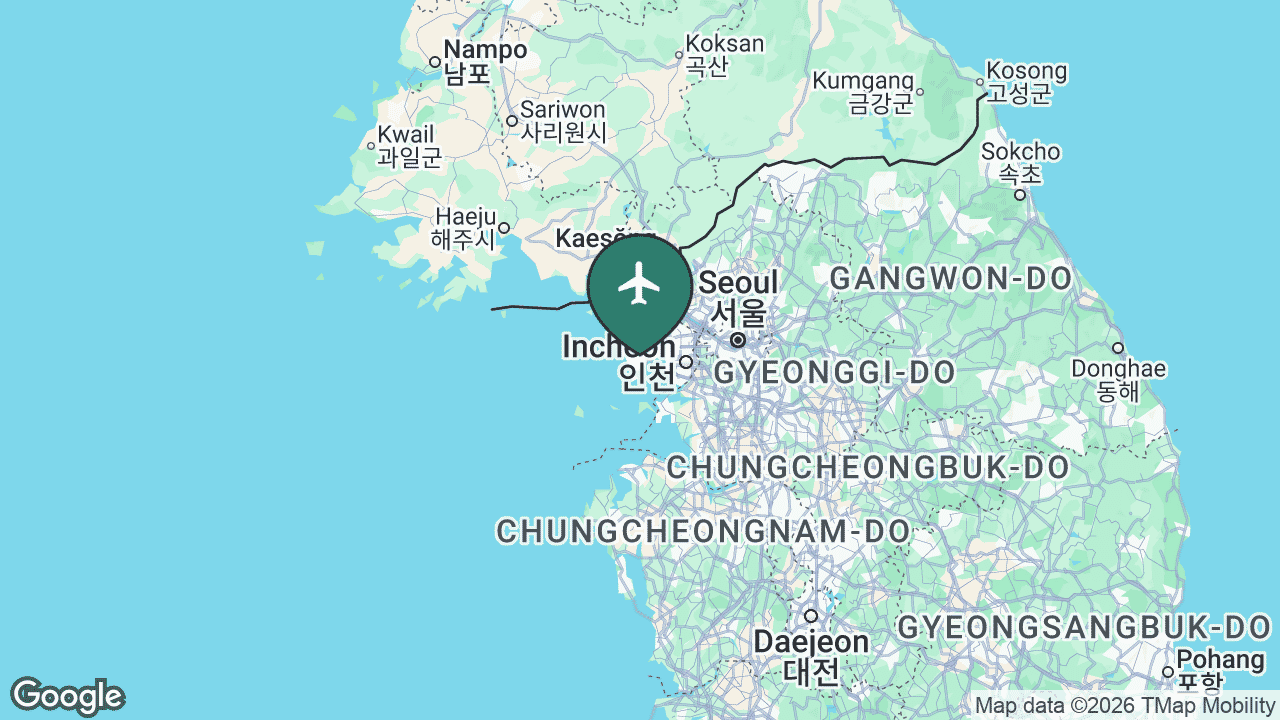
Incheon International is South Korea’s principal gateway, opened in 2001 on reclaimed land between Yeongjong and Yongyu islands, about an hour west of central Seoul. Regularly rated one of the best airports in the world, it is the main long-haul base for Korean Air and Asiana and is linked to the capital by the AREX express railway.
Serving Seoul, ICN reaches around 115 regularly-served nonstop destinations, including roughly 49 intercontinental routes – by far the most of any Korean airport. Top destinations include Weihai, Yantai and Qingdao in China, plus Da Nang and Nha Trang in Vietnam.
Main airlines: Korean Air, Asiana Airlines, Jeju Air, Jin Air, T’way Air, Eastar Jet. See the full route map for ICN on AirportRoutes →
⚓ Busan / Gimhae (PUS)
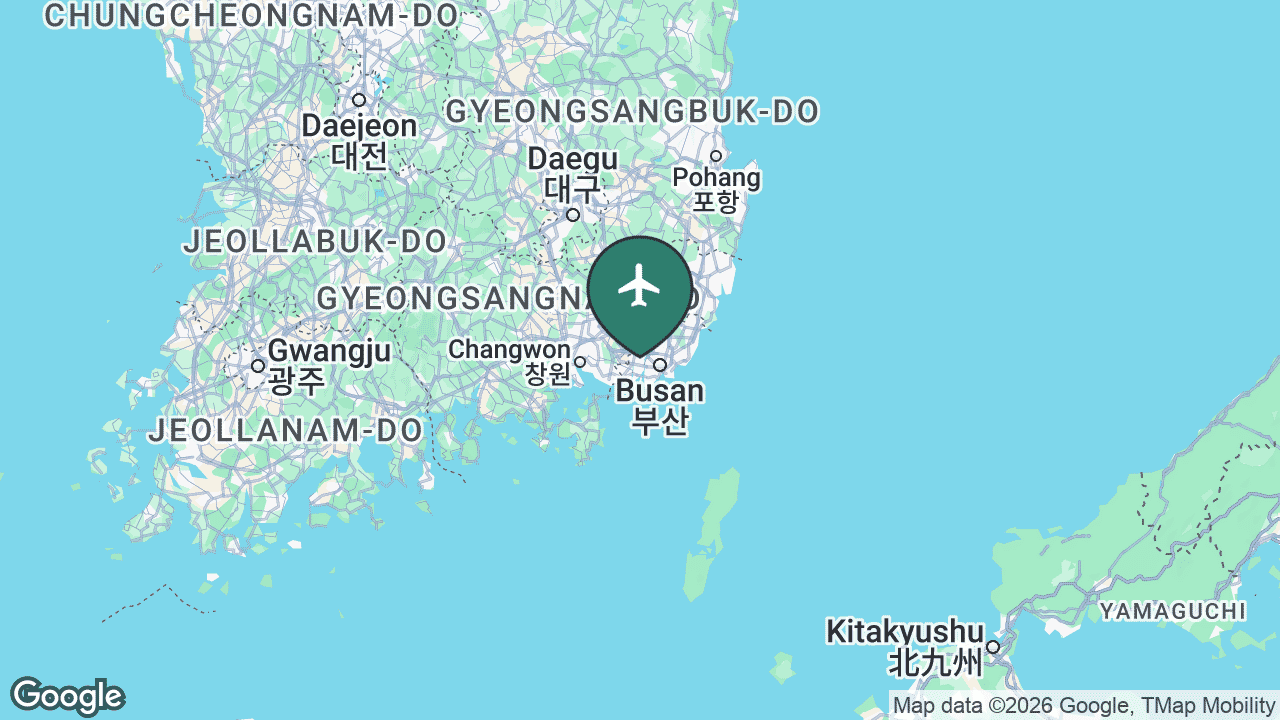
Gimhae International serves Busan, South Korea’s second city and largest port, on the southeast coast. It is the main gateway for the Yeongnam region, mixing a busy domestic schedule with short-haul international flights across East and Southeast Asia. A new airport on Gadeokdo island is planned to eventually replace it.
Serving Busan, PUS reaches around 38 regularly-served nonstop destinations, mostly within Korea and to nearby Asia. Top destinations include Jeju, Seoul, Fukuoka, Tokyo and Phu Quoc.
Main airlines: Air Busan, Jin Air, Jeju Air, Korean Air, T’way Air, VietJet Air. See the full route map for PUS on AirportRoutes →
🏝️ Jeju (CJU)
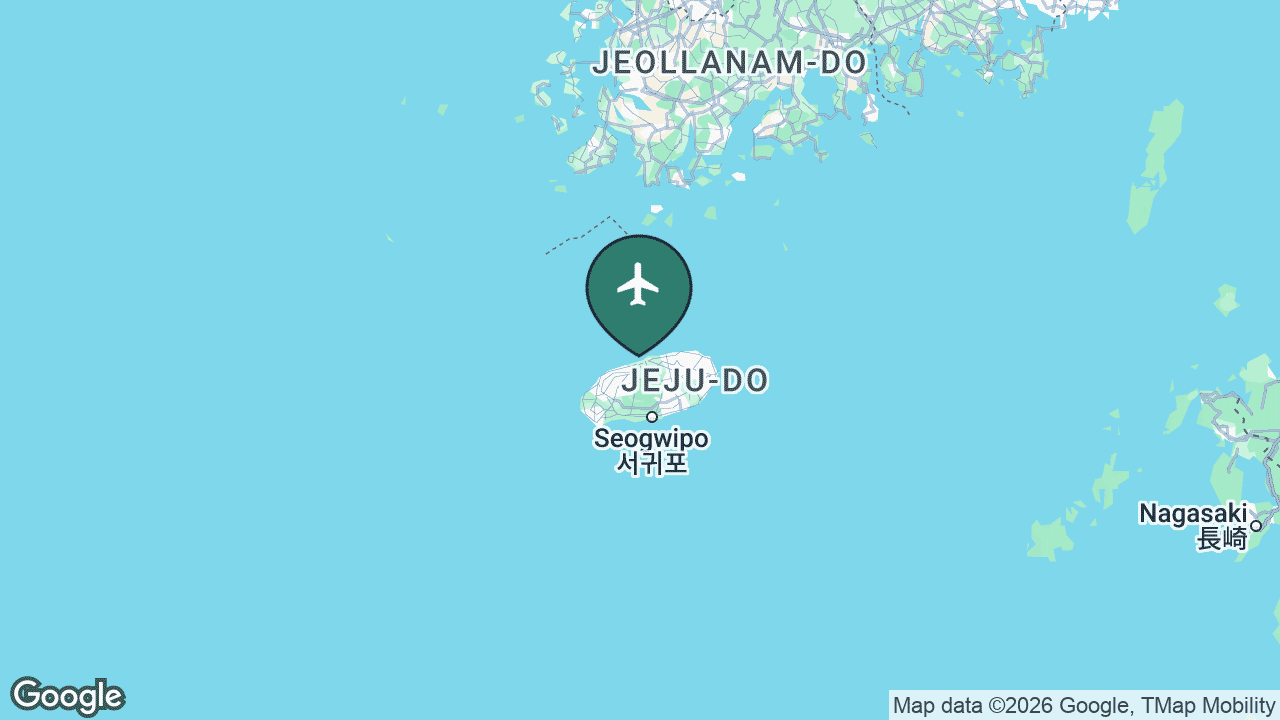
Jeju International is the gateway to Jeju Island, South Korea’s volcanic holiday island and a UNESCO-listed destination off the southern coast. The Seoul (Gimpo) to Jeju route it anchors carries more passengers than any other air route in the world. Traffic is overwhelmingly domestic, with a band of short-haul international flights to China, Japan and Southeast Asia.
Serving Jeju, CJU reaches around 23 regularly-served nonstop destinations. Top destinations include Seoul (Gimpo), Cheongju, Busan, Daegu and Shanghai.
Main airlines: Jin Air, Korean Air, Jeju Air, Spring Airlines, Asiana Airlines, T’way Air. See the full route map for CJU on AirportRoutes →
🛬 Cheongju (CJJ)
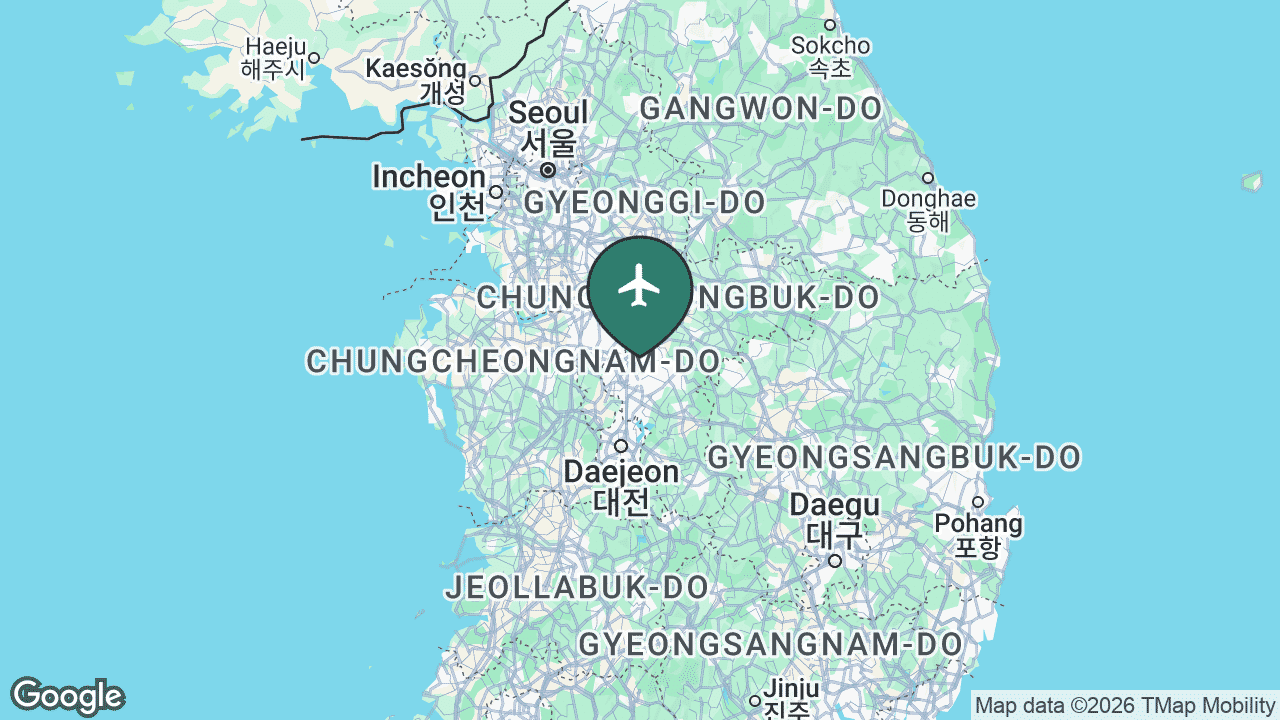
Cheongju International is the main airport for South Korea’s central Chungcheong region, sharing its site with a military air base. It has grown into a low-cost hub – the home base of newcomer Aero K – combining domestic flights with a widening set of short-haul international routes.
Serving Cheongju, CJJ reaches around 20 regularly-served nonstop destinations. Top destinations include Jeju, Tokyo, Osaka, Sapporo and Taipei.
Main airlines: Aero K, T’way Air, Eastar Jet, Korean Air, Jin Air, Jeju Air. See the full route map for CJJ on AirportRoutes →
🌆 Daegu (TAE)
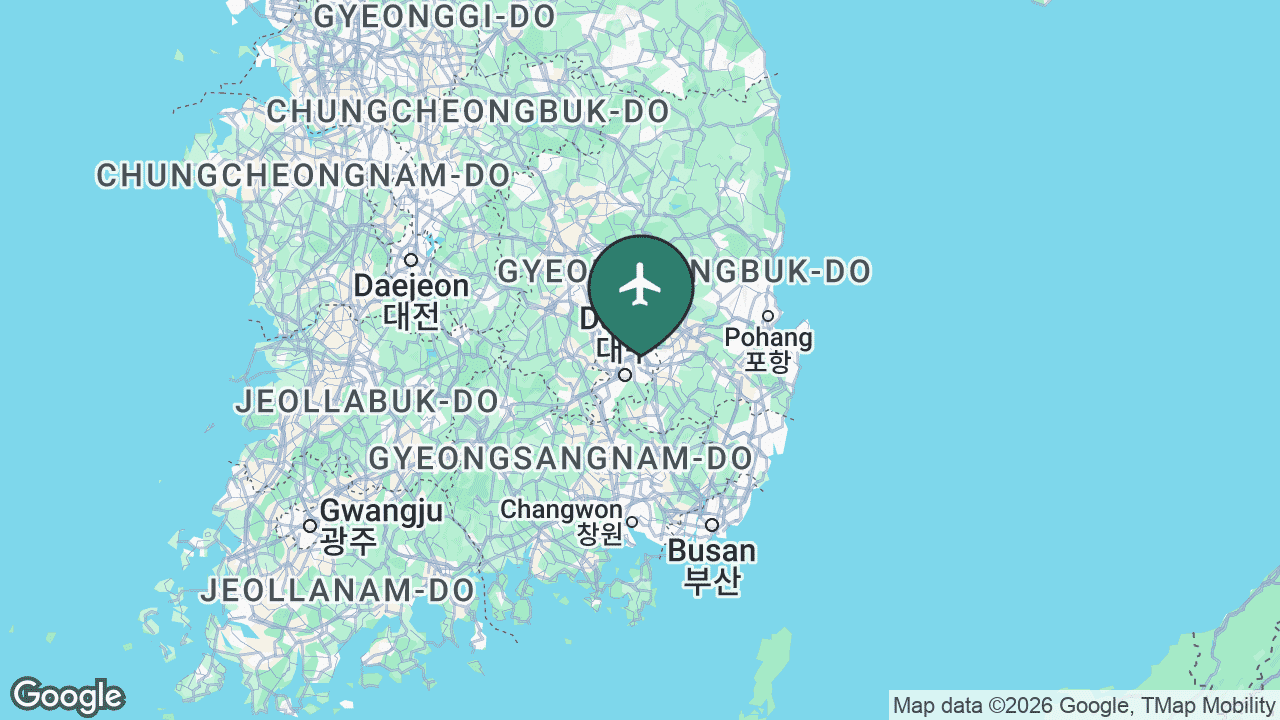
Daegu International serves South Korea’s fourth-largest city, in the southeast interior, on another shared civil-military field. It runs a compact domestic schedule alongside international flights to Japan, Taiwan, Vietnam and elsewhere in Asia; a move to a new airport in nearby Gunwi and Uiseong counties is planned.
Serving Daegu, TAE reaches around 17 regularly-served nonstop destinations. Top destinations include Jeju, Fukuoka, Osaka, Tokyo and Taipei.
Main airlines: T’way Air, Jin Air, Jeju Air, Korean Air, Asiana Airlines, HK Express. See the full route map for TAE on AirportRoutes →
🗼 Seoul / Gimpo (GMP)
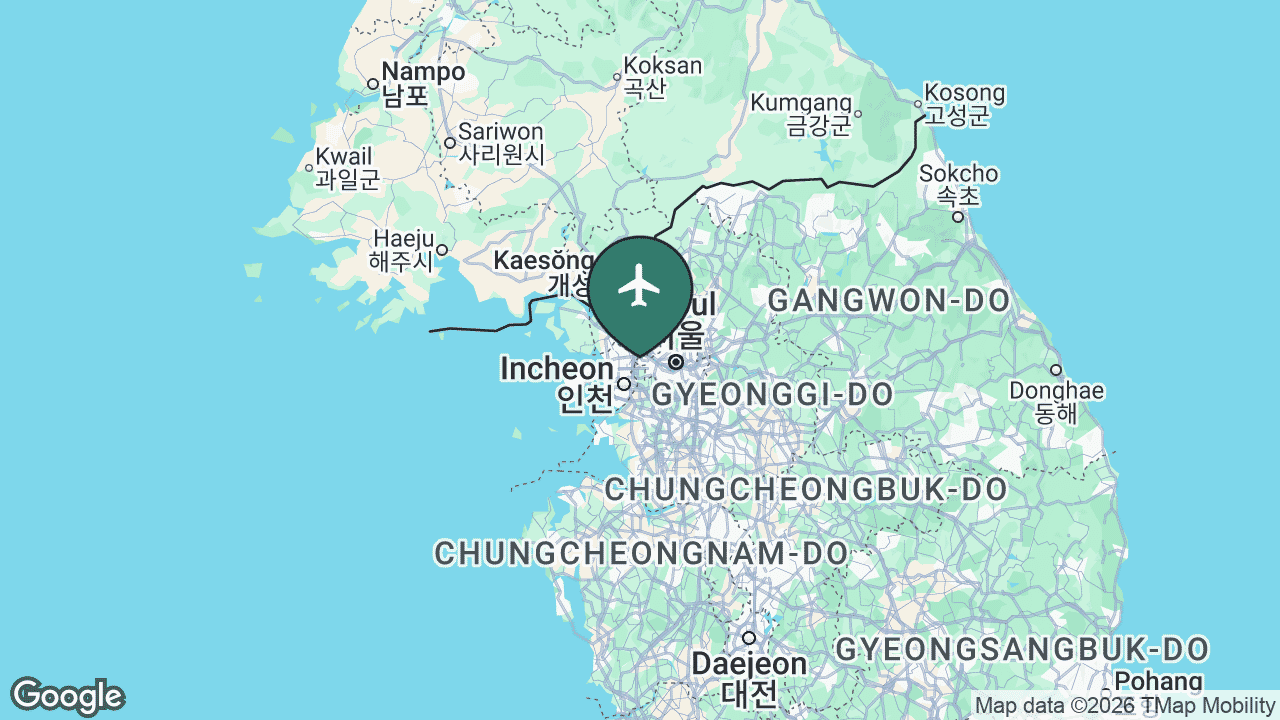
Gimpo International is Seoul’s close-in city airport, on the western edge of the capital and far quicker to reach than Incheon. Once South Korea’s main international gateway, it now handles domestic flights plus a select group of premium short-haul “shuttle” routes to nearby Asian business cities – Tokyo Haneda, Osaka, Shanghai (Hongqiao), Beijing and Taipei (Songshan).
Serving Seoul, GMP reaches around 14 regularly-served nonstop destinations. Top destinations include Jeju, Busan, Gwangju, Tokyo (Haneda) and Ulsan.
Main airlines: Asiana Airlines, Korean Air, Jin Air, Jeju Air, T’way Air, Eastar Jet. See the full route map for GMP on AirportRoutes →
🛩️ Other regional airports
Beyond the six gateways above, South Korea has a string of smaller regional airports that run only a handful of routes – chiefly to Jeju and to Seoul/Gimpo – and several share their runways with air force bases. These include Gwangju (KWJ) and Yeosu (RSU) in the southwest, Pohang (KPO), Ulsan (USN) and Sacheon (HIN) in the southeast, Gunsan (KUV) and Wonju (WJU) in the interior, and Yangyang (YNY) on the east coast, which mostly handles charter and seasonal flights. Together they keep South Korea’s far corners connected to the two big hubs even though each carries only light traffic.
Airport rankings, nonstop-destination counts, served cities, airline lists and intercontinental connections are drawn from live AirportRoutes route data (observed flight data – a sample, not a complete published schedule; we use the regularly-served figure, which filters infrequent observations). Airport facts are cross-checked against the cited references. The map is a Mappr original.
Primary Data Source:
- AirportRoutes – Major airports & routes, South Korea – Live route data: per-airport nonstop destinations, served cities, airlines and intercontinental connections.
Reference:
- Wikipedia – Incheon, Gimhae, Jeju, Cheongju, Daegu & Gimpo international airports – Airport history, terminals and notable facts referenced in the per-airport sections.
- Locator maps – Google Maps / Google Static Maps – Per-airport location maps with airplane markers, generated via Google Static Maps.
Image Sources:
- Map by Mappr – Map of major airports in South Korea – a Mappr original built from AirportRoutes data and Natural Earth boundaries, on a MapTiler winter base.
🌍 More maps & data for South Korea
Browse more: All airports by country · All airlines by country


