
Key Takeaways
- Kathmandu is Nepal’s only major hub. Tribhuvan International (KTM) in the capital handles almost all of Nepal’s international flights and is by far its busiest airport. It is the home base of the flag carrier, Nepal Airlines, alongside the big domestic operators Buddha Air, Yeti Airlines and Shree Airlines.
- Two new international airports sit largely empty. Pokhara (opened 2023) and Bhairahawa’s Gautam Buddha airport (2022) were built to break Kathmandu’s monopoly and draw tourists, but both still run almost entirely domestic flights.
- No nonstop flights to the United States. Nepal has no scheduled nonstop service to the US. Travelers connect through a Gulf hub such as Doha, Dubai or Abu Dhabi, or via Delhi or Istanbul.
- The famous mountain airstrips are not in the data. Lukla, the Everest gateway and one of the world’s most challenging airports, plus Jomsom and other short hill strips, run on small carriers that do not appear in the route data.
- A hub-and-spoke domestic network. Kathmandu connects to a web of regional airports across the lowland Terai and the hills, most of which mainly just fly back to Kathmandu.
Nepal, the Himalayan nation wedged between India and China, is home to eight of the world’s ten highest mountains, including Everest. Its air network is overwhelmingly funneled through a single airport: Tribhuvan International in the capital, Kathmandu, which hosts the national flag carrier, Nepal Airlines, and almost every international route. A scatter of regional airports across the lowland Terai and the hills feeds traffic back to Kathmandu, while two brand-new international airports at Pokhara and Bhairahawa try, so far with limited success, to open second and third gateways.
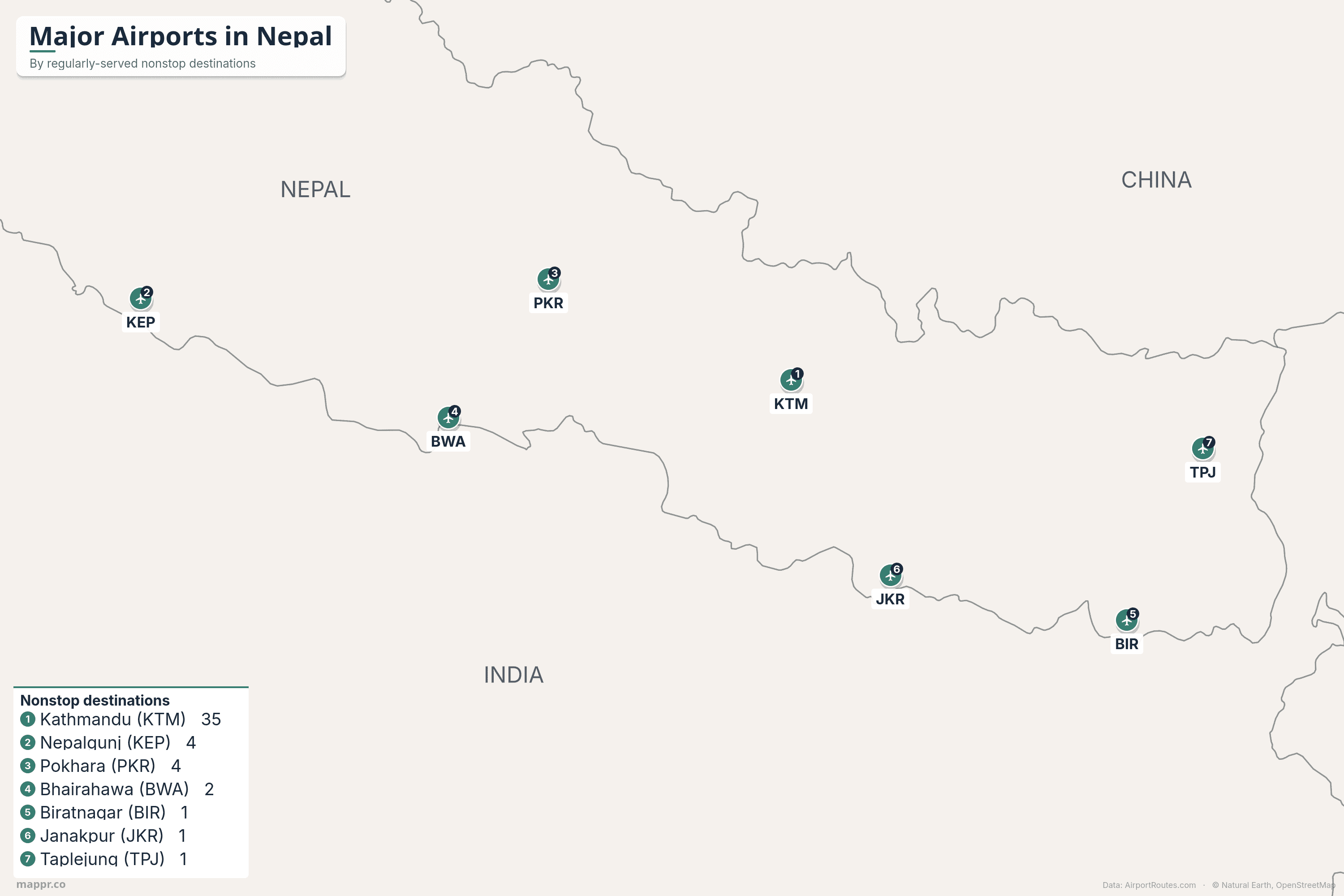
Below we map and rank Nepal’s airports by the number of regularly-served nonstop destinations each one reaches, drawn from live route data on AirportRoutes. Because the figures come from observed flight data, a large sample rather than a complete published timetable, we treat them as a guide to relative connectivity rather than exact, official totals.
Are there direct flights from Nepal to the US?
There are no scheduled nonstop flights between Nepal and the United States. The distance is enormous, and Kathmandu’s single, mountain-ringed runway is not set up for the ultra-long-haul aircraft such a route would need, so no airline flies it today.
To reach the US, travelers from Kathmandu connect through a major hub. The most common options are the Gulf carriers (Qatar Airways via Doha, Emirates via Dubai, Etihad via Abu Dhabi), Air India or IndiGo via Delhi, or Turkish Airlines via Istanbul. From any of these, a single onward flight reaches most large US cities. The Gulf routes are especially busy because of the very large Nepali worker community across the region.
Ranked
Major Airports in Nepal by Nonstop Destinations
Ranked by regularly-served nonstop destinations, busiest first.
| Airport | IATA | Nonstop | City / Area |
|---|---|---|---|
| 1. Kathmandu | KTM | 35 | Kathmandu |
| 2. Nepalgunj | KEP | 4 | Nepalgunj |
| 3. Pokhara | PKR | 4 | Pokhara |
| 4. Bhairahawa | BWA | 2 | Bhairahawa / Lumbini |
| 5. Biratnagar | BIR | 1 | Biratnagar |
| 6. Janakpur | JKR | 1 | Janakpur |
| 7. Taplejung | TPJ | 1 | Taplejung / Kanchenjunga |
A closer look at Nepal’s main airports
✈️ Kathmandu (KTM)
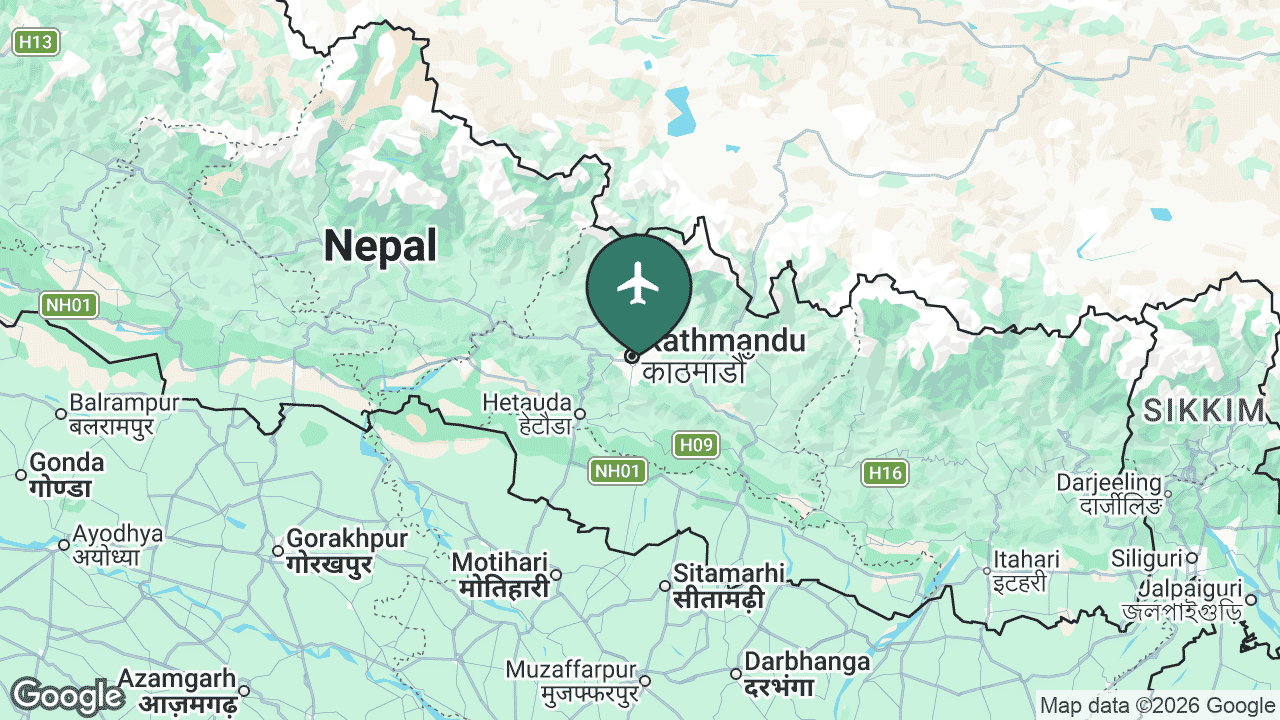
Tribhuvan International Airport, about 6 km east of the city centre, is Nepal’s largest and busiest airport and effectively its only international gateway. Hemmed in by hills with a single runway, it is known for a demanding approach and chronic congestion, which is one reason the government has pushed to build relief airports elsewhere.
Serving Kathmandu, KTM reaches around 35 regularly-served nonstop destinations, by far the widest network in the country. It blends a dense domestic schedule to Pokhara, Bhairahawa, Biratnagar, Nepalgunj and the Terai towns with international flights to the Gulf (Doha, Dubai, Abu Dhabi, Sharjah), India, China and Southeast Asia (Kuala Lumpur, Bangkok). The heavy Gulf and Malaysia traffic reflects the hundreds of thousands of Nepalis who work abroad.
Main airlines: Nepal Airlines, Buddha Air, Yeti Airlines and Shree Airlines on the domestic side, plus Himalaya Airlines and foreign carriers including Qatar Airways, Emirates, flydubai, Air India, IndiGo and Turkish Airlines. See the full route map for KTM on AirportRoutes →
🏔️ Pokhara (PKR)
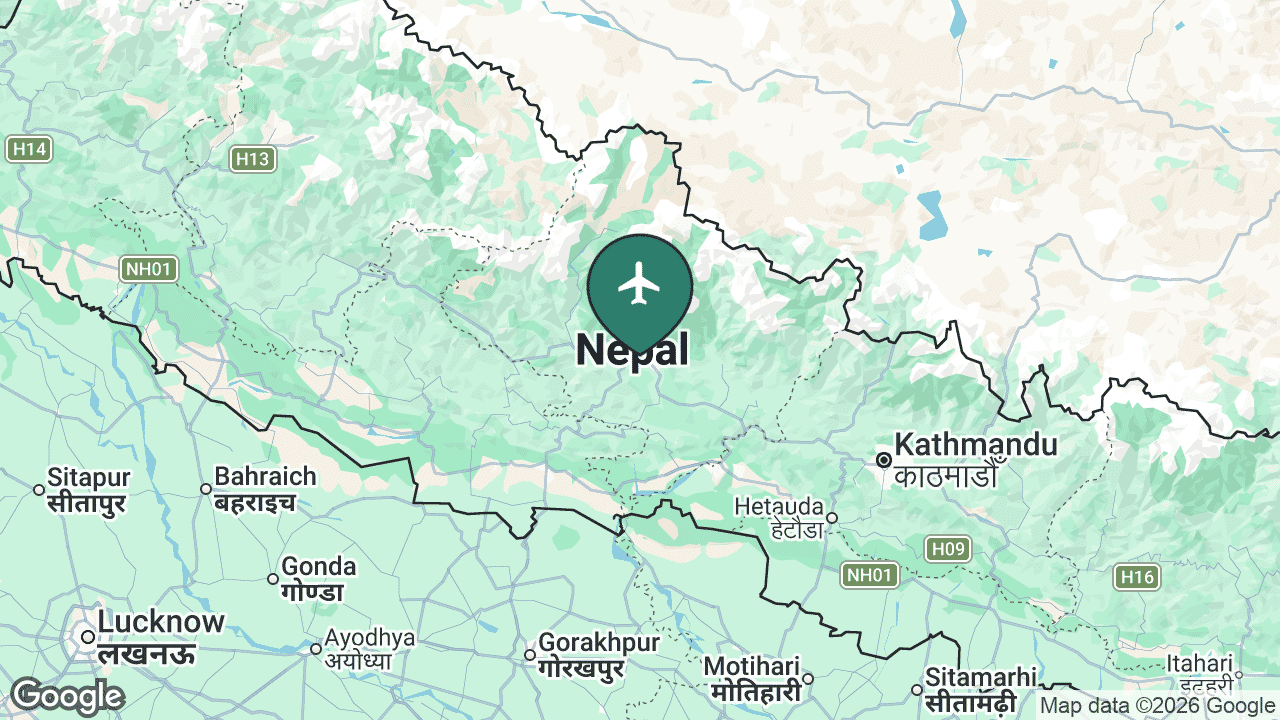
Pokhara is Nepal’s premier tourism city, the lakeside base for treks into the Annapurna range and Mustang. Its new Pokhara International Airport opened on 1 January 2023, built with a Chinese loan under the Belt and Road Initiative, and was meant to bring international flights directly to the trekking heartland.
So far that promise is unfulfilled. Despite the “international” name, almost all of Pokhara’s flights are domestic, chiefly the busy shuttle to Kathmandu plus links to Bhairahawa and other regional points. Regular scheduled international service has yet to take hold, and the airport has become a flashpoint in debates over Chinese lending and cross-border air-route approvals. In the route data PKR shows about 4 nonstop destinations, all domestic.
Main airlines: Buddha Air and Shree Airlines on the domestic network. See the full route map for PKR on AirportRoutes →
☸️ Bhairahawa (BWA)
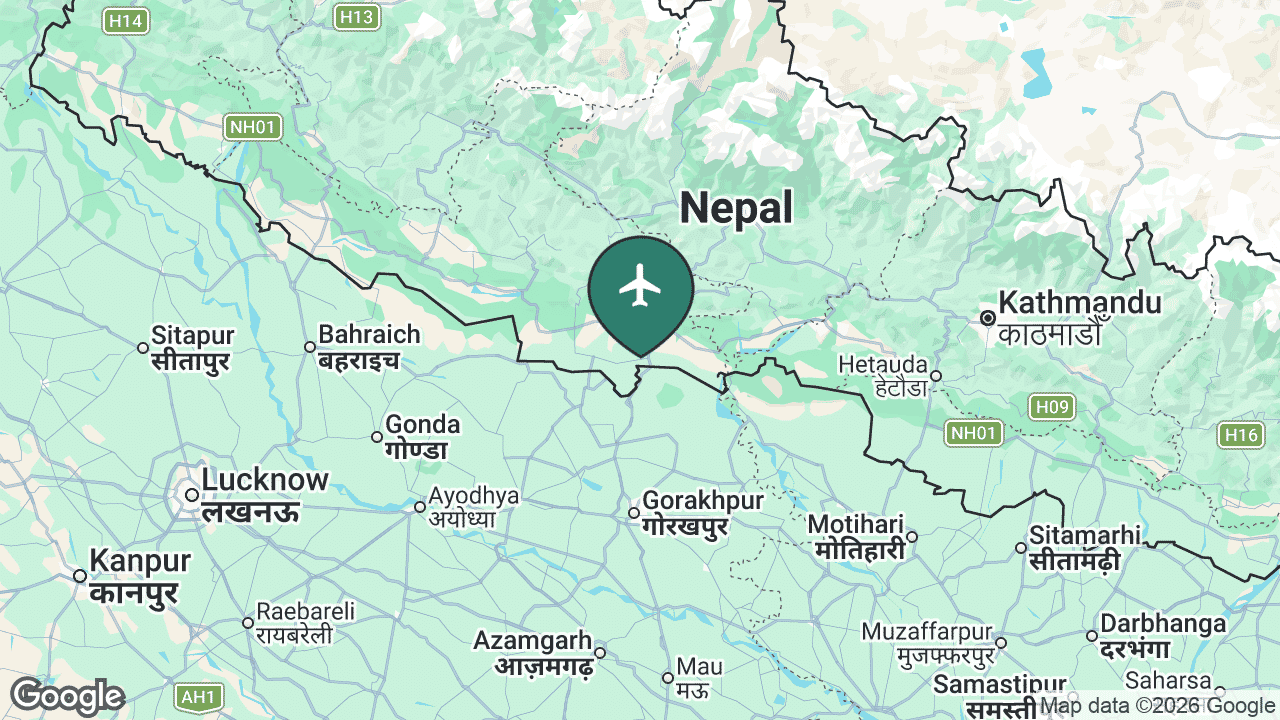
Gautam Buddha International Airport at Bhairahawa opened in May 2022, the first of Nepal’s two new international airports. It sits close to Lumbini, the birthplace of the Buddha, and was built to draw Buddhist pilgrimage tourism and to take pressure off Kathmandu.
Like Pokhara, it has struggled to sustain international flights: a handful of routes to India and Malaysia launched and were later cut. Today it runs mainly domestic service, principally the connections to Kathmandu and Pokhara. The route data shows around 2 nonstop destinations, all domestic.
Main airlines: Buddha Air, Yeti Airlines and Shree Airlines. See the full route map for BWA on AirportRoutes →
🛩️ Nepalgunj (KEP)
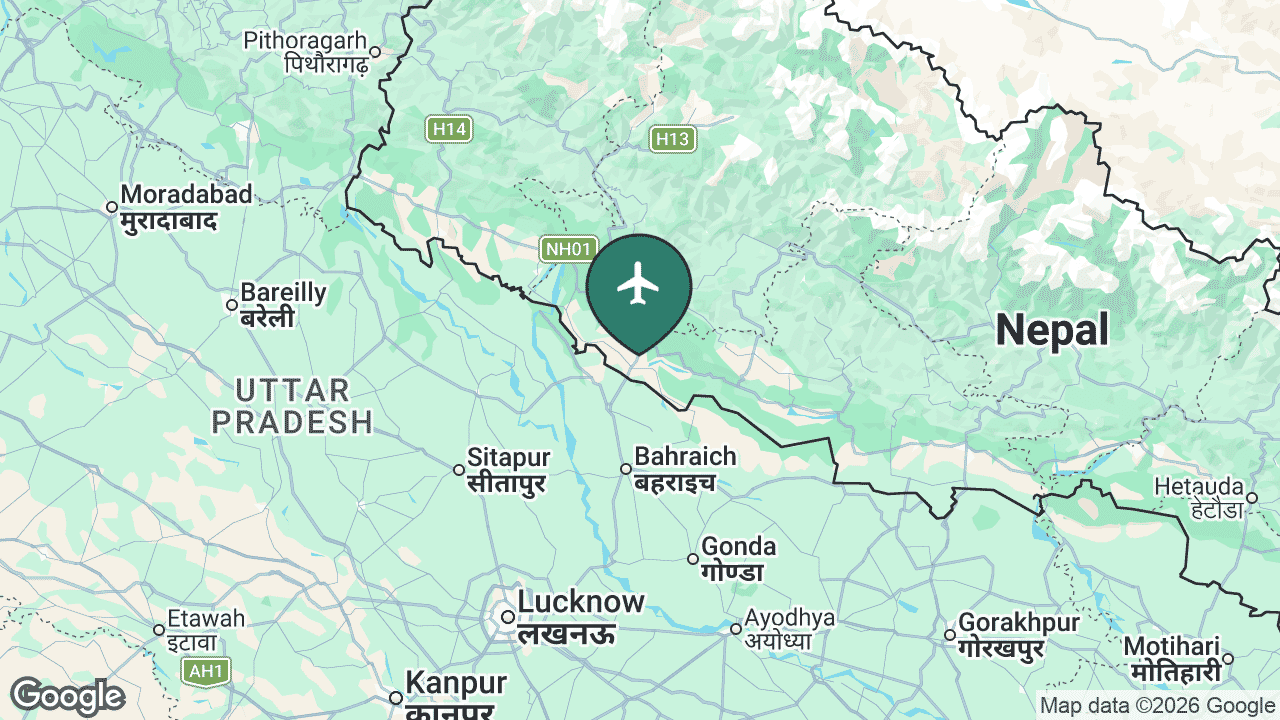
Nepalgunj Airport sits in the western Terai near the Indian border and is the key aviation hub for the remote far west of Nepal. More than a city airport, it is the launch point for short take-off and landing flights into the road-less Karnali mountains, feeding isolated airstrips at Jumla, Simikot, Dolpa and Bajura that connect communities cut off by terrain.
That fan-out is why Nepalgunj shows more distinct destinations in the data than even Pokhara, despite carrying fewer passengers: it serves a wide spread of small mountain fields as well as the trunk routes to Kathmandu and Pokhara.
Main airlines: Buddha Air, Yeti Airlines, Shree Airlines and Nepal Airlines, plus the small mountain STOL operators. See the full route map for KEP on AirportRoutes →
✈️ Biratnagar (BIR)
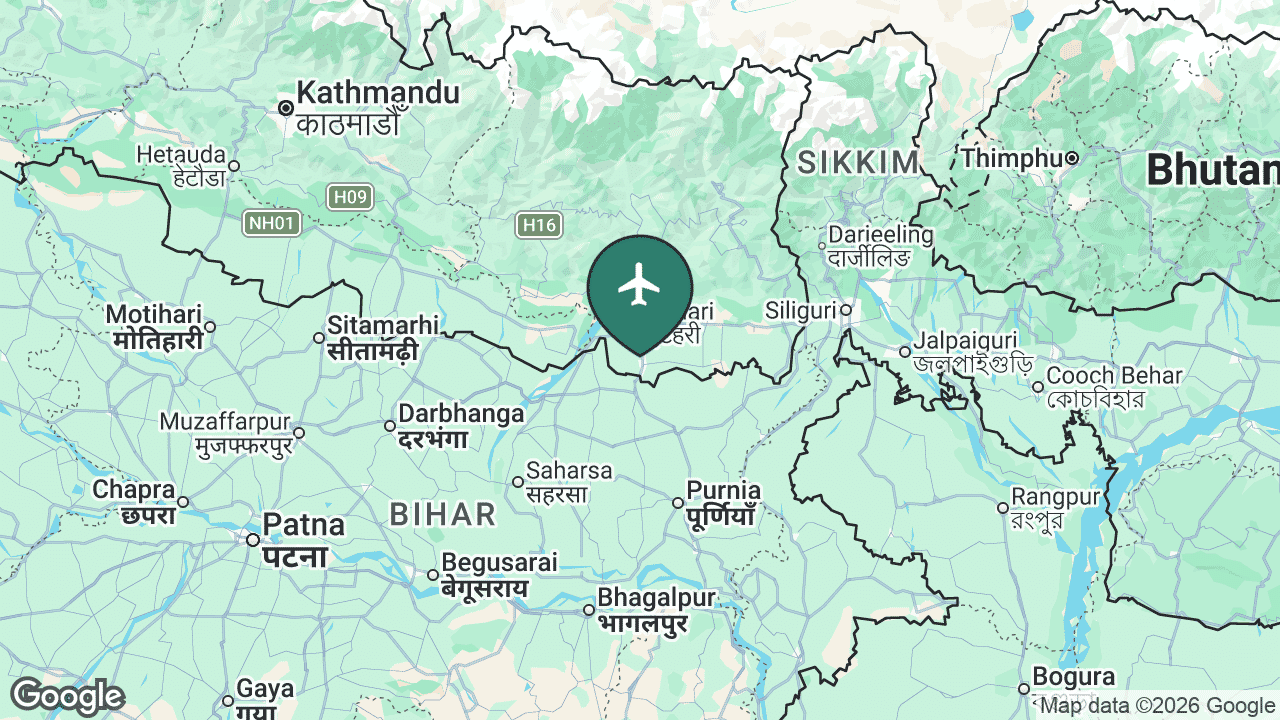
Biratnagar Airport serves Biratnagar, Nepal’s industrial and commercial centre in the southeast and one of its largest cities. It has long been among the busiest domestic airports after Kathmandu, acting as the main gateway for the eastern Terai.
The route data captures mostly the dense Kathmandu shuttle, though in practice Biratnagar also feeds onward domestic connections across eastern Nepal. Like the rest of the network, its traffic funnels through the capital.
Main airlines: Buddha Air, Yeti Airlines and Shree Airlines. See the full route map for BIR on AirportRoutes →
What about Lukla and Nepal’s mountain airstrips?
Nepal’s most famous airport does not appear in the route data at all. Tenzing-Hillary Airport at Lukla (LUA), perched at about 2,860 m, is the gateway to Everest Base Camp. Its short runway, roughly 527 m long, is built on a mountainside with a steep gradient and a sheer drop at one end, and it is routinely described as one of the world’s most challenging airports. It is served by small turboprop operators such as Tara Air, Summit Air and Sita Air, flying from Kathmandu or, in the busy season, from Manthali in Ramechhap to ease congestion at the capital.
Lukla is just the best known of dozens of short mountain airstrips that keep road-less Himalayan communities connected and feed the trekking economy: Jomsom in Mustang, Simikot in Humla, Dolpa, Jumla, Phaplu and Tumlingtar among them. They run on small aircraft and do not show up in the route data, but they are a defining feature of flying in Nepal.
Nepal’s other airports
Beyond the main hubs, a string of lowland Terai airports handle domestic service that mostly funnels back to Kathmandu. Janakpur (JKR) serves the Mithila cultural city and Hindu pilgrimage site of Janaki Mandir, traditionally linked to Sita in the Ramayana. Bharatpur (BHR) is the gateway to Chitwan National Park, while Dhangadhi (DHI), Bhadrapur (BDP) and Simara (SIF) round out the network across the southern plains.
In the far east, Taplejung (TPJ), also known as Suketar, is the trekking gateway to Kanchenjunga, the world’s third-highest peak, served by Nepal Airlines. Together with the western mountain fields out of Nepalgunj, these small airports knit together a country where geography often makes flying the only practical way to travel.
Airport rankings, nonstop-destination counts, served cities and connections are drawn from live AirportRoutes route data (observed AeroAPI flight data, a sample rather than a complete published schedule). Airport history and notable facts are cross-checked against the cited references. The map is a Mappr original.
Primary Data Source:
- AirportRoutes: major airports and routes, Nepal – Live route data: per-airport nonstop destinations, served cities, airlines and connections.
Reference:
- Wikipedia: Tribhuvan, Pokhara and Gautam Buddha international airports – Airport history, location and notable facts referenced in the per-airport sections.
- Nepal Airlines – Background on the national flag carrier and its hub at Kathmandu.
- Tenzing-Hillary Airport (Lukla) – Background on the Everest-gateway airstrip and Nepal’s mountain STOL network.
- Locator maps: Google Maps / Google Static Maps – Per-airport location maps with airplane markers, generated via Google Static Maps.
Image Sources:
- Map by Mappr – Map of major airports in Nepal, a Mappr original built from AirportRoutes data and Natural Earth boundaries.
🌍 More maps & data for Nepal
Browse more: All airports by country


