
Key Takeaways
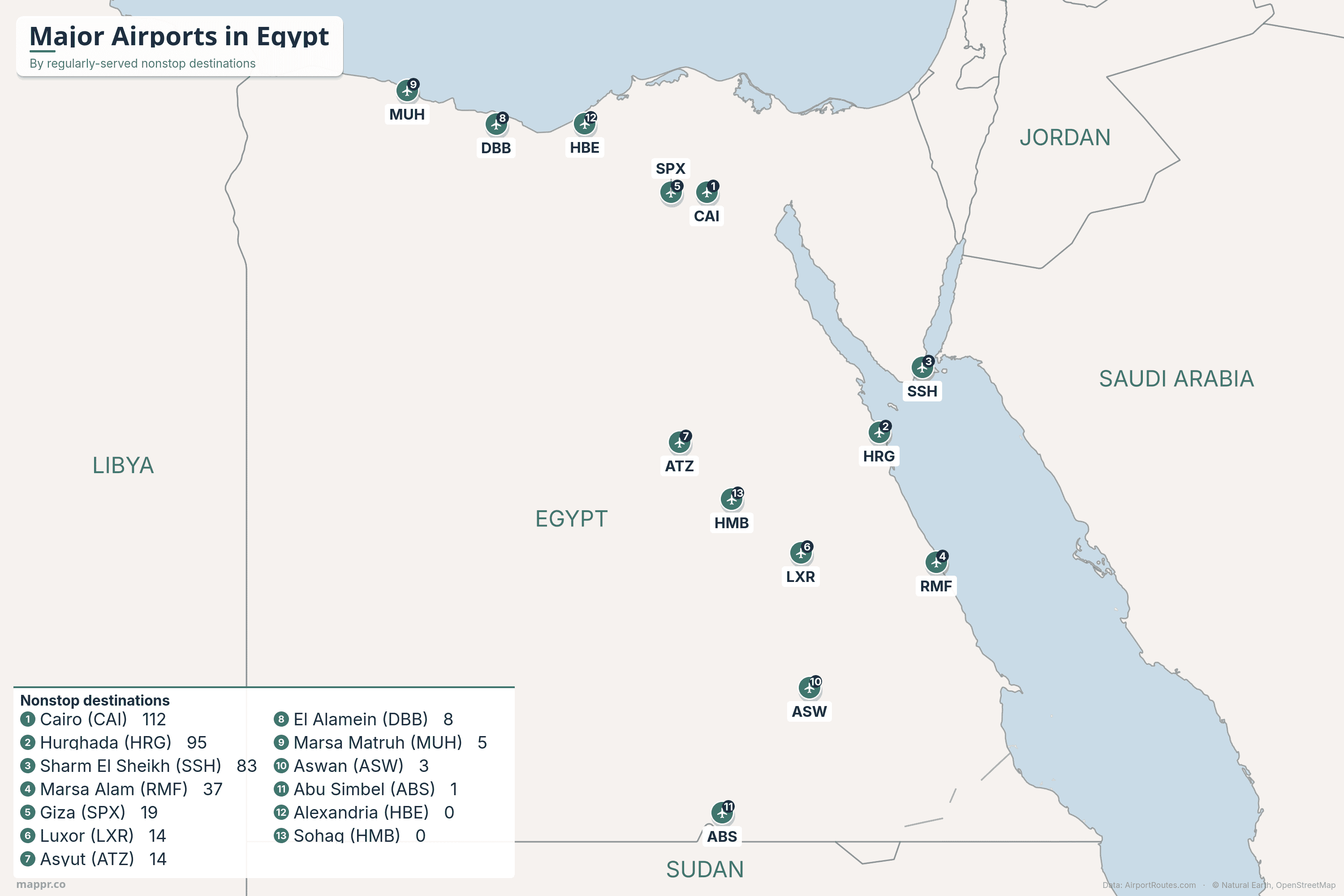
- Cairo is Egypt's busiest airport by a wide margin. Cairo International (CAI) serves around 112 regularly-served nonstop destinations — more than every other Egyptian airport combined — and is the hub of EgyptAir, the national flag carrier and a Star Alliance member.
- The next tier is Red Sea beach resorts, not big cities. After Cairo, Egypt's busiest airports are leisure gateways on the Red Sea — Hurghada, Sharm El Sheikh and Marsa Alam — packed with European and Gulf charter and low-cost flights rather than scheduled city traffic.
- We rank by regularly-served routes, not raw counts. Egypt is a charter- and seasonal-heavy market, so raw nonstop counts overstate the resort airports. Ranking by regularly-served destinations gives a truer picture of which airports fly the same routes week in, week out.
- Direct US flights run only from Cairo. Cairo is Egypt's sole transatlantic gateway, with EgyptAir flying nonstop to New York and Washington (Newark also shows in the data). Every other Egyptian airport is short- and medium-haul only — US travellers connect through Cairo or a European or Gulf hub.
- Alexandria and Sohag carry more than the sample shows. Borg El Arab (Alexandria) and Sohag come out near the bottom of the route sample, but in reality both run scheduled EgyptAir and Gulf-carrier flights — the live data simply under-counts them, so read their low figures with that caveat.
Egypt runs one of the Middle East and Africa’s busiest aviation networks, built around a single dominant hub at Cairo and a string of Red Sea and Nile-valley airports that live off tourism. The country pairs a major capital gateway with some of the world’s most famous holiday airports — the diving and beach resorts of Hurghada and Sharm El Sheikh — and a cluster of small fields that exist mainly to bring visitors to the temples of Luxor, Aswan and Abu Simbel. The national carrier, EgyptAir (a Star Alliance member since 2008), ties the network together from its base at Cairo.
Below we map and rank Egypt’s airports by the number of nonstop destinations each one serves, drawn from live route data on AirportRoutes. Because Egypt is such a charter- and seasonal-heavy market, we rank by regularly-served destinations — routes flown often enough to count as scheduled service — rather than raw nonstop totals, which inflate the summer-only resort airports. The figures come from observed flight data (a large sample rather than a complete published timetable), so treat them as a guide to relative connectivity, not official totals.
Which Egyptian airports have direct flights to the US?
Transatlantic flying from Egypt is concentrated entirely at Cairo. EgyptAir operates nonstop service from CAI to New York (JFK) and Washington (Dulles), and Newark also appears in the route data; these are the only scheduled nonstop links between Egypt and North America. As a Star Alliance member, EgyptAir also feeds US-bound passengers onto United and other partners via its Cairo hub.
No other Egyptian airport has scheduled nonstop flights to the US. The busy Red Sea resorts — Hurghada, Sharm El Sheikh and Marsa Alam — are overwhelmingly European and Gulf leisure markets, so travellers heading to the beaches or the Nile from the United States connect through Cairo or a major European or Gulf hub such as London, Frankfurt, Istanbul, Dubai or Doha.
Ranked
Major Airports in Egypt by Nonstop Destinations
Ranked by regularly-served nonstop destinations, busiest first.
| Airport | IATA | Nonstop | Region |
|---|---|---|---|
| 1. Cairo | CAI | 112 | Cairo (Greater Cairo) |
| 2. Hurghada | HRG | 95 | Red Sea coast |
| 3. Sharm El Sheikh | SSH | 83 | South Sinai |
| 4. Marsa Alam | RMF | 37 | Red Sea coast |
| 5. Sphinx | SPX | 19 | Giza / western Cairo |
| 6. Luxor | LXR | 14 | Upper Egypt (Nile) |
| 7. Asyut | ATZ | 14 | Upper Egypt |
| 8. El Alamein | DBB | 8 | North coast |
| 9. Marsa Matruh | MUH | 5 | North-west coast |
| 10. Aswan | ASW | 3 | Upper Egypt (Nile) |
| 11. Abu Simbel | ABS | 1 | Far south (Nubia) |
| 12. Borg El Arab (Alexandria) | HBE | 0* | Alexandria |
| 13. Sohag | HMB | 0* | Upper Egypt |
A closer look at Egypt’s main airports
✈️ Cairo (CAI)
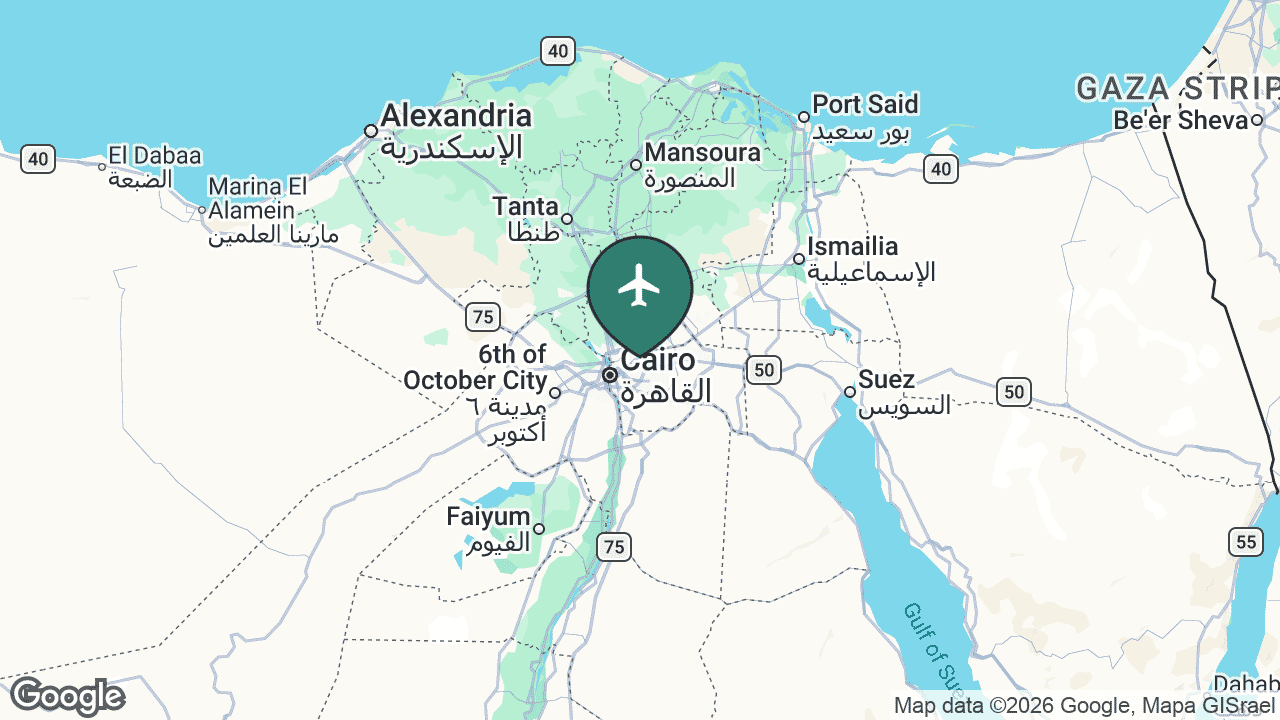
Cairo International Airport sits about 22 km northeast of downtown Cairo, in the Heliopolis area, and is by far the largest and busiest airport in Egypt — and one of the busiest in all of Africa. It is the global hub of EgyptAir and the country’s main long-haul gateway, spread across three passenger terminals, with Terminal 3 handling EgyptAir and its Star Alliance partners.
Serving Greater Cairo, CAI reaches around 112 regularly-served nonstop destinations — a genuine intercontinental network spanning Africa, the Gulf, Europe, Asia and North America that no other Egyptian airport comes close to matching. It is also Egypt’s only airport with scheduled nonstop flights to the United States.
Main airlines: EgyptAir, Nile Air, Air Cairo, Air Arabia Egypt, Flynas, Nesma Airlines. See the full route map for CAI on AirportRoutes →
🏖️ Hurghada (HRG)
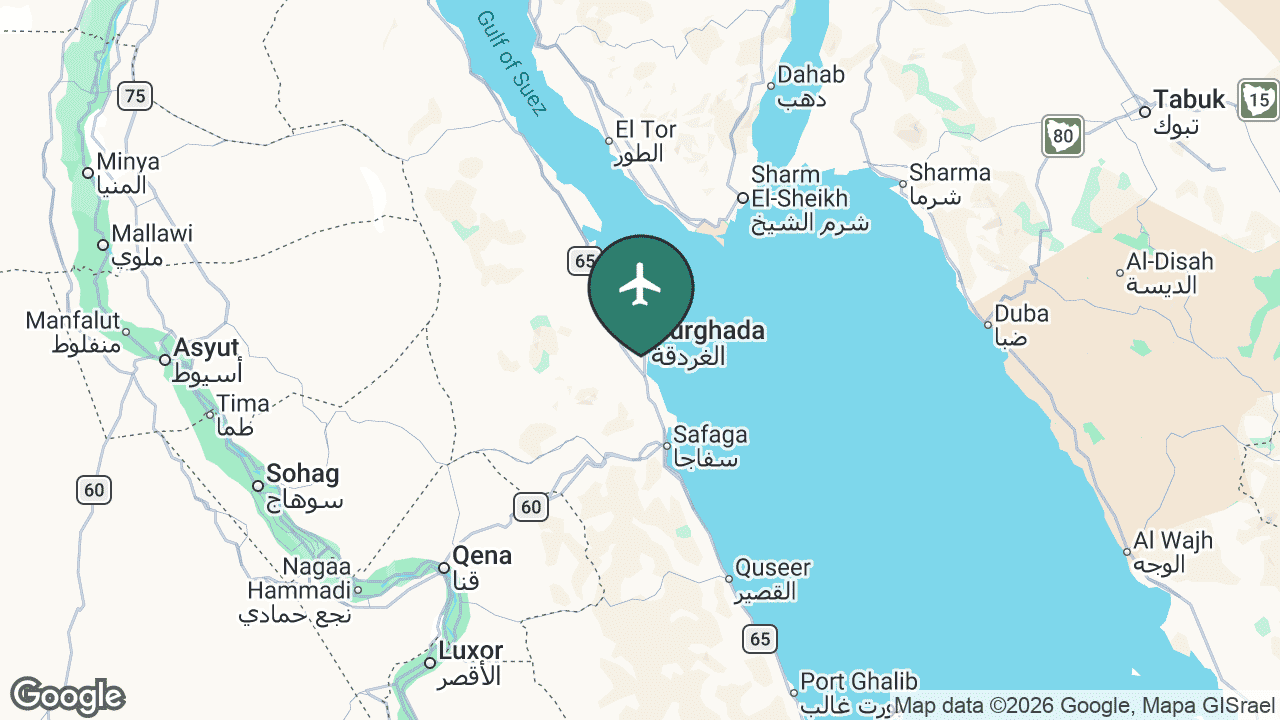
Hurghada International Airport is the gateway to Egypt’s main Red Sea resort strip, just inland from the beach hotels and dive centres that line the coast. It is one of Egypt’s busiest airports by international passengers — almost entirely on the back of holiday traffic — and has been expanded repeatedly to keep pace with European and Gulf charter demand.
Serving Hurghada and the Red Sea Riviera, HRG reaches about 95 regularly-served nonstop destinations, overwhelmingly leisure routes from Germany, Eastern Europe, the UK and Russia. Top markets swing sharply with the seasons and with charter programmes rather than scheduled city links.
Main airlines: Air Cairo, easyJet, Nile Air, Nesma Airlines, Rossiya. See the full route map for HRG on AirportRoutes →
🤿 Sharm El Sheikh (SSH)
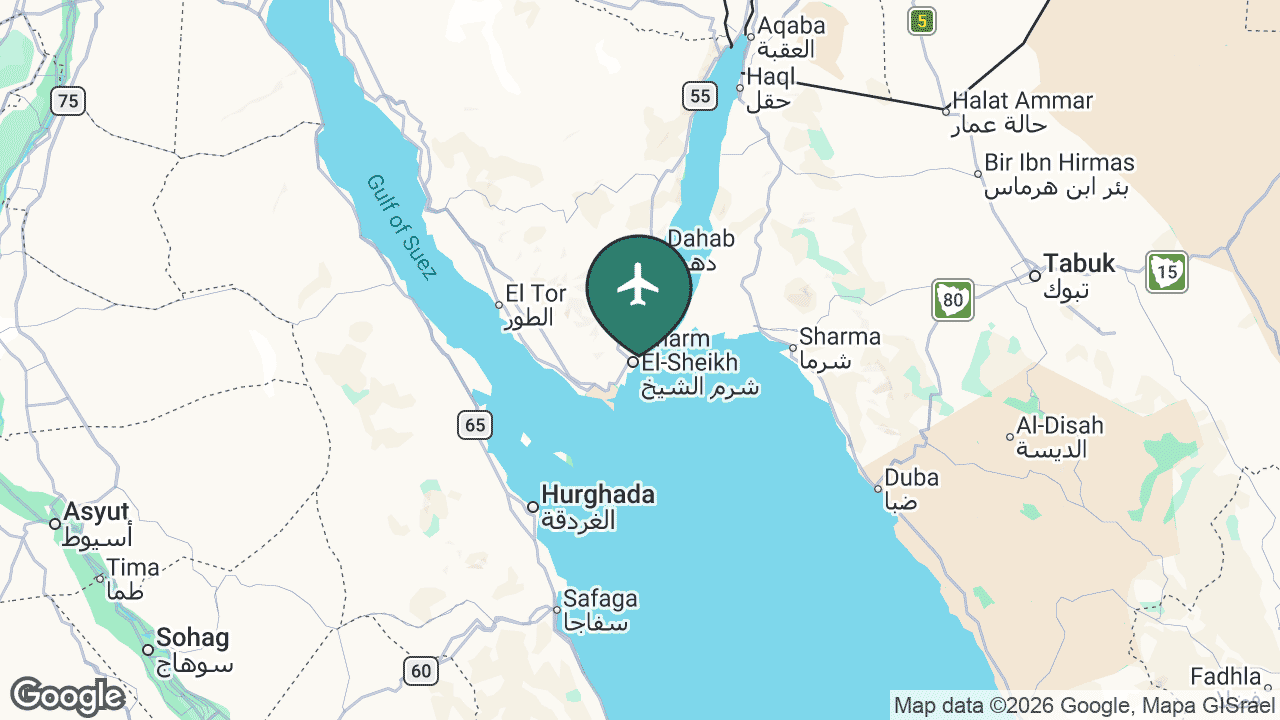
Sharm El Sheikh International Airport sits at the southern tip of the Sinai Peninsula, serving the diving and beach resort of the same name on the Red Sea. It is Egypt’s second great resort airport after Hurghada, and its fortunes track the region’s security picture closely — several European markets, including the UK and Russia, suspended flights after the 2015 Metrojet crash before service was gradually restored.
Serving Sharm El Sheikh and South Sinai, SSH reaches around 83 regularly-served nonstop destinations, again dominated by seasonal European and Gulf charter and low-cost flights rather than year-round scheduled traffic.
Main airlines: Air Cairo, easyJet, Neos, Wizz Air, Rossiya, Red Sea Airlines. See the full route map for SSH on AirportRoutes →
🐠 Marsa Alam (RMF)
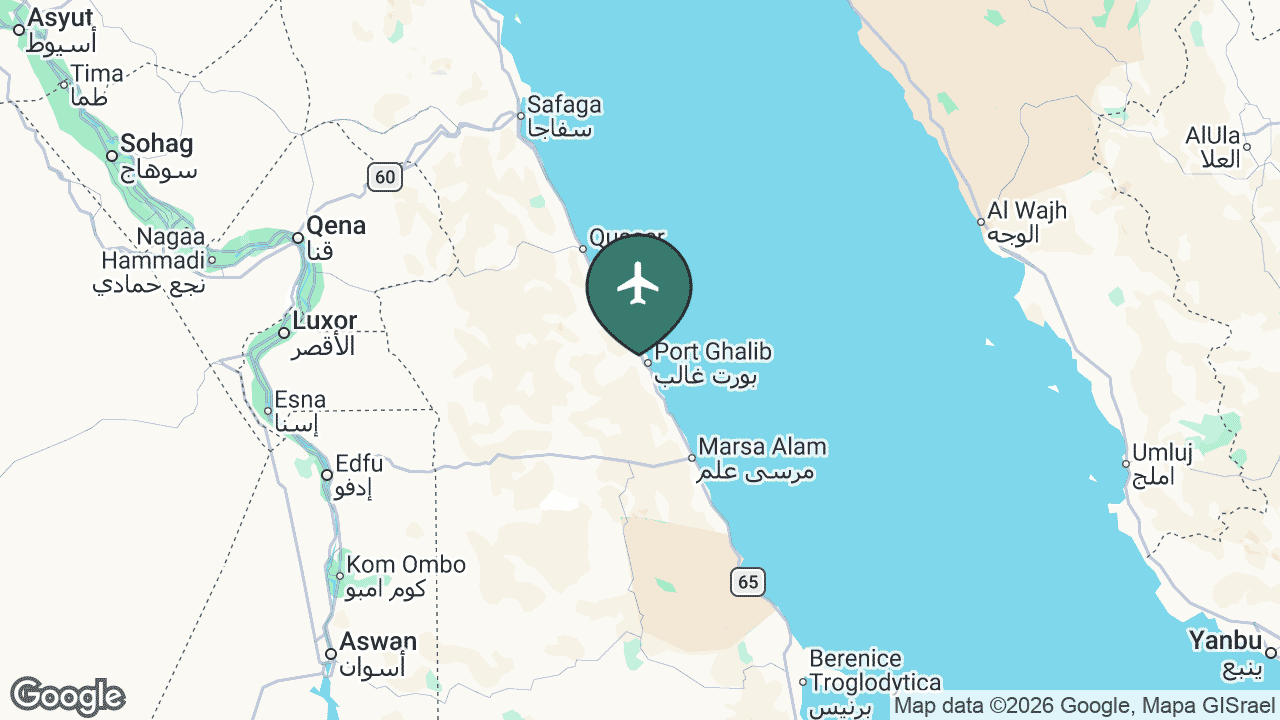
Marsa Alam International Airport opened in 2003 as a privately built airport on the southern Red Sea coast, well south of Hurghada, to open up a quieter stretch of diving and beach resorts. It is essentially a pure leisure airport — built for, and sustained by, international holiday charters.
Serving the southern Red Sea coast, RMF reaches about 37 regularly-served nonstop destinations, almost all of them seasonal European leisure routes, led by Italian, German and central-European tour operators.
Main airlines: Air Cairo, Neos, TUI fly, Smartwings, easyJet, Eurowings. See the full route map for RMF on AirportRoutes →
🛬 Sphinx (SPX)
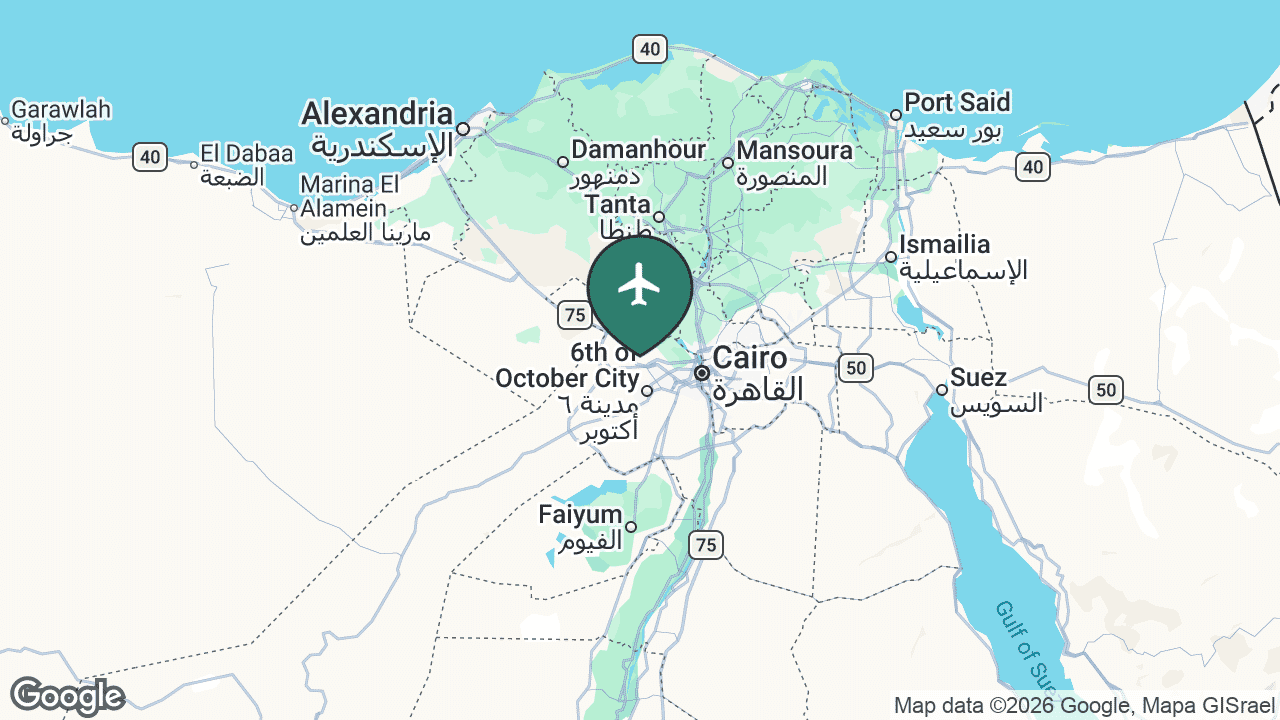
Sphinx International Airport opened in 2019 on the western edge of Greater Cairo, near 6th of October City and within reach of the Giza pyramids — hence the name. It was developed as a relief airport for the congested main Cairo hub and as a low-cost gateway for visitors heading straight to the pyramids and the new Grand Egyptian Museum.
Serving western Cairo and Giza, SPX reaches around 19 regularly-served nonstop destinations. Its traffic skews heavily towards low-cost and Gulf carriers running point-to-point routes that bypass the main Cairo terminals.
Main airlines: Wizz Air, easyJet, Flynas, Pegasus, flydubai, Jazeera Airways. See the full route map for SPX on AirportRoutes →
🏛️ Luxor (LXR)
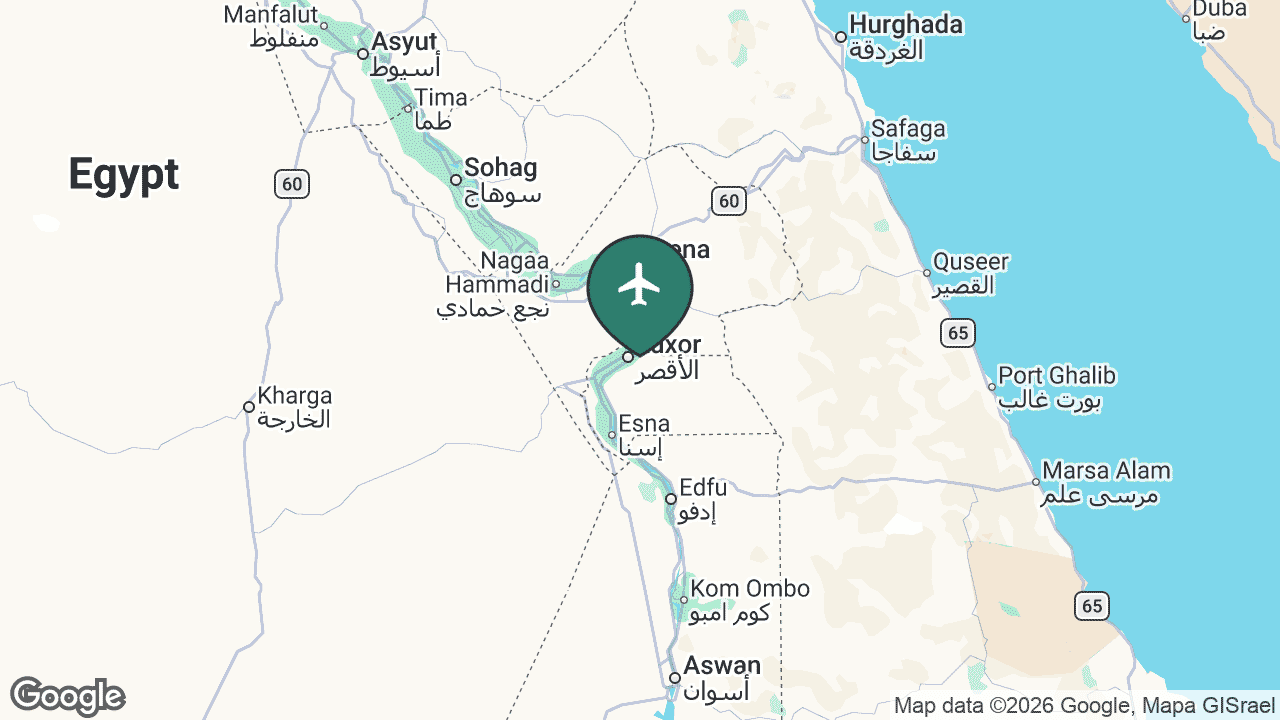
Luxor International Airport lies a few kilometres east of the Nile-side city of Luxor, the gateway to ancient Thebes — the Valley of the Kings, Karnak and Luxor Temple. It is the main air entry point for Upper Egypt’s temple circuit and Nile cruise tourism, mixing domestic links to Cairo with seasonal international charters.
Serving Luxor and the surrounding Nile valley, LXR reaches about 14 regularly-served nonstop destinations, a blend of EgyptAir domestic flights and European leisure routes that rise and fall with the tourist season.
Main airlines: Air Cairo, Neos, EgyptAir, Nesma Airlines, easyJet, Nile Air. See the full route map for LXR on AirportRoutes →
🏙️ Borg El Arab (Alexandria) (HBE)
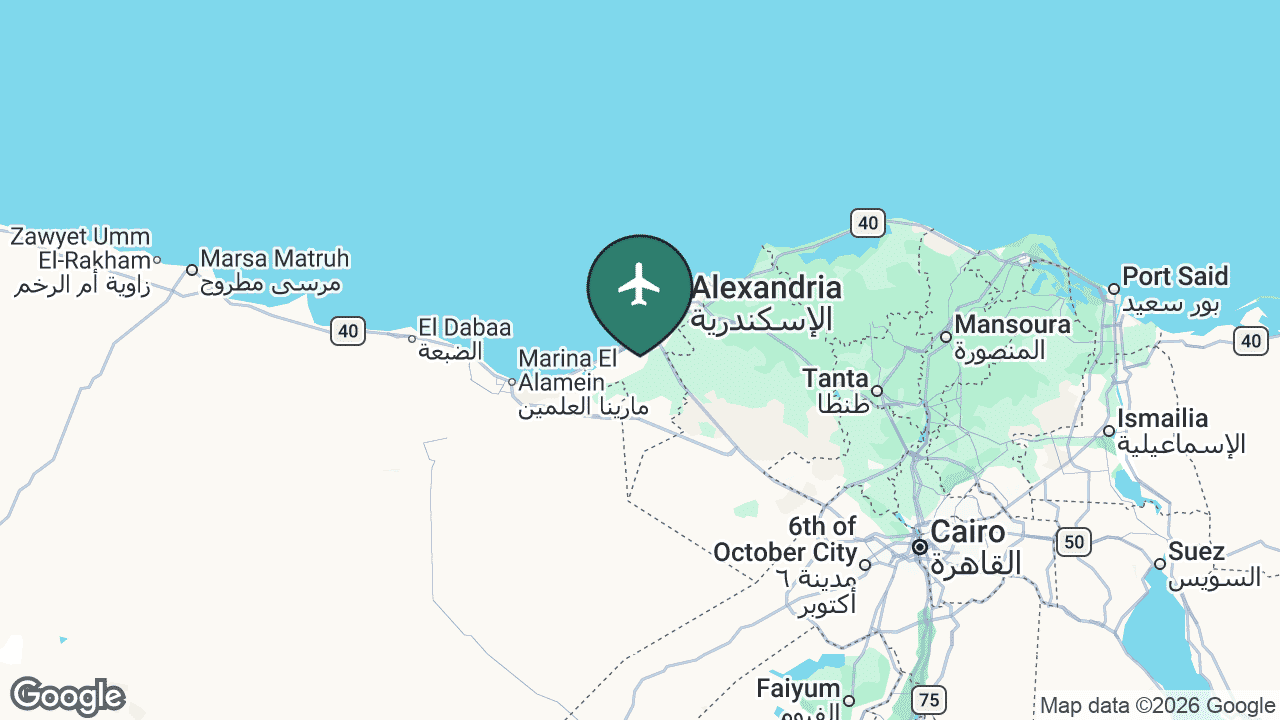
Borg El Arab Airport sits about 40 km southwest of Alexandria and is the main airport serving Egypt’s second city, having taken over from the older, more central Alexandria (El Nouzha) airport, which has been closed for redevelopment. A modern terminal handles EgyptAir domestic and international flights together with Gulf carriers serving the large Egyptian workforce in Saudi Arabia and the Gulf states.
In our route sample Borg El Arab comes out at the bottom of the table, but that is a quirk of the data rather than reality — the sample simply under-counts it. In practice it is one of Egypt’s more important regional airports, with scheduled service to Cairo and a range of Gulf and regional destinations.
Main airlines: EgyptAir and Gulf low-cost and regional carriers. See the full route map for HBE on AirportRoutes →
⛵ Aswan (ASW)
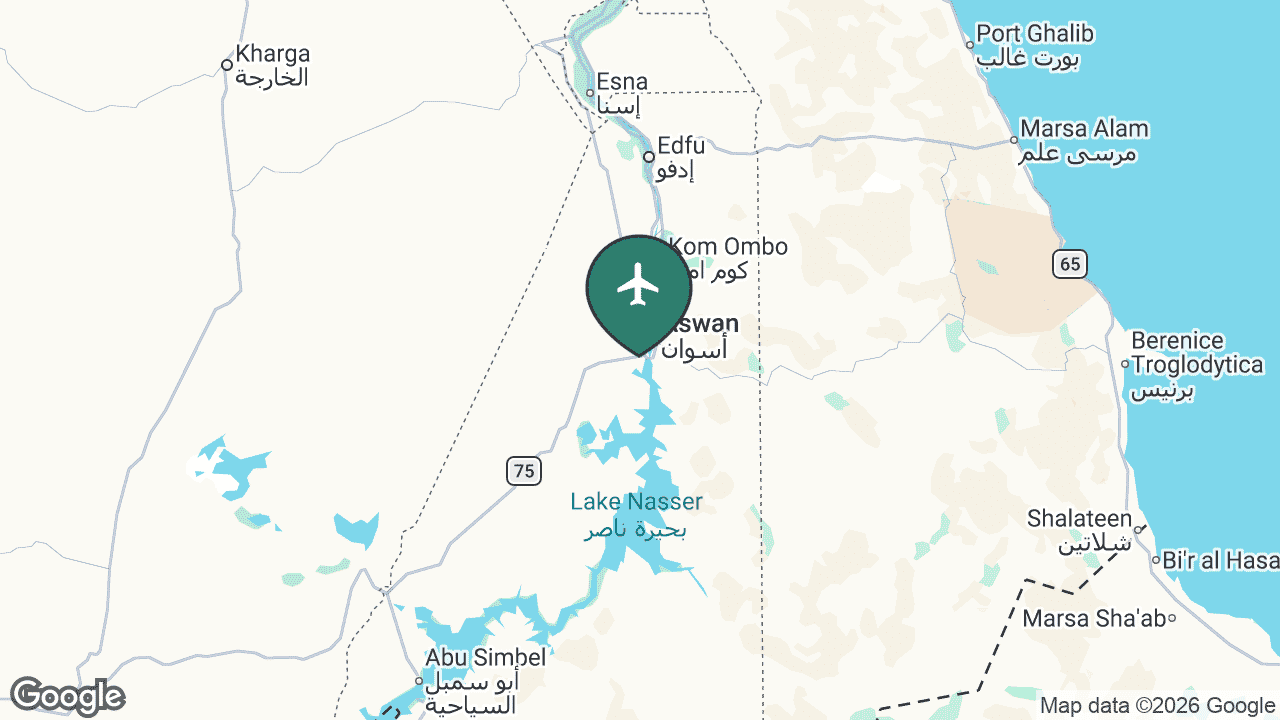
Aswan International Airport serves the southern Nile city of Aswan, gateway to the Philae temples, the Aswan High Dam and the Nubian stretch of the river. It is a key node in EgyptAir’s domestic network and a jumping-off point for visitors continuing south to Abu Simbel.
Serving Aswan and the southern Nile valley, ASW reaches a smaller set of regularly-served destinations — chiefly EgyptAir domestic links to Cairo and Luxor, supplemented by seasonal flights tied to the Nile cruise and temple-tour trade.
Main airlines: EgyptAir, Air Cairo, Nile Air, Nesma Airlines. See the full route map for ASW on AirportRoutes →
🗿 Abu Simbel (ABS)
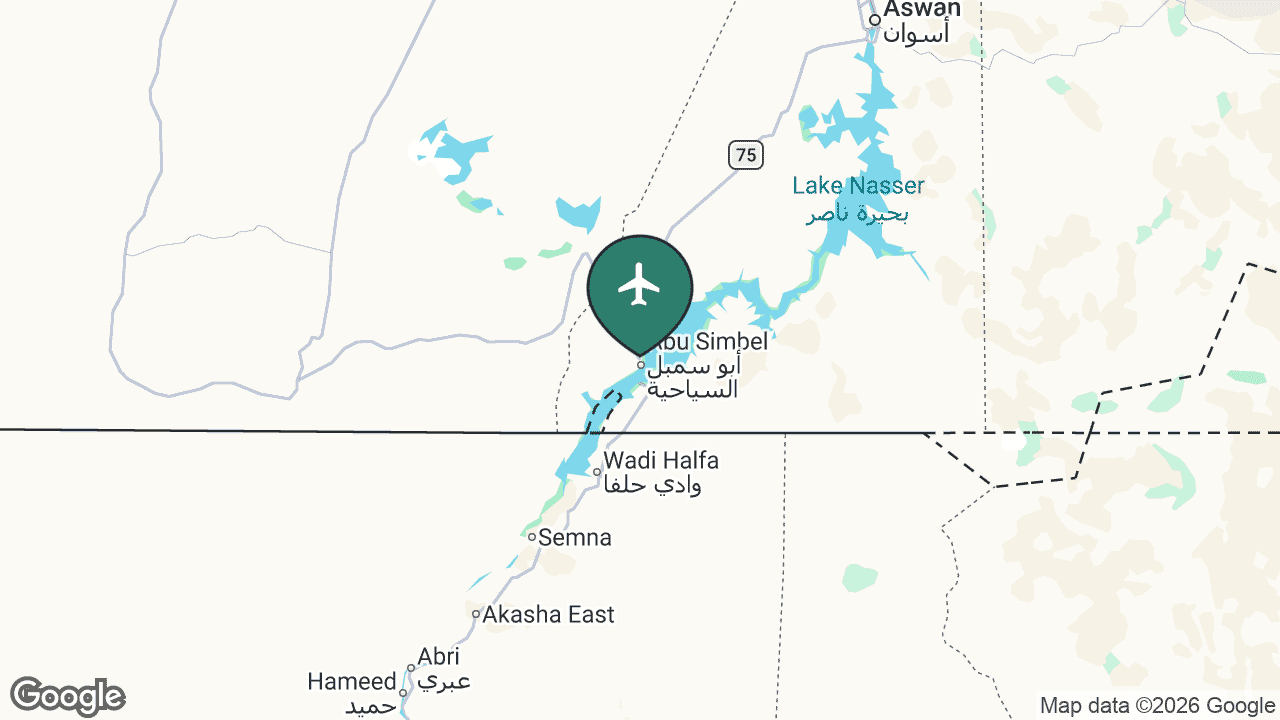
Abu Simbel Airport is a small airport in Egypt’s far south, near the Sudanese border, built almost entirely to serve the magnificent rock-cut temples of Ramesses II at Abu Simbel — relocated stone by stone in the 1960s to escape the rising waters of Lake Nasser. Most visitors arrive on short EgyptAir hops, often as day trips from Aswan or Cairo timed around the temple opening hours.
It is the smallest airport in this ranking by regularly-served routes — essentially a single tourist lifeline rather than a commercial hub — but its place on the map reflects just how much of Egypt’s aviation network is shaped by ancient monuments.
Main airlines: EgyptAir. See the full route map for ABS on AirportRoutes →
Egypt’s other regional airports
Beyond the busiest few, Egypt has a handful of regional airports that mix labour-migration routes to the Gulf with seasonal leisure traffic. Several barely register in the route sample yet carry real scheduled service.
Asyut (ATZ) in Upper Egypt is a notable case — it ranks alongside Luxor by regularly-served routes thanks to a busy network of low-cost flights to Saudi Arabia, Kuwait and the wider Gulf, carrying workers and pilgrims rather than tourists, on carriers such as Air Arabia, flynas, Jazeera Airways and flyadeal. Sohag (HMB), further up the Nile, plays a similar role, with EgyptAir and Gulf low-cost flights to Jeddah, Riyadh and Kuwait that the sample under-counts.
On the Mediterranean, El Alamein (DBB) serves the fast-growing new city and resort coast west of Alexandria, with summer leisure flights and Gulf links from Saudia, flynas and others, while Marsa Matruh (MUH) is a largely summer-only gateway to the north-west coast’s beaches, busiest in the holiday months and quiet the rest of the year. Together these airports show how Egypt’s network is pulled between three forces — the Cairo hub, Red Sea and Mediterranean tourism, and the steady flow of workers between Upper Egypt and the Gulf.
Airport rankings, nonstop-destination counts, served regions, airline lists and US connections are drawn from live AirportRoutes route data (observed AeroAPI flight data — a sample, not a complete published schedule; we use the regularly-served figure, which filters one-off observations, and note where it under-counts an airport). Airport history and notable facts are cross-checked against the cited references. The ranked map is a Mappr original.
Primary Data Source:
- AirportRoutes — Major airports & routes, Egypt – Live route data: per-airport nonstop destinations, served cities, airlines and US connections.
Reference:
- Wikipedia — Egyptian airports (Cairo, Hurghada, Sharm El Sheikh & others) – Airport history, location and notable facts referenced in the per-airport sections.
- Egyptian Civil Aviation Authority – Egypt's civil aviation authority — background on the national airport network.
- Locator maps — Google Maps / Google Static Maps – Per-airport location maps with airplane markers, generated via Google Static Maps.
Image Sources:
- Map by Mappr – Map of major airports in Egypt — a Mappr original built from AirportRoutes data and Natural Earth boundaries.
🌍 More maps & data for Egypt
Browse more: All airports by country


