
Key Takeaways
- Santa Cruz leads, La Paz close behind. Viru Viru International in Santa Cruz (VVI) is Bolivia's busiest airport and its main international gateway, with around 21 nonstop destinations in the route data. El Alto, serving La Paz, is the country's second airport and its altitude record-holder.
- The world's highest international airport. El Alto International Airport (LPB) sits at about 4,061 m (13,325 ft) above sea level, making it the highest international airport on Earth. The thin air at that altitude means longer runways and special high-altitude takeoff procedures.
- One nonstop link to the US. Only Santa Cruz (Viru Viru) flies nonstop to the United States, to Miami on Boliviana de Aviación. From anywhere else in Bolivia you connect through Santa Cruz, Lima, Bogotá or Panama City.
- One bridge to Europe. Santa Cruz also holds Bolivia's only nonstop flight to Europe: Air Europa's service to Madrid. La Paz and Cochabamba reach the wider world through regional hubs rather than direct long-haul flights.
- Famous tourist airports sit off the list. Bolivia's best-known travel gateways, the Uyuni salt flats (UYU) and the Amazon town of Rurrenabaque (RBQ), run domestic-only feeder flights, so they fall outside this ranking of internationally-connected airports.
Bolivia is a country of dramatic extremes, and its airports reflect that. The western half climbs into the high Andes, home to La Paz and the world’s highest international airport, while the eastern lowlands open onto the Amazon and the tropical plains around Santa Cruz. Air travel matters here: the terrain is rugged, distances are long, and for many journeys flying is far quicker than the winding mountain roads. In all, nine Bolivian airports show regular scheduled passenger service in the route data.
Below we map and rank those airports by the number of nonstop destinations each one serves, drawn from live route data on AirportRoutes. Because the figures come from observed flight data, a large sample rather than a complete published timetable, we treat them as a strong guide to relative connectivity rather than exact official totals. Bolivia’s network is small and heavily domestic, so two cities, Santa Cruz and La Paz, stand well ahead of the rest.
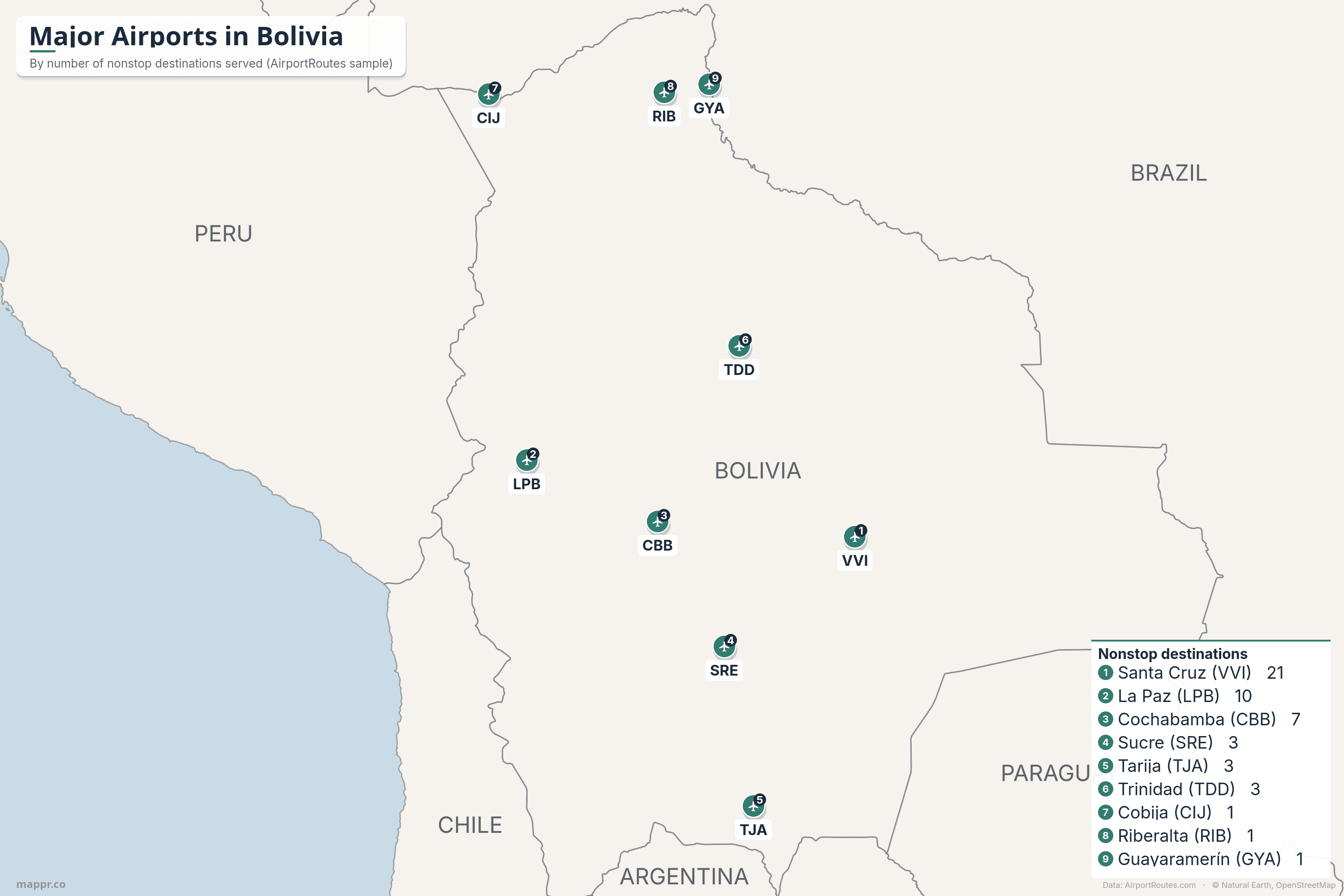
Which Bolivian airports have direct flights to the US?
Just one. Santa Cruz‘s Viru Viru International Airport (VVI) is the only airport in Bolivia with a nonstop flight to the United States: the route to Miami, flown by the national carrier Boliviana de Aviación (BoA). It is also Bolivia’s single link to Europe, with Air Europa flying to Madrid. That makes Santa Cruz, in the eastern lowlands rather than the Andean capital region, the country’s effective intercontinental gateway.
From everywhere else, reaching the United States means connecting. La Paz, Cochabamba and the rest funnel passengers through Santa Cruz, or through foreign hubs such as Lima, Bogotá and Panama City, where Copa offers convenient one-stop routings on to dozens of US airports. The result is a network where international long-haul is concentrated almost entirely at a single airport, while the others handle a busy web of domestic and regional flights.
Ranked
Major Airports in Bolivia by Nonstop Destinations
Ranked by nonstop destinations served, busiest first.
| Airport | IATA | Nonstop | City / Area |
|---|---|---|---|
| 1. Santa Cruz | VVI | 21 | Santa Cruz |
| 2. La Paz | LPB | 10 | La Paz / El Alto |
| 3. Cochabamba | CBB | 7 | Cochabamba |
| 4. Sucre | SRE | 3 | Sucre |
| 5. Tarija | TJA | 3 | Tarija |
| 6. Trinidad | TDD | 3 | Trinidad (Beni) |
| 7. Cobija | CIJ | 1 | Cobija (Pando) |
| 8. Riberalta | RIB | 1 | Riberalta (Beni) |
| 9. Guayaramerín | GYA | 1 | Guayaramerín (Beni) |
A closer look at Bolivia’s airports
✈️ Santa Cruz (VVI)
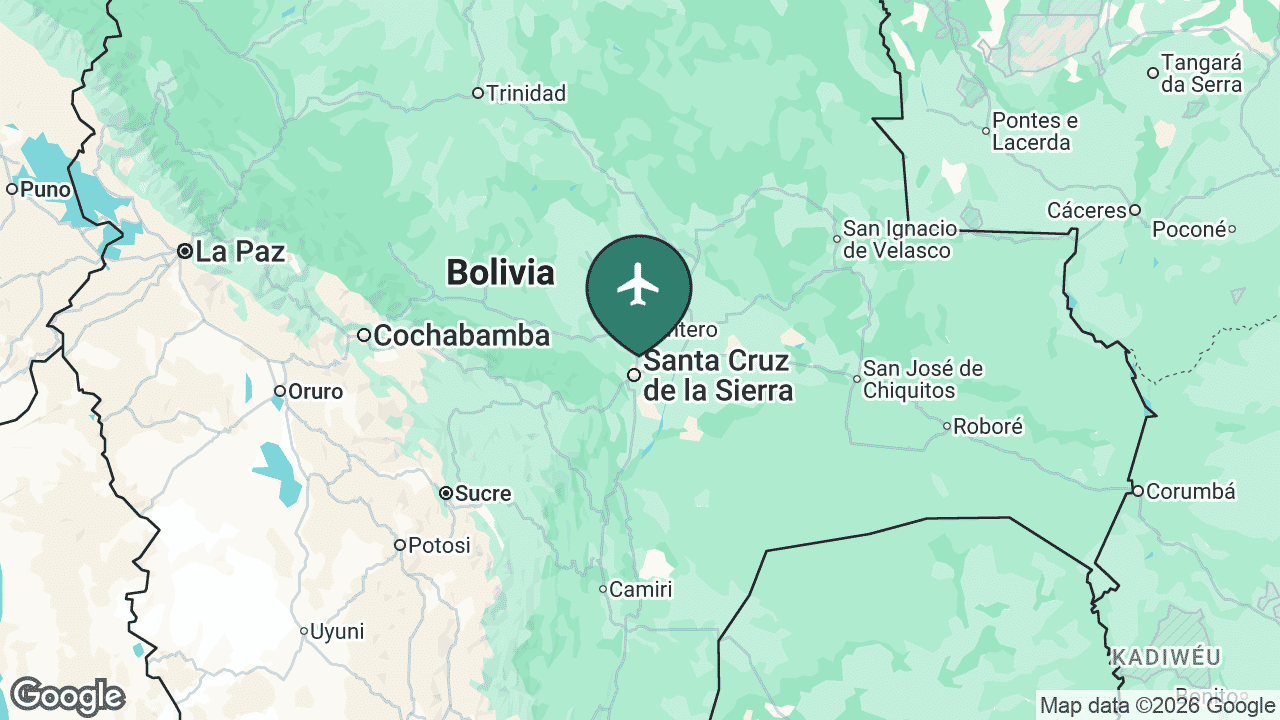
Viru Viru International Airport opened in 1983 about 17 km north of Santa Cruz de la Sierra, the booming eastern lowland city that has become Bolivia’s largest and its economic engine. Sitting at only around 370 m above sea level, it can handle the heavy wide-body aircraft that the high-altitude airports of the Andes struggle with, which is a big part of why it carries Bolivia’s long-haul flights. It replaced the old in-city El Trompillo field as the city’s main gateway and is the principal hub of Boliviana de Aviación.
With around 21 nonstop destinations in the data, Viru Viru has by far the widest network in the country. It is Bolivia’s only airport with nonstop service to the United States (Miami) and to Europe (Madrid, on Air Europa), and it adds regional links to Buenos Aires, São Paulo, Lima, Bogotá and Panama City alongside a full domestic spread.
Main airlines: Boliviana de Aviación, EcoJet, LATAM, Copa Airlines, Avianca, plus seasonal long-haul on Air Europa. See the full route map for VVI on AirportRoutes →
🏔️ La Paz (LPB)
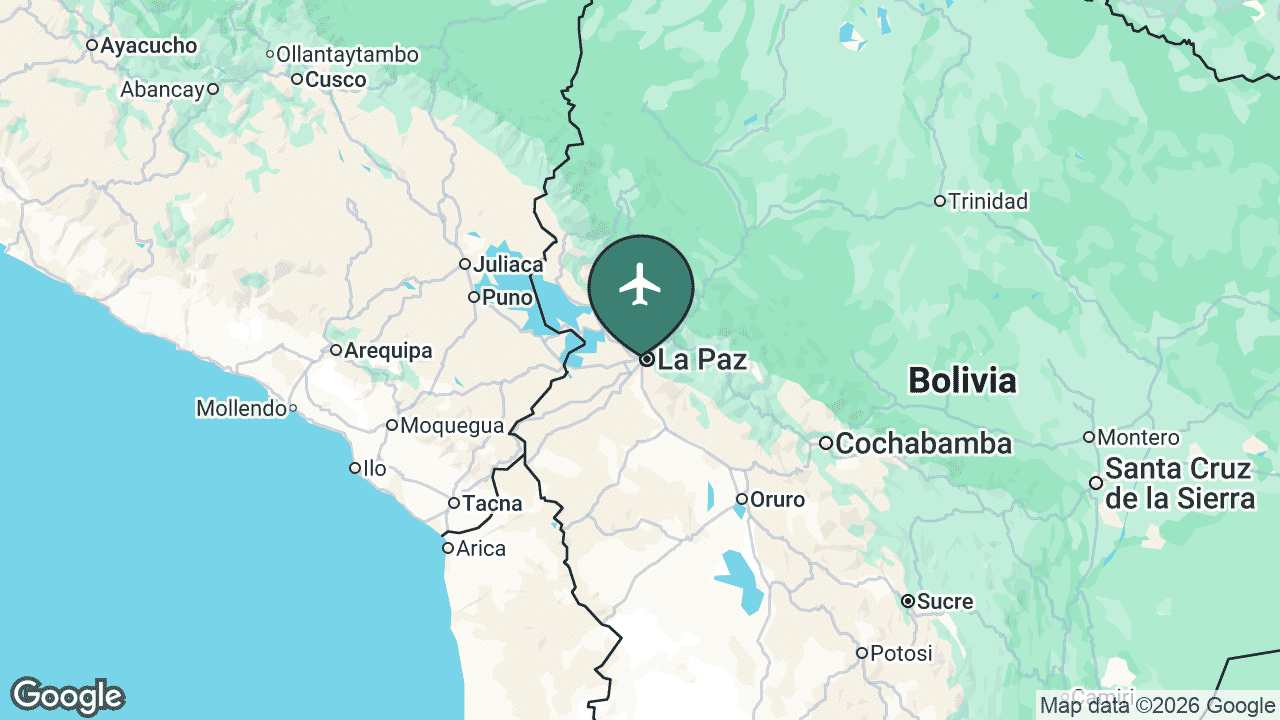
El Alto International Airport is the highest international airport in the world, perched at roughly 4,061 m (13,325 ft) on the altiplano above La Paz, in the sprawling city of El Alto. The altitude shapes everything about flying here: the thin air reduces engine and wing performance, so aircraft need long takeoff rolls and careful weight planning, and the runway is one of the longest in South America to compensate. Passengers often feel the elevation the moment they step off the plane.
El Alto serves La Paz, Bolivia’s seat of government, and is the country’s second-busiest airport with about 10 nonstop destinations. Its international flights run mostly to neighbouring Andean countries, with services to Lima, Cusco and Bogotá, while a dense domestic network reaches Santa Cruz, Cochabamba, Cobija, Uyuni and Rurrenabaque. There are no nonstop US flights from La Paz; travelers connect through Santa Cruz, Lima, Bogotá or Panama City.
Main airlines: Boliviana de Aviación, EcoJet, Avianca, LATAM. See the full route map for LPB on AirportRoutes →
🛌 Cochabamba (CBB)
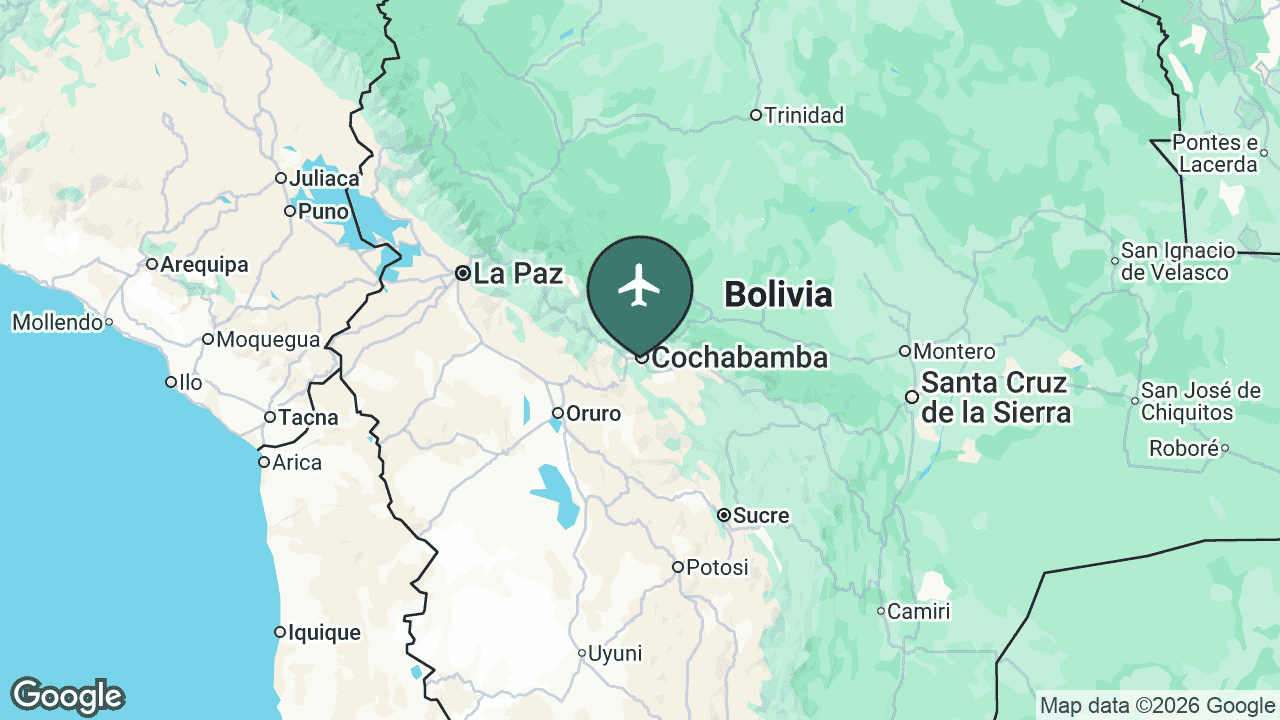
Jorge Wilstermann International Airport serves Cochabamba, the temperate valley city at the heart of the country, and is named after a pioneering Bolivian aviator. At about 2,548 m it is another genuinely high-altitude airport, though far below La Paz. Its central position makes it a natural domestic crossroads between the Andean west and the lowland east, and it was historically a maintenance and operations base for the national carrier.
Cochabamba reaches around 7 nonstop destinations in the data, almost all of them domestic: Santa Cruz, La Paz, Tarija, Sucre, Oruro, Trinidad and Rurrenabaque. That makes it Bolivia’s busy internal hub even though it carries little scheduled international traffic of its own.
Main airlines: Boliviana de Aviación, EcoJet. See the full route map for CBB on AirportRoutes →
🏛️ Sucre (SRE)
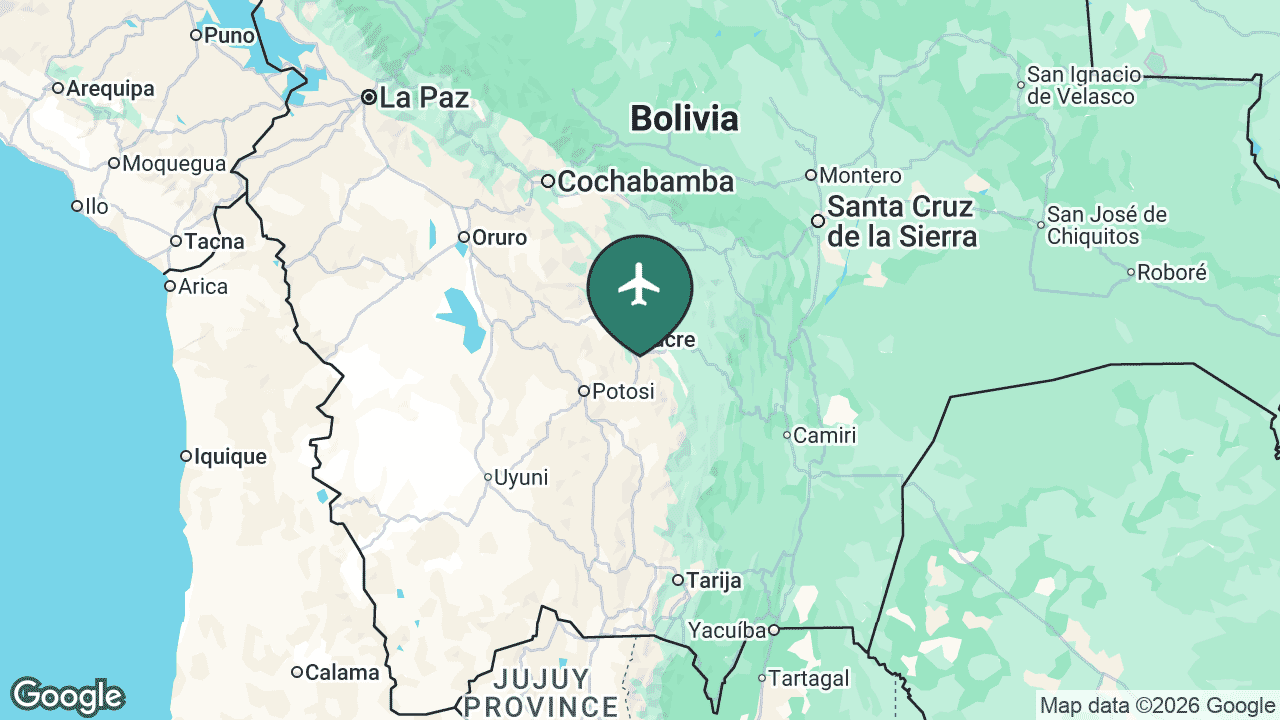
Alcantarí Airport serves Sucre, Bolivia’s constitutional capital and a UNESCO World Heritage city famed for its whitewashed colonial centre. It opened on 15 May 2016, about 30 km from the city on a high plateau, replacing the cramped old Juana Azurduy de Padilla airport whose short runway and tight, mountain-ringed approach had long limited the kinds of aircraft that could serve the city.
Sitting high in the southern Andes, Alcantarí runs a compact, fully domestic schedule, with around 3 nonstop destinations linking Sucre to Cochabamba, Santa Cruz and La Paz. It is the air bridge between the historic capital and the rest of the country.
Main airlines: Boliviana de Aviación. See the full route map for SRE on AirportRoutes →
🍇 Tarija (TJA)
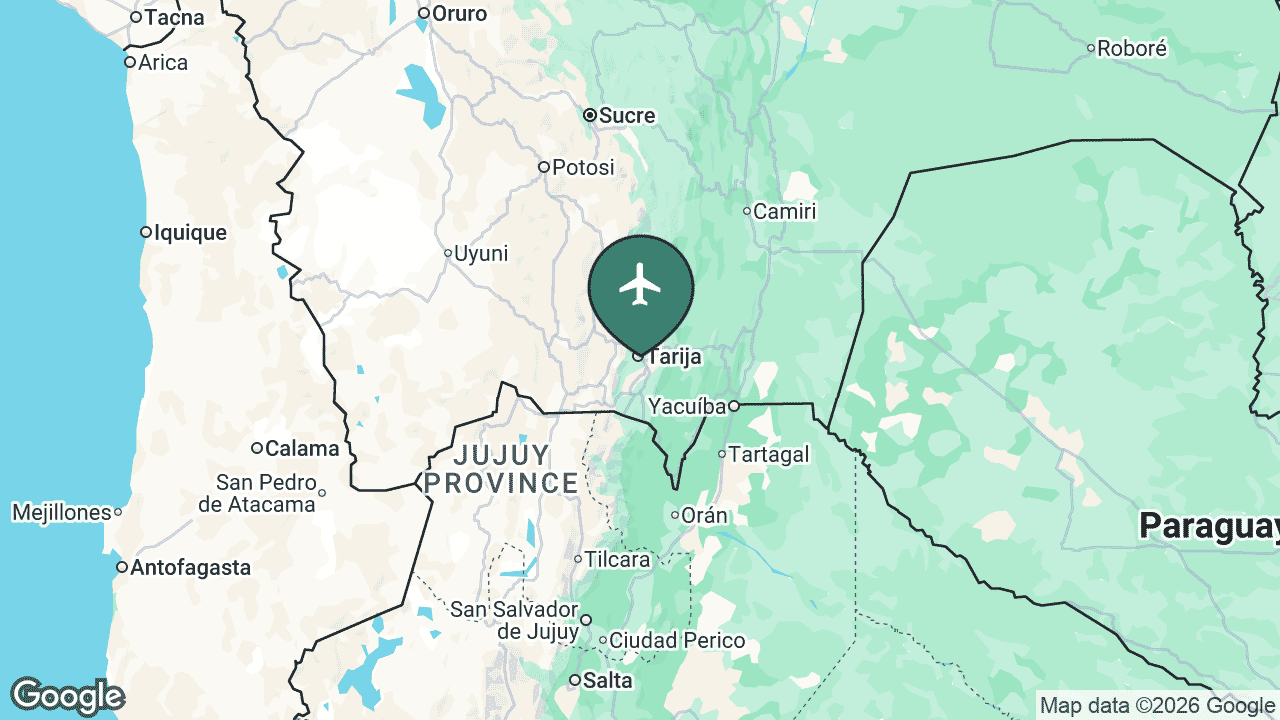
Capitán Oriel Lea Plaza Airport serves Tarija, the warm, vine-growing city of southern Bolivia close to the Argentine border. The surrounding valleys are the centre of the country’s wine and singani industry, producing some of the highest-altitude vineyards on the planet, and the region’s gas fields have made it economically important too.
Tarija runs a domestic schedule of around 3 nonstop destinations, connecting to Cochabamba, Santa Cruz and La Paz. From there, passengers heading abroad pick up onward flights at the bigger hubs.
Main airlines: Boliviana de Aviación. See the full route map for TJA on AirportRoutes →
🐊 Trinidad (TDD)
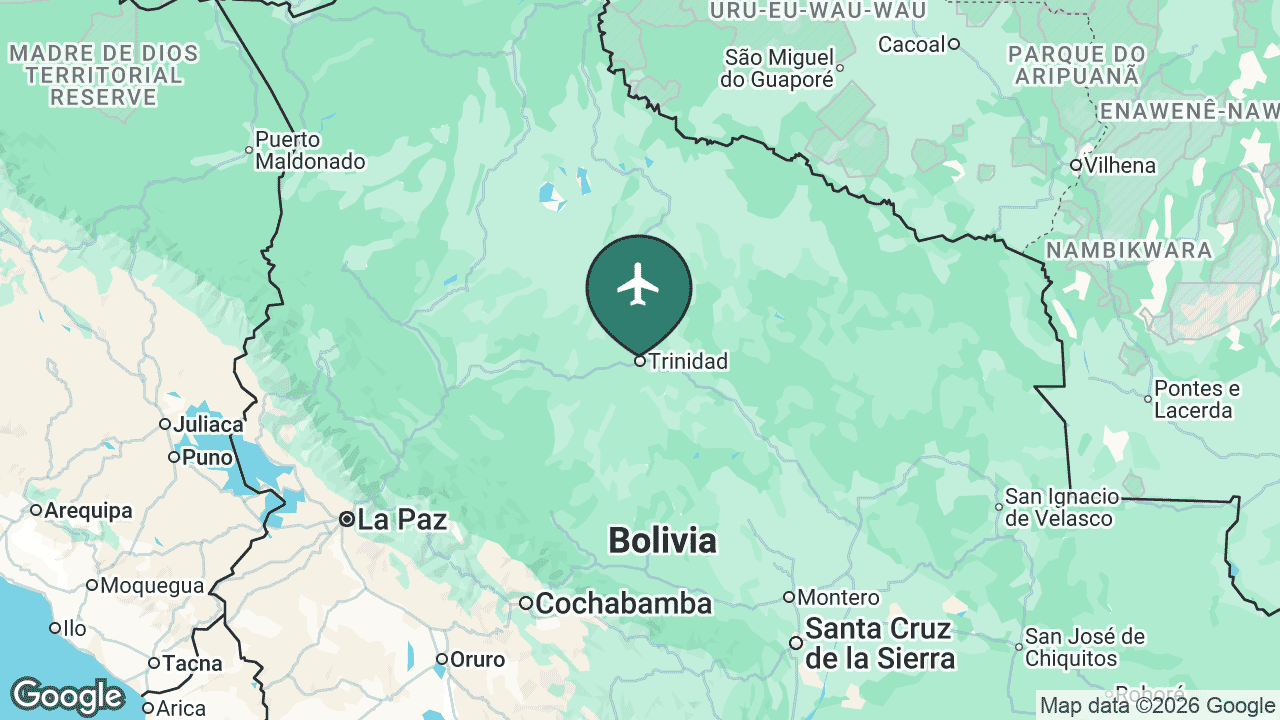
Teniente Jorge Henrich Arauz Airport serves Trinidad, the capital of the vast, flat Beni department in Bolivia’s tropical northeast. This is cattle-ranching and wetland country, the Llanos de Moxos, where rivers and seasonal floods make air links especially valuable for reaching otherwise isolated Amazonian towns.
Trinidad acts as a regional hub for the Beni lowlands, with around 3 nonstop destinations in the data, including Santa Cruz, Cochabamba and the northern Amazon town of Riberalta. Its service is entirely domestic, flown by Bolivia’s local carriers.
Main airlines: Boliviana de Aviación, EcoJet. See the full route map for TDD on AirportRoutes →
What about Uyuni and the salt flats?
Some of Bolivia’s most iconic destinations do not appear in the ranking above, and not because they lack airports. The biggest is Uyuni (UYU), the gateway to the Salar de Uyuni, the largest salt flat in the world and one of South America’s signature sights. Its airport, Joya Andina, handles scheduled domestic flights from La Paz and Santa Cruz but no international service, so it sits outside this list of internationally-connected airports even though it is one of the country’s busiest tourist gateways.
The same is true of Rurrenabaque (RBQ), the small jungle airstrip that is the jumping-off point for Madidi National Park and the Amazon pampas, and of Oruro (ORU), home to the UNESCO-listed Carnival of Oruro. These airports run domestic-only flights, usually from La Paz, Cochabamba or Santa Cruz. Because they connect to the wider world only through the main hubs, they fall below the threshold of regular international service that defines the major airports mapped here.
Bolivia’s other airports
Three more airports round out Bolivia’s scheduled network, all in the remote northern Amazon and each running just a single regular route in the data. Cobija (CIJ), the capital of Pando department, sits right on the Brazilian border and is linked by air to La Paz. Riberalta (RIB) and Guayaramerín (GYA), both in northern Beni, connect to the regional hub at Trinidad; Guayaramerín faces the Brazilian town of Guajará-Mirim across the Mamoré River. For these isolated communities, the airstrip is a vital link where roads are slow or seasonal.
Santa Cruz also keeps its original in-city airport, El Trompillo (SRZ), which now handles general aviation, regional turboprops and military flights rather than the main commercial services that moved to Viru Viru. Together with a scattering of small fields across the lowlands and highlands, these airports fill in the gaps of a country where flying is often the only practical way to travel.
Airport rankings, nonstop-destination counts, served cities, airline lists and US/international connections are drawn from live AirportRoutes route data (observed flight data, a sample rather than a complete published schedule). Airport history, elevation and notable facts are cross-checked against the cited references. The map is a Mappr original.
Primary Data Source:
- AirportRoutes: major airports & routes, Bolivia – Live route data: per-airport nonstop destinations, served cities, airlines and US/international connections.
Reference:
- Wikipedia: Viru Viru, El Alto, Jorge Wilstermann, Alcantarí and other Bolivian airports – Airport elevation, history, opening dates and notable facts referenced in the per-airport sections.
- Locator maps: Google Maps / Google Static Maps – Per-airport location maps with airplane markers, generated via Google Static Maps.
Image Sources:
- Map by Mappr – Map of major airports in Bolivia, a Mappr original built from AirportRoutes data and Natural Earth boundaries.
🌍 More maps & data for Bolivia
Browse more: All airports by country


