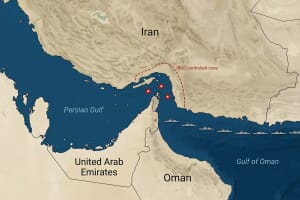
The Quick Answer (October 23, 2026)
- Yes, Dubai and Abu Dhabi airports are open and operating. No attacks have hit UAE territory. US embassy security alerts explicitly list DXB and AUH as operational, and Emirates and Etihad are flying their long-haul networks.
- But the advisories say caution, and some regional flights are cancelled. The US has the UAE at Level 3 (Reconsider Travel); the UK does not advise against travel but warns of short-notice disruption. Cancellations center on Bahrain, Kuwait and Saudi routes.
- Expect longer flights and tight-connection risk. Airlines are routing around Iranian airspace, adding time to Europe-Asia itineraries. Avoid sub-2-hour connections onto regional Gulf sectors.
- The situation moves fast; recheck the day you fly. This page reflects October 23. Check your airline's alerts and your government's advisory before departure; conditions this month have changed on hours' notice.
With missiles hitting Riyadh’s airport and ships under attack in the Strait of Hormuz, the question filling search bars and group chats: is it still safe to fly through Dubai or Abu Dhabi? Here is the factual picture, kept current, with sources you can check yourself.
Is Dubai Airport (DXB) Open?
Yes. Dubai International is operating, listed as operational in the latest US embassy security alert (October 18). Emirates is flying its long-haul network normally; its cancellations are concentrated on short regional routes to Bahrain and Kuwait, plus reduced service to Saudi cities while Riyadh’s King Khalid International operates only partially after the October 10 attack.
Is Abu Dhabi Airport (AUH) Open?
Yes. Zayed International is operating on the same basis: Etihad’s long-haul network is running, with cancellations on the same regional pairs (Bahrain, Kuwait, Saudi destinations). No attack has struck Abu Dhabi or any UAE territory in this escalation.
What the Official Advisories Say
Advisories
Government travel advice for the UAE
As of October 23, 2026. Always recheck your own government’s advisory before flying.
| Authority | Level | Updated | In short |
|---|---|---|---|
| 🇺🇸 US State Department | Level 3 | Oct 18 | Reconsider travel: possible short-notice airspace closures and disruptions |
| 🇬🇧 UK FCDO | No advisory against | Oct 21 | Does not advise against travel; warns of unpredictable conditions and cancellations |
Why Flights Are Longer Right Now
Airlines are avoiding Iranian airspace where operationally necessary, pushing Europe-Asia routings south and adding flight time to connections through the Gulf. Combined with the regional cancellations, the practical risks for passengers are missed tight connections and schedule changes, not security incidents at the hubs themselves.
The Bigger Picture: What’s Actually Happening
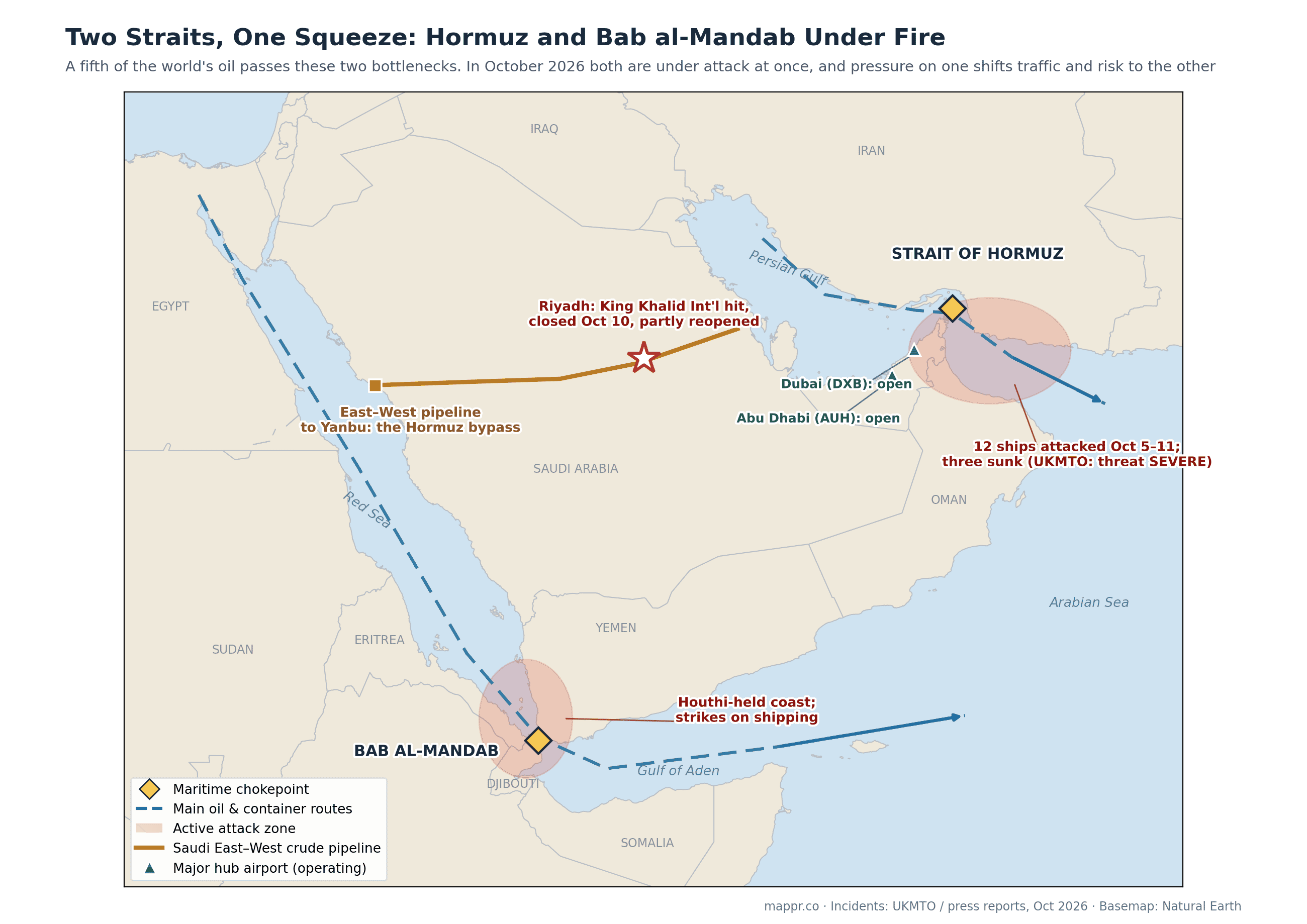
The violence is concentrated on shipping at the two maritime chokepoints (twelve vessels attacked near Hormuz October 5-11, three sunk) and on Saudi targets, where Houthi missiles reached Riyadh’s airport. The UAE has not been struck. For the full geography (the attack zones, the oil routes, the pipeline workaround) see our companion map: Two Straits, One Squeeze, and our running Strait of Hormuz crisis tracker.
Practical Checklist Before You Fly
✅ Turn on your airline’s app notifications: schedule changes are coming at short notice.
✅ Book or rebook connections of 3+ hours through DXB/AUH this month.
✅ Avoid itineraries connecting onward to Bahrain, Kuwait or Saudi cities unless essential.
✅ Recheck your government’s advisory and this page the day you fly.
✅ Travel insurance: confirm whether “travel against advisory” voids your cover (relevant for US Level 3).
This page is informational, not travel advice; conditions can change faster than any page. Last reviewed October 23, 2026.