
Thailand is one of Asia’s largest aviation markets, and almost all of its long-haul and regional traffic flows through a handful of gateways. Bangkok alone runs two major airports, while the resort islands of the south and the cultural north add several more that punch well above their size. In total, around 30 Thai airports currently have scheduled passenger service.
✈️ See also: Most Active Airlines in Thailand — which carriers fly the most routes from Thailand, mapped.
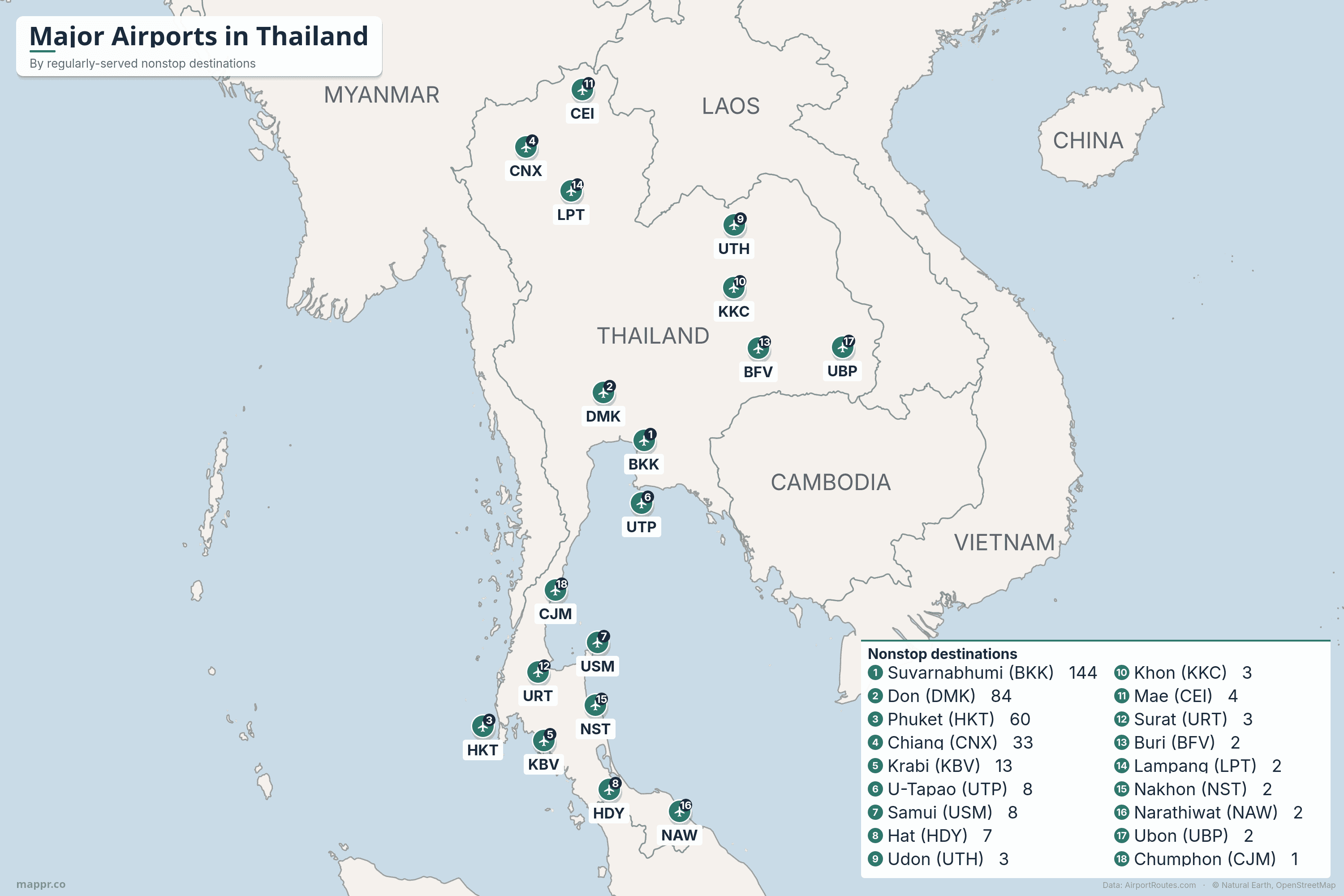
Using live route data from AirportRoutes.com, this guide ranks Thailand’s airports by the number of regularly-served nonstop destinations — routes that operate often enough to count as a real, bookable schedule rather than a one-off charter. The drop-off is steep: the top four airports handle the overwhelming majority of the country’s routes.
Key Takeaways
- Bangkok is a two-airport city. Suvarnabhumi (BKK) handles full-service and long-haul carriers, while Don Mueang (DMK) is the low-cost hub for Thai AirAsia, Thai Lion Air and Nok Air. The two are about 35 km apart with no airside connection.
- Phuket is the second international gateway. Phuket International (HKT) serves around 60 regularly-scheduled nonstop destinations, driven by resort demand from Russia, India, the Gulf states and China.
- Thirty airports, but a steep drop-off. Thailand has roughly 30 airports with scheduled service, yet the top four — BKK, DMK, HKT and Chiang Mai — account for the vast majority of routes. Most provincial fields see only one or two.
- Suvarnabhumi dwarfs everything else. BKK alone serves about 144 regularly-scheduled nonstop destinations — more than every other Thai airport combined.
- No direct flights to the United States. There are no nonstop passenger routes between Thailand and the US. Travellers connect through hubs in East Asia, the Gulf or Europe.
Ranked by destinations
Thailand’s busiest airports
By number of regularly-served nonstop destinations (routes flown at least three times in the observed sample). Counts come from observed route data, not a full published schedule.
| Airport | IATA | Nonstop | City |
|---|---|---|---|
| 1. Suvarnabhumi | BKK | 144 | Bangkok |
| 2. Don Mueang | DMK | 84 | Bangkok |
| 3. Phuket | HKT | 60 | Phuket |
| 4. Chiang Mai | CNX | 33 | Chiang Mai |
| 5. Krabi | KBV | 13 | Krabi |
| 6. U-Tapao | UTP | 8 | Rayong / Pattaya |
| 7. Samui | USM | 8 | Ko Samui |
| 8. Hat Yai | HDY | 7 | Hat Yai / Songkhla |
| 9. Mae Fah Luang–Chiang Rai | CEI | 4 | Chiang Rai |
| 10. Udon Thani | UTH | 3 | Udon Thani |
| 11. Khon Kaen | KKC | 3 | Khon Kaen |
| 12. Surat Thani | URT | 3 | Surat Thani |
| 13. Buri Ram | BFV | 2 | Buri Ram |
| 14. Lampang | LPT | 2 | Lampang |
| 15. Nakhon Si Thammarat | NST | 2 | Nakhon Si Thammarat |
| 16. Narathiwat | NAW | 2 | Narathiwat |
| 17. Ubon Ratchathani | UBP | 2 | Ubon Ratchathani |
| 18. Chumphon | CJM | 1 | Chumphon |
1. Suvarnabhumi Airport (BKK)
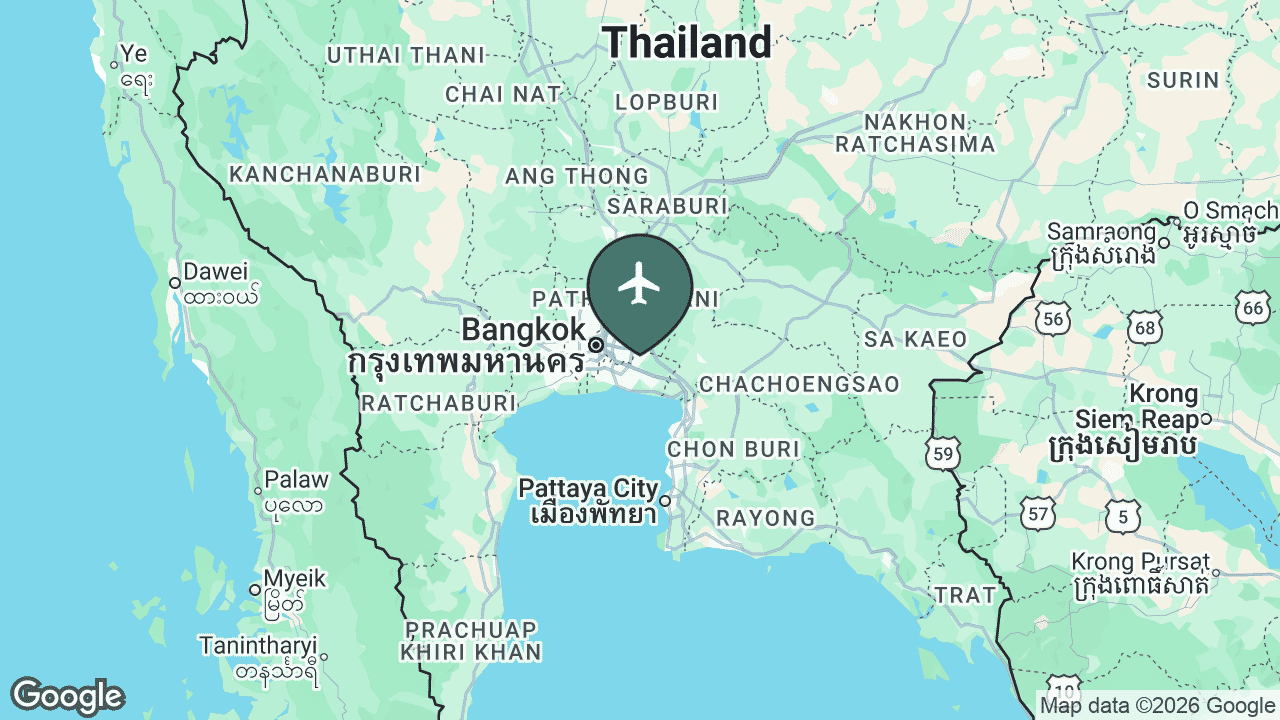
Suvarnabhumi, about 25 km east of central Bangkok, is Thailand’s flagship international airport and one of Southeast Asia’s busiest. Opened in 2006, it is the long-haul gateway to the country and the main hub for Thai Airways, Thai Vietjet Air and Bangkok Airways.
With roughly 144 regularly-served nonstop destinations — including around 33 intercontinental routes — it offers far more connectivity than any other Thai airport. Frequent links run to regional hubs such as Hong Kong, Kuala Lumpur, Taipei and Doha, alongside heavy domestic service to Phuket, Chiang Mai and Ko Samui and long-haul flights to Europe, the Middle East, Australia and East Asia.
2. Don Mueang International Airport (DMK)
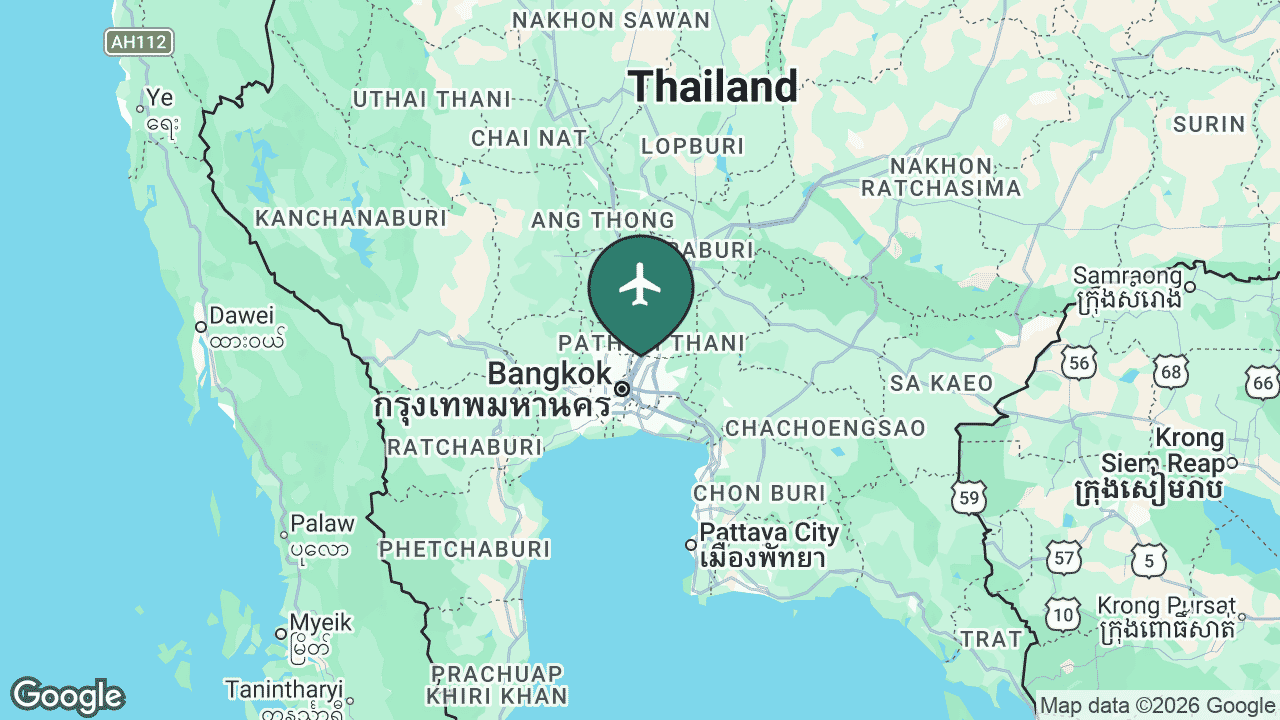
Don Mueang, north of central Bangkok, is the city’s original airport and now its dedicated low-cost hub. For several years it was one of the largest low-cost-carrier airports in the world, and it remains the home base for Thai AirAsia, Thai Lion Air, Nok Air and Thai AirAsia X.
It handles about 84 regularly-served nonstop destinations, weighted heavily toward domestic routes (around two dozen) plus short- and medium-haul international flights across Asia. There is no intercontinental service here — that all runs from Suvarnabhumi. Travellers connecting between the two airports should plan carefully: they are roughly 35 km apart with no airside link, so a switch means clearing immigration and a road transfer.
3. Phuket International Airport (HKT)
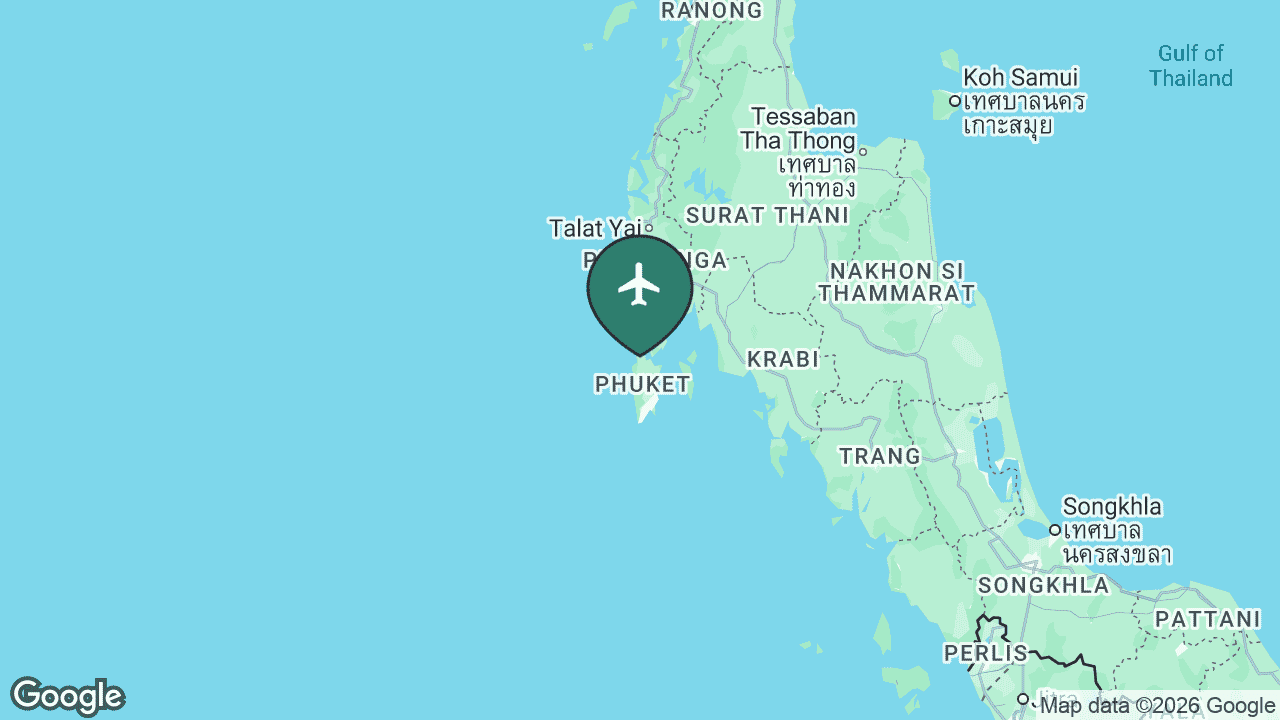
Phuket International, on the resort island’s northern tip on the Andaman coast, is Thailand’s second-busiest international gateway. It is overwhelmingly a leisure airport, and its route map reflects where Phuket’s tourists come from.
Around 60 regularly-served nonstop destinations — including some 26 intercontinental routes — connect the island directly to source markets. Russian carriers (Aeroflot, Azur Air), India’s IndiGo, Gulf hubs such as Abu Dhabi and Sharjah, and Chinese cities all feature prominently, on top of dense domestic and regional service via Bangkok, Singapore and Kuala Lumpur. Traffic is strongly seasonal, peaking in the cool, dry high season.
4. Chiang Mai International Airport (CNX)
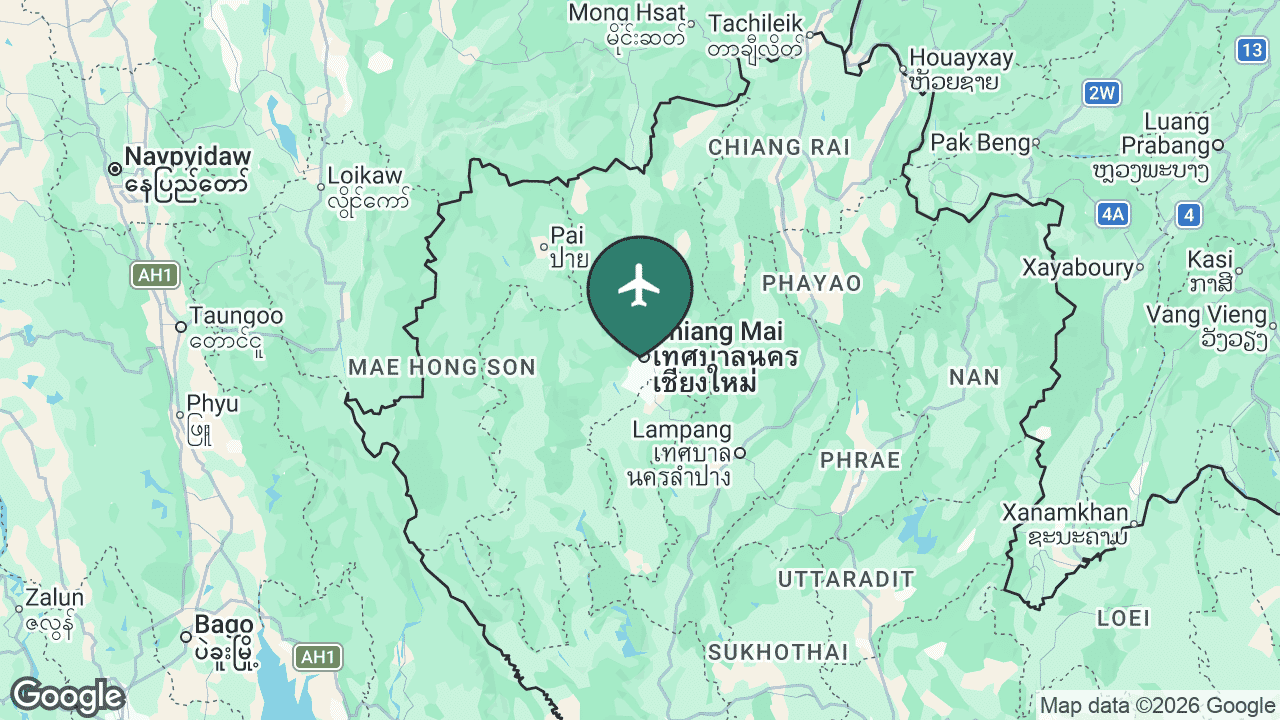
Chiang Mai International is the hub of northern Thailand and the gateway to the region’s temples, mountains and historic old city. Close to the city centre, it is served by Thai AirAsia, Thai Lion Air, Thai Vietjet Air, Bangkok Airways and Nok Air.
It offers roughly 33 regularly-served nonstop destinations, dominated by the high-frequency shuttle to both Bangkok airports plus domestic links to Phuket and Krabi and a handful of regional international routes, including Kunming, Hong Kong and Kuala Lumpur. Its proximity to the city limits expansion, and a replacement airport has long been under discussion.
5. Krabi Airport (KBV)
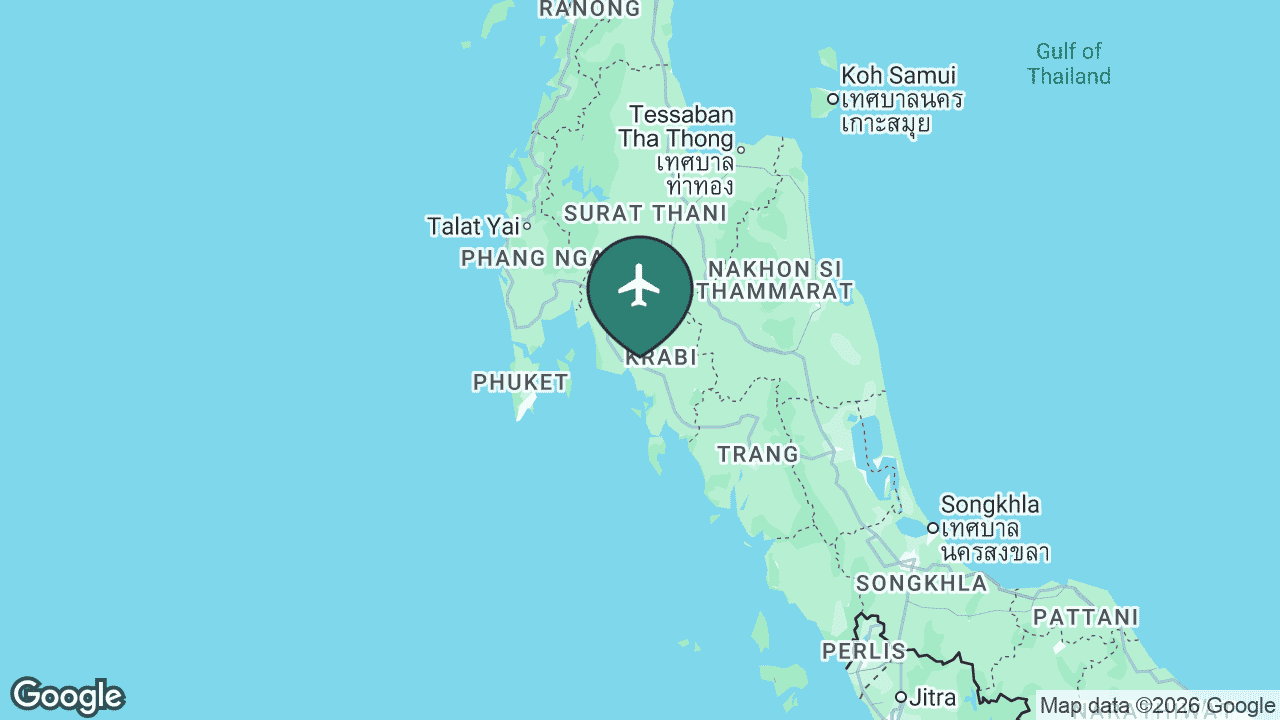
Krabi Airport serves the Andaman coast around Ao Nang, Railay and the islands, and has grown into a popular alternative to Phuket for beach-bound travellers. AirAsia is the dominant carrier, alongside Thai Lion Air, Nok Air and Bangkok Airways.
With about 13 regularly-served nonstop destinations, it mixes domestic flights from Bangkok and Chiang Mai with a useful set of international routes to Kuala Lumpur, Singapore, Dubai and Bangalore — broadening southern Thailand’s direct connectivity beyond Phuket.
6. U-Tapao International Airport (UTP)
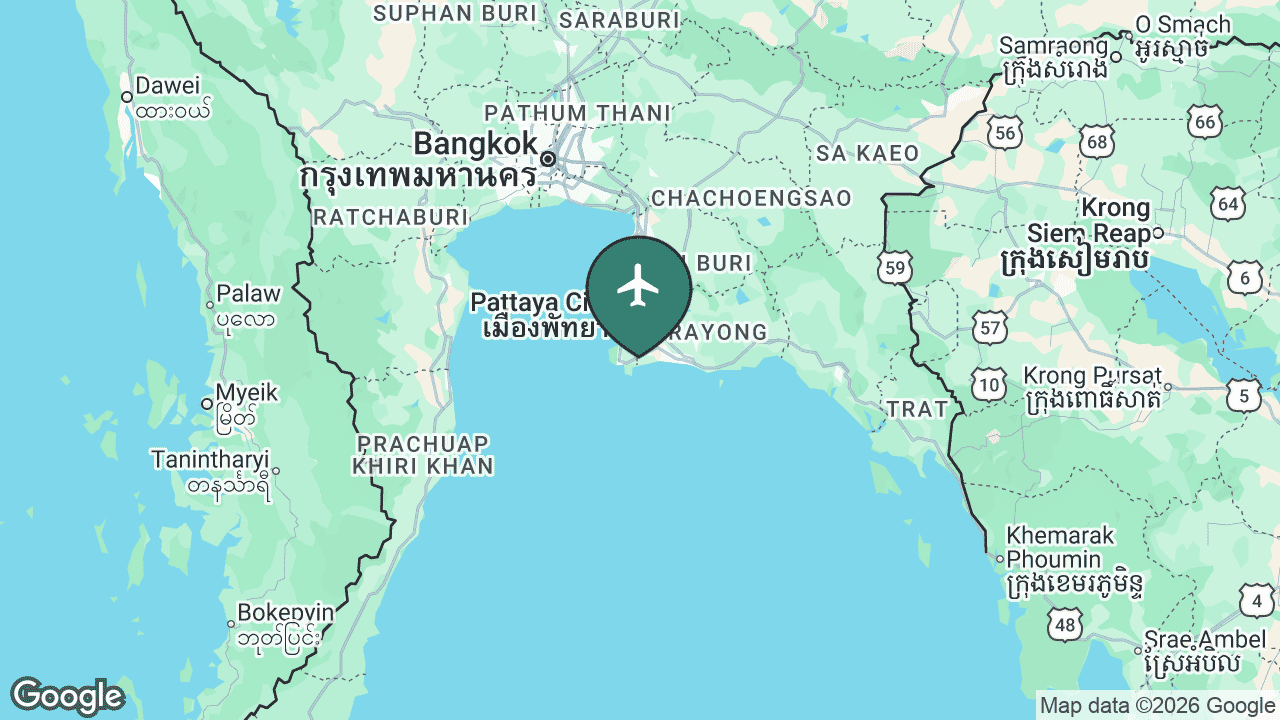
U-Tapao, near Pattaya and Rayong on the eastern Gulf coast, is a joint civil-military airport operated with the Royal Thai Navy. It is the designated air gateway for Thailand’s Eastern Economic Corridor, and ambitious plans would expand it into a third Bangkok-area airport.
Today it handles a modest 8 regularly-served nonstop destinations, including a distinctive cluster of routes to Russia and Central Asia — Irkutsk, Tashkent and Minsk among them, largely flown by S7 Airlines — that reflect Pattaya’s popularity with travellers from those markets, alongside domestic links and regional flights to Kuala Lumpur.
7. Samui Airport (USM)
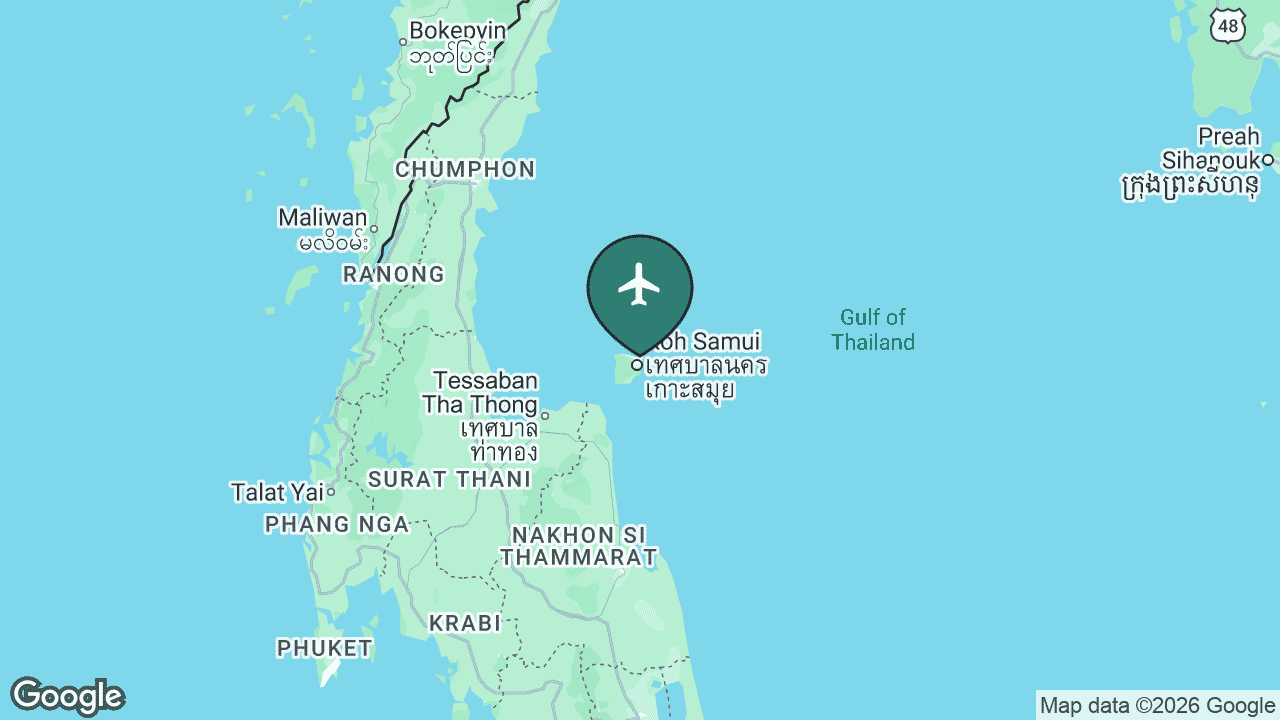
Ko Samui’s airport is one of the most unusual in the region: it is privately owned and operated by Bangkok Airways, which built it and still controls most of its slots. The open-air, garden-style terminal is a destination in itself, but the airline’s near-monopoly keeps fares high.
It serves around 8 regularly-served nonstop destinations, almost all flown by Bangkok Airways, with Scoot adding a link to Singapore. Most traffic runs to and from Bangkok, with seasonal connections to other Thai resorts and a short list of regional cities.
8. Hat Yai International Airport (HDY)
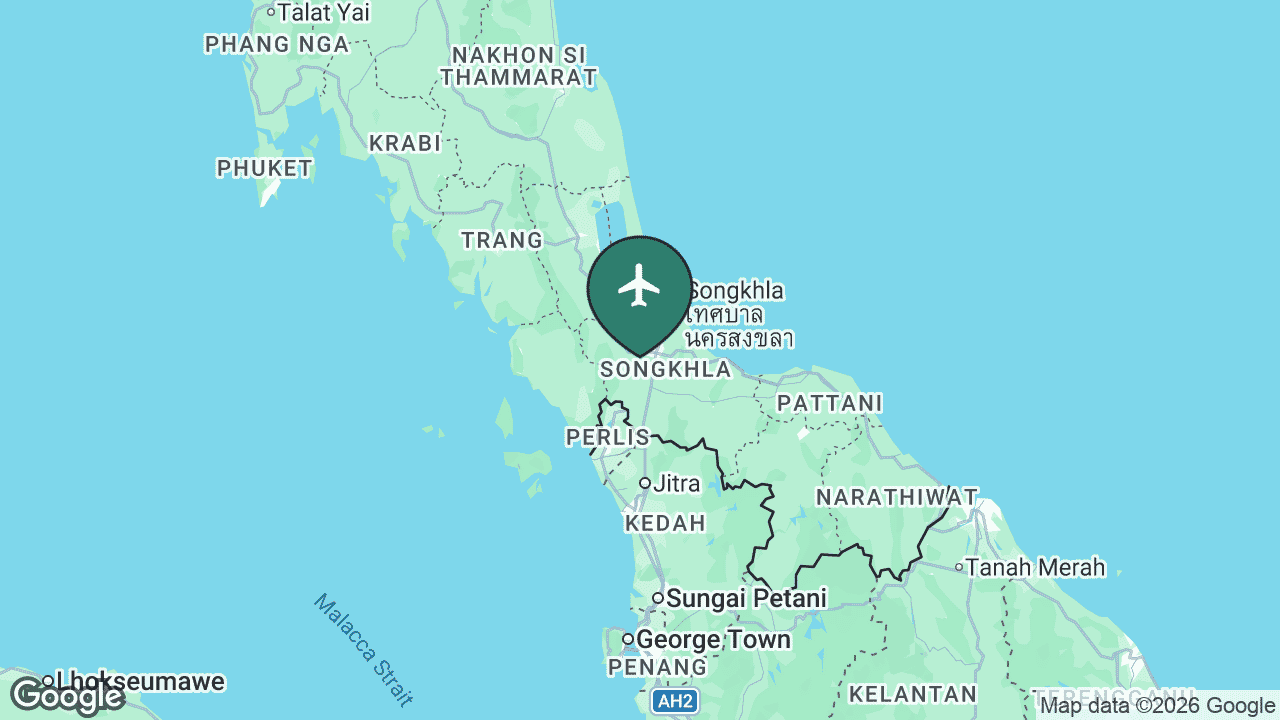
Hat Yai International serves Thailand’s far south, close to the Malaysian border, and is the main air hub for the lower peninsula. It draws strong cross-border demand from Malaysia and is an important gateway for pilgrims travelling onward for Hajj and Umrah.
The airport handles about 7 regularly-served nonstop destinations, flown by Thai AirAsia, Thai Lion Air, Thai Airways, Thai Vietjet Air, Nok Air and Scoot. Routes concentrate on the two Bangkok airports plus international links to Singapore and Kuala Lumpur and domestic service north to Chiang Mai.
Can you fly direct from Thailand to the United States?
No. There are currently no nonstop passenger flights between Thailand and the United States from any Thai airport. The route data confirms it — not a single Thai airport shows a direct US connection.
Thai Airways operated nonstop service to the US years ago, but ultra-long-haul economics and a period when Thailand’s civil-aviation authority was downgraded by the US FAA (which blocked the launch of new US routes until the rating was restored in 2019) pushed those flights off the map. Since then, no carrier has reinstated nonstop Thailand–US service.
In practice, travellers connect through a major hub. The most common one-stop options route via East Asia (Tokyo, Seoul, Taipei or Hong Kong on carriers such as ANA, Japan Airlines, Korean Air, EVA Air or Cathay Pacific), via the Gulf (Doha or Dubai on Qatar Airways and Emirates), or via Europe. From Bangkok’s Suvarnabhumi you’ll find the widest choice of these connecting itineraries.
Route and airport data for this guide:
Image Sources
- Google Static Maps – Per-airport locator maps.
- MapTiler & OpenStreetMap – Base mapping for the featured image and the national airports map.
🌍 More maps & data for Thailand
Browse more: All airports by country · All airlines by country


