
Key Takeaways
- Best overall: Netgear Nighthawk M7. A pocket 5G hotspot with Wi-Fi 7, a physical SIM slot and eSIM, plus data plans for 140+ countries sold in Netgear's app. Unlocked and certified for AT&T and T-Mobile.
- Best for power users: GL.iNet Mudi 7. 5G with an eSIM and two physical SIM slots, tri-band Wi-Fi 7, Ethernet, VPN support and 13.5 hours of battery.
- No SIM at all? Get a cloud-SIM hotspot. The SIMO Solis Hero and GlocalMe Numen Air 5G connect to local networks in 140+ countries without a SIM card. You buy data packs in their apps.
- Already use a travel eSIM on your phone? A $90 router may be enough. The GL.iNet Beryl AX has no modem, but it can share your phone's eSIM data over USB and add a VPN for every device you carry.
Hotel Wi-Fi that drops every ten minutes, a phone battery that dies halfway through a video call, roaming charges that arrive weeks after the trip: a travel router with its own SIM or eSIM fixes all three. It gives you one private Wi-Fi network for your laptop, tablet and phone wherever you land, and leaves your phone free.
There are three ways these devices get online, and the right one depends on how you travel:
- SIM and eSIM hotspots take a local SIM card or a downloadable eSIM data plan. They are the fastest and usually the cheapest per gigabyte, but you buy data in each country.
- Cloud-SIM hotspots need no SIM at all. They switch between local networks automatically and you buy data packs in the maker’s app. Simplest for multi-country trips, but data costs more.
- Travel routers without a modem share a connection you already have, such as hotel Wi-Fi or your phone’s eSIM over USB, and add a private network and VPN on top.
Quick Comparison
At a glance
The Best SIM and eSIM Travel Routers Compared
How each one gets online, and who it suits
| Router | Connection | SIM type | Best for |
|---|---|---|---|
| Netgear Nighthawk M7 | 5G, Wi-Fi 7 | Physical SIM + eSIM | Most travellers |
| GL.iNet Mudi 7 | 5G, Wi-Fi 7 | eSIM + 2 physical SIMs | Remote workers, VPN users |
| SIMO Solis Hero | 4G | Cloud SIM (no card) | Frequent border-crossers |
| GlocalMe Numen Air 5G | 5G | Cloud SIM (no card) | Fast data without a SIM |
| GL.iNet Spitz AX | 5G, Wi-Fi 6 | 2 physical SIMs | Vans, RVs, long stays |
| GL.iNet Beryl AX | Wi-Fi 6 (no modem) | Uses your phone's eSIM | Budget, hotel Wi-Fi + VPN |
The Best SIM and eSIM Travel Routers
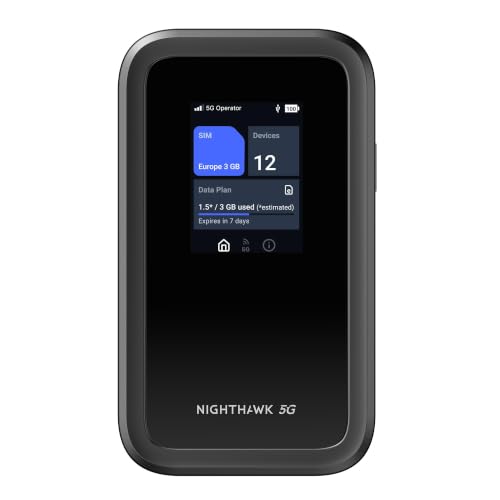
1. Netgear Nighthawk M7: Best Overall
The Nighthawk M7 is the easiest recommendation for most travellers. It is a pocket-sized 5G hotspot with Wi-Fi 7, a physical SIM slot and built-in eSIM, and Netgear’s Nighthawk app sells contract-free data plans for more than 140 countries, so you can buy data for your next stop before you land. It is unlocked and certified for AT&T and T-Mobile in the US, and it handles up to 32 devices.
Reviewers praise its cellular reception more than its Wi-Fi, which is good rather than class-leading. The battery is rated at up to 10 hours. Note that there is no built-in VPN or Ethernet port, and that the similarly named M7 Pro is locked to AT&T, so it is the wrong choice for international travel.
- Pros: SIM and eSIM, global data plans in the app, unlocked, strong 5G reception, up to 32 devices
- Cons: expensive, no VPN client, no Ethernet port without an adapter

2. GL.iNet Mudi 7: Best for Power Users
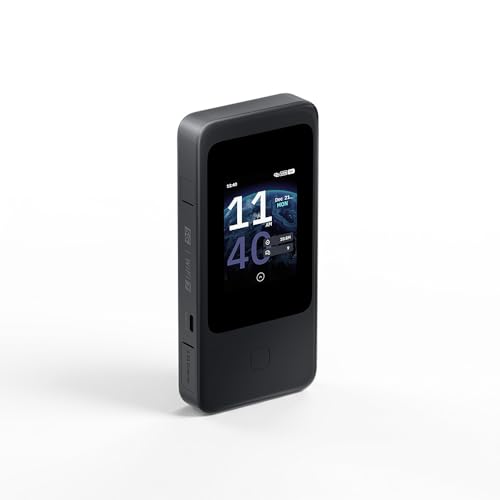
The Mudi 7 (GL-E5800) is the most capable pocket router you can buy. It combines a 5G modem with an eSIM and two physical nano-SIM slots, so you can keep your home SIM in one slot and a local SIM or eSIM in the others. Tri-band Wi-Fi 7 supports up to 64 devices, and a 2.8-inch touchscreen lets you switch SIMs or toggle a VPN without opening an app.
Because it runs GL.iNet’s OpenWrt-based firmware, it doubles as a full travel router: a 2.5 Gbps Ethernet port, VPN clients, and automatic failover between cellular, hotel Wi-Fi and Ethernet. The 5,150 mAh battery is rated at up to 13.5 hours. It is overkill for a beach holiday, but ideal for remote workers.
- Pros: eSIM plus two SIM slots, Wi-Fi 7, VPN and multi-WAN failover, Ethernet, long battery life
- Cons: pricey, more settings than casual travellers need, released in 2026 so it has a shorter track record
3. SIMO Solis Hero: Best Without a SIM
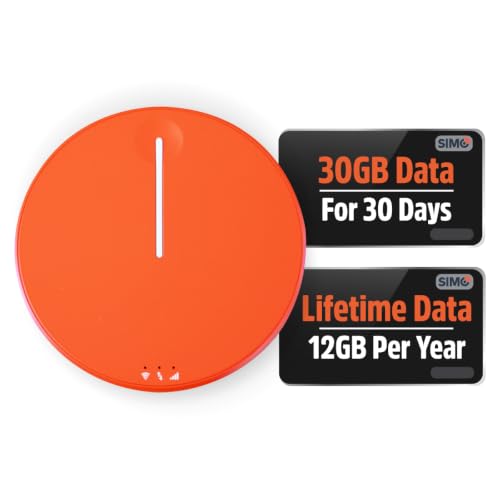
If you cross borders often and do not want to think about SIM cards or eSIM plans, a cloud-SIM hotspot is the simplest option. The SIMO Solis Hero picks the strongest of more than 300 carriers in 140 countries automatically, with no SIM card and no contract. It comes with 1 GB of free data every month and a one-time 30 GB pack valid for 30 days, and its 5,250 mAh battery doubles as a power bank for your phone.
The trade-offs: it is 4G only, it connects up to 10 devices, and data beyond the free allowance costs more than a local SIM would.
- Pros: no SIM needed, works in 140 countries, free monthly data, built-in power bank, affordable
- Cons: 4G only, data packs cost more than local SIMs, up to 10 devices
4. GlocalMe Numen Air 5G: Fastest Cloud-SIM Hotspot
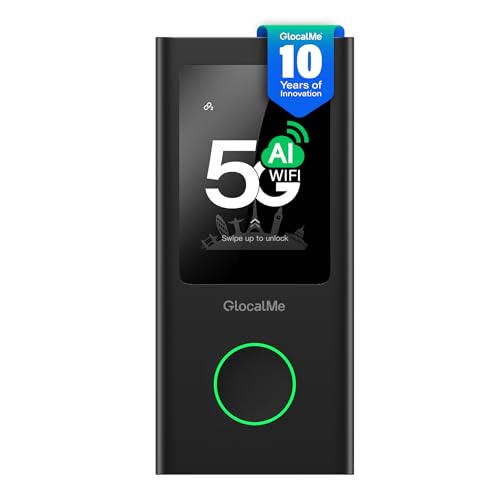
The GlocalMe Numen Air 5G brings 5G speeds to the cloud-SIM model. GlocalMe’s CloudSIM technology connects without a SIM card in more than 200 countries and regions, picking the best local network, and you buy pay-as-you-go data packs in the app. A 2.4-inch touchscreen shows data use and signal at a glance, and it broadcasts on both 2.4 GHz and 5 GHz.
- Pros: 5G without a SIM card, very wide country coverage, touchscreen, flexible data packs
- Cons: cloud data is pricier than local SIMs, 5G only where local networks offer it
5. GL.iNet Spitz AX: Best for Vans, RVs and Long Stays
For a camper van, an RV or a month-long rental, a plug-in 5G router beats a pocket hotspot. The GL.iNet Spitz AX (GL-X3000) has a 5G modem with two physical SIM slots and automatic failover, six detachable antennas for weak-signal areas, Wi-Fi 6 and built-in VPN support. It has no battery and no eSIM, so it is not for your daypack.
- Pros: dual SIM with failover, external antennas, VPN and OpenWrt, strong Wi-Fi 6 coverage
- Cons: needs mains or 12 V power, no eSIM, too big to carry around
Check price: GL.iNet Spitz AX (GL-X3000) on Amazon
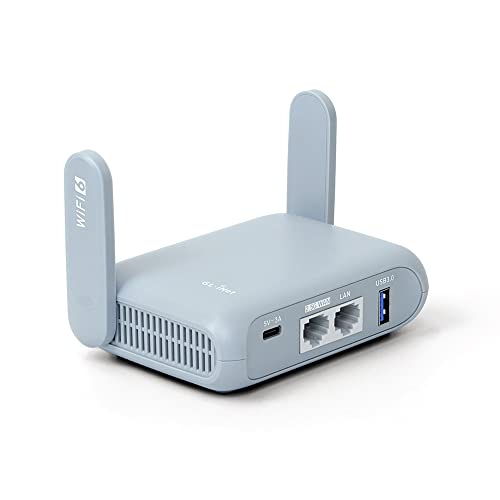
6. GL.iNet Beryl AX: Best Budget Option
Many travellers already buy a data eSIM for their phone. If that is you, the cheapest upgrade is a router without a modem. The GL.iNet Beryl AX (GL-MT3000) can share your phone’s eSIM data over USB, or connect to hotel Wi-Fi and turn it into your own private Wi-Fi 6 network, with WireGuard and OpenVPN built in so every device is protected on public networks. For a Wi-Fi 7 version, look at its successor, the Beryl 7.
- Pros: inexpensive, VPN for every device, fixes captive-portal hotel Wi-Fi, pairs with any phone eSIM
- Cons: no cellular modem of its own, needs your phone or a wired or Wi-Fi source
How to Choose a Travel Router
SIM, eSIM or cloud SIM? Local SIMs and eSIM data plans are the cheapest per gigabyte, so they suit longer stays in one country. Cloud-SIM hotspots cost more per gigabyte but save time on multi-country trips. A device with both a SIM slot and eSIM, such as the Nighthawk M7 or Mudi 7, gives you every option.
Make sure it is unlocked. Carrier-locked hotspots, such as the AT&T-only Nighthawk M7 Pro, will not accept a foreign SIM. Check that the device supports the bands used where you travel; 5G models usually cover the main 4G bands too.
Think about data cost, not just hardware. Mobile data prices vary enormously between countries, from a few cents per gigabyte in parts of Asia to several dollars elsewhere. Our map of mobile data prices by country shows where a local SIM is a bargain and where a regional eSIM plan is the better deal.
Battery and size matter. Pocket hotspots last 10 to 18 hours. Routers like the Spitz AX need power but give far better coverage in a van or rental.
Frequently Asked Questions
Do I need a travel router if my phone has an eSIM?
Not always. For a short trip, your phone’s hotspot is often enough. A dedicated router is worth it if you work on a laptop for long stretches, connect several devices, want to save your phone’s battery, or need a VPN for everything at once.
Can I use a travel eSIM in a hotspot?
Yes, in hotspots with eSIM support such as the Nighthawk M7 and Mudi 7. Check with the eSIM provider that data-only plans can be installed on a hotspot, since some plans are tied to phones.
Is a cloud-SIM hotspot safe?
Cloud-SIM devices connect through the maker’s own servers to local carriers. For sensitive work, use a VPN on top, which is good practice on any shared or foreign network.
Sources:
This guide contains Amazon affiliate links. If you buy through them, Mappr may earn a small commission at no extra cost to you. It never affects which products we recommend.



Last update on 2026-11-23 / Affiliate links / Images from Amazon Product Advertising API