
⚠️ Airspace advisory (June 2026): Parts of the Democratic Republic of the Congo’s airspace carry conflict-zone risk advisories. Ongoing fighting in the east, around Goma and North Kivu, brings a credible risk from anti-aircraft weaponry near affected airports, and airports in the conflict zone have been closed to commercial flights. Some routes may be suspended or rerouted, so the schedules below may not reflect live operations. Verify operational status before booking. Source: safeairspace.net.
Key Takeaways
- Kinshasa is the country’s gateway. Kinshasa N’djili International (FIH) serves around 26 regularly-served nonstop destinations, far more than any other Congolese airport, and is the only one with intercontinental flights. It is the home base of the new national carrier Air Congo, with links to Addis Ababa, Brussels, Istanbul, Doha, Nairobi and Johannesburg.
- Lubumbashi is the mining capital’s hub. Lubumbashi International (FBM), in the copper and cobalt heartland of Katanga in the far south, is a clear second at about 11 destinations. Its busiest links run to Johannesburg, Addis Ababa, Dar es Salaam, Nairobi and the Zambian Copperbelt rather than to the capital alone.
- The east is a conflict zone. Goma and Bukavu, the main airports of the eastern Kivu provinces, came under M23 rebel control in early 2025 and have been closed to commercial flights since. Their route data here reflects service from before the fighting, not live operations.
- We rank by regularly-served routes, not raw counts. The figures come from observed route data, a sample rather than a full timetable, and flight-tracking coverage over central Africa is thin. Big internationally-connected airports are captured well, but the busy domestic networks of interior cities such as Kananga, Mbuji-Mayi and Kindu are larger than these low counts suggest.
- There are no direct flights to the United States. The DR Congo has no scheduled nonstop service to North America. Travellers connect through a hub such as Addis Ababa, Brussels, Istanbul, Nairobi or Doha.
The Democratic Republic of the Congo is the second-largest country in Africa, a vast nation the size of Western Europe with very few paved roads between its cities. That makes flying less a luxury than a necessity, yet its airline network is surprisingly thin and overwhelmingly domestic. Almost everything funnels through the capital, Kinshasa, and its N’djili airport, the country’s only real international and intercontinental gateway. A clear second hub sits far to the south at Lubumbashi, in the copper and cobalt mining belt, while a scattering of provincial airports such as Kisangani, Kananga, Mbuji-Mayi, Kindu and Kolwezi keep the interior connected by air.
Below we map and rank the country’s airports by the number of nonstop destinations each one serves, drawn from live route data on AirportRoutes. We rank by regularly-served destinations, routes flown often enough to count as scheduled service, rather than raw nonstop totals. One important caveat for the DR Congo: flight-tracking coverage over central Africa is sparse, so the interior airports almost certainly run more domestic flights than the sample captures. Treat the figures as a guide to relative connectivity, not official totals.
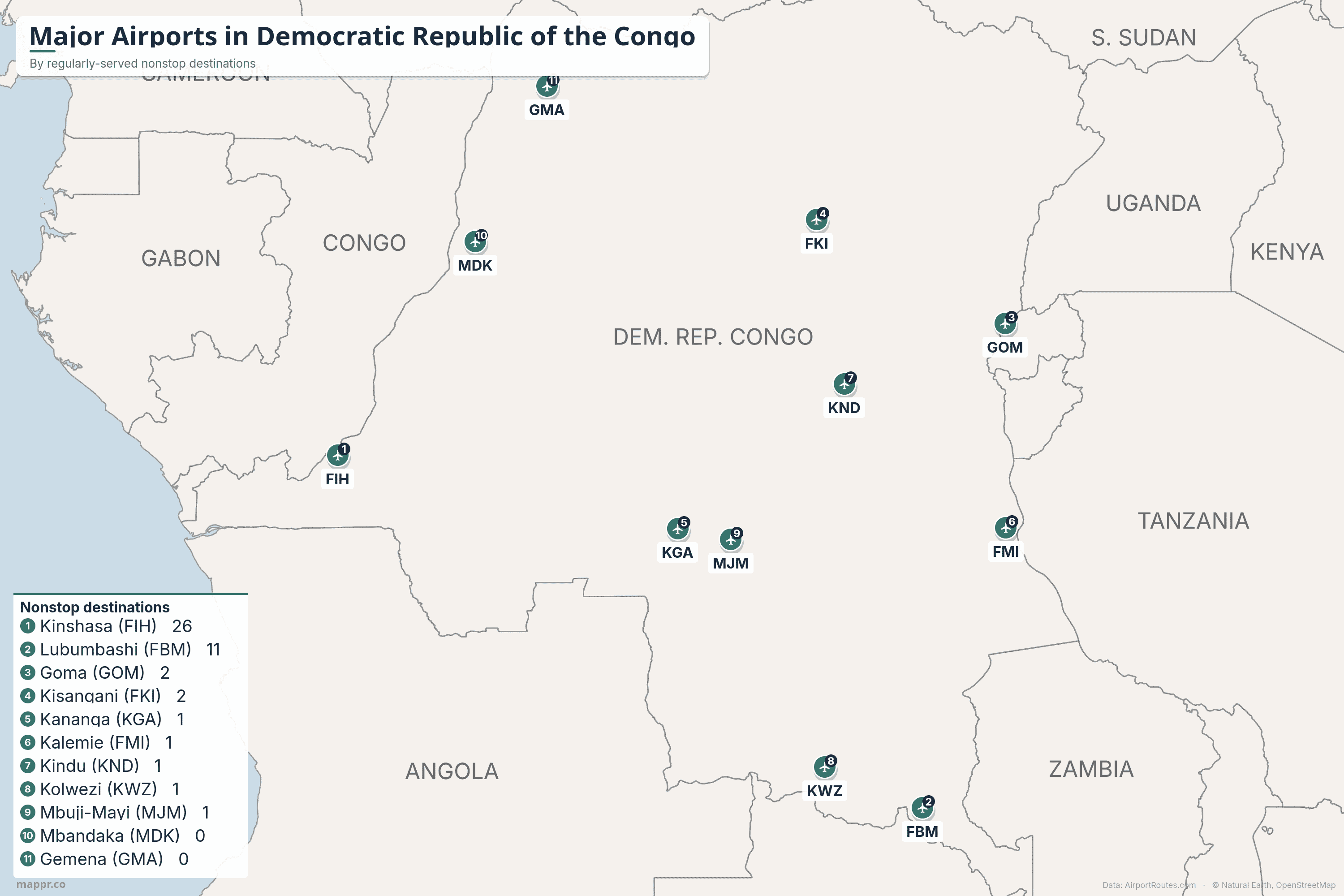
Can you fly nonstop from the DR Congo to the US?
No. None of the country’s airports has a scheduled nonstop flight to the United States, and there is no direct service between the DR Congo and North America. The only airport with intercontinental flights at all is Kinshasa, and its long-haul network points toward Europe and the Middle East rather than across the Atlantic. Demand on the route has never been enough to support a direct service, especially given the limited long-haul fleets of the carriers that serve the country.
Travellers heading to the US connect through a hub. The most common option is Addis Ababa on Ethiopian Airlines, which flies several US cities and is also the part-owner of the new Congolese flag carrier Air Congo. Other one-stop routings run via Brussels on Brussels Airlines, Istanbul on Turkish Airlines, Nairobi on Kenya Airways, Doha on Qatar Airways or Paris on Air France, all of which serve Kinshasa and offer wide North American connections.
Ranked
Major Airports in the DR Congo by Nonstop Destinations
Ranked by regularly-served nonstop destinations, busiest first.
| Airport | IATA | Nonstop | Region |
|---|---|---|---|
| 1. Kinshasa | FIH | 26 | Capital, only intercontinental hub |
| 2. Lubumbashi | FBM | 11 | Mining capital (Katanga) |
| 3. Goma | GOM | 2 | Eastern, conflict-affected |
| 4. Kisangani | FKI | 2 | Congo River, northeast |
| 5. Kananga | KGA | 1 | Kasai-Central |
| 6. Kalemie | FMI | 1 | Lake Tanganyika |
| 7. Kindu | KND | 1 | Maniema |
| 8. Kolwezi | KWZ | 1 | Cobalt mining (Lualaba) |
| 9. Mbuji-Mayi | MJM | 1 | Diamond city (Kasai) |
| 10. Mbandaka | MDK | 0* | Équateur, Congo River |
| 11. Gemena | GMA | 0* | Sud-Ubangi, northwest |
A closer look at the DR Congo’s airports
✈️ Kinshasa N’djili International Airport (FIH)
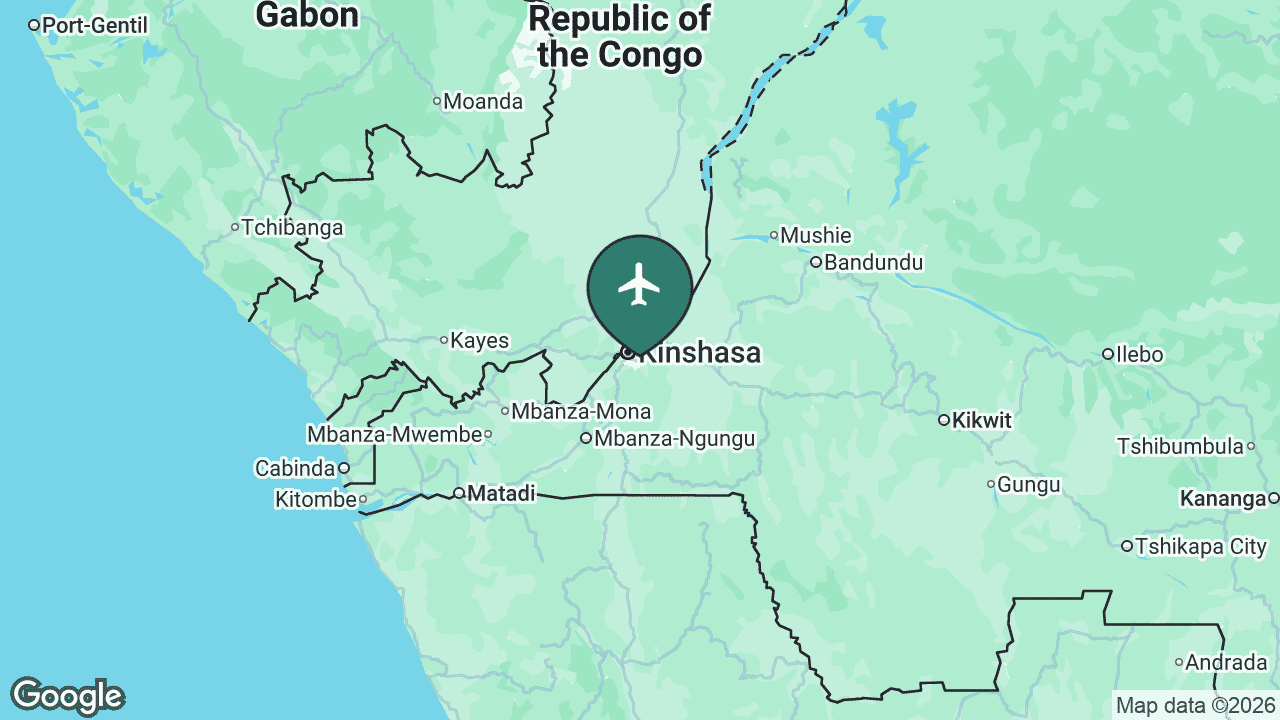
Kinshasa N’djili sits on the eastern edge of the capital, a sprawling city of more than 15 million people on the south bank of the Congo River. It is by far the busiest airport in the country and the only one handling intercontinental flights, making it the symbolic and practical gateway to the DR Congo. A long-discussed modern terminal project aims to expand and upgrade its ageing facilities.
Serving the capital region, FIH reaches around 26 regularly-served nonstop destinations. Its international links run to Addis Ababa, Brussels, Istanbul, Doha, Nairobi, Johannesburg and several West and Central African cities such as Lomé, Abidjan and Brazzaville, the neighbouring capital just across the river. It is also the home base of Air Congo, the new national carrier, a joint venture with Ethiopian Airlines that launched in December 2024 to replace the grounded Congo Airways and opened its first European route, to Brussels, in July 2026.
Main airlines: Air Congo, Compagnie Africaine d’Aviation (CAA), Ethiopian Airlines, Brussels Airlines, Turkish Airlines, Kenya Airways. See the full route map on AirportRoutes →
⛏️ Lubumbashi International Airport (FBM)
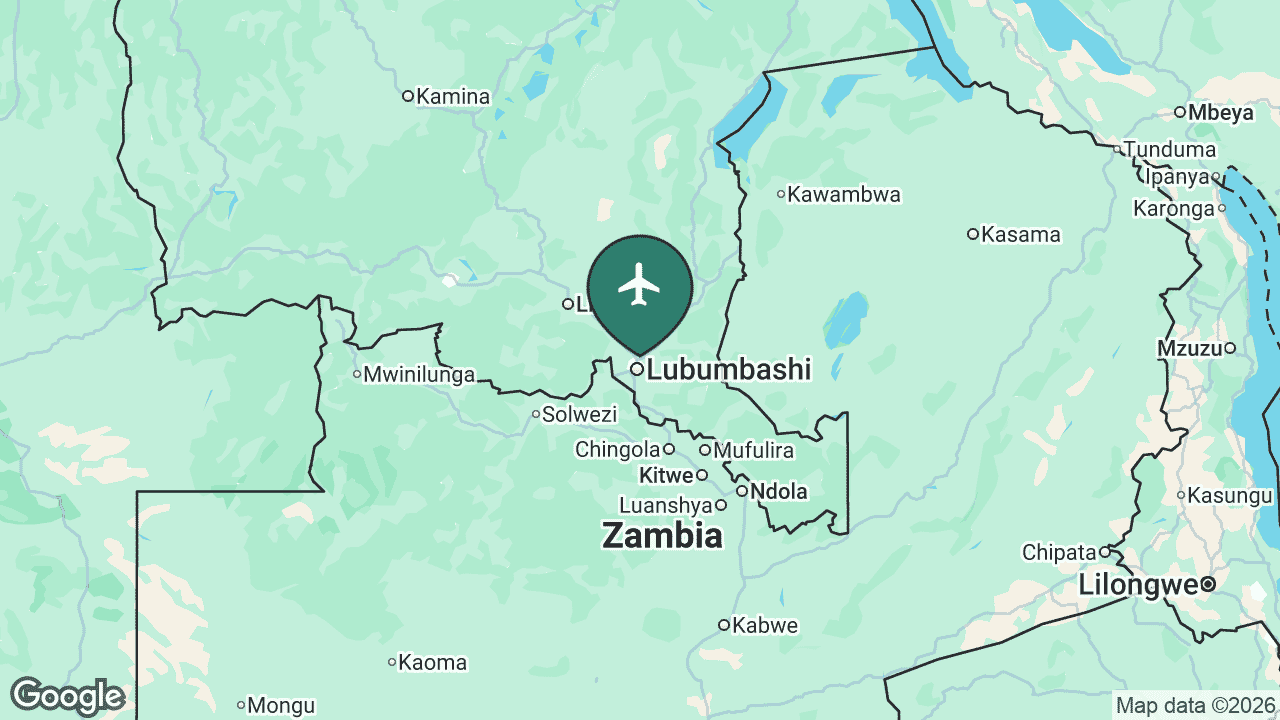
Lubumbashi International serves the country’s second city, the capital of Haut-Katanga in the far southeast and the heart of the DR Congo’s copper and cobalt mining industry. Sitting on the Copperbelt that straddles the border with Zambia, it carries a steady flow of mining-sector workers, business travellers and regional traffic, making it the busiest airport outside Kinshasa.
FBM reaches about 11 regularly-served destinations, the widest network of any Congolese airport after the capital. Unusually for a provincial airport, much of it is international: frequent flights to Johannesburg, Addis Ababa, Nairobi and Dar es Salaam, plus the Zambian Copperbelt city of Ndola, alongside the domestic trunk route to Kinshasa. African carriers feature heavily here in a way they do not at the interior airports.
Main airlines: Compagnie Africaine d’Aviation (CAA), Kenya Airways, Ethiopian Airlines, Airlink, Air Tanzania. See the full route map on AirportRoutes →
🌋 Goma International Airport (GOM)
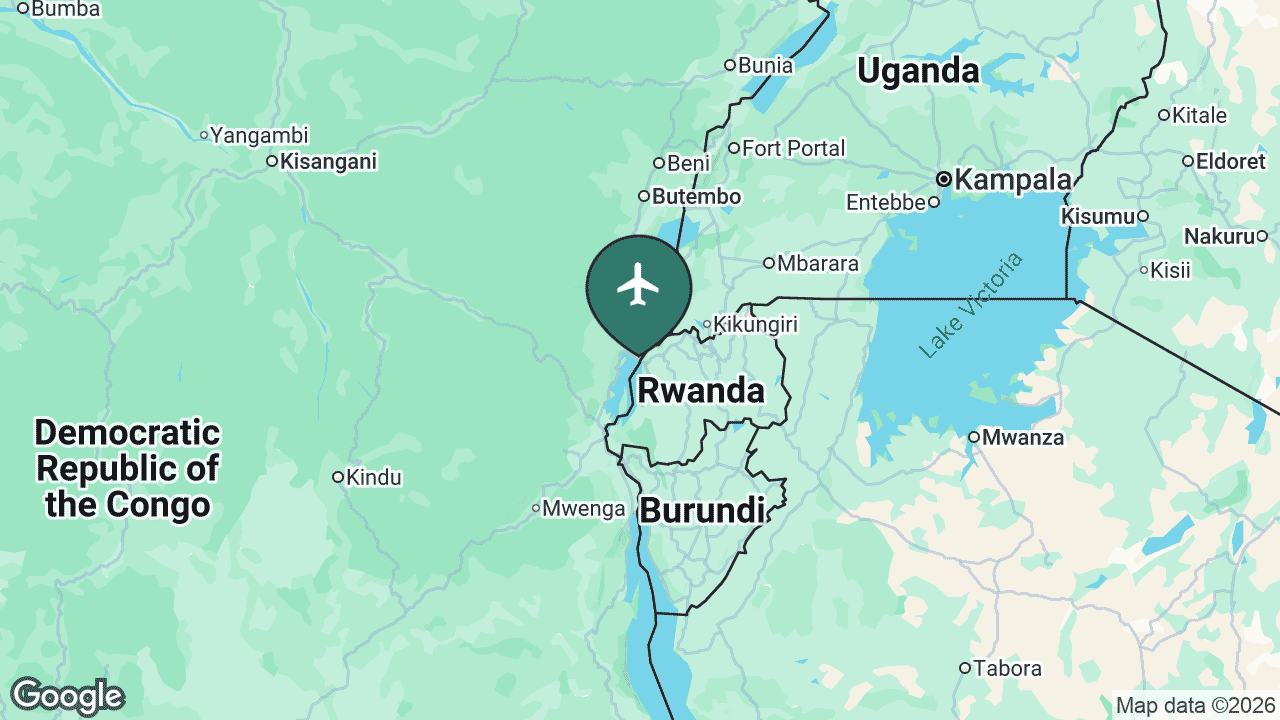
Goma International lies on the northern shore of Lake Kivu, right on the Rwandan border, and serves the capital of North Kivu in the conflict-scarred east. It has long been a vital lifeline for humanitarian operations and regional trade, and its single runway is famously hemmed in by the active Nyiragongo volcano, whose 2021 eruption sent lava across part of the airfield.
The route data here, around two to three destinations led by Nairobi and short hops within the Kivus, reflects service from before the fighting. In late January 2025 the M23 rebel movement captured Goma and its airport during a major offensive, and the airport has since been closed to commercial flights and remains under rebel control. Any travel to the region should be checked against current advisories.
Main airlines: Busy Bee Congo, Kenya Airways. See the full route map on AirportRoutes →
🛫 Kisangani Bangoka International Airport (FKI)
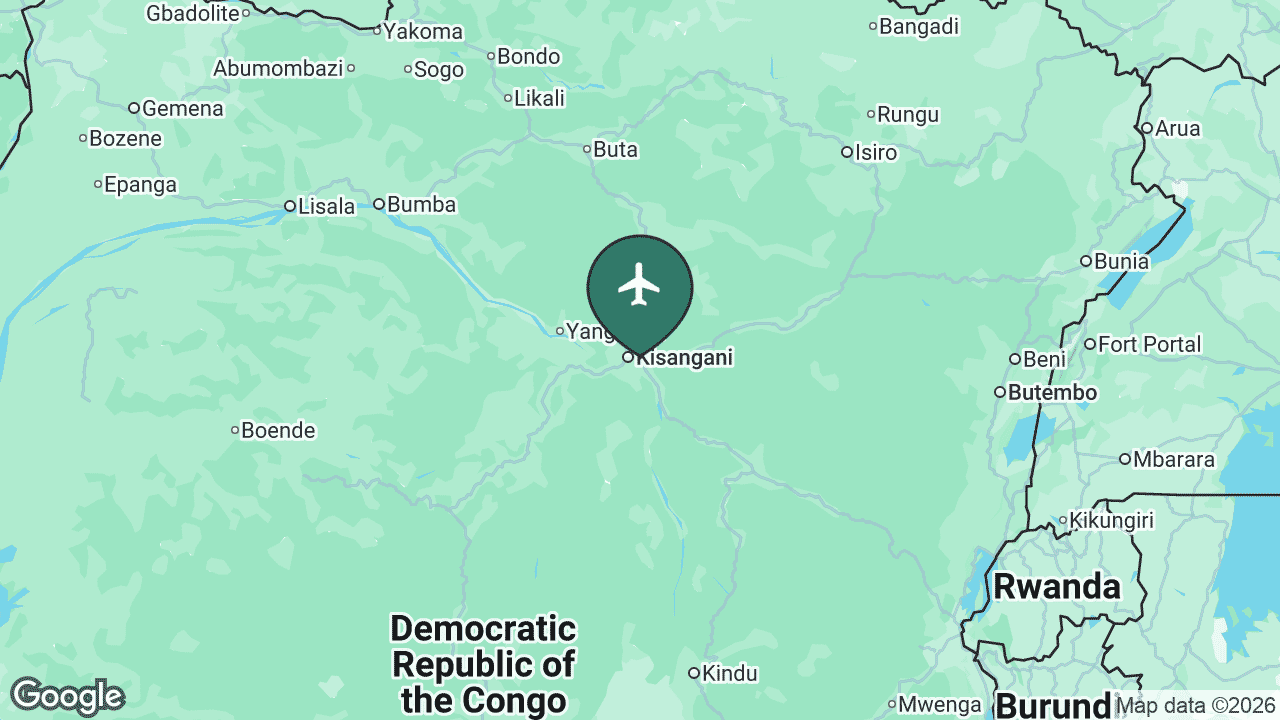
Bangoka International serves Kisangani, the largest city in the northeast and the historic head of navigation on the Congo River, once known as Stanleyville. Surrounded by dense equatorial rainforest, the city has long depended on the river and on air links to the rest of the country, since road access is extremely limited.
FKI reaches a small handful of regularly-served destinations, almost entirely domestic, with its busiest links running to Kinshasa and the nearby provincial hub of Kindu. It is a classic example of a major regional city kept connected to the capital almost entirely by air.
Main airlines: Compagnie Africaine d’Aviation (CAA). See the full route map on AirportRoutes →
🛬 Kananga Airport (KGA)
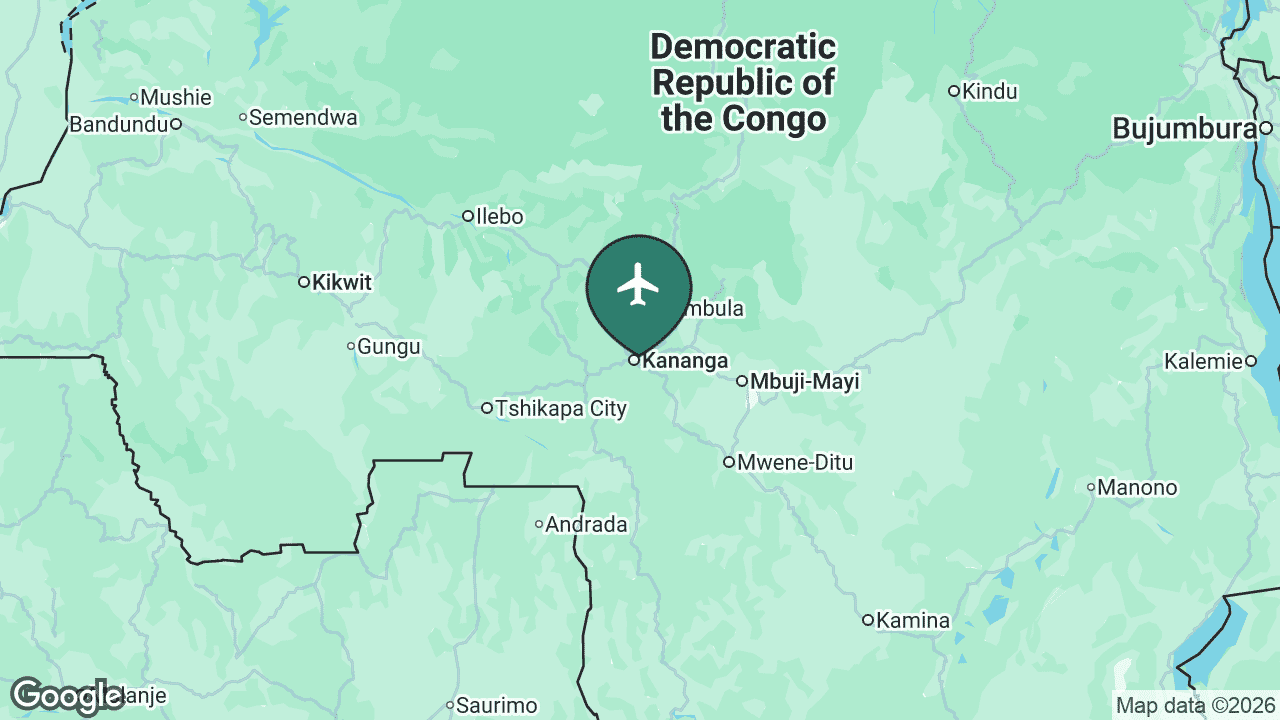
Kananga Airport serves the capital of Kasai-Central, a populous city in the south-centre of the country. The wider Kasai region is one of the more isolated and historically troubled parts of the DR Congo, and the airport provides an essential link to the rest of the nation across a landscape with almost no usable long-distance roads.
Its network is short and domestic, centred on the trunk route to Kinshasa with onward links to Lubumbashi and other Kasai cities. As with most interior airports, the true level of flying is higher than the tracked sample suggests.
Main airlines: Compagnie Africaine d’Aviation (CAA). See the full route map on AirportRoutes →
🌊 Kalemie Airport (FMI)
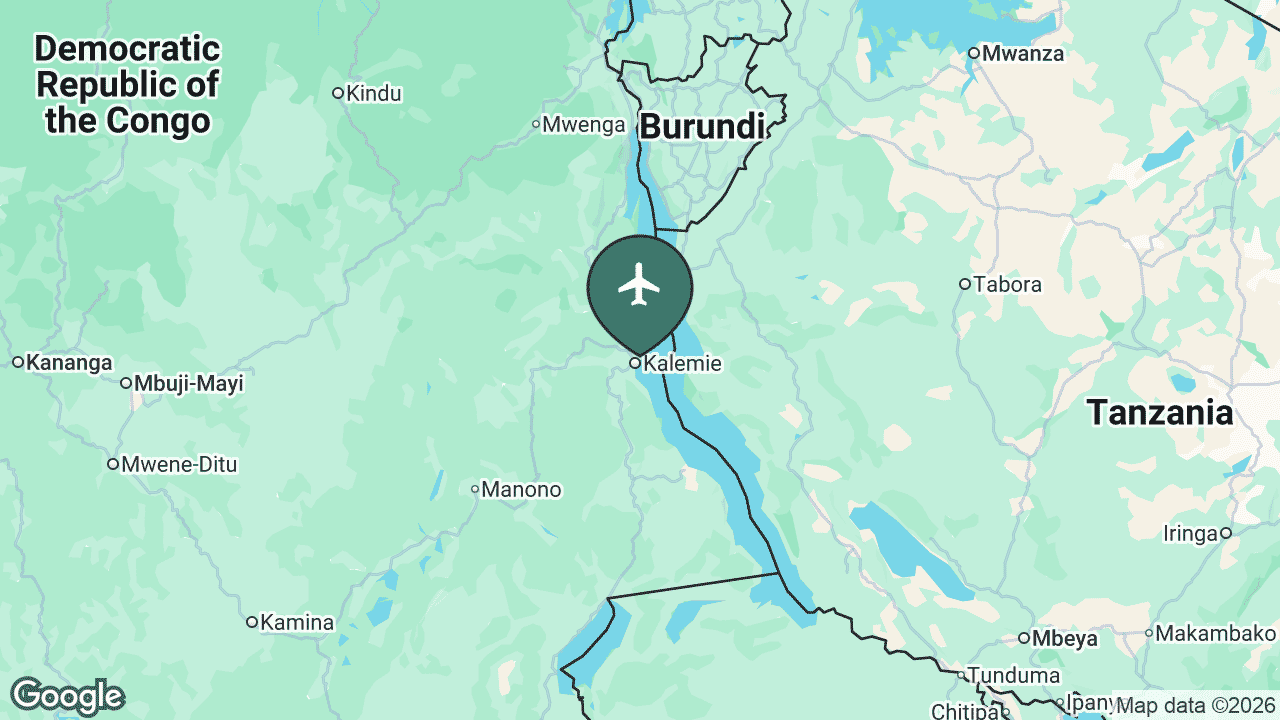
Kalemie Airport sits on the western shore of Lake Tanganyika, in the eastern province of Tanganyika. The lakeside town is a transport node where the lake, the railway and air links meet, and its airport keeps it connected to the rest of the country given how remote it is by road.
FMI runs a thin domestic network, with its main links pointing toward Kindu and the southern hub of Lubumbashi. It is one of several eastern airports that depend on small Congolese operators flying turboprops between provincial centres.
Main airlines: Compagnie Africaine d’Aviation (CAA). See the full route map on AirportRoutes →
🛩️ Kindu Airport (KND)
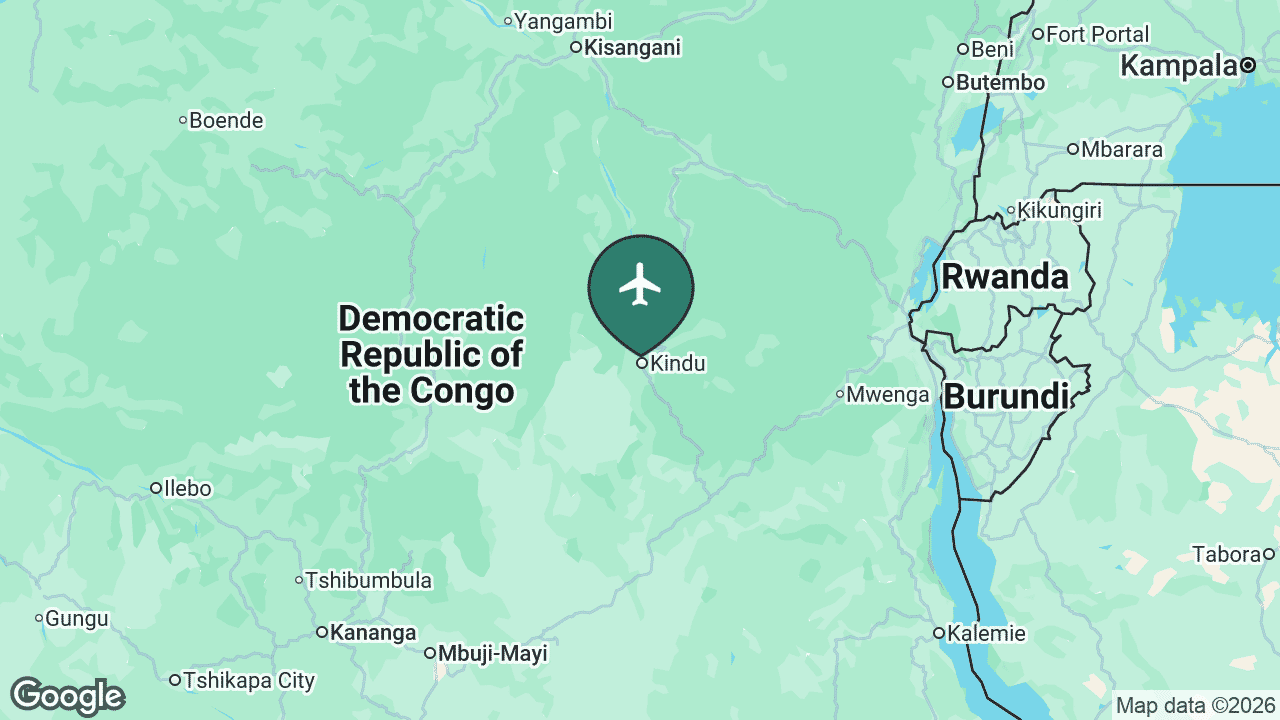
Kindu Airport serves the capital of Maniema, a central-eastern province on the Congo (Lualaba) River. Like Kisangani, Kindu grew up as a river port and rail terminus, and its airport is the quickest way in or out of a region that is otherwise hard to reach overland.
Its scheduled network is small and domestic, with the busiest links running to Kinshasa and Kisangani. The airport acts as a regional connector for Maniema and the surrounding forest provinces.
Main airlines: Compagnie Africaine d’Aviation (CAA). See the full route map on AirportRoutes →
⛏️ Kolwezi Airport (KWZ)
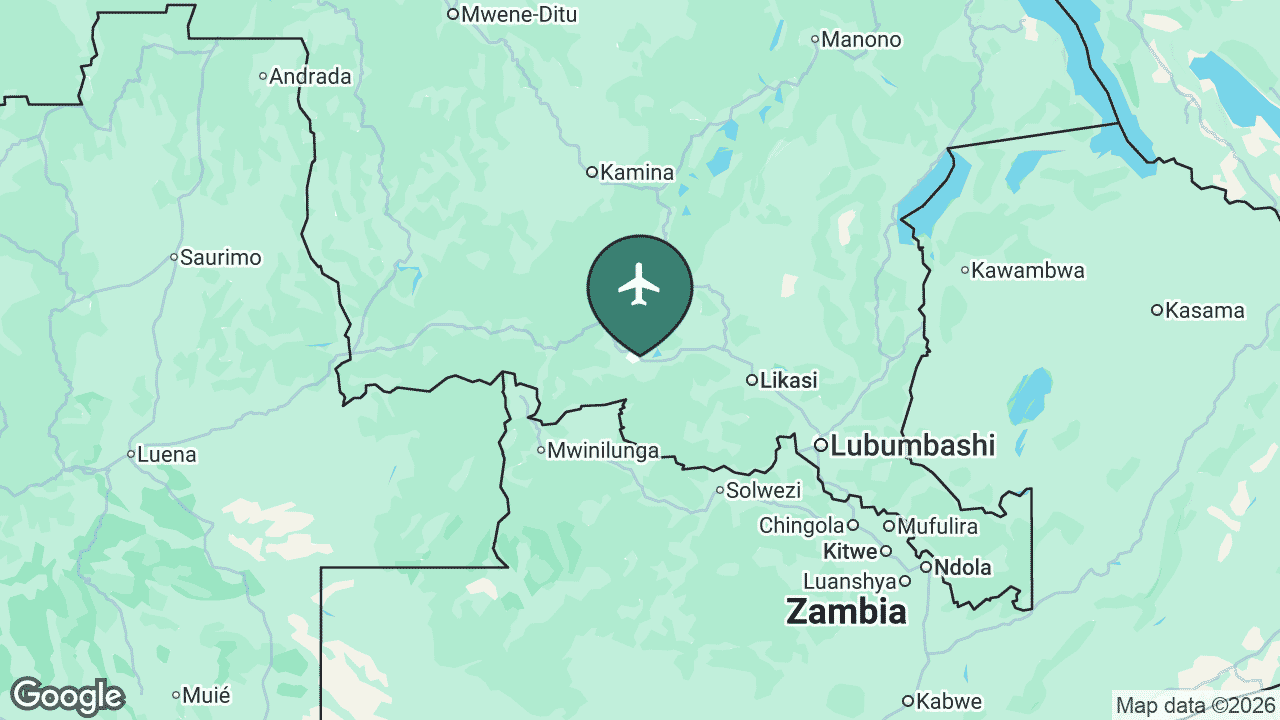
Kolwezi Airport serves the mining city of Kolwezi in Lualaba province, at the western end of the Copperbelt. The surrounding area produces a large share of the world’s cobalt, the metal essential to electric-vehicle batteries, which gives this otherwise small airport an outsized economic importance.
KWZ runs a short domestic network focused on Kinshasa and the regional capital Lubumbashi, carrying mining staff and business travellers between the cobalt fields and the rest of the country.
Main airlines: Compagnie Africaine d’Aviation (CAA). See the full route map on AirportRoutes →
💎 Mbuji-Mayi Airport (MJM)
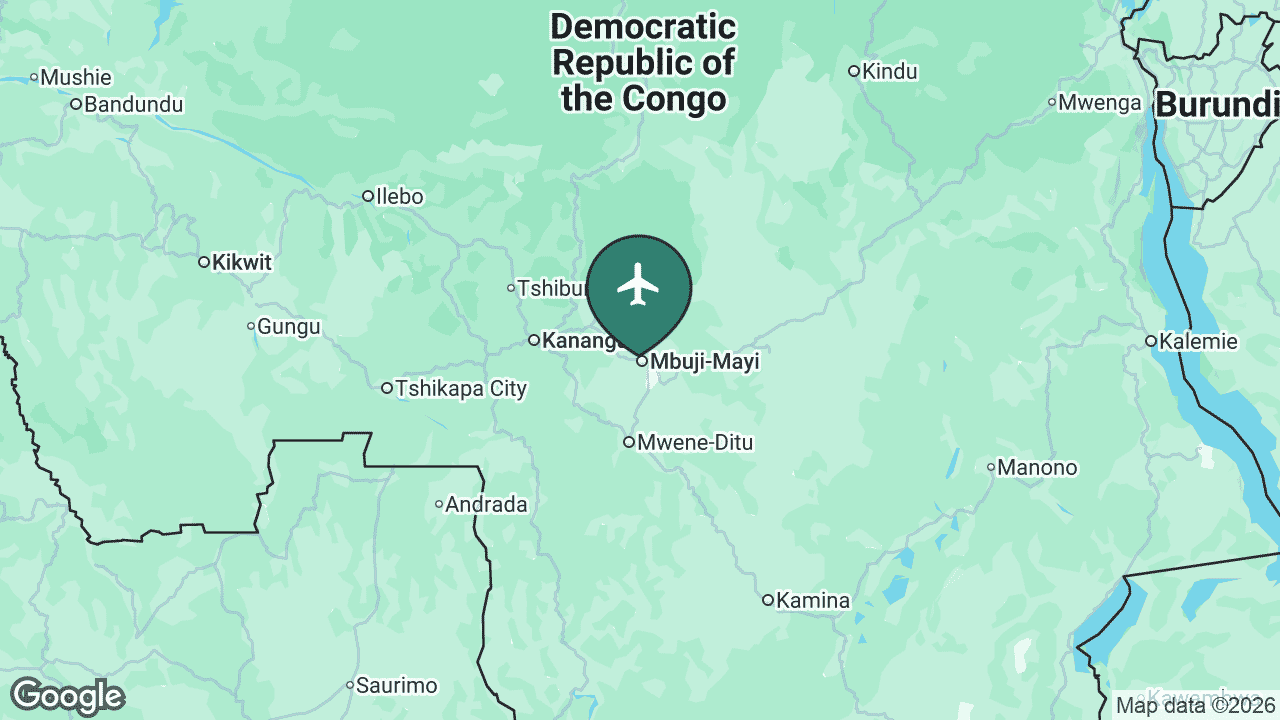
Mbuji-Mayi Airport serves the capital of Kasai-Oriental, one of the largest cities in the country and the centre of its diamond-mining industry. Despite its size and economic weight, Mbuji-Mayi is one of the more isolated major cities in the DR Congo, with poor road links making the airport its main connection to the outside.
Its scheduled flying is domestic, centred on Kinshasa and Lubumbashi. As with the rest of the Kasai region, the real level of air service is higher than the small tracked sample implies.
Main airlines: Compagnie Africaine d’Aviation (CAA). See the full route map on AirportRoutes →
What about Goma, Bukavu and the airports of eastern Congo?
The eastern provinces of North Kivu, South Kivu and Ituri have been gripped by armed conflict for years, and the situation escalated sharply in early 2025. In late January 2025 the M23 rebel movement, which a United Nations panel has linked to neighbouring Rwanda, captured the city of Goma and its airport. Weeks later, in February 2025, the rebels took Bukavu, the capital of South Kivu, and its Kavumu airport. Both airports have been closed to commercial traffic since.
This is the reason the DR Congo appears on international airspace-risk advisories: the fighting brings a credible threat from anti-aircraft weaponry near affected airports, and airspace over the conflict zone can change status at short notice. Smaller eastern airfields, such as Beni and Butembo further north, sit in the same volatile region. For now, the airports that still operate normal scheduled service are concentrated in the west, south and centre of the country, well away from the front lines. Always check current advisories before planning any travel to eastern Congo.
The DR Congo’s other airports
Beyond the airports above, a long tail of regional fields keeps the rest of this enormous country connected, even if flight-tracking data barely captures them. Mbandaka (MDK), on the Congo River in the equatorial northwest, is the capital of Équateur and a classic river-and-air town with domestic links to Kinshasa and Gemena. Gemena (GMA), further northwest in Sud-Ubangi, anchors a remote farming region with a single regular link to the capital. Dozens of smaller airstrips across the DR Congo are served only by small operators, missionary aviation and humanitarian flights, the kind of bush-flying network that a country this large and this road-poor cannot do without.
Airport rankings, nonstop-destination counts, served regions and airline lists are drawn from live AirportRoutes route data (observed AeroAPI flight data, a sample rather than a complete published schedule; we use the regularly-served figure, which filters one-off observations and, for central Africa, understates domestic service). Airport locations and notable facts are cross-checked against the cited references, and the airspace and conflict notes reflect current advisories and reporting. The ranked map is a Mappr original.
Primary Data Source:
- AirportRoutes: Major airports and routes, DR Congo – Live route data: per-airport nonstop destinations, served cities and airlines.
References:
- Safe Airspace (OPSGROUP): DR Congo risk assessment – Conflict-zone airspace risk advisory referenced in the airspace note at the top of the page.
- Wikipedia: Congolese airports (Kinshasa, Lubumbashi, Goma and others) – Airport history, location, status and notable facts referenced in the per-airport sections.
- News reporting on the 2025 M23 offensive in eastern DR Congo – Capture and closure of Goma and Bukavu airports referenced in the conflict section.
- Locator maps: Google Maps / Google Static Maps – Per-airport location maps with airplane markers, generated via Google Static Maps.
Image Sources:
- Map by Mappr – Map of major airports in the DR Congo, a Mappr original built from AirportRoutes data and Natural Earth boundaries.
🌍 More maps & data for the DR Congo
Browse more: All airports by country


