Key Takeaways
- Vingroup’s VinSpeed broke ground on a 120 km high-speed railway connecting Hanoi to Hạ Long, Quảng Ninh on April 12, 2026.
- The $5.6 billion line will use Siemens Mobility trains and signaling, reaching speeds of 350 km/h — cutting travel time from over two hours to roughly 23 minutes.
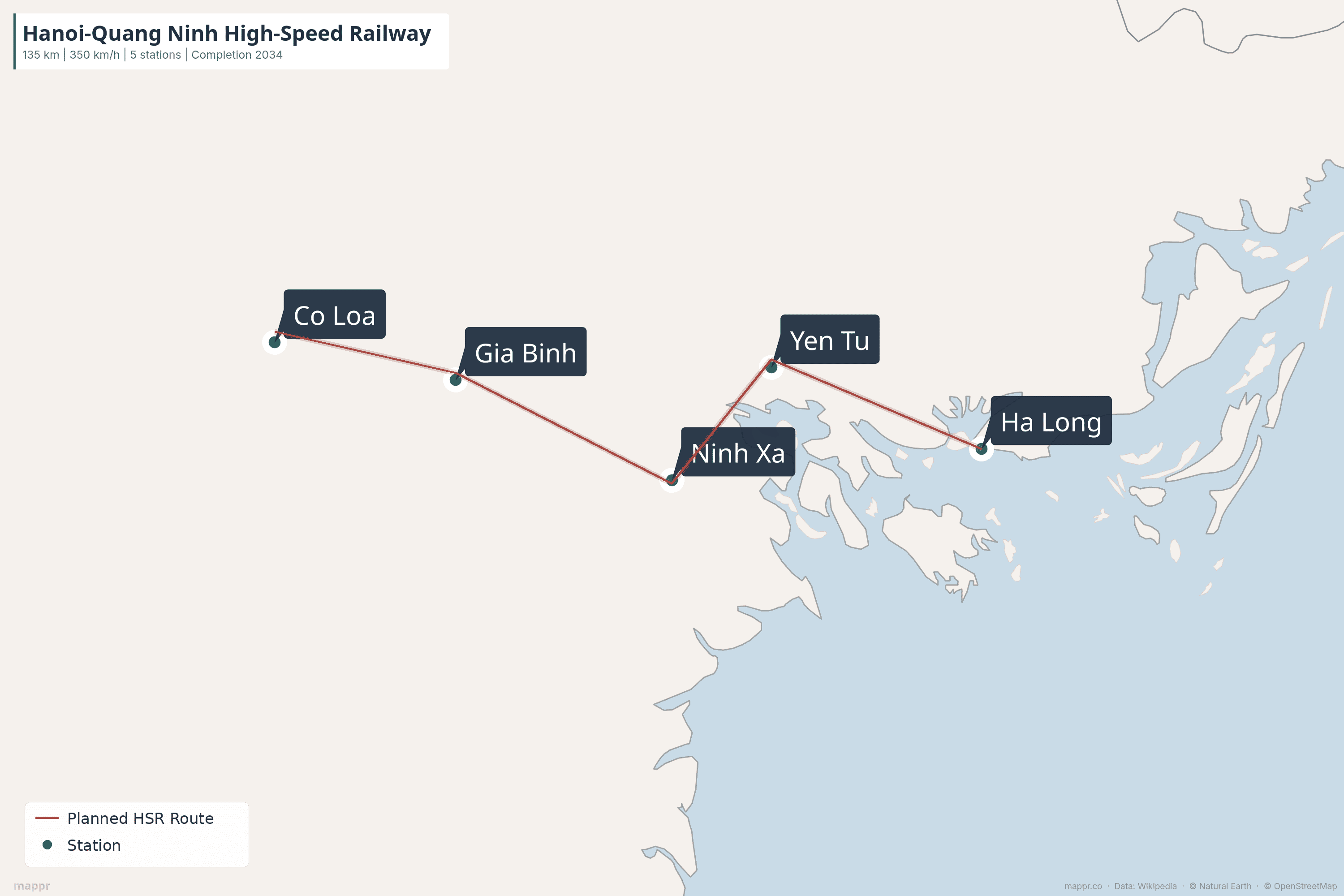
- Five stations span four provinces: Cổ Loa (Hanoi), Gia Bình (Bắc Ninh), Ninh Xá (Hải Phòng), Yên Tử and Hạ Long (Quảng Ninh).
- Siemens has committed to technology transfer to VinSpeed, including train assembly and maintenance collaboration.
- Completion is targeted for end of 2028.
Vietnam just took its biggest step yet toward high-speed rail. On April 12, 2026, newly-elected Prime Minister Lê Minh Hưng joined senior party and state leaders in Quảng Ninh Province for the groundbreaking of a 120-kilometer railway that will link Hanoi to the coast of Hạ Long Bay at speeds of up to 350 km/h.
The project, developed by VinSpeed — the rail division of Vietnamese conglomerate Vingroup — carries a price tag of VND 147 trillion (over $5.6 billion), excluding land clearance costs. It’s the country’s first privately financed high-speed railway and one of the largest single infrastructure investments in Southeast Asian history.
The Route: Hanoi to Hạ Long in 23 Minutes
The double-track, fully electrified, standard-gauge (1,435 mm) line will run through four provinces in northern Vietnam: Hanoi, Bắc Ninh, Hải Phòng, and Quảng Ninh. Five stations are planned along the route:
| # | Station | Province | Notes |
|---|---|---|---|
| 1 | Cổ Loa | Hanoi | Starting terminus, at the Vinhomes Global Gate Hanoi development near the ancient Cổ Loa Citadel |
| 2 | Gia Bình | Bắc Ninh | Serving one of Vietnam’s key industrial and electronics manufacturing provinces |
| 3 | Ninh Xá | Hải Phòng | Gateway to Vietnam’s third-largest city and busiest northern port |
| 4 | Yên Tử | Quảng Ninh | Near the sacred Yên Tử mountain, a major Buddhist pilgrimage destination |
| 5 | Hạ Long | Quảng Ninh | Terminal station at Globe Forest Park, Vinhomes Global Gate Hạ Long — gateway to Hạ Long Bay |
The section passing through Hanoi will operate at a reduced maximum speed of 120 km/h, but once on the main line, trains will hit their top operating speed of 350 km/h. The result: a journey that currently takes over two hours by road will shrink to approximately 23 minutes by rail — a five- to seven-fold reduction in travel time.
Interactive Route Map
The interactive map below shows the planned railway alignment and all five stations. Click any station marker for details.
Static Route Overview
The numbered map below shows the five station locations along the 120-kilometer corridor, stretching from the outskirts of Hanoi to the shores of Hạ Long Bay.
German Technology, Vietnamese Ambition
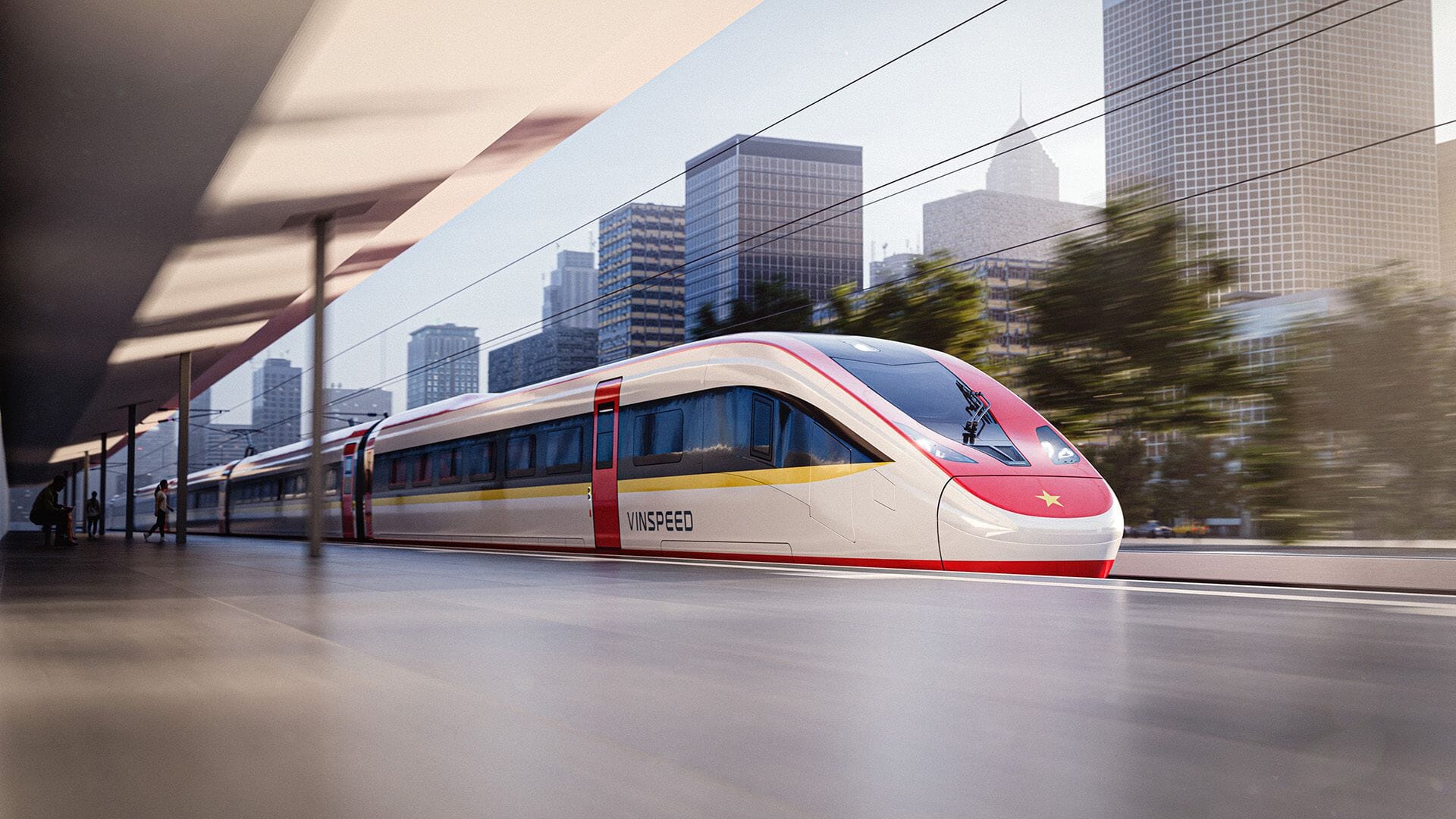
The railway will deploy the latest generation of high-speed trains from Siemens Mobility, alongside world-class signaling, communications, and equipment systems. Michael Peter, Siemens Mobility’s global CEO, attended the groundbreaking ceremony personally — a signal of the project’s strategic importance for the German manufacturer.
Critically, Siemens has committed to a phased technology transfer to VinSpeed. This roadmap includes collaboration on train assembly and maintenance, with the goal of building domestic high-speed rail expertise in Vietnam over the operational lifespan of the project. It’s a model similar to arrangements Siemens has made in other emerging markets — the technology arrives imported, but the knowledge stays local.
Why This Matters
Vietnam’s ambitions for high-speed rail extend well beyond this 120-kilometer line. The country has long planned a North-South express railway connecting Hanoi to Ho Chi Minh City — a 1,500+ km corridor that would be one of the most transformative infrastructure projects in Asia. Contractor selection for that megaproject is targeted for Q2 2026.
The Hanoi–Quảng Ninh line, while smaller in scale, serves as a proof of concept: a privately financed, foreign-technology high-speed line built on a compressed timeline. If VinSpeed delivers by 2028, it will demonstrate that Vietnam can build and operate 350 km/h rail — strengthening the case for the far larger north-south corridor.
The route also has immediate economic logic. It connects Hanoi — Vietnam’s political capital and second-largest city — to Hạ Long Bay, a UNESCO World Heritage Site and one of Southeast Asia’s most visited natural landmarks. The provinces along the route (Bắc Ninh, Hải Phòng, Quảng Ninh) form the backbone of northern Vietnam’s industrial and export economy.
Key Specifications
| Total length | 120.2 km |
| Investment | VND 147 trillion (~$5.6 billion USD) |
| Max speed | 350 km/h (120 km/h within Hanoi) |
| Track type | Double-track, standard gauge (1,435 mm), fully electrified |
| Stations | 5 (Cổ Loa, Gia Bình, Ninh Xá, Yên Tử, Hạ Long) |
| Developer | VinSpeed (Vingroup) |
| Technology partner | Siemens Mobility (Germany) |
| Groundbreaking | April 12, 2026 |
| Target completion | End of 2028 |
| Travel time | ~23 minutes (Hanoi–Quảng Ninh) |
Sources and further reading on Vietnam's Hanoi–Quảng Ninh high-speed railway project.
Primary Sources
- Tuổi Trẻ News – Vietnam's new PM attends groundbreaking for $5.6bn high-speed railway
- Vietnam Investment Review – Vingroup launches Hanoi–Quảng Ninh high-speed rail project
- Asia Today – Vingroup launches Hanoi–Quảng Ninh High-Speed Railway Project
Image Sources
- Siemens AG Press – VinSpeed and Siemens signing ceremony photo
- Featured image – AI-generated illustration (Gemini)